As an affiliate, we may earn a commission from qualifying purchases. We get commissions for purchases made through links on this website from Amazon and other third parties.
For normal use, an outside spigot should usually be closed when you are not drawing water. But when you are winterizing a line that has been shut off from inside, leaving the outside spigot open can help trapped water drain and reduce freeze damage.
The right choice depends on whether the pipe is still connected to a live water supply.
When to Keep an Outside Spigot Closed
Keep the spigot closed during normal operation when water pressure is still reaching it.
This applies to an outside faucet connected to:
- Household plumbing
- A pressurized rainwater system
- A pump-fed garden line
- A cistern or storage tank that can continue feeding the faucet
Leaving a live spigot open wastes water and may allow a tank or pressure system to drain.
If your rainwater tank uses gravity rather than a pump, an open spigot can slowly empty the tank unless another valve stops the flow.
When Leaving the Spigot Open Makes Sense
Leaving the outside spigot open is useful when you are intentionally draining the plumbing.
A common winterizing sequence is:
- Disconnect any garden hose.
- Shut off the valve supplying the outdoor faucet, if your plumbing has one.
- Open the outside spigot.
- Allow the remaining water to drain.
- Leave the faucet open while the isolated section remains out of service, unless the faucet or plumbing manufacturer gives different instructions.
The important part is that the upstream water supply must already be shut off. Simply opening a faucet that is still connected to pressurized water does not winterize it.
Always Disconnect the Hose Before Freezing Weather
A hose left attached to an outdoor faucet can prevent water from draining correctly.
This is especially important with a frost-free hose bib. A frost-free faucet places its actual shutoff point farther inside the building, where temperatures should remain warmer. After you close the faucet, water in the outer portion needs room to drain.
A connected hose, splitter, timer, vacuum breaker, or other attachment can trap that water.
Remove attachments before freezing temperatures arrive unless the equipment is specifically designed to remain installed under those conditions.
What About a Frost-Free Spigot?
During normal use, a frost-free spigot should be closed when you are finished using it.
Its design depends on the water remaining on the warm side of the shutoff point while the exposed section drains.
For that drainage to work:
- Remove the hose.
- Remove anything that traps water at the outlet.
- Make sure the faucet was installed with the proper drainage slope.
- Repair a faucet that continues dripping after it has been shut off.
Leaving a frost-free faucet permanently open is generally unnecessary when the plumbing system remains active.
If you shut off and drain the entire branch line for winter, the procedure may be different. Follow the faucet manufacturer's instructions when available.
What About a Regular Outdoor Faucet?
A standard outdoor faucet does not move its shutoff point inside the heated part of the building. That means water can remain in the pipe close to the exterior wall.
In freezing climates, homes with this type of faucet often have an indoor shutoff valve for the outdoor branch.
If yours does, the general approach is to shut off that indoor valve and drain the outdoor section through the spigot. Some shutoff valves also have a small drain or bleed port.
Do not force, loosen, or dismantle unfamiliar plumbing fittings to drain them. If the line cannot be isolated or you are unsure how it was installed, a plumber can identify the safest winterizing method.
Outside Spigots on Rainwater Tanks
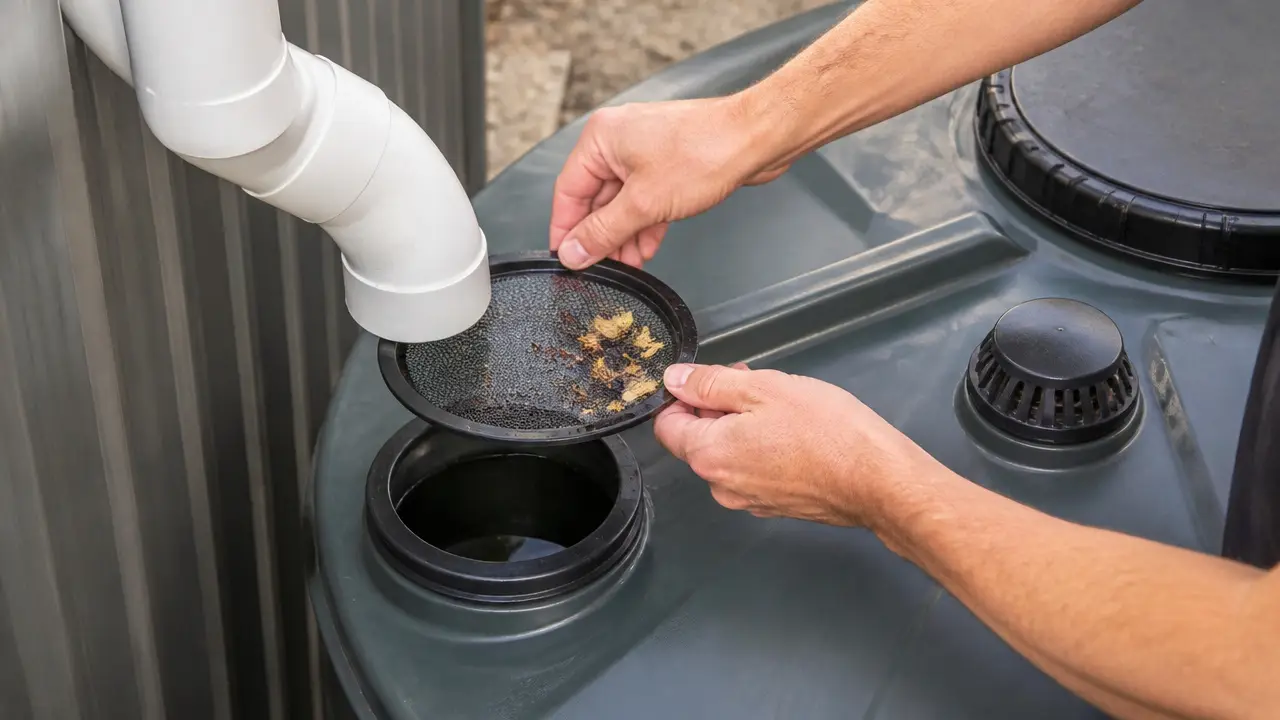
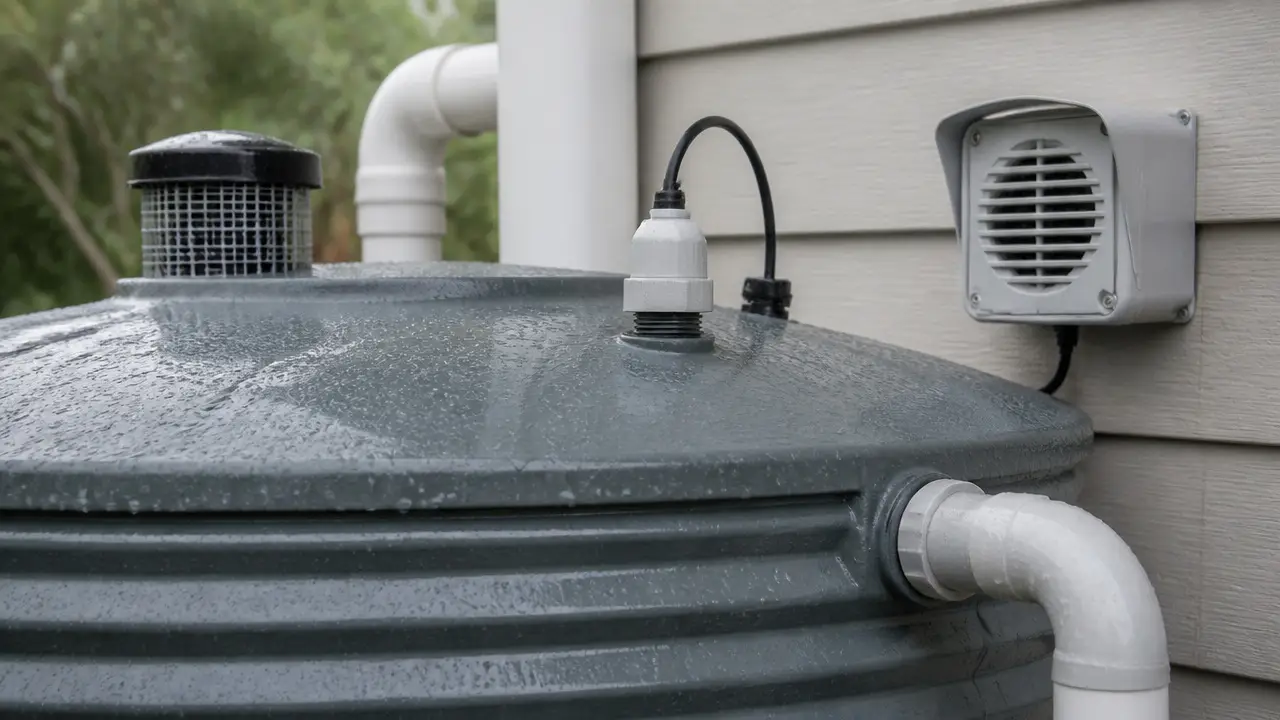
The same principle applies to a rain barrel, IBC tote, or cistern.
Planning around considerations before draining a rain barrel in winter helps compare outside-plumbing needs under changing temperature conditions.
During the collection season, keep the outlet closed unless you are using the water.
Before freezing weather, however, water should not be allowed to remain trapped inside exposed valves, filters, pumps, or narrow pipes.
Depending on the system, winter preparation may include:
- Draining exposed plumbing
- Disconnecting hoses
- Opening an isolated outlet so trapped water can escape
- Draining or protecting pumps according to their instructions
- Bypassing or removing equipment that cannot tolerate freezing
Do not assume that simply opening the tank spigot protects the whole system. Water may still remain in elbows, filters, pump housings, check valves, or low spots.
Large tanks also require special planning. A full tank may sometimes be intended to remain filled through winter, while its exposed plumbing is isolated and drained. Follow the tank manufacturer's requirements and account for your local freezing conditions.
Why Trapped Water Is a Problem
Water expands as it freezes.
If water is trapped inside a closed pipe, valve, filter housing, or pump, freezing can put enough pressure on the equipment to crack it.
Damage may not become obvious until the system thaws and begins leaking.
The goal of winterizing is therefore not simply to choose between an open or closed spigot. The goal is to prevent water from remaining trapped where freezing can damage the system.
A Simple Rule to Remember
Use this rule for most outdoor faucets:
Water supply on: keep the spigot closed when you are not using it.
Water supply shut off for winter: open the isolated outdoor spigot so the line can drain, if that matches the design of your plumbing.
And in freezing weather, disconnect the hose either way.
Frequently Asked Questions
Should I leave my outside faucet open all winter?
Only if the branch has been shut off from its water supply and opening the faucet is part of the drainage procedure. Do not leave a faucet open while it is still connected to an active water supply.
Should I leave a frost-free faucet open during winter?
Normally, no. A working frost-free faucet is generally closed after use, with the hose and other attachments removed so the exposed section can drain.
Can I leave a garden hose attached during winter?
It is better to disconnect it before freezing weather. A hose can hold water against the faucet and prevent proper drainage.
Does opening the spigot keep pipes from freezing?
Not by itself. The line normally needs to be isolated from the water supply and drained. Other parts of the system can still hold trapped water.
Should I leave the spigot on my rain barrel open during winter?
If the barrel is being emptied and taken out of service, leaving the drained outlet open may help prevent water from collecting behind the valve. The rest of the barrel and its fittings must also be prepared for freezing according to their design.
What should I do if my outdoor faucet has no indoor shutoff valve?
Do not assume you can fully drain the line. A frost-free faucet may already provide freeze protection when correctly installed, but a standard faucet may need another solution. A plumber can identify the faucet and determine whether the branch needs additional freeze protection.
Why is my outdoor faucet still dripping after I shut it off?
A brief amount of drainage can be normal with some frost-free faucets, especially after a hose is removed. Continuous dripping can indicate a worn seal, damaged valve, or another plumbing problem that should be repaired.