As an affiliate, we may earn a commission from qualifying purchases. We get commissions for purchases made through links on this website from Amazon and other third parties.
High total dissolved solids (TDS) are treated by removing the dissolved salts and minerals, not by using a normal sediment or carbon filter. Reverse osmosis (RO), distillation, electrodialysis, and blending with a known low-TDS water source can lower TDS. The best choice depends on what is causing the high reading and how you plan to use the water.
Do not choose treatment from the TDS number alone. TDS tells you how much dissolved material is in the water. It does not tell you what those materials are. For drinking water, identify the important contaminants with suitable laboratory testing before choosing a treatment system.
What Does High TDS Mean?
Total dissolved solids, or TDS, is the amount of dissolved material in water. It is usually shown in milligrams per liter (mg/L) or parts per million (ppm). For typical water measurements, these units are roughly equivalent.
TDS can include dissolved:
- Calcium
- Magnesium
- Sodium
- Potassium
- Chloride
- Sulfate
- Bicarbonate
- Other salts and minerals
- Small amounts of dissolved organic material
A high number does not tell you which of these substances are present.
That distinction matters. Water containing a lot of calcium may need a different treatment approach from water containing a lot of sodium or chloride.
The latest World Health Organization drinking-water guidance, updated in 2026, does not set a health-based guideline value for TDS. WHO notes that water below about 600 mg/L TDS is generally considered palatable, while water above about 1,000 mg/L can become increasingly unpleasant to drink and may contribute to scale.
In the United States, EPA lists 500 mg/L as a secondary drinking-water standard for TDS. Secondary standards deal mainly with issues such as taste, deposits, staining, and other nuisance effects. The 500 mg/L value is not a federal health limit.
These numbers are useful for context, but neither should be treated as a simple line between safe and unsafe water.
Confirm the TDS Reading Before Treating the Water
Before changing the system, make sure the high reading is real.
Many handheld TDS meters do not directly weigh the dissolved material in the water. They measure electrical conductivity and use a conversion factor to estimate TDS. The relationship between conductivity and actual TDS depends on which dissolved ions are present, so an inexpensive meter may not match a laboratory measurement exactly.
For a useful check:
- Clean the meter probe according to its instructions.
- Test a fresh sample in a clean container.
- Let very cold or hot water move closer to room temperature unless the meter provides temperature compensation.
- Repeat the test.
- Compare the source water with the treated water, if treatment is already installed.
A meter is very useful for watching trends. For example, an RO system that normally produces low-TDS water but suddenly produces much higher readings may need inspection.
A TDS meter is not a complete water-quality test.
Find Out What Is Raising the TDS
The next step is to identify the source of the dissolved material.
For drinking water, laboratory testing is especially important. The useful test panel depends on the water source and local risks.
For well water, high TDS may be linked to naturally dissolved minerals, salinity, or other groundwater conditions.
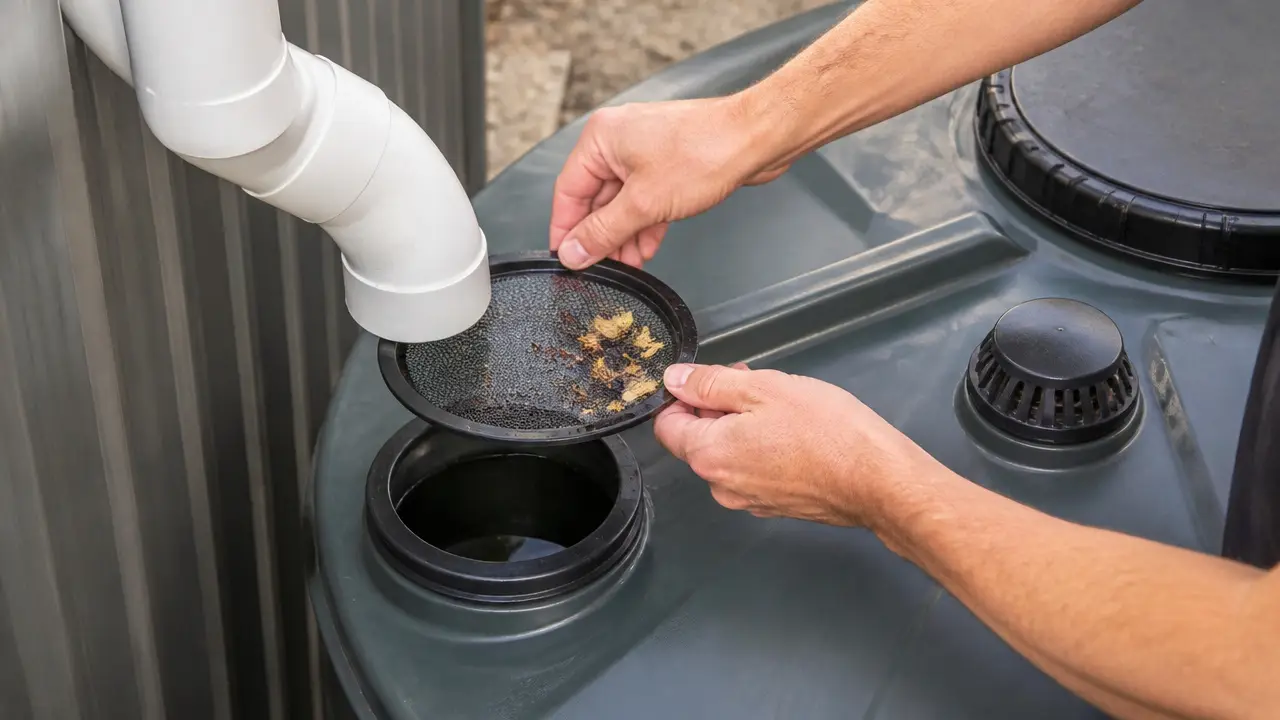
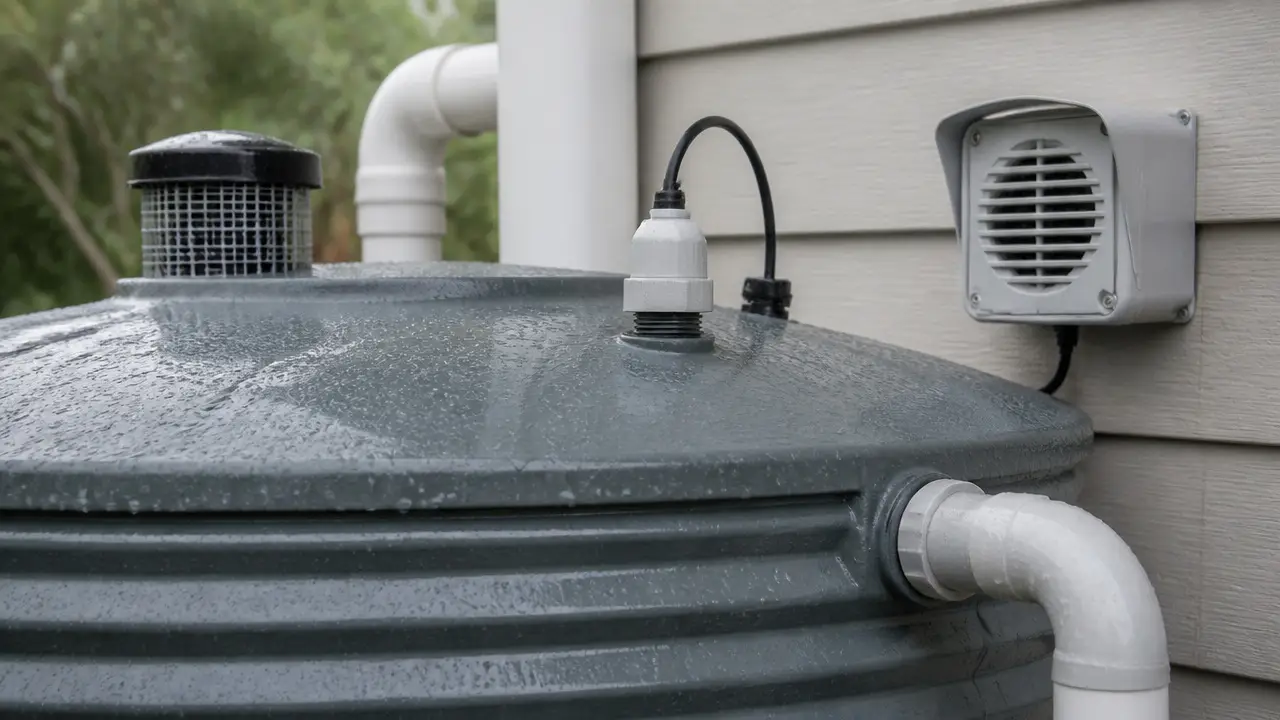
For stored rainwater, a sudden high reading deserves investigation. Check the whole collection path, including:
- Roof and gutter debris
- Salt or dust deposited on the roof
- First-flush performance
- Dirty storage tanks
- Sediment buildup
- Added treatment chemicals
- Connections to another water source
- Contamination entering through an overflow, vent, or opening
A first flush is a device or arrangement that diverts some of the first roof runoff away from the tank. That early runoff may contain more roof dust and debris.
Correcting the source may be easier than treating large amounts of water afterward.
Reverse Osmosis Is the Most Common Way to Lower TDS
Reverse osmosis is one of the most practical ways to remove dissolved salts from household water.
An RO system pushes water under pressure through a membrane. The membrane lets much of the water pass while rejecting many dissolved substances. EPA lists RO as a treatment technology that can remove dissolved solids and many other inorganic contaminants.
RO can work well when the problem involves:
- Salts
- Sodium
- Chloride
- Hardness minerals
- A mixture of dissolved inorganic materials
However, the system has to match the water.
High sediment, hardness, iron, manganese, chlorine, or other conditions can damage or foul some membranes. Pretreatment may be needed.
RO also creates two water streams:
- Product water, which passes through the membrane
- Reject water, which carries away a more concentrated portion of the dissolved material
For drinking and cooking, a point-of-use RO system under one sink may be more practical than treating every gallon entering a home.
Whole-house RO is much more involved. It may require pretreatment, a storage tank, pumps, controls, drainage for reject water, and treatment of the finished water. That type of installation is usually better planned with a qualified water-treatment professional.
Distillation Can Also Reduce TDS
A water distiller heats water and collects the vapor after it condenses.
Most dissolved minerals and salts do not evaporate with the water, so they stay behind in the boiling chamber. This can produce water with much lower TDS.
Distillation can make sense when only a small amount of treated water is needed.
Its drawbacks include:
- Energy use
- Slow production
- Regular scale cleaning
- Limited output
Distillation should not be assumed to make an unknown water source safe by itself. Some contaminants require additional treatment or control, and drinking-water safety depends on the full system rather than one device.
Electrodialysis Can Remove Dissolved Ions
Electrodialysis uses electrical forces and special membranes to separate dissolved ions from water.
EPA identifies electrodialysis, along with RO and distillation, as an effective method for reducing TDS and substances such as chloride.
It is more common in engineered or larger water-treatment systems than in simple rain barrel or household setups.
For most homeowners dealing with high TDS at one drinking-water faucet, RO is usually easier to apply.
Blending Can Lower TDS When Both Water Sources Are Suitable
Another option is to mix high-TDS water with water that has a lower TDS level.
EPA lists blending with an uncontaminated alternative source as one way water systems can address secondary contaminants.
Blending does not remove anything. It only lowers the concentration by dilution.
That means the low-TDS water must be suitable for the intended use. Do not blend questionable water into drinking water simply to make a meter show a lower number.
Blending can sometimes be useful for irrigation or other non-potable uses when the chemistry of both sources is understood.
Non-potable means the water is not intended for drinking.
A Water Softener Is Not a General TDS Treatment
A common mistake is using a water softener because high TDS is causing scale.
A softener mainly exchanges calcium and magnesium ions for sodium or potassium ions. It changes which dissolved minerals are present but does not remove most of the dissolved material from the water.
As a result, the TDS reading may stay similar.
A softener can still be useful when hardness is the actual problem. Hardness is mainly caused by calcium and magnesium.
This is why hardness and TDS should not be treated as the same measurement.
If your main complaint is white scale in a water heater or plumbing, test hardness rather than assuming the entire TDS level needs to be removed.
Filters That Do Not Normally Fix High TDS
Several common water treatments have useful jobs but do not provide meaningful removal of dissolved salts.
| Treatment | Lowers TDS? | Main purpose |
|---|---|---|
| Sediment filter | No | Removes suspended particles |
| Activated carbon | Usually very little | Helps with certain chemicals, tastes, and odors |
| UV treatment | No | Inactivates susceptible microorganisms when properly designed and operated |
| Water softener | Usually not much | Reduces calcium and magnesium hardness |
| Reverse osmosis | Yes | Removes many dissolved substances |
| Distillation | Yes | Separates water from many dissolved minerals |
| Electrodialysis | Yes | Removes dissolved ions |
| Blending | Lowers concentration | Dilutes high-TDS water with suitable lower-TDS water |
Do not keep installing finer sediment filters in an attempt to lower TDS. Dissolved minerals are small enough to pass through ordinary particle filters.
A micron rating describes the size of particles a filter is designed to catch. It does not mean the filter can remove material that is dissolved in the water.
Boiling Water Does Not Lower TDS
Look closely at health considerations for 20 TDS water to interpret which filtration stages fit the planned household purpose.
Boiling is not a treatment for high TDS.
When water boils away as steam, dissolved salts and minerals stay behind. If enough water evaporates, the remaining water can actually have a higher concentration of dissolved solids.
Distillation is different because the water vapor is collected and condensed in a separate container.
Treat High TDS Based on How You Use the Water
There is no single TDS treatment plan that makes sense for every system.
Drinking and cooking
Do not make a drinking-water treatment decision from a TDS meter alone.
Potable water means water intended to be safe for drinking. Making collected rainwater, well water, or another private source potable is a whole-system task.
It may involve:
- Suitable source collection
- Debris control and prefiltration
- Treatment matched to known contaminants
- Microbial control
- Safe storage
- Routine maintenance
- Current laboratory testing
- Applicable local requirements
TDS does not tell you whether bacteria, nitrate, lead, arsenic, pesticides, PFAS, or other specific contaminants are present.
If high TDS water is intended for drinking, have the source properly tested and choose treatment around the actual test results.
Irrigation
For garden water, the type of dissolved salt can matter as much as the total.
Sodium and chloride, for example, can create different problems from calcium and magnesium. Plant tolerance also varies.
Do not rely on a universal TDS number for every crop or soil. If irrigation water is causing plant or soil problems, a laboratory irrigation-water test can provide more useful information than TDS alone.
For a large garden, treating every gallon with RO may also create unnecessary reject water. Correcting the source or blending suitable water may be more practical.
Plumbing and appliances
If the concern is scale, test hardness along with TDS.
High hardness can create deposits in:
- Water heaters
- Faucets
- Showerheads
- Pipes
- Heat exchangers
WHO notes that high TDS can also contribute to scaling and other acceptability problems.
A softener may solve a hardness problem even though it does not substantially lower total TDS.
How to Treat High-TDS Water Step by Step
A practical treatment process looks like this:
1. Confirm the measurement
Retest with a clean meter and fresh sample.
If the reading changed suddenly, compare several locations. Test the source water, tank water, and treated water separately when possible.
2. Decide what the water will be used for
Treatment for a garden hose can be very different from treatment for drinking water.
Do not pay to treat the entire supply to drinking-water conditions when only one faucet needs that level of treatment.
3. Identify the dissolved material
For drinking water or persistent household problems, use suitable laboratory testing.
Look beyond the total TDS number.
4. Correct the source when possible
Inspect the well, rainwater collection system, storage tank, plumbing, and any cross-connections.
A sudden rise often deserves more attention than a stable reading that has existed for years.
5. Choose treatment for the actual problem
Use RO, distillation, electrodialysis, blending, or another properly selected process when dissolved solids truly need to be reduced.
Use a softener when hardness is the main problem rather than general TDS.
6. Check system compatibility
For RO and other pressure-based equipment, confirm:
- Available water pressure
- Required flow
- Connection sizes
- Drain requirements
- Storage capacity
- Pretreatment needs
- Electrical requirements, if any
Whole-house pressure systems and complex treatment trains may need professional design.
7. Maintain the treatment system
Membranes and filters do not work forever.
Follow the system's maintenance requirements. Watch for changes in flow, pressure, taste, and treated-water TDS.
8. Test the finished water
For drinking water, do not assume that a lower TDS reading proves the water is safe.
Use current laboratory testing appropriate for the source and intended use.
Frequently Asked Questions
What is the fastest way to lower TDS in water?
Reverse osmosis is one of the most common household methods for lowering dissolved salts and minerals. The system must be matched to the water chemistry, pressure, flow needs, and required treatment volume.
Does a carbon filter reduce TDS?
Usually not by a meaningful amount. Activated carbon can remove certain dissolved organic chemicals and improve some tastes and odors, but it does not normally remove the mineral salts responsible for most TDS.
Does boiling water reduce TDS?
No. Boiling removes water as vapor while leaving most dissolved minerals behind. The TDS concentration in the water left in the container can increase as water evaporates.
Is 500 ppm TDS unsafe to drink?
Not based on the TDS number alone. EPA's 500 mg/L TDS level is a secondary standard related mainly to taste, deposits, staining, and similar effects, not a federal health limit. Drinking-water safety depends on which contaminants are present, not just their combined TDS reading.
Can a water softener lower high TDS?
Not substantially in most cases. A softener exchanges hardness minerals such as calcium and magnesium for other ions. It can reduce scale caused by hardness without greatly reducing the total amount of dissolved material.
Why did my rainwater TDS suddenly increase?
A sudden change can come from the collection or storage system. Check the roof, gutters, first flush, tank sediment, plumbing connections, added chemicals, and possible entry of another water source. If the water will be used for drinking, investigate the change and use suitable laboratory testing before relying on it.
Does low TDS mean water is safe to drink?
No. Low-TDS water can still contain microorganisms or specific chemicals of concern. A TDS meter cannot provide a complete drinking-water safety assessment.