As an affiliate, we may earn a commission from qualifying purchases. We get commissions for purchases made through links on this website from Amazon and other third parties.
Collecting rainwater is often worth it if you have a useful place to use the water, enough roof area to collect it, and enough storage to hold a practical amount. It can reduce the amount of treated tap water you use for gardens, outdoor cleaning, and other non-potable uses.
But a rain barrel or larger tank is not automatically a good investment for every home. Your rainfall, roof size, storage capacity, water demand, and maintenance needs all matter.
When Collecting Rainwater Is Worth It
Rainwater collection tends to make the most sense when you can use the stored water regularly.
Common uses include:
- Watering vegetable and flower gardens
- Watering trees and shrubs
- Filling watering cans
- Supplying drip irrigation
- Outdoor cleaning
- Other approved non-potable household uses
Non-potable means water that is not intended for drinking.
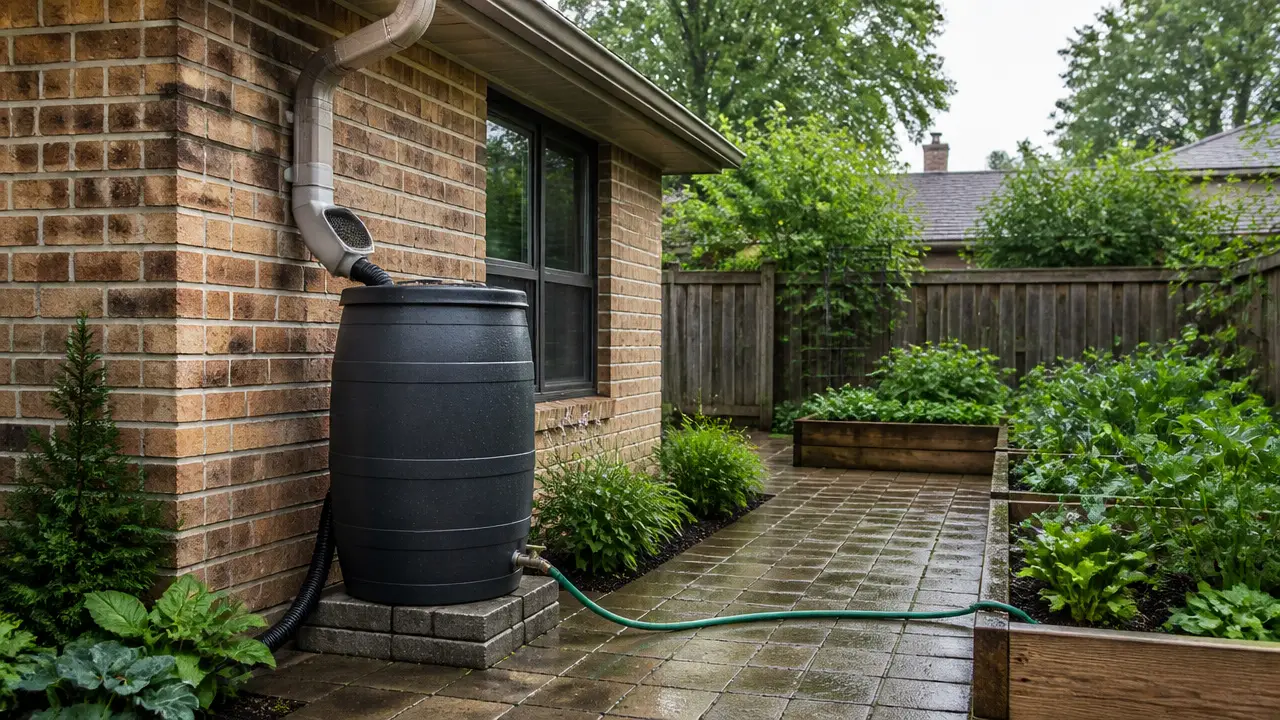
A simple rain barrel can be useful even if it does not supply a large percentage of your total water use. It can give you a convenient source of water beside a garden while reducing runoff around your property.
Larger tanks can make sense when you have more roof area, more water demand, or longer periods between rainfall.
How Much Rainwater Can You Actually Collect?
Before deciding whether rainwater harvesting is worthwhile, estimate how much water your roof can provide.
For measurements in feet and inches, a useful estimate is:
Gallons collected = roof area in square feet × rainfall in inches × 0.623
For example, 1 inch of rain falling on 1,000 square feet of roof represents about:
1,000 × 1 × 0.623 = 623 gallons
That is the theoretical amount falling on the roof.
You normally collect less than this. Some water is lost because of:
- Splashing
- Gutter overflow
- Leaks
- Debris screens
- First-flush devices
- Water remaining on the roof
- Tank overflow after the tank becomes full
A first flush device sends some of the first roof runoff away from the tank. That early runoff can contain more dust, leaves, bird droppings, and other material that collected on the roof between rains.
The calculation is still useful because it shows how quickly a roof can produce water.
Your Storage Tank May Matter More Than Your Roof
Many homeowners are surprised by how quickly a small rain barrel fills.
A 50-gallon barrel needs only a fraction of an inch of rain from a moderately sized roof section to reach capacity.
Once the container is full, additional rain goes through the overflow instead of being stored.
That means a larger roof does not always give you more usable rainwater. You also need enough storage and enough water use between storms.
For a small garden, one or two barrels may be enough to be useful. For larger irrigation needs, a larger tank or cistern may make better use of the available roof runoff.
Do not install a larger tank simply because more water is available. Think about how much water you can realistically use.
Consider How Often You Get Rain
Rainfall timing matters as much as annual rainfall.
A place can receive plenty of rain over a year but still have long dry periods.
If most of your rain falls during a season when your garden needs little water, a small tank may overflow repeatedly without helping much during the dry season.
Storage becomes more useful when rainfall and water demand occur fairly close together.
Very large storage systems can carry water through longer dry periods, but they also require more space, stronger foundations, larger pipes, and more maintenance.
Rainwater Collection Can Reduce Tap-Water Use
Rainwater is especially useful for jobs that do not require treated drinking water.
Using stored rainwater for irrigation can reduce the amount of municipal or well water used outdoors.
The amount you save depends on your actual water use.
A small rain barrel may not make a dramatic difference in total household consumption. But it may still provide enough water for containers, raised beds, or a small garden.
A larger system can replace more water when there is enough rainfall, collection area, storage, and demand.
Convenience Can Be a Bigger Benefit Than Savings
Rainwater collection does not have to pay for itself quickly to be useful.
A barrel located beside a garden can make watering easier. You may be able to fill a watering can without dragging a hose across the yard.
A properly planned tank can also capture some roof runoff that would otherwise discharge near the house.
However, the overflow still needs a safe destination. Rainwater tanks should not simply move a drainage problem from the downspout to another part of the foundation.
Rainwater Is Not Automatically Clean Water
Water coming from a roof can contain contaminants.
These may include:
- Dust
- Pollen
- Leaves
- Bird and animal droppings
- Insects
- Roofing material residues
- Airborne pollutants
- Microorganisms
For garden irrigation and similar non-potable uses, a basic system may use gutters, debris screening, covered storage, and suitable overflow management.
Drinking the water is a very different decision.
Do not assume that clear-looking rainwater is safe to drink. A screen, sediment filter, carbon filter, UV unit, or home water test by itself does not prove that roof runoff is potable.
Potable means suitable for drinking.
A drinking-water system requires suitable collection materials, contamination control, treatment designed for the risks involved, regular maintenance, current laboratory testing, and compliance with applicable local requirements. Professional guidance may be appropriate for household drinking-water systems.
Maintenance Is Part of the System
Rainwater harvesting is not maintenance-free.
Even a simple barrel needs occasional attention.
You may need to:
- Remove leaves from gutters
- Clean inlet screens
- Check mosquito protection
- Inspect tank covers
- Remove accumulated sediment
- Check fittings for leaks
- Keep overflow paths clear
- Clean first-flush equipment
- Protect pumps and pipes from freezing where necessary
A system that is difficult to clean often gets neglected.
When choosing a tank, think about maintenance access before thinking about maximum capacity.
Gravity Systems Are Simple, but Pressure Is Limited
A raised rain barrel can provide some water flow without a pump, but the pressure is usually much lower than household water pressure.
Consider uses for collected rainwater to evaluate likely upkeep demands over the system’s service life.
Water pressure from gravity depends mainly on the vertical distance between the water level and the outlet.
This difference in elevation is sometimes called head height.
A barrel sitting just a little above the ground may work well for filling a watering can. It may not provide enough pressure for some sprinklers or irrigation equipment.
If you need higher pressure or want to move water uphill, you may need a pump.
Adding a pump also adds:
- Electricity requirements
- Pressure controls
- Intake protection
- Dry-run protection
- More fittings
- More maintenance
A simple gravity system is usually easier to maintain when it can meet the intended use.
Large Tanks Need a Suitable Base
Water is heavy.
One US gallon of water weighs about 8.3 pounds. That means hundreds or thousands of gallons create a substantial load.
Large tanks need a stable base that can support the tank when it is completely full.
This becomes especially important with IBC totes, large above-ground tanks, and cisterns.
Do not place a large water tank on a weak deck, unstable soil, or an improvised platform without confirming that the structure can safely support the load.
Buried tanks add excavation and soil-loading concerns. Those projects may require professional planning.
Freezing Climates Need Extra Planning
Rainwater systems can be damaged if water freezes inside tanks, pumps, valves, filters, or pipes.
The best approach depends on:
- Tank location
- Local winter conditions
- Pipe depth
- Pump placement
- Whether the system is used during winter
Some homeowners drain and shut down outdoor systems before freezing weather. Others design systems specifically for year-round operation.
Do not assume that insulating a pipe or tank alone guarantees freeze protection.
When Rainwater Collection May Not Be Worth It
A system may provide limited value if you have very little usable roof area, little rainfall, no regular use for the water, or nowhere suitable to place storage.
It may also be a poor fit when maintaining gutters, screens, tanks, pumps, and treatment equipment would be more work than you want.
Other warning signs include:
- The only tank location creates drainage problems.
- You need expensive pumping just to reach the intended use.
- Your small storage tank would constantly overflow while you rarely use the water.
- The system would be difficult to clean.
- Your intended use requires treatment that you are not prepared to maintain.
- Local rules prevent or limit your planned use.
A smaller system is often a good way to find out how useful rainwater is before building a much larger one.
How to Decide What Size System Makes Sense
Start with the water use rather than the tank.
Ask how you expect to use the water and roughly how much you need.
Then consider:
- How much roof area can feed the system?
- How much rain normally falls when you need the water?
- How much water can you store?
- How quickly will you use the stored water?
- Can overflow drain safely?
- Can you clean and inspect the system?
- Does the water need pressure from a pump?
- Is freezing a concern?
- Is the intended use allowed locally?
This keeps you from building a large system simply because a large tank is available.
Is a Simple Rain Barrel Worth It?
For many homeowners and gardeners, yes.
A rain barrel is a relatively simple way to learn how roof collection works. It can provide useful garden water without the plumbing and controls required by a larger system.
Its limits are also important.
A small barrel may fill quickly and empty quickly. It normally provides low pressure, and it cannot store enough water to carry a large garden through a long dry period.
Think of it as a small water source rather than a complete irrigation supply.
Is a Large Rainwater Tank Worth It?
A larger system can be worthwhile when your water demand, roof area, rainfall pattern, and available space support it.
Larger storage may be useful for:
- Bigger gardens
- Greenhouses
- Livestock uses where appropriate
- Cabins
- Larger irrigation systems
- Approved household non-potable uses
But increasing tank size also increases the importance of foundation preparation, overflow design, plumbing, cleaning access, pumps, and freeze protection.
Calculate your likely collection and use before choosing the tank.
The Bottom Line
Collecting rainwater is worth it when the water has a clear purpose and the system matches your roof, rainfall, storage space, and water demand.
For many homes, a simple system used for garden watering is enough to provide real value. You do not need to capture every gallon that falls on the roof.
Start with the job you want the water to do. Estimate how much your roof can collect, choose storage you can safely support and maintain, and make sure excess water has somewhere safe to go.
Treat drinking-water use as a separate, higher-risk project that requires proper treatment, testing, maintenance, and attention to local requirements.
Frequently Asked Questions
How much rainwater can I collect from my roof?
For measurements in feet and inches, multiply the roof collection area in square feet by rainfall in inches and then by about 0.623. This gives the theoretical number of gallons. Actual collection will be lower because of system losses and tank overflow.
Is collecting rainwater worth it for a small garden?
It often is. A rain barrel or small tank can provide useful water for containers, raised beds, and other small garden areas. The main limitation is storage capacity between storms.
How quickly does a rain barrel fill?
It can fill surprisingly quickly. A roof produces about 0.623 gallon per square foot for every inch of rain before losses. Even part of a roof can therefore fill a small barrel during one storm.
Can I drink collected rainwater?
Do not assume roof-collected rainwater is safe to drink. Drinking-water use requires appropriate collection, treatment, maintenance, current laboratory testing, and compliance with applicable local requirements.
Do I need a pump for a rain barrel?
Not always. Gravity can work for filling watering cans or some low-pressure irrigation. A pump may be needed when you require more pressure, higher flow, or need to move water uphill.
Does a bigger rainwater tank always make sense?
No. A larger tank helps only if you collect enough water and have enough demand to use it. Large tanks also require more space, stronger foundations, suitable plumbing, and more maintenance.
Can a rainwater tank help with stormwater runoff?
It can temporarily capture some roof runoff, but its effect depends on available tank space when a storm starts. A full tank cannot store additional rain, so a properly designed overflow and drainage path are still necessary.