As an affiliate, we may earn a commission from qualifying purchases. We get commissions for purchases made through links on this website from Amazon and other third parties.
A garden hose with low water pressure usually has one of a few simple causes: a partly closed valve, a kinked hose, a clogged fitting or nozzle, a hose that is too long or narrow, or low pressure from the water source itself.
Start with the easy checks before replacing anything. The goal is to find where the flow drops.
Check the Faucet First
Remove the hose from the outdoor faucet and turn the water on.
You should get a strong, steady stream directly from the faucet. If the flow is already weak, the hose may not be the problem.
Check that:
- The faucet is fully open.
- Any upstream shutoff valve is fully open.
- A splitter or timer is not partly closed.
- A backflow preventer is not clogged or damaged.
- Other fixtures are not using a large amount of water at the same time.
If water pressure is low throughout the house, the problem may be with the plumbing system, pressure regulator, well system, or water supply. That is usually a job for a plumber or qualified well professional.
Straighten Kinks in the Hose
A sharp bend can restrict water much more than it looks like it should.
Lay the hose out and look for:
- Kinks
- Twisted sections
- Flattened areas
- Sections trapped under wheels or furniture
- Damaged spots that collapse when water flows
Flexible hoses can sometimes pinch internally even when the outside looks normal.
Turn the water on while the hose is stretched out. If pressure improves, a kink or collapsed section was likely causing the problem.
Check the Hose Connections
Every fitting adds some resistance to water flow.
Disconnect accessories one at a time, including:
- Hose splitters
- Quick-connect fittings
- Timers
- Spray nozzles
- Pressure regulators
- Backflow devices
- Irrigation adapters
Then connect the hose directly to the faucet.
If the flow becomes much stronger, reconnect the parts one at a time until the restriction returns. That helps identify the problem fitting.
Also check the rubber washer inside each hose connection. A washer that is twisted, swollen, or out of position can partly block the opening.
Clean the Nozzle or Sprayer
Mineral deposits, dirt, rust, and small pieces of debris can clog a hose nozzle.
Remove the nozzle and test the hose without it.
If water flows well from the bare hose, the nozzle is the likely problem.
Inspect its inlet screen and openings. Clean removable debris according to the nozzle manufacturer's instructions. Replace the nozzle if internal parts are damaged or badly blocked.
The same problem can happen with sprinklers, watering wands, and drip-irrigation adapters.
Check for a Clogged Inlet Screen
Some hose accessories have small screens where water enters.
These screens keep debris out, but they can slowly become clogged.
Look inside fittings such as:
- Hose timers
- Pressure regulators
- Spray nozzles
- Irrigation filters
- Pumps
- Some backflow preventers
If a screen is removable, clean it according to the equipment instructions.
Do not simply remove a required filter or backflow device to increase flow. The correct fix is to clean, repair, or replace the restricted part.
Consider the Hose Length
Water loses pressure as it travels through a hose.
The longer the hose, the greater the loss.
For example, a short hose used beside the house will normally deliver better flow than several hoses connected together across a large yard.
Long runs become especially noticeable when you are trying to operate equipment that needs a higher flow rate.
Flow rate means how much water moves through the hose during a certain amount of time, often measured in gallons per minute.
If you are using more hose than you need, try a shorter run and compare the result.
Hose Diameter Can Make a Big Difference
A narrow hose restricts water more than a wider hose, especially over long distances.
The important measurement is the hose's inside diameter.
A larger inside diameter generally allows more water to pass with less pressure loss. That can help when watering large gardens, filling storage tanks, or running sprinklers.
However, a larger hose cannot create pressure that the source does not have. It only reduces some of the loss that happens while water travels through the hose.
Test the Flow Without the Hose
A simple flow test can help separate a supply problem from a hose problem.
Use a container with a known volume and measure how long the faucet takes to fill it.
Then repeat the test at the end of the hose.
You can estimate flow with:
Flow rate = container volume ÷ filling time
Keep the units consistent.
For example, if you measure the container in gallons and the filling time in minutes, the result will be gallons per minute.
A large drop between the faucet and hose outlet points toward resistance somewhere in the hose or its fittings.
Use this only as a practical comparison. It does not replace a proper pressure test.
Pressure and Flow Are Not the Same Thing
Low pressure and low flow can feel similar at the end of a hose, but they are different.
Pressure is the force pushing the water.
Flow rate is the amount of water moving through the system.
You can have reasonable pressure but poor flow because of a clogged fitting or undersized hose. You can also have plenty of pipe capacity but weak pressure from the source.
This distinction matters when troubleshooting pumps, wells, irrigation systems, and rainwater systems.
Check for Leaks
Check key facts about the most common cause of low water pressure to verify duty-cycle limits for prolonged water delivery.
A leaking hose can reduce the amount of water reaching the end.
Inspect:
- Faucet connections
- Hose couplings
- Splitters
- Hose repairs
- Cracks along the hose
- Nozzle connections
Small leaks may not cause a major pressure loss by themselves, but several leaks can reduce useful flow.
Replace damaged washers first. If the hose wall itself is split or badly worn, replacement may be more reliable than repeated repairs.
If You Use a Hose Reel, Test Without It
A hose reel can sometimes restrict flow.
Possible causes include:
- A narrow internal connector
- A kink inside the reel
- A partly collapsed leader hose
- A damaged swivel fitting
Connect the main hose directly to the faucet and compare the flow.
If performance improves greatly, inspect the reel and its connections.
Check Your Water Pressure Carefully
If you suspect the water source itself, a hose-thread pressure gauge can be used to check pressure at an outdoor faucet.
Follow the gauge instructions.
Household water pressure should not be adjusted by guessing. Excessive pressure can damage pipes, valves, hoses, appliances, and irrigation equipment.
If pressure appears unusually high or low, especially throughout the house, have the plumbing system checked by a qualified professional.
Low Pressure From a Well System
Homes supplied by a private well can have changing pressure as the pump and pressure tank cycle.
Weak hose performance may be related to:
- Pressure tank problems
- A clogged filter
- A partly closed valve
- Pump problems
- Heavy water use elsewhere
- Plumbing restrictions
Do not adjust pump pressure switches unless you understand the system and its safe operating limits. Well pumps and pressure tanks involve electricity and pressurized equipment.
A qualified well or plumbing professional should handle problems involving electrical controls, pressure tanks, or pump settings.
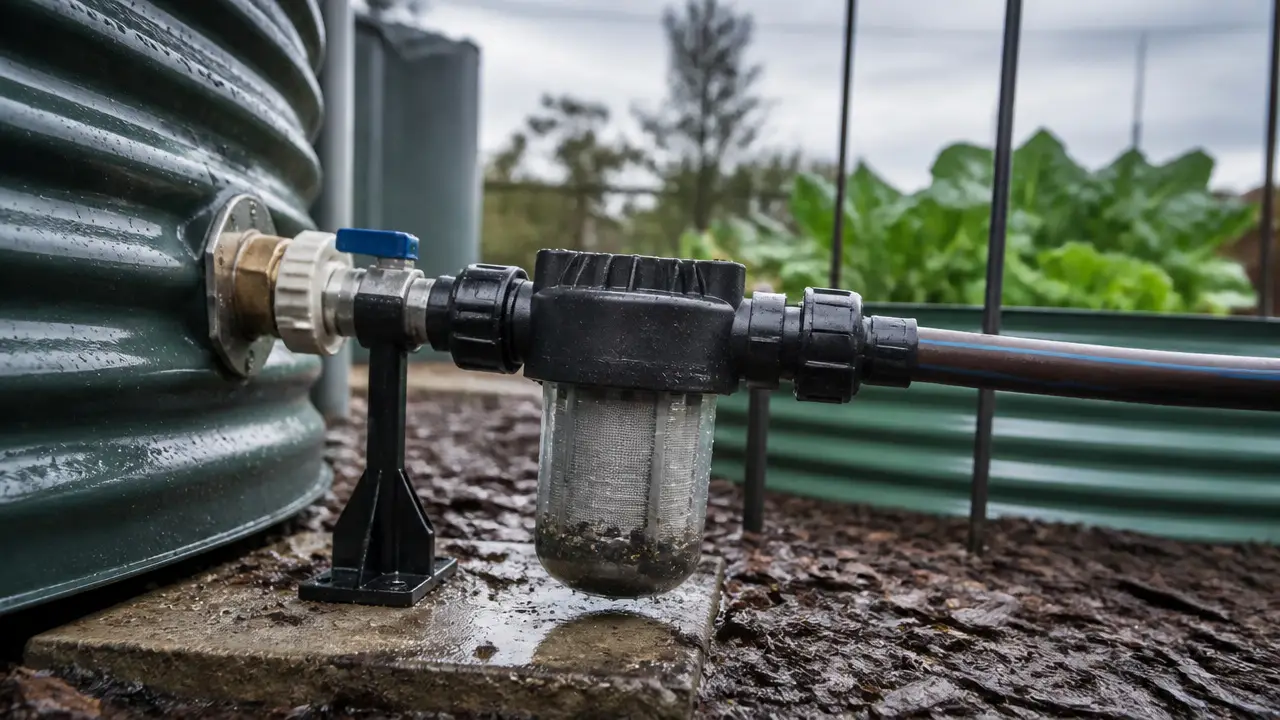
Low Pressure From a Rainwater Tank
A garden hose connected to a rain barrel or tank behaves differently from one connected to pressurized household plumbing.
A tank that feeds the hose only by gravity may produce modest pressure.
Head height is the vertical distance between the water level in the tank and the outlet. More vertical height creates more gravity pressure.
Simply using a longer hose will not increase that pressure. In fact, a long or narrow hose creates additional resistance.
For gravity-fed watering, keep the hose run practical and avoid unnecessary restrictive fittings.
If the garden system needs more pressure than gravity can provide, a properly sized water pump may be needed. Pump selection should consider the required flow, pressure, lift, power source, connection sizes, and protection against running dry.
Watch for Restrictions in Irrigation Systems
Sometimes the hose works normally until it is connected to irrigation equipment.
The restriction may be in:
- A clogged irrigation filter
- A pressure regulator
- A narrow adapter
- A partly closed valve
- A long run of small tubing
- Too many sprinklers operating at once
Drip irrigation often uses pressure regulators on purpose. Removing one simply to increase pressure can damage components or cause uneven watering.
Instead, check whether the regulator, filter, tubing size, and number of outlets suit the system.
A Simple Troubleshooting Order
Working through the system in order makes the problem easier to find.
- Remove the hose and test the faucet.
- Fully open the faucet and any supply valves.
- Straighten the hose.
- Remove the nozzle and test again.
- Remove splitters, timers, and quick-connect fittings.
- Check washers and inlet screens.
- Look for leaks or crushed hose sections.
- Try a shorter hose if possible.
- Compare flow directly from the faucet and from the end of the hose.
- Investigate the home's water supply only if the faucet itself has weak flow.
Change one thing at a time. Otherwise, you may fix the problem without knowing what caused it.
When a Different Hose May Help
Replacing the hose can make sense when the existing hose is:
- Very long for the job
- Narrow for the required flow
- Permanently kinked
- Internally collapsed
- Cracked or leaking
- Restricted by damaged fittings
Choose a hose based on the distance you actually need and the amount of water your watering setup requires.
A bigger hose is not always necessary. For light hand watering, a smaller hose may work well. Wider hoses become more useful when you need higher flow over longer distances.
When to Call a Professional
Stop troubleshooting and consider professional help if:
- Water pressure is weak throughout the house.
- Pressure changes suddenly for no clear reason.
- Pipes make unusual noises.
- You suspect a failing pressure regulator.
- A private well pump or pressure tank is involved.
- There is a hidden plumbing leak.
- Electrical pump equipment needs testing or repair.
Garden-hose problems are often simple. Problems involving household plumbing, pumps, pressure vessels, or electrical controls deserve more caution.
Frequently Asked Questions
Why is my garden hose pressure suddenly low?
A sudden drop often comes from a kink, clogged nozzle, blocked screen, partly closed valve, leaking connection, or another fixture using a large amount of water. Remove accessories and test the hose directly from the faucet to narrow down the cause.
Will a shorter garden hose give me better pressure?
It can improve performance. Water loses pressure as it moves through a hose, so shortening a long hose reduces resistance. The improvement will be greater when the original hose is long or narrow.
Does a larger hose diameter increase water pressure?
A larger hose does not increase the source pressure. It can reduce pressure loss and allow more flow, especially over longer distances.
Why does my hose have good pressure without the nozzle but low pressure with it?
The nozzle may be clogged, damaged, or designed with a small internal opening. Check its screen and spray openings. If cleaning does not help, the nozzle may need replacement.
Can a hose splitter reduce water pressure?
Yes. A splitter adds some restriction, and dividing the supply between two hoses reduces the flow available to each branch. A damaged or partly closed splitter can make the problem worse.
Why is pressure low when several sprinklers are running?
The sprinklers may require more flow than the water source can provide at one time. Try running fewer zones or sprinklers and see whether performance improves.
Why is the pressure from my rain barrel so weak?
Most rain barrels rely on gravity. Pressure depends largely on the vertical distance between the water surface and the hose outlet. A low tank has much less pressure than household plumbing. Long hoses, narrow hoses, and restrictive fittings reduce the available flow further.
Can I increase my home's water pressure myself?
Simple hose restrictions can be handled by most homeowners, but changing household pressure settings is different. Incorrect adjustments can damage plumbing and equipment. If the faucet itself has unusually low pressure, especially throughout the house, a plumber or qualified well professional should inspect the system.