As an affiliate, we may earn a commission from qualifying purchases. We get commissions for purchases made through links on this website from Amazon and other third parties.
Low water pressure when your sprinklers are on usually means the irrigation system is using water faster than your supply can deliver it. The problem may come from too many sprinkler heads running at once, small or restricted pipes, a clogged filter, a weak pump, or a pressure problem in the main water supply.
The right fix depends on whether your sprinklers use municipal water, a well, or stored rainwater.
Why Sprinklers Can Make Water Pressure Drop
Sprinklers need both flow and pressure.
- Flow rate is how much water moves through the pipe over time.
- Pressure is the force pushing that water through the system.
A sprinkler zone may work well when it is the only thing using water. But when its demand gets close to the maximum flow your plumbing can supply, pressure can fall throughout the system.
You might notice:
- Sprinkler heads do not rise fully.
- Spray does not reach as far as usual.
- Faucets or showers become weak while irrigation is running.
- Sprinklers work better when fewer heads are turned on.
- Pressure gets worse in zones farther from the water source.
These signs often point to a flow restriction or a system that is trying to move more water than the source can provide.
Too Many Sprinkler Heads May Be Running at Once
One of the most common causes is an oversized sprinkler zone.
Every sprinkler head needs a certain amount of water. When several heads run at the same time, their flow requirements add together.
For example, if one zone needs more water than your supply line, pump, or well can provide, pressure will fall. The last sprinkler heads on the line may perform especially poorly.
The practical fix is often to divide a large zone into two smaller zones.
Do not assume a larger pump is automatically the answer. Pipe size, available water supply, valves, filters, and sprinkler requirements also matter.
Your Main Water Supply May Not Provide Enough Flow
A house can have acceptable pressure when little water is being used but struggle during high demand.
This can happen with:
- Municipal water connections with limited available flow.
- Wells that cannot keep up with irrigation demand.
- Rainwater tanks connected to undersized pumps.
- Long supply lines.
- Small-diameter plumbing.
Try running the sprinkler system without using showers, washing machines, or other high-flow fixtures. If sprinkler performance improves, total water demand is likely part of the problem.
A Partly Closed Valve Can Restrict Water
Check accessible valves between the water source and irrigation system.
A valve that is not fully open can restrict flow enough to cause a noticeable pressure drop.
Possible locations include:
- The irrigation shutoff valve.
- A valve near the water meter.
- A valve at a rainwater tank.
- A pump isolation valve.
- Zone valves.
Do not adjust utility equipment that you are not authorized to operate.
If a valve is difficult to turn, leaking, or damaged, have it repaired instead of forcing it.
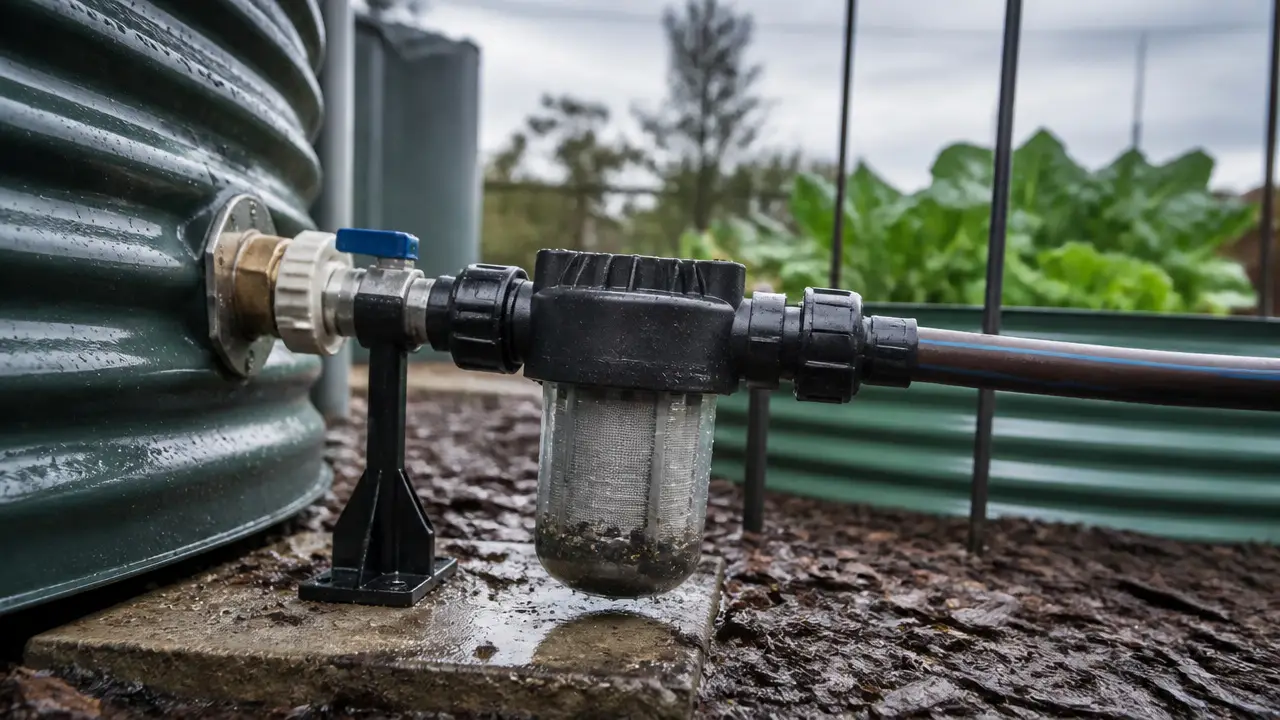
A Clogged Filter Can Reduce Sprinkler Pressure
Filters protect sprinkler valves, emitters, and heads from dirt. But a dirty filter can also become a major restriction.
This is especially important in rainwater systems.
Roof runoff may carry:
- Sediment.
- Small pieces of leaves.
- Insect debris.
- Roofing particles.
- Organic material.
A screen or filter that has collected this material may allow some water through while limiting the amount available to the irrigation system.
Inspect and clean serviceable filters according to their design. If pressure improves after cleaning, the restriction was likely contributing to the problem.
A filter's micron rating describes the approximate size of particles it is designed to catch. Finer filtration can create more resistance to flow, especially when the filter becomes dirty.
Small Pipes Can Limit Flow
A pipe can carry water only so easily.
Long, narrow pipes create more resistance than short, larger pipes. Fittings, elbows, valves, filters, and backflow devices add more resistance.
This means you can have good pressure near the water source but poor pressure at the sprinklers.
Pipe sizing becomes especially important when:
- A sprinkler zone has many heads.
- The water must travel a long distance.
- The property has a large rise in elevation.
- A rainwater tank is far from the garden.
- Several filters or valves are installed in the same line.
Replacing one short section of pipe with a larger size will not always solve the problem. The whole path from the source to the sprinklers needs to be considered.
Elevation Can Reduce Available Pressure
Water pressure falls as water is pushed uphill.
If sprinklers are much higher than the water source, some of the available pressure is used simply to lift the water.
For pumped systems, this height difference is part of the pump's head height.
Head height describes how much resistance the pump must overcome. It includes elevation as well as losses from pipes, fittings, filters, and other equipment.
A pump that produces strong flow at tank level may provide much less flow at the pressure required by sprinklers farther uphill.
Your Pump May Be Too Small for the Sprinkler System
If your sprinklers use a well, cistern, rain barrel system, or rainwater tank, check the pump's ability to provide both the needed pressure and flow.
A pump should not be chosen using its maximum flow number alone.
Pump flow normally drops as the pressure or head requirement rises.
For example, a pump may be able to move a large amount of water with little resistance but much less water once it must:
- Lift water uphill.
- Push through long pipes.
- Pass through filters.
- Operate several sprinkler heads.
- Maintain sprinkler pressure.
The pump's performance curve is more useful than its maximum flow rating. It shows how much water the pump can provide at different head levels.
If the system requires more than the pump can provide at its actual operating conditions, reducing zone size may be easier than replacing the pump.
The Pump May Be Losing Its Water Supply
A pump cannot maintain pressure if water is not reaching its inlet freely.
Possible problems include:
- A low tank water level.
- A clogged intake screen.
- A blocked suction line.
- A leaking suction connection.
- A collapsed or undersized suction hose.
- Air entering the pump.
- A pump that has lost prime.
This issue is common when a pump sits above the water level and must pull water through a suction pipe.
Do not let a pump repeatedly run without water unless it is specifically designed for dry operation. Running some pumps dry can damage seals or other parts.
Dry-run protection is useful for pumps connected to rainwater storage because the tank can eventually empty.
A Dirty Sprinkler Valve Can Restrict One Zone
If only one irrigation zone has weak pressure, the problem may be inside that zone rather than at the main supply.
Check for:
- A valve that does not open fully.
- Debris inside the valve.
- A damaged valve diaphragm.
- A clogged zone filter.
- A crushed or kinked pipe.
Compare the weak zone with other zones.
If every zone has low pressure, look closer to the main water source. If one zone is weak while the others are normal, focus on that zone's valve and piping.
Broken Pipes or Leaking Sprinkler Heads Can Steal Flow
A leak can cause a major drop in sprinkler performance.
Factor in typical sprinkler-system flow rates to evaluate target pressure at the furthest delivery fixture.
Look for:
- Unusually wet soil.
- Water pooling near sprinkler heads.
- Water bubbling from the ground.
- A sprinkler head spraying sideways.
- A head that does not rise.
- Water continuing to flow after the zone shuts off.
A damaged underground pipe may release enough water that the remaining sprinklers cannot maintain proper pressure.
Turn the affected zone off if you find a large leak.
A Pressure Regulator May Be Causing the Problem
Some homes have a pressure-reducing valve or other regulator on the incoming water line.
A failing or incorrectly adjusted regulator can sometimes provide acceptable pressure at low demand but struggle when a large amount of water is flowing.
Do not simply turn the adjustment screw in an attempt to increase pressure. Raising plumbing pressure too far can damage fixtures, valves, appliances, or irrigation equipment.
If you suspect the home's pressure regulator, have the system pressure tested and the regulator inspected.
Sprinkler Nozzles May Not Match the Zone
Sprinkler heads in the same zone should work well together.
Installing high-flow nozzles can increase total zone demand beyond what the supply can provide.
This can happen after replacing heads or changing nozzles without checking the flow requirements.
If pressure problems started after modifying the irrigation system, compare the new sprinkler requirements with the original design.
Reducing nozzle flow or splitting the zone may solve the problem without changing the water supply.
Rainwater Systems Need a Whole-System Check
When sprinklers are supplied by stored rainwater, check the entire route:
Tank → intake → pump → filter → valves → irrigation pipe → sprinkler heads
A restriction anywhere along this path can affect pressure.
Pay special attention to:
- Tank outlet size.
- Bulkhead fittings.
- Intake screens.
- Pump suction lines.
- Pump performance.
- Filters.
- Pipe length and diameter.
- Elevation.
- Number of sprinklers per zone.
A bulkhead fitting is a sealed fitting installed through the wall of a tank. If the tank outlet or fitting is much smaller than the rest of the irrigation line, it can become a bottleneck.
Also make sure the stored water level is high enough for the pump intake to remain submerged or properly supplied.
Rainwater used for irrigation is generally treated as non-potable, meaning it is not intended for drinking. Keep rainwater plumbing separated from drinking-water plumbing unless the system has been designed to meet applicable plumbing and water-quality requirements.
How to Narrow Down the Cause
You can often find the problem without replacing equipment.
1. Compare Different Zones
Run each sprinkler zone separately.
If one zone is weak and the others are normal, inspect that zone.
If every zone is weak, investigate the main supply, pump, filters, or shared piping.
2. Reduce Water Demand
Avoid using other large water loads while testing the sprinklers.
If pressure improves, the supply may not have enough flow for simultaneous use.
3. Look for Leaks
Walk the active sprinkler zone and check for unusually wet areas or damaged heads.
4. Check Accessible Filters
A dirty irrigation or rainwater filter can cause a large pressure loss.
Clean only filters designed for routine user servicing.
5. Check Valve Positions
Make sure normal system shutoff valves are fully open.
6. Compare Sprinkler Performance Near and Far From the Source
If nearby heads work well but distant or uphill heads do not, pipe loss, elevation, or zone demand may be the cause.
7. Measure Pressure and Flow if Needed
A pressure gauge can show what happens when the system is resting and when sprinklers are running.
Flow can also be measured or calculated from a water meter when appropriate.
The important measurement is not just static pressure with everything off. You need to know how the system performs while water is actually flowing.
When to Call a Professional
Simple problems such as a dirty screen, damaged sprinkler head, or partly closed accessible valve may be easy to correct.
Consider an irrigation, plumbing, pump, or well professional if the problem involves:
- A buried pipe leak.
- A failing pressure regulator.
- A well that may not keep up with demand.
- Pump sizing.
- Pressure tanks or pump controls.
- Electrical pump wiring.
- Major plumbing changes.
- Connecting rainwater and household plumbing systems.
Pump electrical work should be handled carefully, especially around wet areas. Turn off power before servicing equipment when required, and use a qualified electrician or pump technician when electrical work is involved.
Frequently Asked Questions
Why does my shower pressure drop when the sprinklers turn on?
The sprinklers may be using a large share of the flow available to the house. If the supply pipe, well, regulator, or water source cannot provide enough water for both uses at once, pressure at the shower can fall.
Can too many sprinkler heads cause low pressure?
Yes. Each sprinkler uses water. If the total demand of the zone exceeds the available flow, pressure will drop. Dividing the zone into smaller sections is often an effective solution.
Why does only one sprinkler zone have low pressure?
A single weak zone may have a clogged valve, dirty filter, pipe leak, damaged sprinkler head, or too many high-flow nozzles. If the other zones work normally, the main water supply is less likely to be the cause.
Can a clogged filter lower sprinkler pressure?
Yes. As debris builds up, the filter creates more resistance to water flow. This is common in irrigation systems using pond, well, or collected rainwater.
Will a bigger pump fix low sprinkler pressure?
Not always. A larger pump cannot fix every restriction. Small pipes, clogged filters, limited tank outlets, leaks, or oversized sprinkler zones can still reduce performance. Pump sizing should consider both required flow and total head.
Why do my sprinklers have less pressure when my rainwater tank gets low?
The pump may be receiving water less easily as tank conditions change, especially if the intake becomes exposed or begins drawing air. Some systems also receive a small benefit from the water level above the pump inlet. Check the intake arrangement and make sure the pump is protected from dry running.
How can I tell if low sprinkler pressure is caused by a leak?
Look for wet soil, pooling water, unusually green patches, bubbling ground, damaged heads, or a water meter that continues to show significant flow where a leak may be present. Large underground leaks may require professional locating equipment.