As an affiliate, we may earn a commission from qualifying purchases. We get commissions for purchases made through links on this website from Amazon and other third parties.
Rainwater is often very good for plants. It usually contains fewer dissolved minerals and salts than hard tap water, and it does not contain the chlorine residual that may be present in treated municipal water.
For gardens, lawns, trees, shrubs, and many container plants, collected rainwater can be a useful irrigation source.
But there is an important difference between rain falling directly from the sky and rainwater collected from a roof. Roof runoff can pick up dirt, bird droppings, pollen, roofing particles, and other contaminants before it reaches a barrel or tank.
Why Rainwater Can Be Good for Plants
Plants need water, but the substances dissolved in that water also matter.
Rainwater generally has a low mineral content. This can make it especially useful where tap water is hard or salty.
Rainwater Usually Contains Fewer Dissolved Salts
Tap water can contain minerals such as calcium and magnesium. These minerals are not automatically harmful. In fact, plants need some minerals.
Problems can develop when dissolved salts build up in soil over time, especially in containers where water cannot move deeply through the ground.
Rainwater usually adds fewer dissolved salts. Regular rain can also help move accumulated salts deeper into the soil.
This can be useful for:
- Houseplants
- Container gardens
- Seedlings
- Greenhouses
- Raised beds
- Plants sensitive to mineral buildup
Rainwater does not replace plant fertilizer or healthy soil. Its advantage is mainly that it often adds less unwanted mineral residue.
Is Rainwater Better Than Tap Water for Plants?
Sometimes.
The answer depends on the tap water, the plant, and how the rainwater is collected.
If your tap water has moderate mineral levels and your plants are healthy, changing to rainwater may not make a noticeable difference.
Rainwater becomes more useful when tap water causes problems such as:
- White mineral crust around pots
- Salt buildup on soil
- Mineral deposits on leaves
- Poor performance from plants that prefer low-mineral water
Some treated tap water also contains chlorine or chloramine for drinking-water disinfection. Most common garden plants can still be watered with municipal tap water without trouble.
You usually do not need to avoid tap water simply because it contains a disinfectant.
Is Rainwater Good for Houseplants?
It can be particularly useful for houseplants because containers allow dissolved minerals to build up more easily than open garden soil.
Water evaporates from the pot or is used by the plant, while some minerals remain behind. Repeated watering can slowly increase the concentration.
Rainwater can reduce how many additional dissolved minerals are introduced.
However, stored rainwater should still be kept reasonably clean. Water that smells bad, contains heavy algae growth, or has been sitting in a contaminated container is not automatically good for indoor plants just because it originally came from rain.
Is Roof-Collected Rainwater Safe for Garden Plants?
Roof-collected rainwater can be used for many landscape and garden irrigation purposes, but it should not be treated as clean water simply because it is rainwater.
As rain moves across a roof, it can collect:
- Bird and animal droppings
- Dust
- Leaves
- Pollen
- Insects
- Roofing debris
- Airborne pollutants
- Material from gutters
A simple rainwater system normally tries to keep some of this material out of storage.
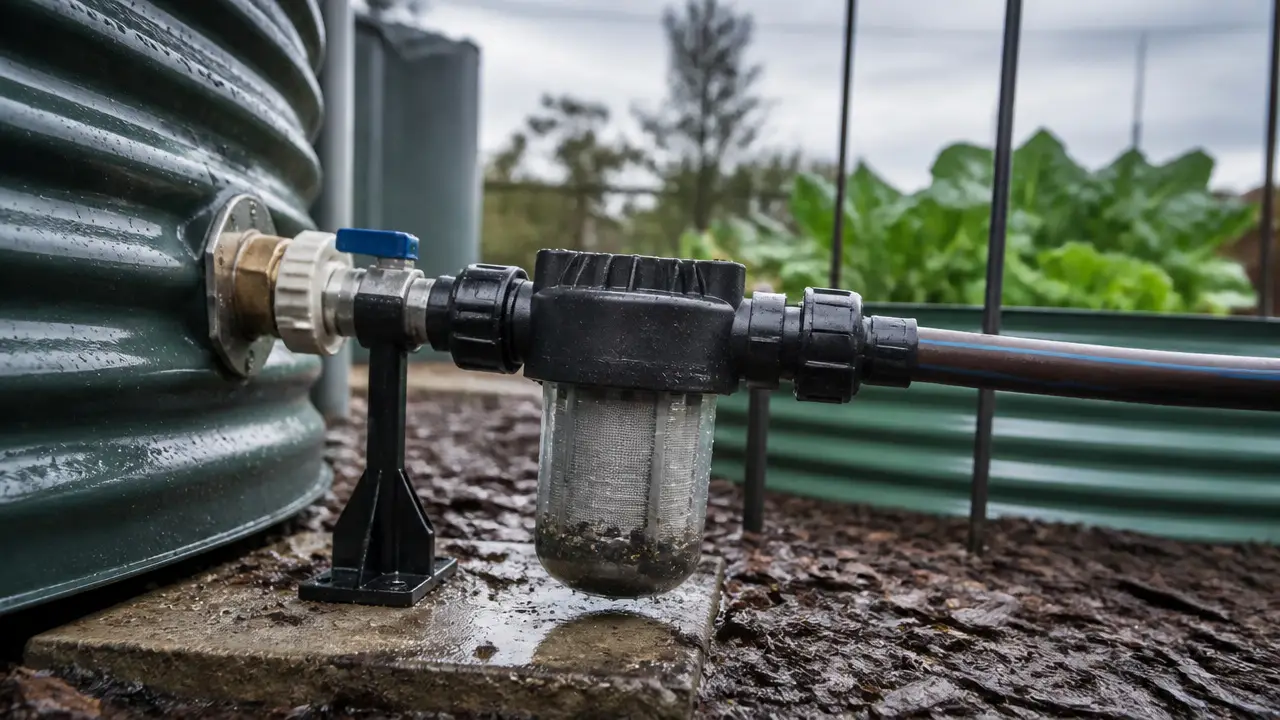
Useful parts may include gutter screens, inlet screens, and a first-flush device.
A first flush diverts some of the first roof runoff from a storm. That early water often carries a higher amount of material that accumulated on the roof between rains.
These devices can improve water quality, but they do not sterilize the water.
Using Rainwater on Vegetables and Herbs
Extra care makes sense with plants you plan to eat.
Untreated roof runoff can contain microorganisms and other contaminants. Try to apply collected rainwater directly to the soil rather than spraying it over vegetables, herbs, or fruit that will be eaten.
Drip irrigation or a hose placed near the base of the plant can reduce contact with edible parts.
Pay particular attention to crops eaten raw, such as:
- Lettuce
- Spinach
- Herbs
- Strawberries
- Tomatoes
- Peppers
Good collection-system maintenance also matters. Keep gutters clean, prevent animals from entering the tank, and use screened openings.
If the roof contains materials that may release unwanted substances into runoff, determine whether that collection surface is suitable before using its water on food crops.
Does Rainwater Have the Right pH for Plants?
Rainwater is often slightly acidic because it absorbs carbon dioxide from the atmosphere. Its exact pH can change with local conditions.
That does not mean rainwater automatically creates the ideal soil pH for every plant.
Soil chemistry is much more complicated. Soil minerals, organic matter, fertilizer, drainage, and existing pH all affect root conditions.
If plants show signs of a soil problem, test the soil rather than assuming the irrigation water is responsible.
Rain Barrels Are Useful for Small Gardens
A rain barrel can provide a simple water supply for:
- Raised beds
- Patio containers
- Flower gardens
- Shrubs
- Small vegetable plots
The main limitation is pressure.
A barrel does not produce the same pressure as a household faucet. Water pressure increases when the water surface is higher above the outlet.
This vertical difference is sometimes called head height.
For simple watering cans or short hoses, gravity may be enough. Some drip systems and sprinklers need more pressure than a low rain barrel can provide.
Check plants that benefit from rainwater to verify fitting standards across the complete plumbing path.
Always check the pressure needs of irrigation equipment before connecting it to a gravity-fed tank.
Larger Tanks Can Support More Irrigation
IBC totes and cisterns can store much more water than a typical barrel.
However, larger storage also requires more planning.
Consider:
- Roof collection area
- Local rainfall patterns
- Tank capacity
- Overflow location
- Tank foundation
- Outlet size
- Irrigation flow needs
- Pump requirements
- Mosquito protection
- Cleaning access
- Freezing conditions
Water is extremely heavy. A large tank needs a firm, stable base designed for the load.
Do not place a full tank on a deck, platform, or other structure unless you know the structure can safely support it.
Keep Stored Rainwater in Good Condition
A rainwater tank does not need to be spotless to water ornamental plants, but poor storage conditions can still create problems.
Screen Openings
Keep mosquitoes, leaves, animals, and large debris out of the tank.
Screened inlets and overflow openings are especially important.
Keep Light Out
Sunlight entering a tank encourages algae growth.
Opaque tanks are generally easier to manage than clear containers exposed to sunlight.
Clean Gutters and Screens
Leaves and organic debris can break down in gutters and screens before entering storage.
Check these areas regularly, especially after storms or heavy leaf fall.
Provide a Safe Overflow
Once the tank is full, additional rain needs somewhere to go.
Direct overflow away from foundations and places where erosion or standing water could develop.
Watch for Freezing
Water expands when it freezes.
In freezing climates, exposed barrels, pipes, valves, pumps, and filters may need seasonal draining or suitable freeze protection.
Do not assume a closed valve or full barrel can safely remain outdoors through freezing weather.
Can Rainwater Harm Plants?
Rain itself is rarely the main problem. Contamination or poor system management is usually the bigger concern.
Potential problems include water collected from unsuitable surfaces, heavy sediment accumulation, contaminated storage containers, or irrigation water with unusual chemical contamination.
Plants can also suffer simply from receiving too much water.
Rainwater does not prevent overwatering.
Soil still needs suitable drainage, and watering frequency should match the plant, weather, container size, and soil conditions.
When Rainwater Makes the Most Sense
Rainwater is especially practical when you already have a suitable roof and want to reduce the amount of treated household water used outdoors.
It can work well for:
- Gardens
- Trees and shrubs
- Lawn watering
- Raised beds
- Greenhouses
- Container plants
The system can be as simple as a screened barrel and watering can or as large as a cistern, pump, filter, and irrigation network.
The important part is matching the storage and delivery system to how much water the plants actually need.
Frequently Asked Questions
Is rainwater healthier for plants than tap water?
Rainwater can be beneficial because it normally contains fewer dissolved minerals and salts than hard tap water. However, ordinary municipal tap water is also suitable for most garden plants.
Can I water houseplants with collected rainwater?
Yes. Many houseplants can be watered with properly stored rainwater. Keep the storage container clean and covered, and avoid using water that appears heavily contaminated.
Is rain barrel water safe for vegetable gardens?
It is commonly used for irrigation, but roof runoff can contain microorganisms and other contaminants. Apply untreated collected rainwater to the soil rather than spraying edible plant parts whenever practical.
Does rainwater contain nutrients for plants?
Rainwater may contain small amounts of dissolved substances, but it should not be treated as fertilizer. Plants still depend mainly on soil and appropriate fertilization for essential nutrients.
Why do some houseplants do better with rainwater?
Plants that are sensitive to dissolved salts or mineral buildup may benefit from water with a lower mineral content. Rainwater can also reduce the white mineral deposits sometimes left by hard tap water.
Can rainwater be stored all summer for watering plants?
It can be stored, but the tank should be covered, screened against mosquitoes, protected from excessive sunlight, and maintained. Long-term storage does not guarantee that the water stays clean.
Do I need to filter rainwater before watering plants?
A fine drinking-water filter is usually unnecessary for basic landscape irrigation. Screens and basic debris control are more important for keeping leaves and sediment from clogging watering equipment. Drip irrigation may require additional filtration to protect small emitters.