As an affiliate, we may earn a commission from qualifying purchases. We get commissions for purchases made through links on this website from Amazon and other third parties.
Stored rainwater is most useful for jobs that do not require drinking-quality water. Common uses include watering ornamental plants, washing tools, rinsing outdoor surfaces, and supplying some properly designed toilet or irrigation systems.
The right use depends on how the water was collected, how it was stored, and what may have entered it. Roof runoff can contain dirt, bird droppings, germs, metals, and other chemicals even when the water looks clear.
Good Uses for Stored Rainwater
For a basic rain barrel or storage tank, outdoor non-potable uses are usually the simplest choice. Non-potable means the water is not intended for drinking.
Useful options include:
- Watering flowers, shrubs, trees, and lawns
- Watering ornamental container plants
- Filling watering cans
- Washing garden tools
- Rinsing muddy boots
- Washing outdoor furniture
- Rinsing patios and some other outdoor surfaces
- Washing vehicles where local water and drainage rules allow it
- Adding water to a compost pile when it becomes too dry
These jobs usually do not require the same water quality needed for drinking or cooking.
If you have a large cistern, stored rainwater may also be useful for toilet flushing or other household non-potable uses. That requires a properly designed plumbing system. Rainwater pipes must be kept separate from drinking-water pipes unless the connection has the backflow protection required by local plumbing rules.
Use It for Irrigation Before the Tank Overflows
Garden irrigation is one of the easiest ways to use stored rainwater.
If another storm is coming and your tank is nearly full, using some water creates room for the next rainfall. That can reduce the amount that simply leaves through the overflow.
Gravity may be enough for a watering can, short hose, drip line, or low-flow garden setup. Whether it works depends on the height of the tank and the irrigation equipment.
The higher the water surface is above the outlet, the more head height you have. Head height is the vertical distance that helps gravity create water pressure.
Some sprinklers and irrigation devices need more pressure than a rain barrel can provide. A pump may be needed for those systems.
Be More Careful Around Food Gardens
Roof-collected rainwater can carry contamination from birds, animals, roofing materials, gutters, and airborne pollution.
For that reason, the CDC recommends using safer water when possible for plants that you plan to eat.
If local guidance allows harvested rainwater on food crops, reduce contact with the edible parts of the plant. A drip or soil-level irrigation system generally creates less contact than spraying stored roof runoff over leaves, fruits, or vegetables.
Do not assume that a screen or basic sediment filter makes the water suitable for food-related uses. A screen mainly keeps leaves, insects, and larger debris out.
Can You Use Stored Rainwater to Flush Toilets?
Potentially, yes.
Toilet flushing can use a substantial amount of non-potable water, which makes stored rainwater useful in larger systems. But this is different from connecting a hose to a rain barrel.
An indoor system may need:
- A pump
- Filtration
- Controls
- An approved storage arrangement
- Correct pipe labeling
- Backflow or cross-connection protection
- Plumbing that meets local requirements
A backflow problem occurs when water travels in the wrong direction and could enter the drinking-water plumbing.
Do not make a direct, unprotected connection between a rainwater system and a municipal or other potable water supply. The CDC specifically advises keeping collected rainwater from entering pipes that carry safe drinking water.
Check local plumbing and health requirements before installing an indoor rainwater supply.
Can You Wash With Stored Rainwater?
It depends on what you are washing.
Using stored rainwater for garden tools or some outdoor surfaces presents a different level of risk from using it for bathing, brushing teeth, washing dishes, or preparing food.
For personal washing and other uses where water may enter your mouth, eyes, or wounds, water quality matters much more.
The CDC recommends regularly testing rainwater for germs and chemicals if it is used for bathing, drinking, or cooking.
Do not judge water safety by appearance or smell alone. Harmful germs and chemicals may be present without changing either.
Do Not Assume Stored Rainwater Is Drinking Water
Water collected from a clean-looking roof is not automatically safe to drink.
Contamination can enter the system at several points:
- Dust, smoke, and pollutants can be present in the air.
- Bird and animal droppings can collect on the roof.
- Roofing and gutter materials can add chemicals or metals.
- Leaves and organic matter can enter the tank.
- Germs can enter through poorly screened openings.
- Contamination can build up in dirty tanks, pipes, or filters.
A first-flush diverter can help. It sends the first part of a rainfall away from the tank because this initial runoff can wash a larger amount of accumulated debris from the roof. It improves collection quality, but it does not make the remaining rainwater automatically drinkable.
Likewise, a sediment filter, carbon filter, or UV unit should not be treated as a stand-alone guarantee of safe drinking water.
A drinking-water rainwater system needs to be considered as a whole. That can include suitable collection materials, debris removal, prefiltration, treatment chosen for the actual contaminants, good storage, routine maintenance, current laboratory testing, and compliance with local health and plumbing requirements.
The CDC advises testing rainwater used for drinking for harmful germs and chemicals at least annually. Additional testing may be appropriate when water quality changes or contamination is suspected.
What to Do With Rainwater That Has Been Stored for a Long Time
Use practical uses for non-potable water to verify filtration requirements for the intended household application.
There is no single number of days that tells you whether roof runoff in a rain barrel has become safe or unsafe.
Storage conditions matter more.
Water quality is easier to manage when the tank is:
- Opaque or protected from sunlight
- Covered
- Screened against mosquitoes and debris
- Protected from animals
- Made from a suitable water-storage material
- Kept away from fuels, pesticides, and other chemicals
- Cleaned as needed
- Connected to clean gutters and collection surfaces
Sunlight can encourage algae growth. Openings can allow insects, rodents, leaves, and dirt into the water.
For simple rain barrels, the CDC recommends screening the inlet or emptying the barrel at least every 10 days to help prevent mosquitoes from breeding.
If you routinely store water longer than that, a properly screened and covered tank is a better approach than leaving an open barrel of water outside.
When Stored Rainwater Should Not Be Used
Some water is better discarded than reused.
Do not use stored rainwater for drinking or bathing if you know or suspect that it has been contaminated with:
- Fuel
- Pesticides
- Toxic chemicals
- Sewage
- Floodwater
- Unknown chemical spills
Water contaminated by toxic chemicals cannot simply be made safe by boiling it or running it through an ordinary household filter.
Also investigate the system before using water if you find a dead animal in the tank, major animal contamination, unusual chemical odors, or evidence that floodwater entered the storage system.
Cloudiness, algae, color, or bad smells are also reasons to inspect and clean the collection system. Keep in mind that clear, odorless water is not proof that the water is safe.
Dispose of questionable water where it will not enter a drinking-water system, damage your foundation, flood neighboring property, or violate local drainage rules.
Keep the Water Moving Through the System
A rainwater system usually works better when it is treated as a working water supply rather than a container that is filled and forgotten.
Use stored water between storms when you have a suitable purpose for it. Periodically inspect:
- Roof collection areas
- Gutters
- Leaf screens
- First-flush devices
- Tank inlet screens
- Tank lids
- Overflow screens
- Valves
- Hoses
- Pumps
- Filters
Remove accumulated sediment and organic material when the system needs cleaning.
A dirty roof or gutter can keep adding contamination every time it rains, so maintaining the collection side is just as important as cleaning the tank.
Choose the Use Before Choosing the Treatment
It is easier to decide what to do with stored rainwater when you start with one question:
What will the water touch?
Watering ornamental shrubs has relatively simple requirements. Toilet flushing needs more plumbing and controls. Bathing raises water-quality concerns. Drinking requires the most careful collection, treatment, testing, and maintenance.
That means you should not add filters simply because the water looks dirty and then assume it can be used for everything.
Instead, match the system to its intended use.
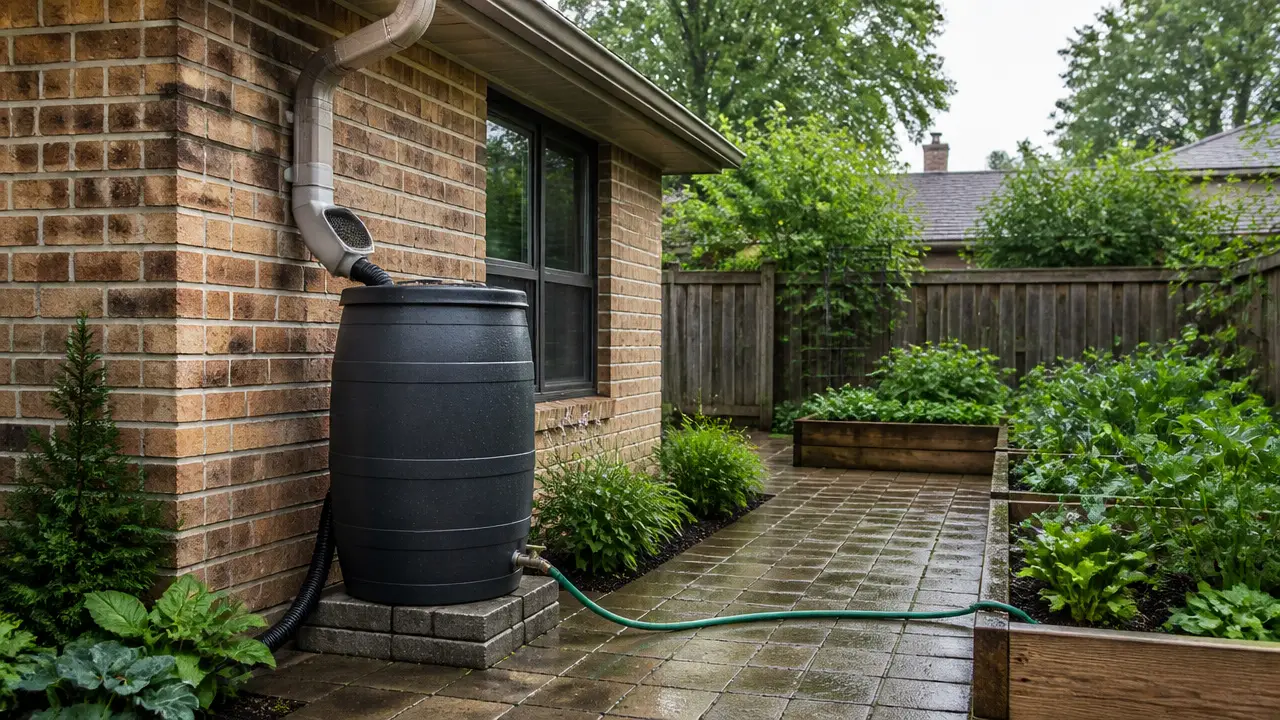
For many homeowners with a basic rain barrel, the simplest plan is to keep the water covered and screened, use it regularly for appropriate outdoor jobs, maintain the collection system, and let a safe overflow route handle water that cannot be stored.
Frequently Asked Questions
How long can rainwater sit in a tank?
There is no universal safe storage time for untreated rainwater. Water quality depends on the tank, temperature, sunlight, contamination, collection system, and intended use. A covered, opaque, screened, maintained tank is better suited to longer storage than an open rain barrel.
Can I use old rainwater to water plants?
Stored rainwater can often still be useful for ornamental plants if it has not been contaminated by sewage, toxic chemicals, fuel, or similar hazards. Be more cautious with plants that you plan to eat.
Can I drink stored rainwater after filtering it?
Do not assume so. One filter cannot establish that roof-collected rainwater is safe to drink. Drinking-water use requires suitable collection, treatment matched to the contaminants, maintenance, current water testing, and compliance with applicable local requirements.
Can stored rainwater be used to flush toilets?
Yes, rainwater can be used for toilet flushing in properly designed systems where local rules allow it. Indoor systems need suitable plumbing and protection against rainwater entering drinking-water pipes.
Why does stored rainwater turn green?
Green water often indicates algae growth, which is encouraged by sunlight and nutrients in the water. An opaque tank, covered openings, cleaner incoming water, and routine tank maintenance can help reduce the problem.
Should I empty my rain barrel before another storm?
If the barrel is nearly full and you have a suitable use for the water, using some before the next storm creates storage space. Always maintain a safe overflow route because even an empty barrel can fill during a large storm.
Can I use rainwater that smells bad?
An unusual smell is a reason to inspect the tank and collection system before using the water. Organic debris, stagnant material, algae, animals, or chemical contamination may be involved. Do not use suspicious water for drinking, cooking, or bathing merely because it has been filtered.