As an affiliate, we may earn a commission from qualifying purchases. We get commissions for purchases made through links on this website from Amazon and other third parties.
Rainwater can be used to wash dishes only when the water is suitable for food-contact use. Ordinary water from a rain barrel or untreated roof-fed tank should not be treated as safe dishwashing water.
Plates, cups, utensils, cutting boards, and cookware can carry a small amount of rinse water into your food or mouth. The CDC recommends limiting untreated rainwater to uses where you are unlikely to swallow it, such as watering non-food plants or washing items not used for cooking or eating.
If you want rainwater at the kitchen sink or dishwasher, treat it as a potable-water system, not as a basic rain barrel project.
Why Untreated Rainwater Is a Poor Choice for Dishes
Rain starts fairly clean, but the water you collect does not fall straight into a sterile tank.
Roof runoff can pick up:
- Bird and animal droppings
- Dust and dirt
- Bacteria and other germs
- Smoke and airborne particles
- Metals from roofing, flashing, gutters, or pipes
- Chemicals from roofing or storage materials
The CDC notes that collected rainwater can contain germs and chemicals even when it looks clear. Contamination can come from the air, roof, gutters, pipes, and storage system.
That matters more when washing dishes than when watering a lawn. A plate or drinking glass is a food-contact surface.
Potable means water that is suitable for drinking and other uses where people may swallow the water. Dishwashing generally belongs on the potable side of a rainwater system because cleaned dishes later touch food and mouths.
When Rainwater Can Be Used for Washing Dishes
A properly designed rainwater system can supply kitchen water in some homes. The important part is that the water must be collected, treated, tested, and maintained for that use.
A suitable system may involve several stages rather than one filter:
- A suitable roof and collection surface
- Gutter screening and debris control
- A first-flush system
- A protected storage tank
- Sediment filtration
- Treatment selected for the actual contaminants present
- Disinfection where required
- Regular water testing
- Ongoing filter, tank, and treatment maintenance
A first-flush diverter sends away some of the first roof runoff from a storm. That first water often carries more dirt and contamination from the roof. It can improve incoming water quality, but it does not make the stored water potable by itself.
CDC guidance recommends regular testing when rainwater is used for higher-contact household purposes and choosing treatment based on the germs and chemicals found in the water. Different treatment methods remove different contaminants.
A Basic Rain Barrel Is Not Enough
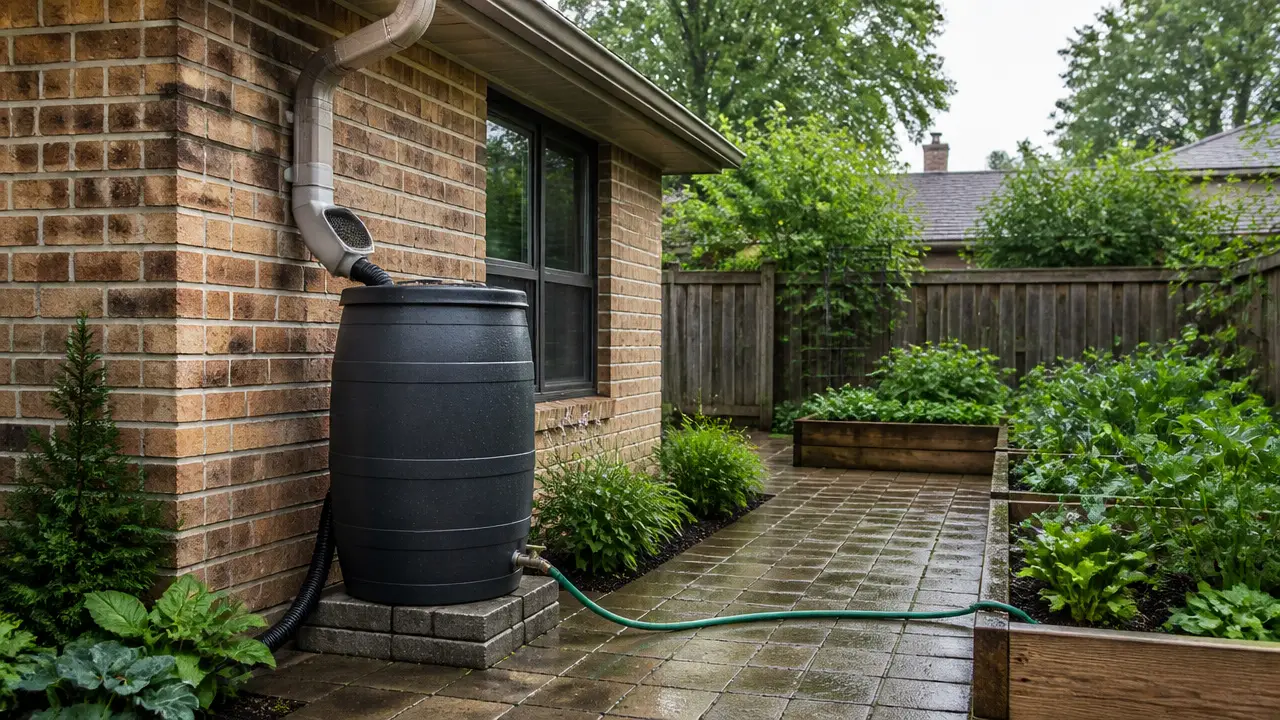
A typical rain barrel is intended for outdoor, non-potable use.
A screen over the inlet and a first-flush diverter are useful improvements, but neither turns barrel water into safe kitchen water.
Even a clear, odor-free barrel can contain contaminants you cannot see or smell. CDC guidance specifically warns that appearance, taste, and smell are not reliable ways to tell whether water is safe.
For a normal garden rain barrel, it is much simpler to reserve the collected water for suitable outdoor uses and wash dishes with your normal drinking-water supply.
What About Washing With Rainwater and Rinsing With Tap Water?
Using untreated rainwater for the wash step and potable water for the final rinse reduces some exposure, but it is not the same as using safe water throughout the process.
Food particles, scratches, sponges, sink surfaces, and your hands can move contaminated water back onto dishes after rinsing.
For everyday use, the simpler approach is to use potable water for both washing and rinsing dishes.
Untreated rainwater is better saved for jobs that do not involve food-contact surfaces.
Does Hot Water Make Rainwater Safe?
Do not assume that hot tap water makes untreated rainwater safe.
Warm or hot dishwashing water may help remove grease, but ordinary household water temperatures should not be treated as a complete rainwater-disinfection system.
The CDC advises against using water known or suspected to be unsafe for washing dishes unless appropriate precautions are being followed. It also notes that boiling can kill many germs but cannot make water containing harmful chemicals safe.
Roof runoff can contain both microbial and chemical contaminants. That is why simply heating untreated rainwater is not a complete solution.
Can I Put Rainwater Through My Dishwasher?
Only if the rainwater supply is suitable for that use and the plumbing arrangement is allowed where you live.
A dishwasher's sanitizing cycle is not a substitute for having a safe source water system.
CDC guidance for boil-water advisories says some dishwashers can safely handle a temporary microbial water problem when they have a sanitizing cycle or reach a final rinse temperature of at least 150°F (66°C).
That advice should not be taken to mean a dishwasher can turn ordinary roof runoff into potable-quality water. A boil-water advisory usually concerns a known drinking-water supply with a specific problem. Untreated rainwater may have different germs and chemicals.
If you plan to supply a dishwasher from a cistern, the rainwater should be treated before it reaches the appliance according to the intended use and local requirements.
Be Careful When Connecting Rainwater to Household Plumbing
Explore risks of drinking untreated rainwater to understand how much confidence to place in the available test readings.
An indoor rainwater system needs more planning than running a hose from a barrel.
One major concern is a cross-connection. This is a connection that could let non-potable water flow into pipes carrying potable water.
The EPA identifies cross-connections and backflow as contamination risks. If water pressure changes, non-potable water can potentially move backward into the drinking-water plumbing.
Do not simply tee a rainwater pump into your home's cold-water piping.
A kitchen rainwater system may require approved separation, backflow protection, labeling, plumbing components, permits, or inspection. Requirements depend on your location.
As of August 28, 2026, rainwater rules and allowed indoor uses still vary by state and local authority in the United States. EPA summaries show that some jurisdictions allow potable rainwater systems when specific collection, treatment, and plumbing requirements are met.
Check with your local health department and plumbing authority before connecting rainwater to a kitchen sink or dishwasher.
Treatment Needs to Match the Water
There is no single "dishwashing filter" that automatically makes collected rainwater safe.
For example:
- A sediment filter can remove particles but may not remove microorganisms or dissolved chemicals.
- A carbon filter can reduce certain chemicals, tastes, and odors but does not provide complete protection from every contaminant.
- UV treatment can control certain microorganisms when the system is correctly designed and maintained, but it does not remove metals or other dissolved chemicals.
- Reverse osmosis can remove many contaminants, but its performance depends on the system and the contaminant.
- Boiling can kill many germs but does not remove many chemical contaminants.
CDC guidance recommends testing the source water and choosing treatment that addresses the contaminants actually present.
For a rainwater system used for dishes, cooking, or drinking, laboratory testing and professional system design are much more useful than guessing which single filter to install.
Keep the Collection System Clean
Treatment works better when less contamination reaches the tank in the first place.
Useful maintenance includes:
- Keeping gutters and roof collection areas clean
- Removing accumulated leaves and debris
- Keeping insects, rodents, and animals out of the tank
- Maintaining inlet screens
- Servicing first-flush components
- Keeping the storage tank covered and protected
- Replacing treatment filters on schedule
- Servicing pumps and disinfection equipment
- Testing water at suitable intervals
A neglected potable rainwater system can become unsafe even if it worked correctly when first installed.
CDC guidance recommends regular maintenance and regular testing when rainwater is used for higher-risk household purposes.
The Simple Rule
For an ordinary rain barrel or untreated cistern, do not use the water to wash dishes, cups, utensils, or other food-contact items.
Use potable water instead.
If you want rainwater to supply your kitchen, design the collection, storage, treatment, testing, and plumbing as a potable rainwater system. Do not rely on clear-looking water, a basic filter, boiling, UV alone, or the dishwasher's hot cycle to make ordinary roof runoff safe.
Frequently Asked Questions
Can I wash dishes with water straight from a rain barrel?
It is not recommended. Rain barrel water can contain germs, animal waste, metals, and other contaminants from the roof and collection system. Use potable water for dishes and utensils.
Can I use rainwater for the first wash and tap water for the final rinse?
A potable final rinse lowers exposure, but untreated rainwater can still contaminate dishes, sinks, sponges, and hands. For routine dishwashing, potable water for the full washing process is the safer choice.
Does boiling rainwater make it safe for washing dishes?
Boiling can kill many germs, but it does not remove many chemical contaminants that may enter roof runoff. Boiling alone should not be considered a complete treatment method for collected rainwater.
Can a water filter make rainwater safe for dishes?
Not automatically. Filters remove different contaminants. A sediment or carbon filter alone does not establish that the water is potable. Treatment should be chosen using water testing and the intended use.
Can I connect a rainwater tank to my dishwasher?
It may be possible when the rainwater has been properly treated for potable use and the plumbing complies with local requirements. The system also needs protection against cross-connections and backflow.
Is a first-flush diverter enough for kitchen rainwater?
No. A first-flush diverter removes some of the dirtier early runoff from the roof. It improves source-water quality but does not make the remaining water safe to drink or use on food-contact items.
What can I safely use ordinary rain barrel water for instead?
Suitable uses depend on water quality and local rules, but basic rainwater systems are commonly used for lower-contact jobs such as ornamental landscape watering. CDC guidance recommends favoring uses that reduce the chance of swallowing untreated rainwater.