As an affiliate, we may earn a commission from qualifying purchases. We get commissions for purchases made through links on this website from Amazon and other third parties.
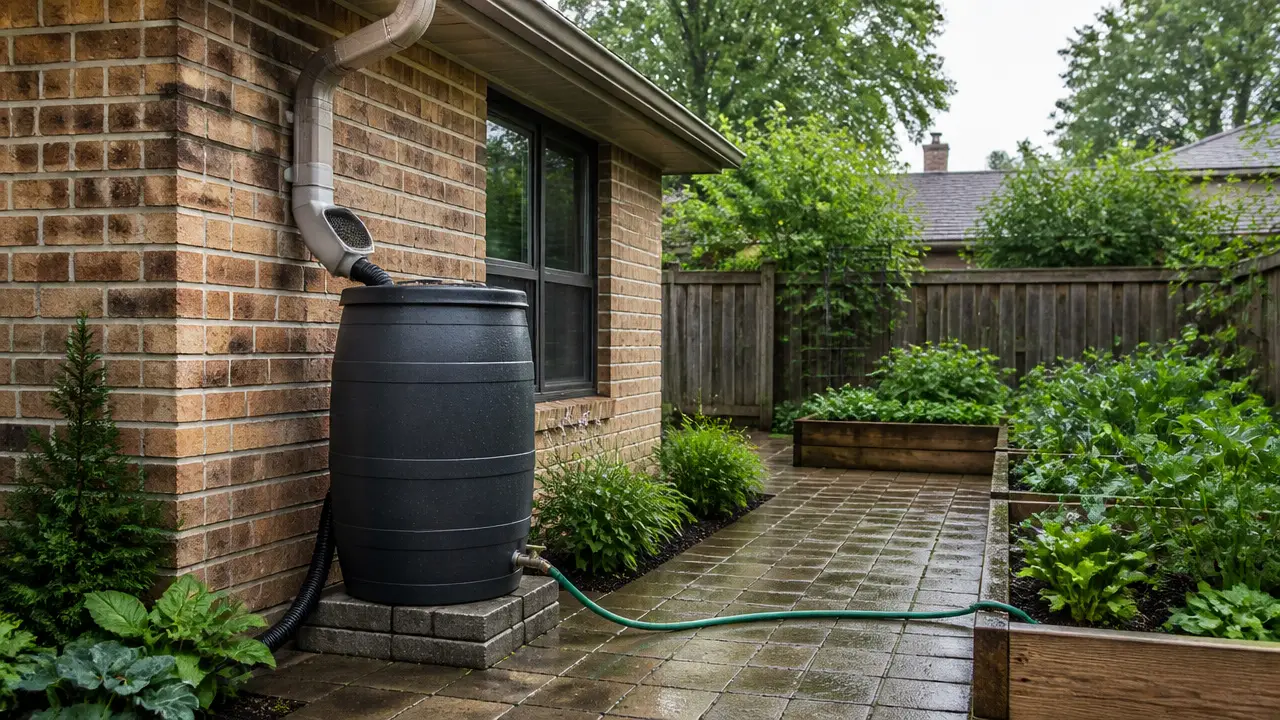
Rainwater collected in a barrel is not automatically safe to drink. A typical rain barrel collects runoff from a roof, gutter, and downspout. Along that path, the water can pick up bird droppings, dirt, bacteria, chemicals, and metals.
The CDC recommends using public tap water or bottled water for drinking when possible. If collected rainwater will be used for drinking, cooking, or other uses where it may be swallowed, it needs a collection and treatment system designed for that purpose, plus regular water testing.
For most simple rain barrel systems, it is better to treat the stored water as non-potable, meaning water that is not intended for drinking.
Why Rain Barrel Water May Not Be Safe to Drink
Rain starts out relatively clean, but that can change before it reaches your barrel.
Water running across a roof can carry contaminants into the storage container. Common sources include:
- Bird and animal droppings
- Dust, pollen, and leaves
- Insects and other organic matter
- Smoke and airborne particles
- Roofing materials and coatings
- Gutters, flashing, pipes, and fittings
- Dirt already inside the barrel
The CDC notes that roof-collected rainwater can contain both germs and chemicals even when the water looks clear. Some metals, including lead or copper, can also enter water from roofing or collection-system materials.
A clear glass of rainwater is therefore not proof that the water is safe.
A Rain Barrel Is Usually a Non-Potable Water System
Most basic rain barrels are designed to store water for outdoor uses rather than provide drinking water.
Typical uses include watering lawns, ornamental plants, or other places where people are unlikely to swallow the water. EPA guidance also describes rain barrels mainly as systems for capturing roof runoff for landscape use.
A barrel connected directly to a downspout should not be treated like a drinking-water tank just because it has a lid and spigot.
There is an important difference between:
A rain barrel: A simple container that catches roof runoff.
A potable rainwater system: A collection, storage, treatment, and monitoring system specifically designed to produce water intended for human consumption.
Potable means suitable for drinking.
What Can Contaminate Water in a Rain Barrel?
Roof runoff
The roof is one of the biggest factors affecting collected water.
Bird droppings can introduce microorganisms. Leaves and other organic material can break down in the gutter or tank. Roofing materials, coatings, flashing, and other components may also release chemicals or metals into runoff.
This is why water quality depends on the entire collection path, not only the barrel.
The first water from a storm
A roof can collect contamination during dry weather. When rain finally arrives, the first runoff can wash much of that material toward the barrel.
A first flush diverter sends an initial portion of roof runoff away from the storage tank. This can reduce the amount of dirt, germs, and other contamination entering the stored water. The correct diversion amount depends in part on the roof area supplying the system.
A first flush improves water quality, but it does not make rainwater safe to drink by itself.
The barrel itself
The storage container also matters.
Water can become contaminated if debris, animals, insects, or dirty equipment can enter the barrel. Materials that contact the water also need to be suitable for their intended use.
A barrel that previously held an unknown substance should not be assumed suitable for storing water that might later be consumed.
Mosquitoes
Open or poorly screened barrels can become mosquito breeding sites.
The CDC recommends tightly covering water-storage containers such as rain barrels. Where a lid cannot fully close the opening, mesh small enough to exclude adult mosquitoes can be used.
Mosquito control is important for maintaining a rain barrel, but controlling mosquitoes does not make the water potable.
Can You Make Rain Barrel Water Safe to Drink?
Potentially, but this is different from simply attaching a filter to an ordinary rain barrel.
Drinking-water use should be planned as a complete system. Depending on the water source and test results, that system may involve:
- A suitable roof and collection surface
- Clean gutters and downspouts
- Screening to keep out leaves, insects, and animals
- First-flush diversion
- A suitable closed storage tank
- Sediment removal or prefiltration
- Treatment chosen for the contaminants that may be present
- Regular cleaning and maintenance
- Current laboratory testing
- Compliance with applicable local requirements
The CDC recommends regular testing for germs and chemicals when rainwater is used for drinking, cooking, or bathing. It also recommends getting advice from the local health department about which contaminants should be tested.
A simple garden rain barrel normally does not include all of these protections.
Will a Water Filter Make Rain Barrel Water Drinkable?
Not necessarily.
Different filters remove different contaminants. A sediment filter, for example, mainly catches suspended particles. It does not automatically remove bacteria, viruses, dissolved chemicals, or metals.
A very fine filter may remove certain microorganisms, but its effectiveness depends on its design and certification. Other contaminants can require completely different treatment.
This is why drinking-water treatment should be chosen according to the actual water quality rather than assuming that any filter will work.
Reviewing sanitary quality of collected rainwater helps verify this decision within the complete collection path.
A filter also needs proper maintenance. An overdue filter cartridge or poorly maintained treatment system can no longer be assumed to provide its intended performance.
What About Boiling Rain Barrel Water?
Boiling should not be treated as a complete solution for ordinary roof-collected rainwater.
Boiling can kill many disease-causing microorganisms when done correctly, but it does not remove every possible chemical contaminant or dissolved metal. Some contaminants are unaffected by boiling.
Because roof runoff can contain both biological and chemical contaminants, boiling alone cannot establish that water from a rain barrel is safe to drink. The CDC specifically notes that rainwater can contain both germs and chemicals and recommends treatment suited to the contaminants present.
Does a First Flush Diverter Make the Water Safe?
No.
A first flush diverter is useful because it keeps some of the dirtiest early runoff out of your storage tank.
It should be viewed as prefiltration, not drinking-water treatment.
The diverter can reduce contamination entering the system, but later runoff can still contain microorganisms, chemicals, and small particles.
For a potable system, first flush is one part of a larger treatment plan.
Can You Drink Rainwater From a Clean Barrel?
Cleaning the barrel helps, but a clean barrel does not solve contamination that entered before the water reached it.
For example, a freshly cleaned tank can still receive water containing:
- Bird droppings from the roof
- Debris from gutters
- Metals from collection materials
- Airborne pollution
- Microorganisms carried in runoff
Keeping the barrel clean is worthwhile. It simply should not be confused with making the stored water potable.
What Should You Use Rain Barrel Water For?
For a basic untreated rain barrel, uses with little chance of swallowing the water are generally the safer choice.
Depending on local guidance and the condition of your system, that may include landscape watering and other outdoor uses.
Use extra care with edible plants. Roof runoff can contain bacteria and chemicals, and EPA guidance specifically notes that these contaminants should be considered before using rain barrel water on edible plantings.
If you have a vegetable garden, reducing contact between untreated barrel water and the edible portions of plants can reduce exposure. Local extension or health authorities may provide more specific guidance for your area.
Keep Rainwater Separate From Drinking-Water Plumbing
If your home uses both rainwater and municipal or other potable water, the systems should not be casually connected.
Untreated rainwater entering drinking-water plumbing can contaminate water that was previously safe.
The CDC recommends keeping rainwater from entering pipes carrying treated drinking water. Local plumbing requirements may also require specific backflow protection or separation methods.
Connecting a rainwater tank to household plumbing is therefore different from attaching a hose to a garden barrel. If the system involves indoor plumbing, pumps, pressure tanks, or potable-water connections, qualified professional help may be appropriate.
A Better Way to Think About Drinking Rainwater
Instead of asking whether the water in a barrel looks clean enough to drink, look at the entire path the water takes:
Roof → gutters → first flush → screening → storage → filtration → treatment → testing → tap
Each stage affects the next one.
A standard rain barrel normally covers only the collection and storage parts of that chain. That is useful for many non-potable jobs, but it is not the same thing as producing drinking water.
If drinking rainwater is your goal, plan the system for potable use from the beginning. Use suitable collection and storage materials, control contamination before it enters the tank, select treatment based on the water and intended use, maintain the system, and have the finished water tested through an appropriate laboratory.
Frequently Asked Questions
Is rainwater straight from a barrel safe to drink?
It should not be assumed safe. Roof runoff can contain germs, chemicals, metals, and other contaminants even when the water appears clear. Ordinary rain barrels are generally better treated as non-potable storage.
Can I drink rain barrel water after filtering it?
Only if the complete collection and treatment system is appropriate for potable water and testing confirms acceptable water quality. A basic sediment or garden filter alone does not establish that the water is safe to drink.
Can I boil rain barrel water and drink it?
Boiling can address many microorganisms, but it does not remove every chemical or dissolved metal that may occur in roof runoff. Boiling alone is not a complete treatment method for unknown rain barrel water.
Does a first flush diverter make rainwater potable?
No. A first flush diverter sends some of the initially contaminated roof runoff away from the storage tank. It can improve incoming water quality, but additional treatment and testing are needed for drinking-water use.
Can I drink rainwater collected from a metal roof?
Roof material is only one part of the question. Fasteners, flashing, coatings, gutters, airborne contamination, animal droppings, storage materials, treatment, and maintenance can all affect water quality. A suitable roof does not by itself make collected rainwater potable.
How often should drinking rainwater be tested?
There is no single testing schedule suitable for every private rainwater system. The CDC recommends regular testing for germs and chemicals when collected rainwater is used for drinking, cooking, or bathing. A local health department can advise which contaminants and testing frequency are appropriate for your area and system.
Is rain barrel water safe for watering vegetables?
Roof runoff can contain microorganisms and chemicals, so it should not automatically be considered safe for edible plants. The risks depend on the catchment surface, contamination sources, irrigation method, and intended crop. Follow current local health or agricultural guidance where available.