As an affiliate, we may earn a commission from qualifying purchases. We get commissions for purchases made through links on this website from Amazon and other third parties.
Collected rainwater can be useful for watering plants, cleaning outdoor areas, washing tools, flushing toilets, and other jobs that do not require drinking-quality water. The best use depends on how the rainwater was collected, how clean it is, and whether it will be used inside or outside the home.
Rainwater should not be assumed safe to drink just because it looks clear. Roof runoff can contain dirt, bird droppings, chemicals, metals, and germs. The CDC recommends using water that is safe for the intended job and taking extra precautions when rainwater may be swallowed or used for bathing.
Good Uses for Collected Rainwater
For a basic rain barrel or outdoor storage tank, the simplest uses are usually jobs where the water will not be swallowed.
Common uses include:
- Watering ornamental plants
- Watering trees and shrubs
- Watering lawns
- Filling drip irrigation systems
- Washing garden tools
- Rinsing muddy boots
- Cleaning outdoor furniture
- Washing patios and some outdoor surfaces
- Washing vehicles where local runoff rules allow it
- Supplying some toilet-flushing systems
- Supplying certain non-potable household systems where local plumbing rules allow it
Non-potable means water that is not intended for drinking.
These uses do not all require the same water quality. Water for a flower bed may need little more than debris screening. Water piped into a house may need filtration, treatment, backflow protection, and separate plumbing.
Watering Flowers, Trees, and Landscaping
Landscape irrigation is one of the easiest ways to use collected rainwater.
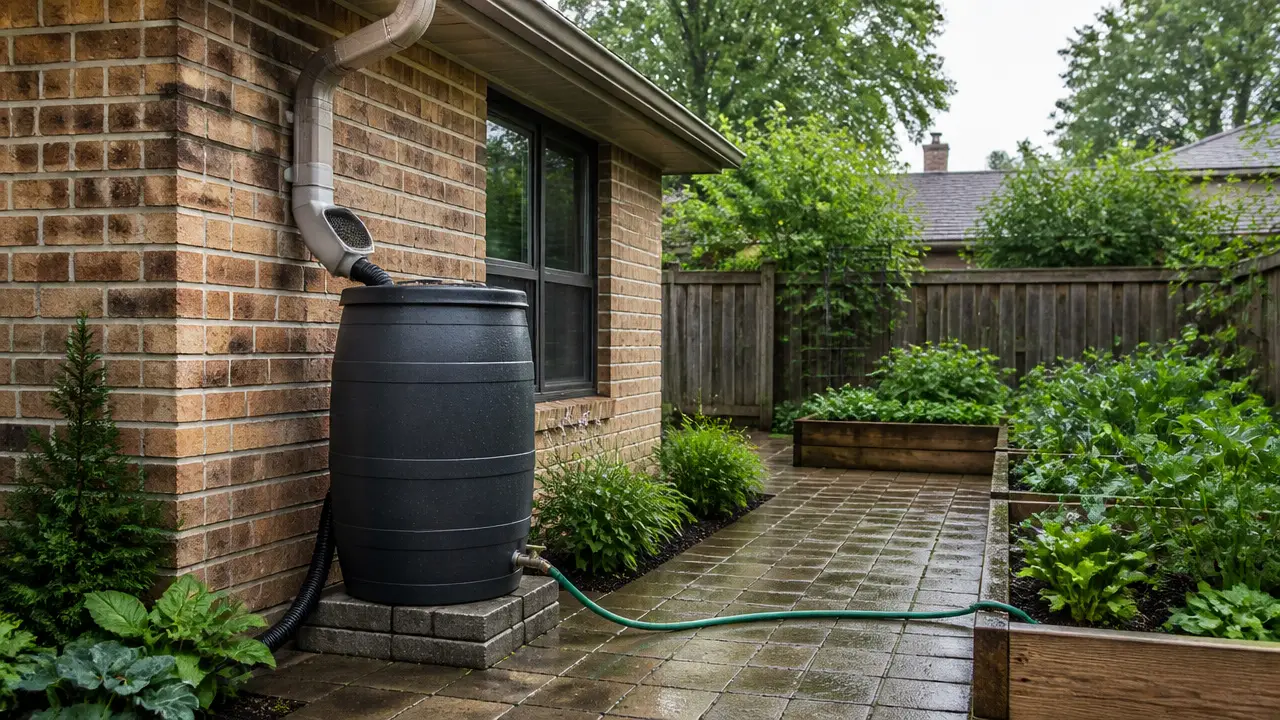
A simple system might include:
- Gutters collecting roof runoff.
- A screen that keeps leaves and insects out.
- A rain barrel or tank.
- A hose, watering can, or irrigation line.
A screen is important because leaves and other debris can clog valves and irrigation tubing.
A first-flush diverter can also help. It sends the first portion of runoff from a storm away from the tank. That first runoff often carries more roof dust, dirt, bird droppings, and other contaminants than the water that follows.
A first-flush system can improve collected-water quality, but it does not make rainwater drinking water.
Using Rainwater in a Garden
Rainwater can be used for gardening, but consider what you are watering and how the water reaches the plant.
Using collected rainwater on ornamental plants creates less chance of someone swallowing the water.
Food gardens need more care. The CDC recommends using public tap water or bottled water, when possible, for plants that you plan to eat. Roof runoff may contain germs or chemicals picked up from the roof, gutters, piping, or storage system.
If you plan to use harvested rainwater on edible crops, check local public-health or agricultural guidance. The catchment surface, irrigation method, crop, treatment system, and local rules can all matter.
Avoid assuming that a sediment filter alone makes roof runoff suitable for food-related uses.
Running Drip Irrigation
Stored rainwater can work well with drip irrigation if the system is designed around the available flow and pressure.
A gravity-fed rain barrel usually produces fairly low pressure. The higher the water surface is above the irrigation outlet, the more pressure is available.
This vertical difference is called head height.
Some drip systems work with low pressure. Others need a pump.
You should also consider:
- Filter requirements for the emitters
- Hose and pipe diameter
- Tank outlet size
- Total irrigation-line length
- Elevation changes
- Available water volume
- Pump pressure, if a pump is used
Fine drip emitters can clog easily, so filtration may be needed even when the water is only being used on plants.
Washing Tools and Outdoor Equipment
Rainwater can be convenient for rinsing:
- Shovels
- Rakes
- Garden carts
- Wheelbarrows
- Plant pots
- Outdoor furniture
- Muddy outdoor equipment
This is often a practical use for water from a small rain barrel.
Avoid using untreated rainwater to wash food-contact items such as dishes, cooking utensils, or food-preparation equipment. The CDC recommends limiting rainwater uses that could lead to accidental swallowing when the water has not been shown to be safe for that purpose.
Washing Cars and Outdoor Surfaces
Collected rainwater can also be used for vehicle washing and some outdoor cleaning.
A pump may be needed if you want stronger flow from a large tank or cistern. A small elevated rain barrel may provide enough gravity flow for gentle rinsing but usually will not behave like a pressurized household hose.
Think about where the wash water goes as well. Soap and dirty runoff should not be allowed to enter storm drains or waterways where local rules prohibit it.
Flushing Toilets With Rainwater
Rainwater can sometimes be used for toilet flushing, but this is a bigger project than connecting a hose to a rain barrel.
Indoor rainwater plumbing needs to be kept separate from drinking-water plumbing so untreated rainwater cannot flow backward into the potable supply.
Potable means water that is suitable for drinking.
A toilet-flushing system may require:
- A larger storage tank
- Filtration
- A pump
- Pressure controls
- Properly sized piping
- Backflow protection
- Clearly separated non-potable plumbing
- An approved method for switching to another water supply
- Treatment required by local rules
Requirements vary by location. Indoor rainwater reuse is a good point to involve a qualified plumber or rainwater-system professional rather than improvising a connection to household plumbing.
Can You Use Rainwater for Laundry?
Some rainwater systems supply washing machines, but this is another indoor use that needs more planning.
Stored water may contain sediment, microorganisms, color, or organic material. These can affect clothes, appliances, plumbing, and water quality.
Indoor non-potable systems may require filtration or disinfection depending on the application and local requirements. EPA resources describe toilet flushing and similar building uses as potential non-potable applications when water is appropriately treated for its intended use.
Examine risks of drinking untreated rainwater to understand which filtration stages fit the planned household purpose.
Do not connect an untreated rainwater tank directly to household plumbing without proper separation and backflow protection.
Can You Bathe or Shower in Collected Rainwater?
Bathing creates more exposure than watering a lawn because water can reach your mouth, nose, eyes, and skin.
The CDC recommends regular testing for harmful germs and chemicals if rainwater is used for bathing.
A shower system may therefore need:
- Suitable collection surfaces
- Good debris control
- First-flush management
- Proper tank maintenance
- Filtration
- Treatment matched to identified contaminants
- Regular water testing
A basic rain barrel should not be treated as a ready-to-use shower supply.
Can You Drink Collected Rainwater?
Collected rainwater should not automatically be considered safe for drinking.
Even clear rainwater can contain harmful germs and chemicals. Contamination can come from the air, roofing materials, gutters, pipes, storage materials, animals, and debris on the roof.
For drinking, cooking, brushing teeth, or other uses where water will be swallowed, think of rainwater treatment as a complete system rather than a single filter.
A drinking-water system may involve:
- A suitable roof and collection system
- Debris screening
- First-flush management
- Clean storage
- Multiple treatment stages
- Treatment matched to likely contaminants
- Current laboratory testing
- Regular maintenance
- Compliance with local requirements
A sediment filter, carbon filter, UV unit, purifier, test strip, or handheld meter by itself cannot prove that roof runoff is safe to drink.
The CDC recommends regularly testing rainwater for harmful germs and chemicals if you drink it or use it for cooking or bathing, and getting advice from your local health department about appropriate testing and treatment.
Match the Water Quality to the Job
A useful way to plan a rainwater system is to start with the intended use.
| Intended use | General level of planning |
|---|---|
| Ornamental plants | Usually simple |
| Trees and lawns | Usually simple |
| Outdoor cleaning | Usually simple |
| Drip irrigation | May need filtration and pressure planning |
| Food gardens | More water-quality care needed |
| Toilet flushing | Indoor plumbing and treatment considerations |
| Laundry | Indoor plumbing and water-quality considerations |
| Bathing | Higher water-quality and testing needs |
| Drinking or cooking | Full potable-water treatment and testing approach |
The more likely someone is to swallow or closely contact the water, the more important water quality becomes.
Your Collection System Affects What the Water Can Be Used For
Intended use should influence how you build and maintain the system.
For example, water from an open barrel that regularly collects leaves and mosquitoes is very different from water stored in a sealed cistern with screened inlets and controlled overflow.
Check the whole path:
Roof → gutter → debris screen → first flush → tank → outlet → filter or treatment → intended use
Problems anywhere along that path can affect the water.
Roofing material matters too. Rainwater can pick up substances such as metals and other chemicals as it moves across roofing, gutters, pipes, and storage materials.
Keep Stored Rainwater in Good Condition
Even rainwater used only outdoors needs basic maintenance.
Keep leaves, insects, animals, and sunlight out of the tank as much as practical. Use insect-resistant screens on openings and make sure overflow pipes do not create an easy entrance for mosquitoes.
Inspect:
- Roof gutters
- Screens
- First-flush components
- Tank lids
- Overflow outlets
- Valves
- Pumps
- Filters
- Irrigation emitters
Remove accumulated sediment when needed and follow the maintenance instructions for any treatment equipment.
Good maintenance can improve water quality, but it cannot guarantee that stored rainwater is safe for every use.
Frequently Asked Questions
What is the easiest use for collected rainwater?
Watering ornamental plants, trees, shrubs, and lawns is usually one of the easiest uses. These applications generally require less treatment than indoor or drinking-water uses.
Can I use rainwater from a barrel to water my vegetable garden?
There can be contamination risks when roof runoff is used on plants you plan to eat. The CDC recommends using public tap water or bottled water for edible plants when possible. Check local guidance if you plan to irrigate food crops with collected rainwater.
Can collected rainwater be used to flush toilets?
It can be used in some properly designed systems. Indoor rainwater plumbing must remain safely separated from drinking-water plumbing and may require filtration, treatment, backflow protection, and compliance with local plumbing requirements.
Is collected rainwater safe for washing a car?
It can be useful for vehicle washing when the water quality is suitable and local runoff rules allow it. A pump may be needed if the storage tank cannot provide enough flow or pressure.
Can I shower with rainwater?
Do not assume untreated roof runoff is suitable for bathing. The CDC recommends regular testing for harmful germs and chemicals when collected rainwater is used for bathing.
Is filtered rainwater safe to drink?
Not necessarily. A filter may remove only certain contaminants. Drinking-water use requires suitable collection, treatment matched to possible contaminants, regular maintenance, current laboratory testing, and compliance with applicable local requirements.
Do I need to treat rainwater before watering plants?
Basic landscape irrigation may only need screening or filtration to keep debris from clogging the system. More treatment may be appropriate when exposure is greater or when the irrigation equipment has fine emitters.