As an affiliate, we may earn a commission from qualifying purchases. We get commissions for purchases made through links on this website from Amazon and other third parties.
For most garden and houseplants, clean rainwater is one of the healthiest water choices. It is usually low in dissolved salts and does not contain the chlorine or added minerals found in some tap water.
But rainwater is not automatically safe or clean. Roof runoff can carry dirt, bird droppings, metals, and other contaminants. The best water for a plant depends on the plant, the water source, and how the water is collected and stored.
What Makes Water Healthy for Plants?
Plants need more than water. They also need nutrients from soil or fertilizer. The water itself should mainly do three things well:
- Reach the roots without adding harmful levels of salt
- Stay within a suitable pH range for the plant and soil
- Avoid chemicals or contaminants that can damage roots or build up over time
For many plants, the biggest water problems are excessive salts, very hard water, and poor drainage rather than a lack of minerals in the water.
Is Rainwater Good for Plants?
Rainwater is often an excellent choice for gardens, raised beds, containers, and many houseplants.
Natural rainwater normally contains fewer dissolved minerals than hard tap water. This can reduce the white crust that sometimes forms on soil, pots, and leaves after repeated watering.
Rainwater is especially useful for plants that are sensitive to mineral buildup.
However, collected rainwater is different from rain falling directly from the sky. Once rain runs across a roof, gutter, screen, barrel, or tank, it can pick up contaminants.
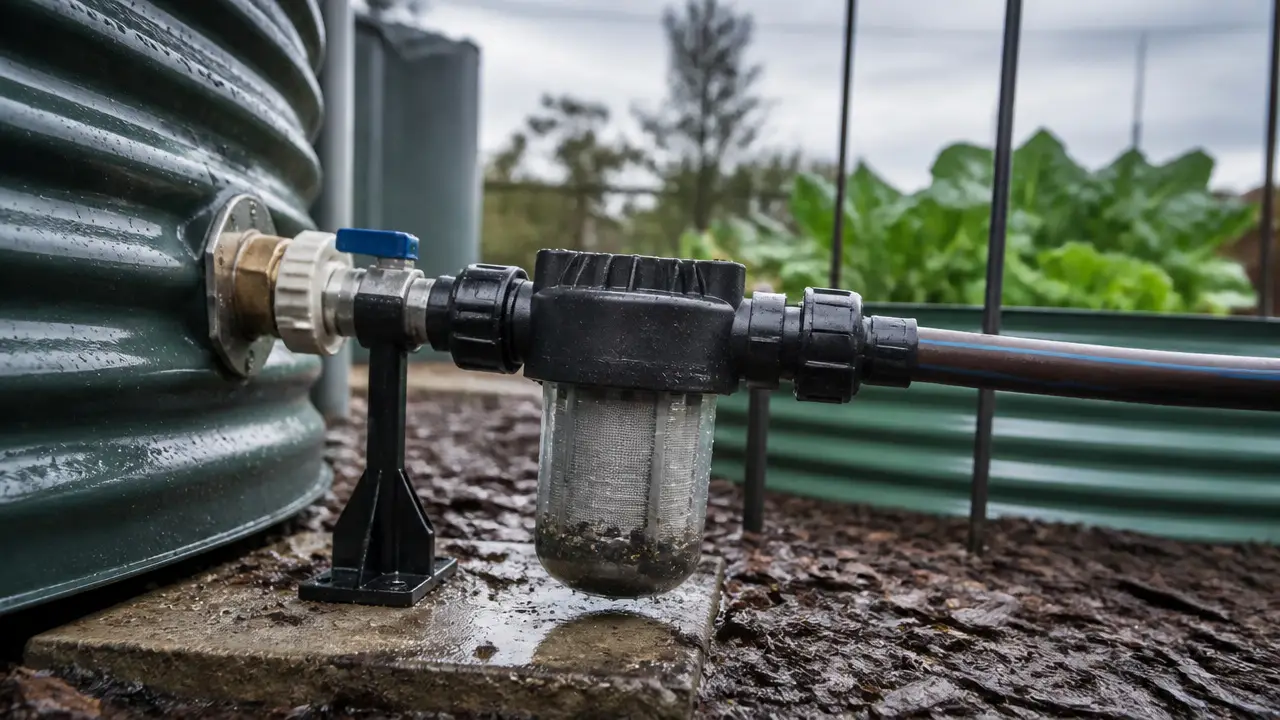
For garden irrigation, a basic collection system may include:
- A reasonably clean collection surface
- Gutters that are kept clear
- A debris screen
- A first-flush system when appropriate
- Covered storage
- An outlet that keeps leaves and sediment away from the irrigation line
A first flush diverts some of the first roof runoff from a storm. That first water often carries more dust and debris from the roof.
Keeping the tank covered also helps limit mosquitoes, algae, animals, and falling debris.
Rainwater vs. Tap Water for Plants
Tap water works well for many plants. There is usually no need to avoid it just because it comes from a municipal supply.
The main concern is the mineral content of your local water.
Soft or Moderately Hard Tap Water
Many garden plants tolerate it without trouble.
If your plants are growing well and you do not see heavy mineral deposits, there may be little reason to change water sources.
Very Hard Tap Water
Hard water contains higher levels of dissolved minerals, mainly calcium and magnesium.
These minerals are not automatically harmful. Plants need both calcium and magnesium. The problem occurs when repeated watering leaves too much mineral salt in container soil.
Signs may include:
- White deposits on potting soil
- Crust around pot rims
- Browning leaf tips
- Poor growth in sensitive plants
The same symptoms can have other causes, so do not assume hard water is responsible without considering fertilizer use, drainage, humidity, and watering habits.
Is Chlorinated Tap Water Bad for Plants?
For most common garden and houseplants, normal municipal drinking water is generally usable.
Some sensitive plants may respond poorly to certain water conditions, but chlorine is not usually the main reason plants struggle with tap water.
Water hardness, dissolved salts, fluoride in some supplies, soil conditions, and fertilizer buildup may matter more.
If a plant repeatedly develops leaf-tip damage despite good care, checking the quality of the irrigation water can help narrow down the cause.
Is Distilled Water Healthy for Plants?
Distilled water contains very little dissolved mineral material.
It can be useful for sensitive houseplants, especially when local tap water is very hard or high in dissolved salts.
But distilled water does not supply meaningful plant nutrients. That is not normally a problem because plants should receive nutrients from their growing medium and fertilizer.
Distilled water can make sense for:
- Small collections of sensitive houseplants
- Seedlings where mineral buildup is a concern
- Plants grown in containers with known hard-water problems
Using distilled water for a large outdoor garden is usually unnecessary.
What About Reverse Osmosis Water?
Reverse osmosis, or RO, removes a large portion of dissolved material from water.
RO water can be helpful for plants that are sensitive to high mineral levels. Like distilled water, it contains fewer dissolved salts than most tap water.
For normal garden plants, however, RO treatment is often more than you need.
It also should not be confused with fertilizer. Plants still need the right nutrients from soil or a feeding program.
Is Well Water Good for Plants?
It can be.
Well water varies much more from one property to another. One well may produce excellent irrigation water while another may contain high levels of salts, iron, sodium, or other substances.
You cannot judge well water by appearance alone.
If a garden has ongoing problems and well water is the main irrigation source, a water test can help. For irrigation, useful measurements may include pH, electrical conductivity, sodium, alkalinity, and other factors depending on the crop and local geology.
Does Water pH Matter for Plants?
Yes, but the water pH number alone does not tell the whole story.
The soil or potting mix helps control conditions around the roots. Water chemistry, alkalinity, fertilizer, and the growing medium all interact.
For most home gardeners, it is better to watch plant health and soil conditions than to constantly adjust irrigation-water pH.
Hydroponic growing is different. Because there is little or no soil to buffer the water, pH and nutrient concentration need much closer control.
Does TDS Tell You Whether Water Is Healthy for Plants?
A total dissolved solids, or TDS, meter estimates how much dissolved material is in water.
A higher number can warn you that water contains more dissolved salts. But a TDS meter cannot tell you exactly what those substances are.
For example, two water samples could have similar TDS readings while containing very different minerals.
Details about contaminants in untreated rainwater help verify likely upkeep demands over the system’s service life.
A TDS reading can be useful for comparing:
- Tap water with rainwater
- Water before and after an RO system
- Fresh irrigation water with water that has accumulated fertilizer salts
It cannot prove that water is safe or ideal for plants.
Best Water for Houseplants
Rainwater is often a good option if it is collected and stored cleanly.
For ordinary houseplants, a practical order of preference is often:
- Clean rainwater
- Suitable tap water
- Filtered or RO water when tap water causes mineral problems
- Distilled water for especially sensitive plants
You do not need special water for every houseplant.
If pothos, spider plants, philodendrons, herbs, or similar plants are thriving with your tap water, changing water sources may provide little benefit.
Some Plants Are More Sensitive to Water Quality
Certain plants are more likely to show damage from dissolved salts or other minerals.
Examples can include some:
- Carnivorous plants
- Calatheas
- Marantas
- Dracaenas
- Orchids
- Seedlings grown in small containers
Care requirements vary by species. A plant that prefers low-mineral water may do better with rainwater, distilled water, or properly treated RO water than with very hard tap water.
Carnivorous plants deserve special attention because many naturally grow in nutrient-poor environments and can be unusually sensitive to dissolved minerals.
Is Rain Barrel Water Safe for Vegetable Gardens?
Collected rainwater is commonly used for landscape and garden irrigation, but roof runoff should not be treated as sterile water.
It may contain contaminants from:
- Bird and animal droppings
- Roof debris
- Air pollution
- Roofing materials
- Gutters
- Storage tanks
Keep the collection system clean and covered. Avoid letting irrigation water splash heavily onto edible portions of crops when there is concern about contamination.
Drip irrigation or watering at soil level can also put water where plants need it while reducing wet leaves.
Local guidance may differ, especially for rainwater used on food crops. Follow recommendations from your local health, agriculture, or water authority when applicable.
What Is the Worst Water for Plants?
There is no single worst source, but several water conditions can cause trouble.
Water With Excessive Salts
Salt buildup can make it harder for roots to take up water and can damage sensitive plants.
Water From a Household Water Softener
Many conventional ion-exchange softeners replace hardness minerals with sodium or potassium.
Water containing elevated sodium may be unsuitable for regular irrigation, especially over long periods.
A separate unsoftened outdoor line is often preferable for gardens when available.
Contaminated Runoff
Do not assume water is suitable for irrigation simply because it looks clear.
Runoff that may contain chemicals, oils, sewage, industrial contamination, or other unsafe substances should not be used without appropriate evaluation.
Stagnant or Poorly Maintained Stored Water
Dirty tanks can collect sediment, organic matter, insects, and other contaminants.
Storage systems need inspection and cleaning as conditions require.
How to Choose the Best Water for Your Plants
Start with the simplest option.
If your plants are healthy with tap water, keep using it.
If you have access to cleanly collected rainwater, it is often an excellent irrigation source and can reduce mineral buildup.
If plants show repeated signs of salt stress, check more than the water source. Look at:
- Drainage
- Fertilizer use
- Pot size
- Soil condition
- Water hardness
- Salt buildup
- Plant species
- Watering frequency
For persistent problems, a soil or irrigation-water test is more useful than guessing.
Frequently Asked Questions
Is rainwater healthier for plants than tap water?
Often, yes. Rainwater usually contains fewer dissolved salts than hard tap water. This can make it especially useful for container plants and species that are sensitive to mineral buildup. Collected roof runoff still needs clean collection and storage.
Can I water all my plants with rainwater?
Many plants grow well with rainwater. However, collection surfaces and storage conditions matter. Avoid using water that may have picked up harmful contaminants.
Should I let tap water sit overnight before watering plants?
It is usually not necessary for most plants. Letting water sit does not solve problems caused by hardness, dissolved salts, or many other water-quality factors.
Is bottled water better for plants?
Usually not. Bottled water can contain minerals just like tap water, and its mineral content varies. Rainwater, suitable tap water, RO water, or distilled water can all be appropriate depending on the plant.
Can I use softened water on plants?
Regular use of sodium-softened water can cause problems because sodium may build up in the soil. If possible, use rainwater or an unsoftened water line for irrigation.
Is distilled water good for houseplants?
Yes, especially for plants that are sensitive to dissolved minerals. It does not contain meaningful nutrients, so normal soil fertility or appropriate fertilizer is still needed.
How do I know if my tap water is hurting my plants?
Look for repeated mineral deposits, leaf-tip damage, poor growth, or salt buildup in the soil. These symptoms can also have other causes. If the problem continues, test the irrigation water and review drainage and fertilizer use.