As an affiliate, we may earn a commission from qualifying purchases. We get commissions for purchases made through links on this website from Amazon and other third parties.
What Are the Best Hose Connectors That Don't Leak?
The best hose connectors for preventing leaks are solid brass or high-quality polymer connectors with good rubber washers, clean threads, and the correct hose size.
For most garden and rainwater systems, a well-made threaded connector with a replaceable washer is more dependable than a cheap quick-connect fitting. Quick connectors can also work well, but their internal O-rings must stay clean and in good condition.
No connector is completely leak-proof in every setup. Most leaks come from worn washers, damaged threads, poor hose ends, incorrect fittings, or too much pressure rather than from the connector body itself.
Best Hose Connector Types for Leak Resistance
Solid Brass Threaded Connectors
Solid brass connectors are a strong choice for permanent or semi-permanent garden hose connections.
They work well for:
- Garden hoses
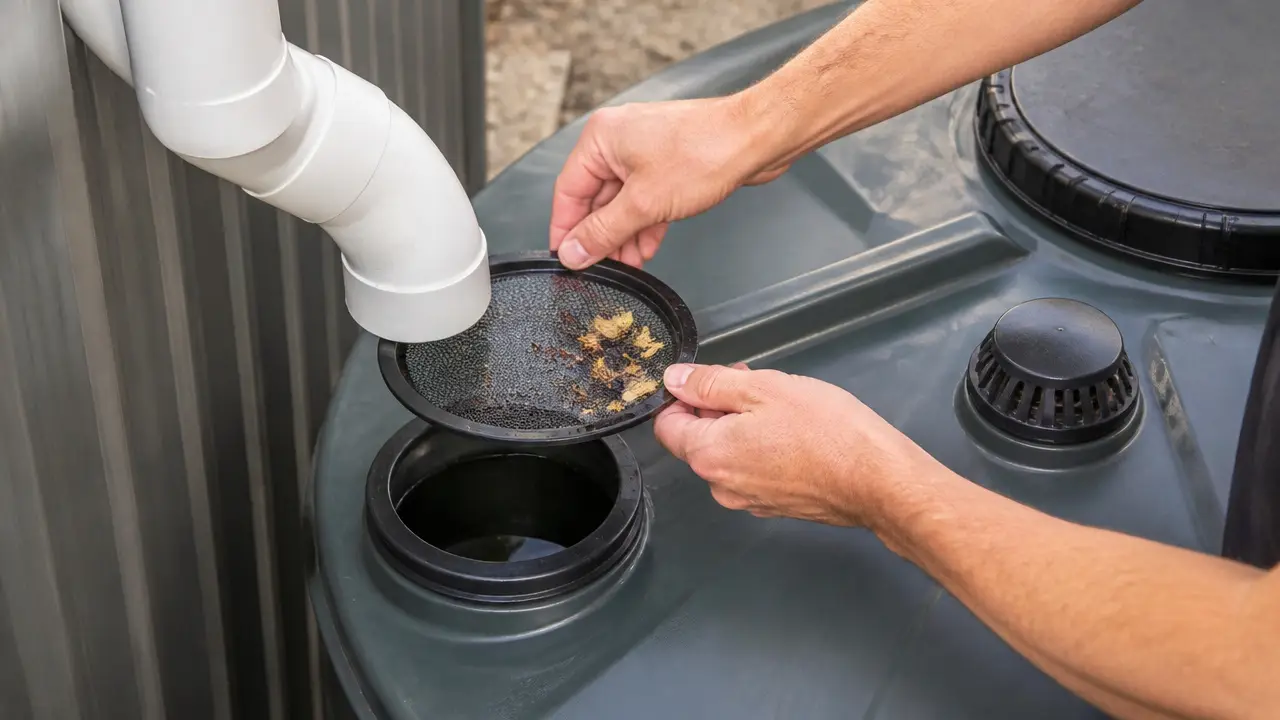
- Rain barrels
- Outdoor faucets
- Hose splitters
- Irrigation supply lines
- Tank outlets with the correct adapter
Brass is rigid, so the threads usually hold their shape better than thin plastic fittings. It also handles repeated connection and removal well.
The important part is the washer inside the female connector. Garden hose threads normally seal against this washer. Tightening the threads harder does not necessarily stop a leak if the washer is missing or damaged.
Heavy-Duty Polymer Connectors
Good-quality polymer connectors can also provide reliable seals.
They have several useful advantages. They do not corrode like some metals can, and they are often easier to handle when wet. Polymer connectors can be especially useful where metal fittings might remain exposed to fertilizers, moisture, or other corrosive conditions.
However, thin or poorly molded plastic fittings can crack, distort, or develop damaged threads.
Choose fittings with:
- Thick walls
- Clean, well-formed threads
- Replaceable washers or O-rings
- Enough grip to tighten them by hand
Quick-Connect Hose Fittings
Quick-connect fittings are useful when you regularly move one hose between several outlets or tools.
A typical quick connector has two parts. One side stays attached to the hose or faucet. The other snaps into it.
The seal is usually made by an internal O-ring, which is a small rubber ring that presses against the mating fitting.
Quick connectors work best when both halves come from the same compatible system. Mixing fittings that look similar can cause dripping, loose connections, or connectors that will not fully lock together.
For a rainwater system, quick connectors make sense where frequent hose removal is useful. A threaded connection is usually simpler for fittings that rarely need to be disconnected.
Cam-Lock Fittings for Larger Water Lines
Cam-lock fittings are useful for larger hoses and higher-flow water-transfer systems.
They are common around:
- IBC totes
- Cistern transfer hoses
- Pumps
- Tank filling systems
- Larger irrigation lines
Two cam arms lock the fitting together while a gasket creates the seal.
Cam-lock fittings are usually unnecessary for an ordinary garden hose. They make more sense when moving larger amounts of water through larger hoses.
Brass vs. Plastic Hose Connectors
Neither material automatically guarantees a leak-free connection.
| Feature | Brass | Quality polymer |
|---|---|---|
| Thread durability | Very good | Good |
| Corrosion resistance | Good, but varies by water and metal combination | Very good |
| Weight | Heavier | Lighter |
| Resistance to cracking | Very good | Depends on quality |
| Easy hand tightening | Good | Often very good |
| Best use | Long-term threaded connections | General outdoor and corrosion-prone connections |
Avoid assuming that a connector is better simply because it feels heavy. Thread quality, gasket design, compatibility, and hose condition matter just as much.
The Washer Matters More Than Many People Realize
A garden hose connection usually does not seal because the threads fit perfectly together.
The threads pull the two fittings together. A rubber washer inside the female fitting is compressed against the flat end of the male fitting.
That washer creates the seal.
If water leaks around the threaded joint, check the washer before replacing the entire connector.
A washer may need replacement if it is:
- Missing
- Cracked
- Flattened
- Hardened
- Torn
- Sitting crooked inside the fitting
Keeping a few correctly sized replacement hose washers is one of the simplest ways to prevent outdoor water leaks.
Look for the Correct Thread Type
A connector can appear to fit while still having the wrong thread.
Ordinary garden hoses commonly use garden hose-style threads. Plumbing components, pumps, tanks, and irrigation systems may use completely different thread standards.
For example, a tank outlet might require an adapter between the tank fitting and the garden hose connection.
Do not force fittings together if the threads do not turn smoothly by hand. Cross-threading can permanently damage the connector and make leaks more likely.
Do You Need Thread-Sealing Tape?
Not always.
Standard garden hose connections generally seal against a washer, so adding thread-sealing tape to the hose threads usually does not fix the real problem.
Thread-sealing tape may be appropriate on certain tapered pipe-thread connections used elsewhere in a water system. Those joints seal differently.
The important distinction is the type of fitting being connected.
If a garden hose leaks at its swivel connector, inspect the washer first.
Check the Hose End Too
Sometimes the connector is not the actual problem.
The end of the hose may be damaged.
Look for:
- Bent metal hose ends
- Cracked plastic fittings
- Loose crimped fittings
- Damaged threads
- Split hose material near the fitting
- Dirt on the sealing surface
A new connector cannot create a reliable seal against a badly damaged hose end.
Repair fittings are available for hoses with damaged ends, but the repair needs to match the hose's inside diameter and construction.
Avoid Overtightening Hose Connectors
More force does not always mean a better seal.
Most garden hose fittings should seal with firm hand tightening when the washer and mating surfaces are in good condition.
Excessive tightening can:
- Crush washers
- Strip plastic threads
- Crack fittings
- Deform hose ends
- Make the connection difficult to remove
If a fitting still leaks after reasonable tightening, disconnect it and find the cause instead of applying more force.
Consider Water Pressure
Review leak-resistant hose splitter options to verify assembly details that affect everyday performance.
Connectors are only one part of the system.
A connection that works well on a gravity-fed rain barrel may behave differently on a pressurized pump system.
A rain barrel sitting slightly above the hose outlet creates relatively little pressure. A pump supplying irrigation or household non-potable water can create much more.
If you are using a pump, make sure the hose, connector, valves, and other fittings are suitable for the operating pressure of the complete system.
A leaking connection can also be a warning that pressure is higher than a fitting or hose was designed to handle.
Best Connectors for Rain Barrels
For a basic rain barrel, a threaded hose adapter with a replaceable washer is usually the simplest arrangement.
The connection often follows this path:
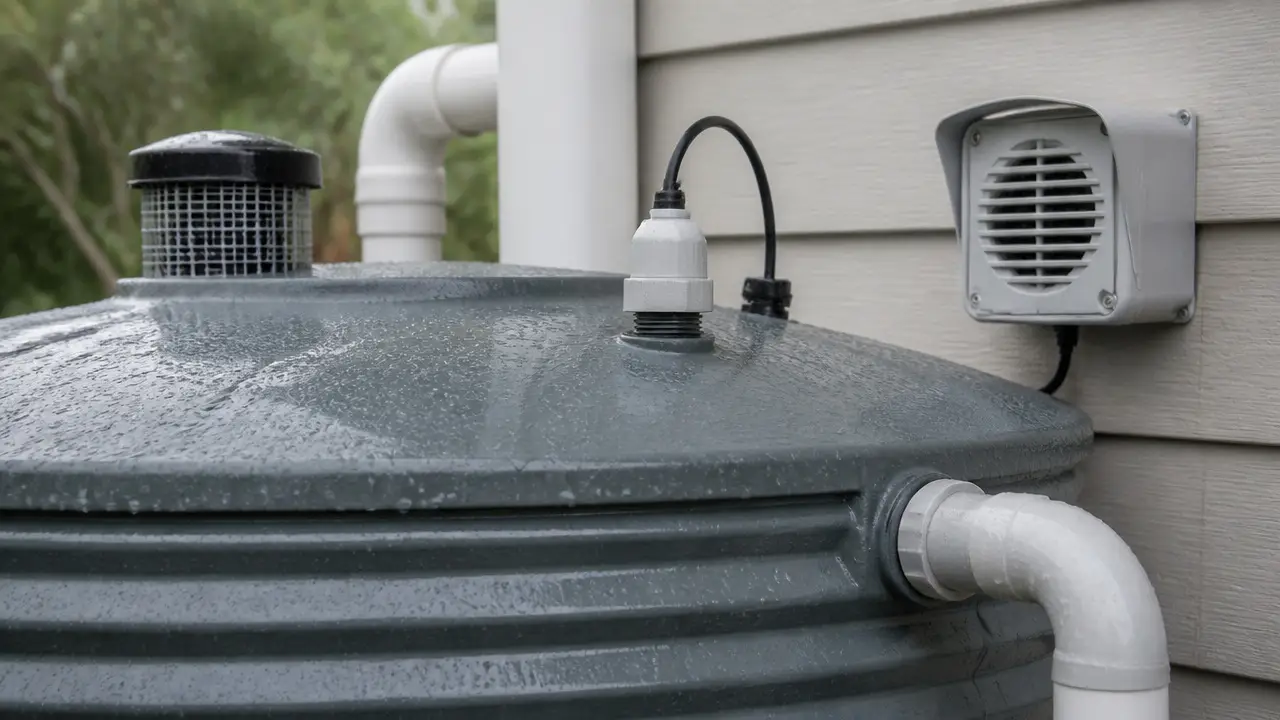
Rain barrel wall → bulkhead fitting or installed outlet → valve → hose adapter → garden hose
A bulkhead fitting is a fitting designed to pass through the wall of a tank while sealing around the opening.
If water is leaking where the fitting passes through the barrel wall, replacing the hose connector will not solve the problem. The leak may instead involve the bulkhead gasket, barrel wall, valve, or threaded adapter.
Identify exactly where the water appears before replacing parts.
Best Connectors for IBC Totes
IBC totes often have larger outlet valves that require an adapter before a garden hose can be attached.
The tote outlet, adapter, and hose fitting must all match.
Do not assume every IBC tote has the same outlet thread. Valve designs and thread types vary.
For frequent high-flow water transfers, a larger hose or cam-lock-style connection may make more sense than reducing everything immediately to a garden hose.
For light garden watering, a properly matched tote adapter leading to a hose-thread connection is usually adequate.
Best Connectors for Irrigation Systems
Threaded hose fittings are useful at the beginning of many small irrigation systems, but irrigation tubing often uses different connections farther downstream.
A typical setup might be:
Faucet or tank → hose connection → filter → pressure regulator if required → irrigation adapter → tubing
Do not force garden hose fittings onto irrigation tubing.
Drip systems often depend on specific tubing inside or outside diameters. A fitting that is only slightly wrong can leak or pull free.
What to Look for When Choosing a Hose Connector
Instead of looking for a connector advertised as "leak-proof," check how the fitting will work in your system.
A good connector should have:
- The correct thread or hose size
- Clean, accurately formed threads
- A replaceable rubber washer or O-ring
- Enough material around the fitting to resist cracking
- A secure grip for hand tightening
- Materials suitable for outdoor exposure
- Pressure capability appropriate for the system
- Compatible mating fittings
For connections you rarely remove, simplicity is often best. Each extra swivel, quick connector, splitter, and adapter adds another possible leak point.
How to Stop a Hose Connector From Leaking
First, turn off the water or pump and relieve pressure from the line.
Then disconnect the fitting and inspect both sides.
Clean dirt or grit from the sealing surfaces. Make sure a washer is installed in the female fitting and replace it if it looks damaged or permanently flattened.
Reconnect the fittings carefully by hand. They should engage smoothly without forcing the threads.
Turn the water back on and inspect the joint.
If it still leaks, determine whether the water is coming from:
- The threaded connection
- Behind the swivel fitting
- The hose-to-fitting crimp
- A valve stem
- A tank fitting
- A cracked connector body
Finding the exact leak location is more useful than repeatedly tightening the same fitting.
Protect Connectors From Freezing
Water trapped inside a connector can expand when it freezes.
That can damage:
- Hose fittings
- Splitters
- Valves
- Quick connectors
- Filter housings
- Pumps
- Tank outlets
In freezing climates, disconnect and drain equipment as required for the system. Do not assume a metal connector will survive freezing simply because it is stronger than plastic.
The weak point may be the valve, washer, housing, or nearby pipe rather than the connector itself.
A Simple Choice for Most Systems
For a normal garden hose or rain barrel, start with a well-made threaded brass or heavy-duty polymer fitting with a fresh rubber washer.
Choose quick connectors when frequent hose changes matter more than having the fewest possible joints.
For IBC totes, pumps, and larger transfer hoses, choose fittings based on the actual outlet size, thread type, flow requirement, and operating pressure.
Most importantly, avoid building a chain of unnecessary adapters. The fewer joints you have, the fewer places there are for water to escape.
Frequently Asked Questions
Are brass hose connectors less likely to leak than plastic ones?
A good brass connector is durable and holds its thread shape well, but material alone does not prevent leaks. A quality polymer connector with the correct washer can also seal reliably. Washer condition and compatibility are often more important.
Why does my hose leak at the connector even with a new fitting?
Check the washer, hose end, threads, and sealing surface. A bent hose fitting, damaged thread, loose crimp, or incorrect connector can cause leaks even when the connector itself is new.
Should I use thread-sealing tape on garden hose connectors?
Usually not on a standard garden hose joint. These connections generally seal with a washer rather than through the threads. Some tapered pipe-thread connections elsewhere in the system may require an appropriate thread sealant.
Are quick-connect hose fittings leak-proof?
They can seal well, but they depend on an internal O-ring and compatible mating pieces. Worn O-rings, dirt, damaged fittings, and mixing incompatible connector systems can cause leaks.
Why does my hose connector leak only when the pressure increases?
Higher pressure places more force on washers, seals, hose ends, and fittings. Inspect the connection and confirm that every component is suitable for the pressure produced by your water supply or pump.
Can I connect a garden hose directly to an IBC tote?
Sometimes, but usually an adapter is needed between the tote outlet and the garden hose. IBC outlet sizes and threads vary, so identify the actual valve connection before choosing an adapter.
How often should hose washers be replaced?
There is no fixed replacement schedule. Inspect them whenever a connection starts dripping or when equipment is disconnected for maintenance. Replace washers that are hard, cracked, torn, badly flattened, or missing.