As an affiliate, we may earn a commission from qualifying purchases. We get commissions for purchases made through links on this website from Amazon and other third parties.
The best weather station for farmers is not simply the one with the most sensors. It is a station that measures the weather conditions that affect your crops, irrigation, spraying, and field work, while staying reliable in the location where you install it.
For most farms, a useful station should measure air temperature, relative humidity, rainfall, wind speed, and wind direction. If you plan to use weather data for irrigation scheduling, a solar radiation sensor becomes much more valuable. Soil moisture, soil temperature, and leaf wetness sensors can also help, but they should be chosen for a specific farming need rather than added just because they are available.
Just as important, the station needs good placement, dependable power, workable communications, replaceable parts, and access to its historical data.
What Farmers Should Look for in a Weather Station
A basic backyard weather station can tell you what the weather is doing. A farm weather station should help you make decisions.
Those decisions may include:
- Whether irrigation is needed
- How much rain actually reached the farm
- Whether conditions are suitable for spraying
- Whether frost is developing
- How quickly soil may be drying
- Whether high winds could affect field work
- Whether conditions favor certain crop diseases
- How much water may be available for rainwater storage
The right sensor package depends on which of these questions matters on your farm.
Air Temperature
Air temperature is one of the most important measurements.
It can help with frost monitoring, growing-degree calculations, irrigation planning, and crop management.
The sensor should normally be protected by a radiation shield. This is a ventilated cover that keeps direct sunlight from heating the sensor and causing a falsely high reading.
Sensor placement matters as much as the sensor itself. National Weather Service guidance for standard temperature observations calls for a sensor about 5 feet above the ground, over representative ground cover and away from pavement and major obstructions.
A farmer may sometimes intentionally use a different height when monitoring a crop canopy or frost-prone area. In that case, understand that you are measuring that specific microclimate rather than standard air temperature.
Relative Humidity
Relative humidity tells you how much moisture the air contains compared with the maximum it could hold at that temperature.
Humidity becomes especially useful when combined with temperature.
Together, these measurements can help with:
- Frost and dew assessment
- Evaporation estimates
- Greenhouse management
- Crop disease monitoring
- Spray-condition decisions
A humidity sensor should also be well shielded and ventilated.
Rainfall
For many farms, the rain gauge may be the most immediately useful part of the station.
Local rainfall can vary enough that a reading from an airport or town several miles away may not represent what happened on your fields. FAO guidance also notes that locally measured climate information is preferable when accurate site-specific assessments are needed.
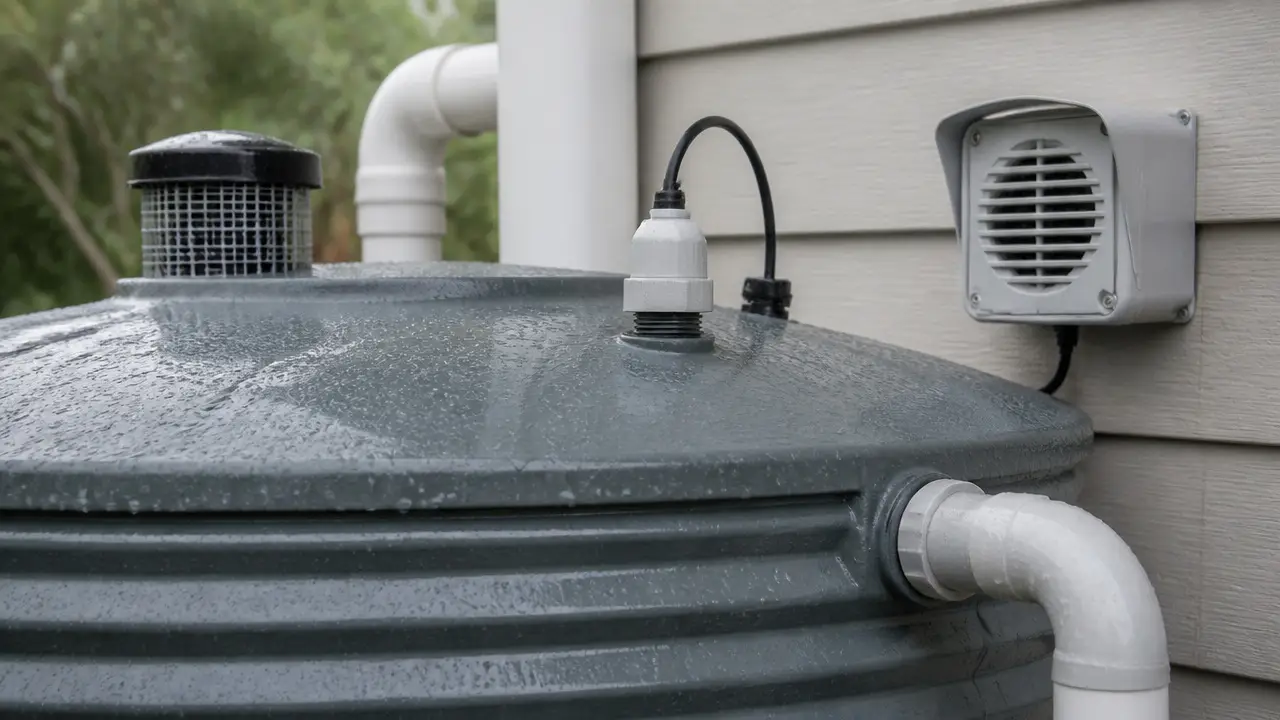
Rainfall records can help you decide when irrigation is needed and can also help with planning rainwater collection.
If you use stored rainwater, compare rainfall with tank levels and irrigation demand over time. That gives you a much better picture of how your collection system performs through wet and dry periods.
Rain-gauge placement is critical. Nearby buildings, trees, and strong turbulence can change how much rain enters the gauge. The National Weather Service specifically warns against poorly exposed rooftop locations and other sites where wind interferes with precipitation collection.
Wind Speed and Direction
Wind measurements are particularly useful for farms that spray crops.
They can also help with:
- Irrigation management
- Frost conditions
- Greenhouse ventilation
- Fire-weather awareness
- Field-work planning
- Understanding evaporation
Wind sensors need open exposure. A wind sensor mounted next to a barn, tree line, or silo may mostly measure turbulence created by that object.
Professional agricultural weather networks place strong emphasis on keeping wind instruments away from obstructions. Oklahoma Mesonet, for example, aims for rural sites with minimal wind obstructions and representative surroundings.
Do not assume that wind measured beside the farmhouse is the same as wind in an open field.
Solar Radiation
For general weather monitoring, solar radiation is optional.
For serious irrigation management, it is much more important.
Solar radiation is one of the main weather variables used to calculate reference evapotranspiration, usually written as ETo.
Evapotranspiration is the combined movement of water into the air through evaporation from surfaces and transpiration from plants.
FAO's standard Penman-Monteith method for estimating reference evapotranspiration uses:
- Solar radiation
- Air temperature
- Air humidity
- Wind speed
A station that measures all four can therefore provide much more useful information for irrigation planning than a simple temperature-and-rain station.
ETo is still not the same as the exact amount of water your crop needs. Crop type, growth stage, soil, rooting depth, available water, and irrigation efficiency also matter.
Are Soil Moisture Sensors Worth Adding?
Often, yes.
Farm weather data becomes more actionable when paired with using a soil moisture sensor for automatic irrigation.
Weather data tells you about atmospheric conditions. A soil moisture sensor tells you something different: what is happening where the roots are.
That distinction is important.
Two fields receiving the same rainfall can hold very different amounts of usable water because of differences in:
- Soil texture
- Drainage
- Organic matter
- Root depth
- Slope
- Irrigation method
A good irrigation setup may therefore use both weather data and soil measurements.
Do not automatically install one soil sensor beside the weather station and assume it represents the entire farm. The useful location and depth depend on the crop, root zone, soil profile, and irrigation system.
Multiple monitoring points may make sense where soils or irrigation zones are very different.
What About Leaf Wetness Sensors?
A leaf wetness sensor attempts to detect conditions similar to moisture sitting on a leaf surface.
These sensors can be useful where crop-disease management depends on periods of leaf wetness combined with temperature or humidity.
They are not necessary for every farm.
If you are mainly tracking rainfall and deciding when to irrigate pasture, for example, leaf wetness may add little value. For crops where disease-management models depend on wetness duration, it can be much more useful.
Placement and interpretation should follow the crop-management system or disease model you are using.
Choose the Data System as Carefully as the Sensors
A weather station is not very useful if you cannot retrieve its data when you need it.
Before choosing a system, think about how the station will communicate.
Wi-Fi
Wi-Fi can work well when the station is close enough to a house, shop, office, or other network connection.
It becomes less dependable when the station is installed far out in a field.
Do not assume the advertised wireless range will be available across your property. Buildings, trees, terrain, interference, and antenna placement can all affect the connection.
Cellular
Cellular communications can be useful for remote stations when there is dependable mobile coverage at the installation site.
Check coverage where the station will actually stand rather than assuming coverage near the farmhouse means coverage everywhere on the property.
Also check what happens when communications fail. A good farm station should ideally continue logging measurements locally rather than simply losing the data.
Long-Range Radio
Some farm systems use long-range radio between field sensors and a gateway located somewhere with internet access.
Account for practical where should you not place a rain gauge to evaluate routine maintenance needed for dependable operation.
This can be useful on larger properties or where several monitoring points are needed.
Range still depends on terrain, obstructions, antenna height, and the radio system being used.
Make Sure You Can Keep Your Data
Historical information becomes more useful with every season.
Look for a system that allows you to review and preferably export measurements such as:
- Daily rainfall
- Maximum and minimum temperature
- Humidity
- Wind
- Solar radiation
- Soil measurements
- Irrigation-related calculations
Exportable data is useful if you later change software, analyze rainfall yourself, compare weather with yields, or keep long-term farm records.
A station that only shows today's numbers on a screen gives up much of this long-term value.
Also check whether important features depend on an ongoing cloud service. Understand what measurements remain available locally if the internet connection or online service becomes unavailable.
Where Should a Farm Weather Station Be Installed?
Good siting can improve an ordinary station. Bad siting can make an expensive station misleading.
The main goal is to measure conditions that represent the area you care about.
Professional agricultural weather networks generally favor sites that are:
- Rural rather than affected by buildings and pavement
- Fairly level
- Representative of the surrounding area
- Away from unusual heat sources
- Away from large obstructions
- Accessible for maintenance
Avoid putting the complete station on a barn roof simply because installation is easy. Roofs can become unusually hot, and the building can interfere with wind and rainfall measurements.
There is also an important compromise: the ideal location for one sensor is not always ideal for another.
Temperature sensors need representative, ventilated conditions. Rain gauges need protection from severe turbulence without being blocked by nearby objects. Wind sensors need good exposure.
For high-quality measurements, follow the station manufacturer's sensor-specific installation instructions and applicable agricultural or meteorological siting guidance rather than treating the whole station as one object that can go anywhere.
One Weather Station May Not Represent a Large Farm
A single station works best when the area around it experiences reasonably similar weather.
Large farms can contain several microclimates.
Conditions may differ between:
- High and low ground
- Sheltered and exposed fields
- Orchards and open fields
- Irrigated and dry areas
- Valleys and ridges
- Areas with different soil types
Frost is a good example. Cold air can collect in low areas, so a station on higher ground may not warn you about temperatures occurring in a frost pocket.
You do not necessarily need a complete weather station in every field. In some cases, one main station plus additional temperature, soil moisture, or other sensors in critical areas is more practical.
The Best Setup for Irrigation Management
If irrigation is one of your main reasons for buying a weather station, prioritize:
- Air temperature
- Relative humidity
- Rainfall
- Wind speed
- Solar radiation
- Reliable historical logging
These weather variables provide much of the information needed for evapotranspiration-based irrigation calculations.
FAO's standard reference ETo method uses temperature, humidity, wind, and radiation.
Adding properly placed soil moisture measurements can give you another important check on what is happening in the root zone.
Think of the two sources of information this way:
Weather data estimates how strongly the atmosphere is pulling water from the landscape.
Soil monitoring helps show how much water remains where the plants can use it.
Together they are generally more informative than either one alone.
The Best Setup for Rainwater Collection
If your main goal is collecting and storing rainwater for irrigation, your needs can be simpler.
Accurate rainfall should be the priority.
Temperature can also help with seasonal records and freeze planning, while soil moisture can help determine when stored water is actually needed.
Remember that a weather-station rain gauge measures rainfall depth. It does not directly tell you how much water entered your tank.
Collection volume also depends on:
- Roof catchment area
- Actual rainfall at the roof
- Roof and gutter losses
- First-flush or diversion losses
- Overflow
- Storage capacity
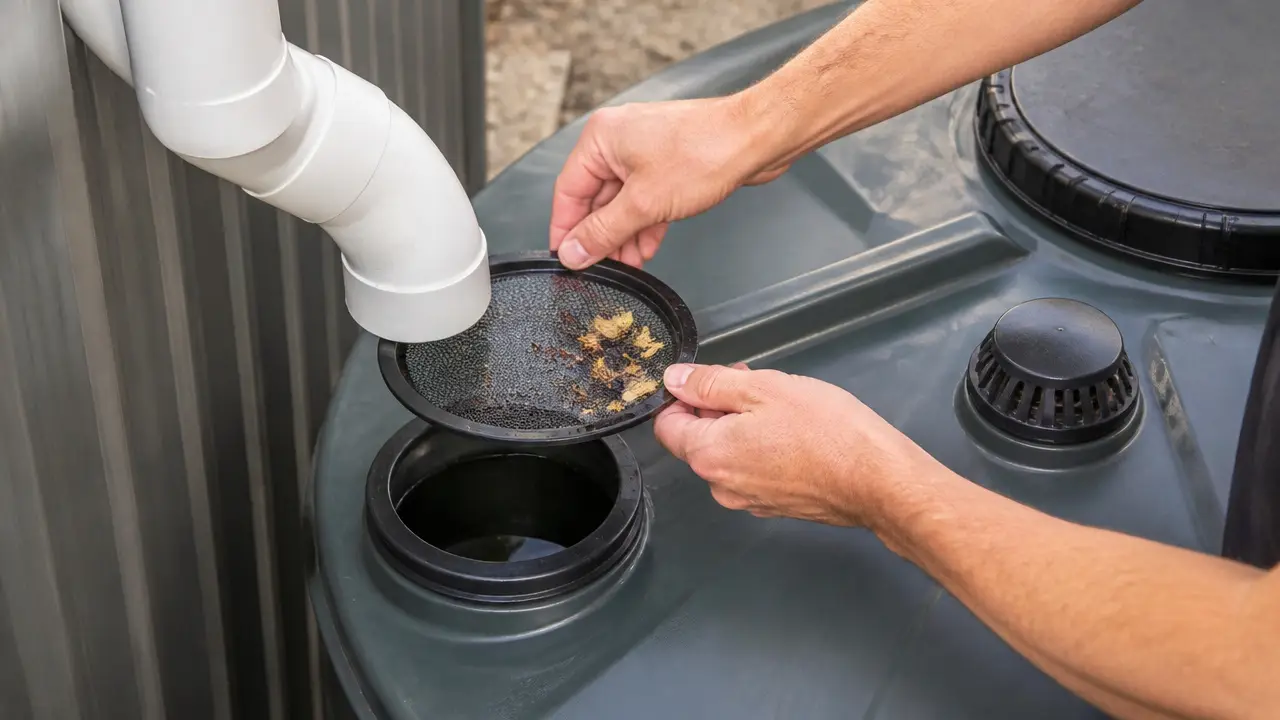
A first flush is the initial portion of roof runoff that is intentionally diverted before water enters storage. It can help remove some of the debris and contaminants washed from the collection surface, but it does not make collected rainwater automatically safe to drink.
Farm Weather Stations Still Need Maintenance
Weather instruments sit outdoors every day, so maintenance is part of owning one.
Check the station regularly for:
- Leaves, insects, or debris in the rain gauge
- Bird droppings or nests
- Dirty solar sensors
- Damaged radiation shields
- Loose mounting hardware
- Corroded electrical connections
- Weak or failed batteries
- Solar-panel shading
- Vegetation growing around the station
- New trees, buildings, or equipment affecting exposure
A rain gauge blocked by debris can quietly give incorrect readings for weeks.
Sensors can also drift or fail over time. If a measurement suddenly looks unusual, compare it with nearby trusted stations and your own field observations before making an important management decision from that number alone.
Features That Matter More Than a Long Specification List
When comparing farm weather stations, put these qualities ahead of a huge sensor count:
| Feature | Why It Matters |
|---|---|
| Properly shielded temperature and humidity sensors | Helps reduce solar-heating errors |
| Reliable rain gauge | Provides local rainfall records |
| Well-exposed wind sensors | Useful for spray and field decisions |
| Solar radiation sensor | Important for stronger ETo-based irrigation calculations |
| Local data logging | Helps prevent data loss during connection failures |
| Data export | Makes long-term records more useful |
| Replaceable sensors and parts | Makes the station easier to maintain |
| Suitable communication method | Allows reliable access from the installation site |
| Weather-resistant construction | Important for permanent outdoor use |
| Expandable sensor support | Useful if soil or crop monitoring is added later |
More sensors do not automatically mean better information. Accurate measurements from five useful sensors are more valuable than questionable measurements from fifteen poorly placed ones.
What Is the Best Weather Station for a Farmer?
For most crop farms, the best all-around choice is a field-ready, serviceable weather station that measures temperature, humidity, rainfall, wind speed, wind direction, and solar radiation, stores historical data, and can communicate reliably from the farm.
Add soil moisture or leaf wetness when those measurements support a specific management decision.
Smaller farms mainly interested in rainfall, frost, and general weather may not need solar radiation or a large sensor network. Farms using evapotranspiration for irrigation should give solar radiation, wind, humidity, and good sensor siting much greater importance.
Above all, choose the station around the decisions you want the data to support. Then make sure you have a suitable place to install it. Sensor accuracy, good siting, dependable data storage, and routine maintenance matter more than having the longest feature list.
Frequently Asked Questions
What sensors should a farm weather station have?
For general farm use, temperature, relative humidity, rainfall, wind speed, and wind direction are a strong starting point. Add solar radiation for better evapotranspiration-based irrigation management. Soil moisture and leaf wetness are useful when they address specific crop-management needs.
Do farmers need a solar radiation sensor?
Not every farmer does. Solar radiation becomes especially useful when the station will be used for reference evapotranspiration and irrigation scheduling. FAO's standard Penman-Monteith ETo method uses radiation along with temperature, humidity, and wind.
Should I put my weather station on the roof?
Usually not if you want representative farm measurements. Roofs and nearby buildings can affect temperature, wind, and rainfall readings. A representative ground-level field site with proper sensor exposure is generally better.
Is a personal weather station accurate enough for farming?
It can be useful if its sensors are suitable, installed correctly, maintained, and checked for questionable readings. Whether it is accurate enough depends on the decision being made. High-stakes spraying, frost protection, research, or regulated applications may require additional verified information or specialized instrumentation.
Is a weather station better than a soil moisture sensor for irrigation?
They measure different things. Weather measurements help estimate atmospheric water demand, while soil sensors help show conditions in the root zone. Using both can provide a clearer picture for irrigation management.
How many weather stations does a farm need?
A small farm with similar terrain may be represented reasonably well by one station. Large farms or properties with major elevation, exposure, irrigation, or crop differences may benefit from additional monitoring points. These do not always need to be complete weather stations.
Can a farm weather station predict the weather?
A local station measures conditions at your farm and creates a useful historical record. Some systems combine those measurements with outside forecasts, but a single farm station does not replace professional regional forecasting. Use official forecasts and warnings when hazardous weather is possible.