As an affiliate, we may earn a commission from qualifying purchases. We get commissions for purchases made through links on this website from Amazon and other third parties.
A water level sensor often lasts about 5 to 10 years in a well-installed water system, but there is no single lifespan that applies to every sensor.
Some simple sensors wear out sooner because they have moving parts. Others can stay in service for more than 10 years because they measure water without mechanical movement. Water quality, moisture, corrosion, electrical surges, freezing, dirt, installation, and how often the sensor operates can all shorten its useful life.
For a rainwater tank or cistern, it is better to judge the sensor by its type, condition, and reading accuracy than by age alone.
Typical Water Level Sensor Lifespan
The following ranges are useful for planning, not guaranteed replacement dates.
| Sensor type | General planning range | Common life-limiting problems |
|---|---|---|
| Float switch | About 3–10+ years | Mechanical wear, sticking, cable damage, corrosion |
| Submersible pressure sensor | About 5–10+ years | Moisture entry, cable damage, corrosion, measurement drift |
| Ultrasonic sensor | About 7–15+ years | Electronics failure, condensation, buildup, weather exposure |
| Radar sensor | Often 10+ years | Electronics, wiring, surge damage, severe environmental exposure |
| Conductive or probe sensor | About 5–10+ years | Scale, corrosion, deposits, damaged wiring |
These ranges can vary greatly. A sensor installed in a clean indoor tank may last much longer than the same type installed outdoors in dirty water with frequent lightning, freezing weather, or constant pump cycling.
Manufacturers also rate different sensors in different ways. For example, some float switches are rated by the number of switching cycles rather than years. One industrial float-switch specification lists more than 100,000 switching operations, while other designs may be rated much higher.
The Sensor Type Makes a Big Difference
Float switches
A float switch moves up and down with the water level. The movement opens or closes an electrical switch.
They are common in:
- Rainwater tanks
- Sumps
- Pump-control systems
- Cisterns
- IBC totes
- Low-water pump protection
Float switches are simple, but they have mechanical parts. The float may eventually stick, the hinge or cable may wear, or the internal switch can reach its cycle limit.
In clean water, a good float switch can provide many years of service. Heavy sediment, algae, tangled cables, or frequent switching can shorten that life.
If a float controls a pump that starts many times each day, its cycle rating may matter more than its age.
Submersible pressure sensors
A submersible level sensor normally sits near the bottom of the tank. It measures the pressure created by the water above it and converts that pressure into a water-level reading.
Many are designed for permanent immersion. Industrial versions may use sealed stainless-steel housings and IP68 construction for continuous underwater service.
These sensors have no float that must move, but other problems can develop over time.
Possible failure points include:
- Damaged cables
- Water entering a vent tube
- Corrosion
- Lightning or electrical surges
- Deposits on the sensing surface
- Gradual measurement drift
Drift means the reading slowly becomes less accurate even though the sensor still appears to work.
Some pressure-sensor specifications describe long-term stability as a percentage of full-scale measurement per year. That is one reason a sensor may need checking before it completely fails.
Ultrasonic water level sensors
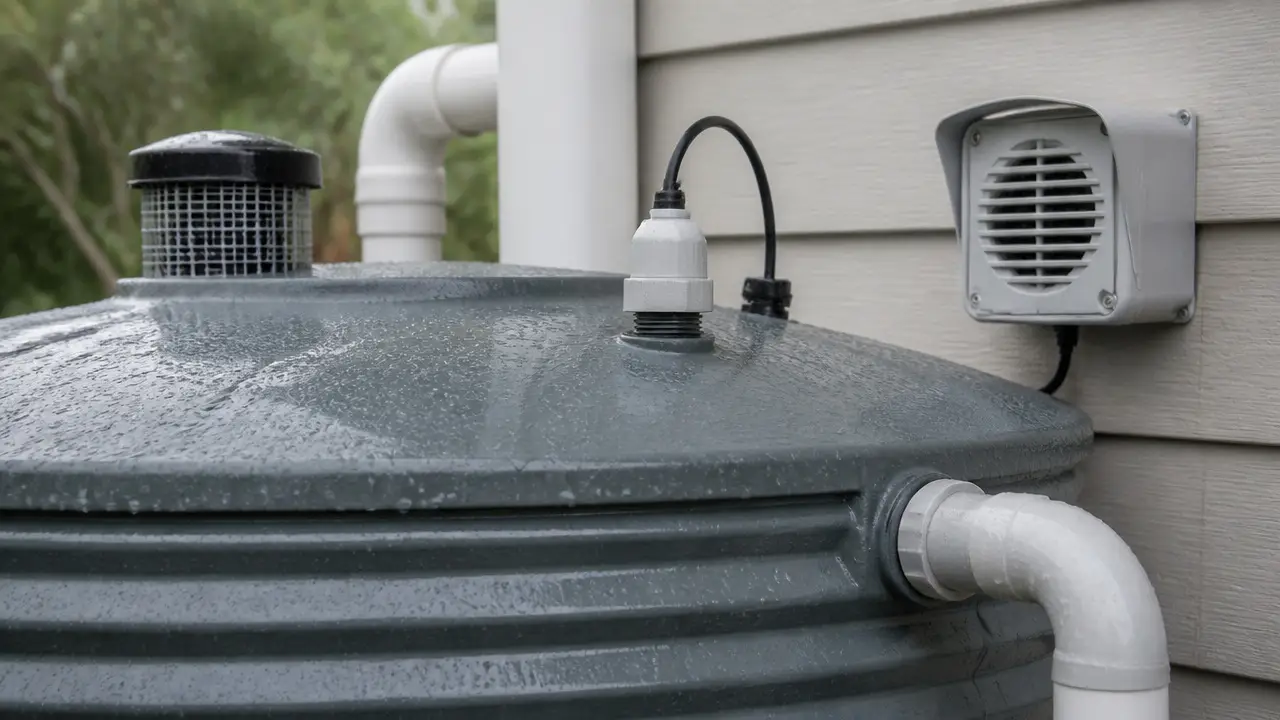
An ultrasonic sensor is normally mounted above the water rather than submerged in it.
It sends a sound pulse toward the water surface and measures how long the reflected signal takes to return. The controller then calculates the distance to the water.
Because the sensor does not normally touch the water, there are fewer problems with corrosion and submerged moving parts. Ultrasonic level measurement is commonly described as a non-contact, low-maintenance technology with long service life.
That does not mean the sensor can be ignored.
Condensation, dirt, splashing, and deposits on the sensor face can weaken the ultrasonic signal and cause poor readings.
Outdoor rainwater tanks can also expose the electronics and wiring to heat, moisture, insects, and electrical storms.
Radar water level sensors
Radar sensors are another non-contact option. They send electromagnetic signals toward the water instead of sound waves.
They have no mechanical float and normally do not touch the stored water. This can make them useful where long life and low maintenance are important.
Radar can also handle some conditions that cause difficulty for ultrasonic sensors. For example, condensation generally has less effect on radar measurements than on ultrasonic measurements.
For a basic household rainwater tank, however, a radar system may provide more capability than is actually needed.
What Shortens a Water Level Sensor's Life?
Water getting into electrical parts
Moisture is one of the biggest problems in outdoor water systems.
A sensor may be designed for wet conditions while its:
- Cable splice
- Connector
- Junction box
- Controller
- Power supply
is not.
A waterproof sensor connected through a poorly protected splice can still fail early.
Keep electrical connections within the environmental rating required by the equipment. Do not assume a connector is suitable for burial, immersion, or outdoor exposure simply because the sensor itself is waterproof.
Sediment and organic buildup
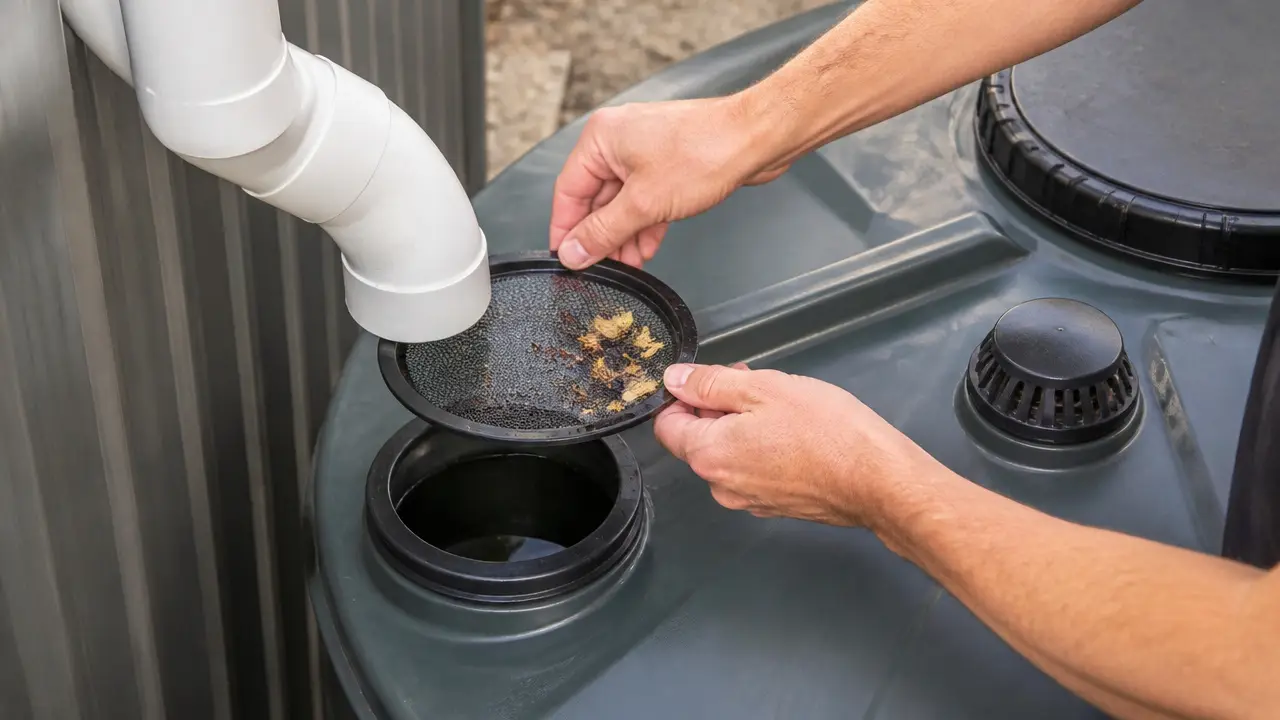
Rainwater tanks can collect fine sediment even when gutters, screens, and first-flush devices are used.
A first flush device diverts some of the first roof runoff from a storm so that part of the roof debris does not immediately enter the storage tank.
Sediment can interfere with floats and sensors mounted near the tank bottom. Slime or algae can also make moving components stick.
Keeping the tank and inlet system reasonably clean can therefore help the level sensor as well as the rest of the system.
Corrosion
A sensor that touches water needs suitable wetted materials.
Stainless steel, plastics, seals, cables, and other materials do not all tolerate the same water chemistry or operating environment.
Corrosion risk increases when incompatible metals, aggressive water, chemicals, or damaged protective surfaces are involved.
For water intended for household or drinking-water treatment systems, also confirm that materials touching the water are appropriate for the intended use. A level sensor does not make stored rainwater potable.
Potable means suitable for drinking.
Too many switching cycles
This is especially important for float switches.
Suppose one float activates only when a large rainwater tank reaches a high or low point. It may operate only occasionally.
Another float may control a small pump tank and switch dozens of times every day.
Even if both sensors are the same age, the heavily cycled switch has done much more mechanical work.
Electrical surges and lightning
Long outdoor cables can expose sensor electronics to electrical surges.
Reviewing key facts about the lifespan of a home weather station helps compare connection requirements before hardware is ordered.
This is particularly important with:
- Remote tanks
- Bore or well-style installations
- Outdoor cisterns
- Long sensor cables
- Electronic transmitters
Use surge protection when recommended by the sensor or control-system manufacturer.
If a water-level sensor connects to mains-voltage pump controls, have unsafe or exposed mains wiring repaired by a qualified electrician.
Freezing
Freezing water can damage floats, housings, fittings, cables, and mounting hardware.
A sensor that works normally during summer may fail after repeated freeze-thaw cycles.
In freezing climates, the sensor needs to be installed as part of the tank's overall winter plan rather than treated as a separate component.
How to Tell When a Water Level Sensor Is Wearing Out
A failing sensor does not always stop working completely.
Watch for changes such as:
- The displayed level suddenly jumping
- A tank showing full when it is partly empty
- A tank showing empty when water is present
- A pump starting or stopping at the wrong level
- A float sticking
- Readings slowly becoming less accurate
- Frequent alarms with no obvious water-level change
- Intermittent readings after rain
- Visible cable or connector damage
- Corrosion around the sensing area
Before replacing the sensor, check the whole measurement path.
The problem could be the sensor, but it could also be the wiring, controller, power supply, mounting position, or buildup around the sensing surface. Level-instrument manufacturers similarly recommend considering the entire measuring point when troubleshooting rather than assuming the sensing element itself has failed.
Check Accuracy Instead of Replacing by Age Alone
A five-year-old sensor that still reads correctly may be more useful than a two-year-old sensor with water inside its connector.
A simple check for a rainwater tank is to compare the sensor reading with another reasonable estimate of the actual water level.
For example, compare:
- The displayed level.
- A safe visual level indication or known tank-level reference.
- The expected reading based on the tank's dimensions.
Do not enter a tank to make this measurement. Water-storage tanks and cisterns can present confined-space hazards.
If readings differ consistently, investigate calibration, mounting, buildup, wiring, and sensor condition.
There is no universal calibration interval for every level sensor. Temperature changes, deposits, mechanical stress, environmental conditions, accuracy needs, and manufacturer recommendations all affect how often a sensor should be checked.
How to Make a Water Level Sensor Last Longer
A few installation choices can make a large difference.
Match the sensor to the job
Do not choose a sensor based only on whether it can detect water.
Check:
- Tank depth
- Sensor measuring range
- Water temperature
- Outdoor or indoor installation
- Submersion rating
- Cable length
- Controller compatibility
- Output signal
- Water-contact materials
A sensor designed for a shallow indoor tank may not be suitable for a deep outdoor cistern.
Keep cables protected
Support cables so their weight does not constantly pull against electrical connections.
Protect them from:
- Sharp tank edges
- Rodents
- Mowers and garden tools
- Sun exposure when the cable is not UV-rated
- Pinching
- Constant movement
Cable failure can end the useful life of an otherwise healthy sensor.
Reduce sediment entering the tank
Roof screens, gutter cleaning, suitable inlet screening, and appropriate first-flush management can reduce debris entering the tank.
These steps do not make rainwater safe to drink, but they can reduce the amount of material that eventually collects around tank equipment.
Inspect moving floats
A float needs enough open space to move freely.
Keep it away from:
- Tank walls
- Pipes
- Pump cables
- Intake hoses
- Floating debris
A float that cannot move may look like an electrical failure even though the switch still works.
Follow the manufacturer's operating limits
Temperature, pressure, water depth, electrical load, cable type, and enclosure rating all matter.
Exceeding one of these limits can shorten sensor life even when the sensor initially appears to operate normally.
When Should You Replace a Water Level Sensor?
Replacement makes sense when the sensor:
- Gives unreliable readings after cleaning and troubleshooting
- Has visible water intrusion
- Has badly damaged wiring
- Shows serious corrosion
- Repeatedly sticks
- Cannot hold calibration
- Causes unreliable pump control
- Is no longer compatible with the controller
- Has reached a manufacturer-specified cycle or service limit
A water-level indicator used only for convenience can sometimes tolerate a minor reading error.
A sensor that protects a pump from running dry deserves more attention. Incorrect low-water information can affect the pump as well as the sensor.
If the sensor controls critical household water equipment, pressurized pumps, mains-voltage equipment, or an automatic backup-water system, have persistent control problems checked by a qualified professional.
Frequently Asked Questions
How many years does a water level sensor last?
Many homeowner water-level sensors can provide roughly 5 to 10 years of service, while some well-protected sensors last longer than 10 years. Sensor type, water conditions, installation, electrical protection, and maintenance matter more than age alone.
Do water level sensors wear out?
Yes. Mechanical sensors can wear from repeated movement and switching. Electronic sensors can eventually suffer from moisture, corrosion, electrical surges, component aging, or measurement drift.
How long does a float water level sensor last?
A float switch can often last several years and may exceed 10 years in favorable clean-water conditions. Its switching-cycle rating, water quality, cable condition, and ability to move freely are important factors.
Do ultrasonic water level sensors last longer than float switches?
They can. Ultrasonic sensors normally have no moving float and do not need to touch the water. That removes some mechanical wear and corrosion risks. However, electronics, condensation, dirt, electrical surges, and outdoor exposure can still cause failure.
How often should a water level sensor be replaced?
There is no universal replacement schedule. Check the manufacturer's instructions and replace the sensor when its readings become unreliable, it is physically damaged, or it can no longer operate within the accuracy needed by the system.
Can a dirty water tank damage a level sensor?
It can. Sediment, algae, scale, and other deposits can make floats stick or interfere with some sensing surfaces. Keeping debris out of the tank and periodically inspecting accessible equipment can help.
Can I use the same water level sensor in a drinking-water tank?
Only if its materials and installation are suitable for that intended use. A sensor being waterproof does not automatically mean its wetted materials are appropriate for potable-water applications. The sensor also does not determine whether collected rainwater is safe to drink.