As an affiliate, we may earn a commission from qualifying purchases. We get commissions for purchases made through links on this website from Amazon and other third parties.
For most rainwater users, La Crosse is the better choice if you mainly want simple rainfall tracking, an easy indoor display, and room to add other home sensors. AcuRite is often better if you want a fuller backyard weather station that tracks rain along with wind, temperature, humidity, and other weather conditions.
Neither brand is automatically more accurate across every model. The exact sensor, where you install it, whether it is level, and how well you keep it clean can matter as much as the name on the unit.
As of September 1, 2026, both brands sell equipment that can measure actual rainfall at your property rather than relying only on weather forecasts. That makes either one useful for gardeners and rainwater harvesting systems.
La Crosse vs. AcuRite at a Glance
| Feature | La Crosse | AcuRite |
|---|---|---|
| Simple rainfall monitoring | Very good | Very good |
| Full backyard weather stations | Very good | Excellent |
| Clear indoor displays | Strong | Strong |
| Standalone rain gauges | Available | Several choices available |
| Rainfall history | Available on supported models | Available on supported models |
| Phone monitoring | La Crosse View on compatible systems | AcuRite NOW or My AcuRite, depending on system |
| Add-on home sensors | Strong point | Available on supported systems |
| Best fit | Rainfall and home monitoring | Weather-focused monitoring |
The important point is that model compatibility matters more than brand alone. A rain sensor made for one display may not work with another display, even when both carry the same brand.
Why La Crosse May Be Better for Rainwater Tracking
La Crosse is a strong choice when your main goal is answering simple questions such as:
- How much rain fell today?
- How long has it been since the last rain?
- How much rain fell this month?
- Should I irrigate the garden?
- Does the rainfall match what I expected my rain barrel to collect?
Its current digital rain gauge can display rainfall by hour, 24 hours, seven days, month, year, and total. It also keeps monthly rainfall history for the previous 12 months. The outdoor collector uses a self-emptying rain sensor, so you do not have to manually empty it after every storm.
That type of history can be especially useful around a rainwater system. You can compare recorded rainfall with changes in your tank level and learn how your roof and storage system respond to different storms.
La Crosse also has a broad sensor system
Compatible La Crosse stations can work with added sensors for rainfall, temperature, humidity, water leaks, pools, probes, and other conditions. Its connected weather stations use the La Crosse View app for remote readings, graphs, alerts, and supported sensor data.
That can be useful if rainfall is only one thing you want to watch. For example, someone with a cabin might monitor outdoor temperature along with rainfall and a leak sensor inside.
Do not assume any La Crosse sensor will connect to any La Crosse display. La Crosse specifically tells users to check sensor compatibility, and some older rain sensors are not interchangeable with newer versions.
Why AcuRite May Be Better for a Full Weather Station
AcuRite has a strong weather-station focus.
Its current advanced station families include Optimus, Atlas, and Iris. These systems can measure rainfall along with temperature, humidity, wind speed, and wind direction. Some systems add other weather measurements as well.
That makes AcuRite attractive if rainfall is only one part of what you want to understand.
For example, a gardener may want to know that 0.5 inch of rain fell but may also care about heat, humidity, and wind because those conditions affect how quickly soil dries.
AcuRite also offers dedicated rain gauges
You do not have to buy a complete weather station just to measure rain. AcuRite currently lists both manual and digital rain gauges, including models with self-emptying wireless collectors.
Some digital models keep daily, weekly, monthly, yearly, or other rainfall history depending on the exact model.
This gives AcuRite a good range of choices for someone who wants anything from a very simple gauge to a larger home weather system.
Which Brand Has the Better App?
This depends on how important phone monitoring is to you.
La Crosse currently uses La Crosse View for its compatible connected systems. The app can provide remote monitoring, graphs, data history, alerts, and device sharing. Some more advanced features require its PLUS subscription.
AcuRite's setup is a little more divided as of September 1, 2026. Optimus uses the newer AcuRite NOW app, while Atlas and Iris still use My AcuRite. AcuRite says it plans to move existing My AcuRite systems to AcuRite NOW without requiring new hardware.
If having one established app across several kinds of home sensors matters to you, La Crosse may currently feel simpler.
If your main interest is a dedicated weather station, AcuRite's app situation may be less important than choosing the weather sensor package you actually need.
Which Is More Accurate for Rainfall?
There is no good reason to declare one whole brand more accurate than the other.
The selection guide “4 Best Digital Rain Gauges for Rainwater Tracking” connects this choice to the way the complete rainwater system performs.
Accuracy varies by model. Installation can also cause large errors.
Most automatic home rain gauges use a tipping-cup mechanism. Rain enters a collector and fills a small cup. When the cup reaches a set amount, it tips and records rainfall. The next cup then begins filling.
For this system to work properly, the collector needs to be:
- Level
- Firmly mounted
- Open to falling rain
- Away from roof runoff
- Away from sprinklers
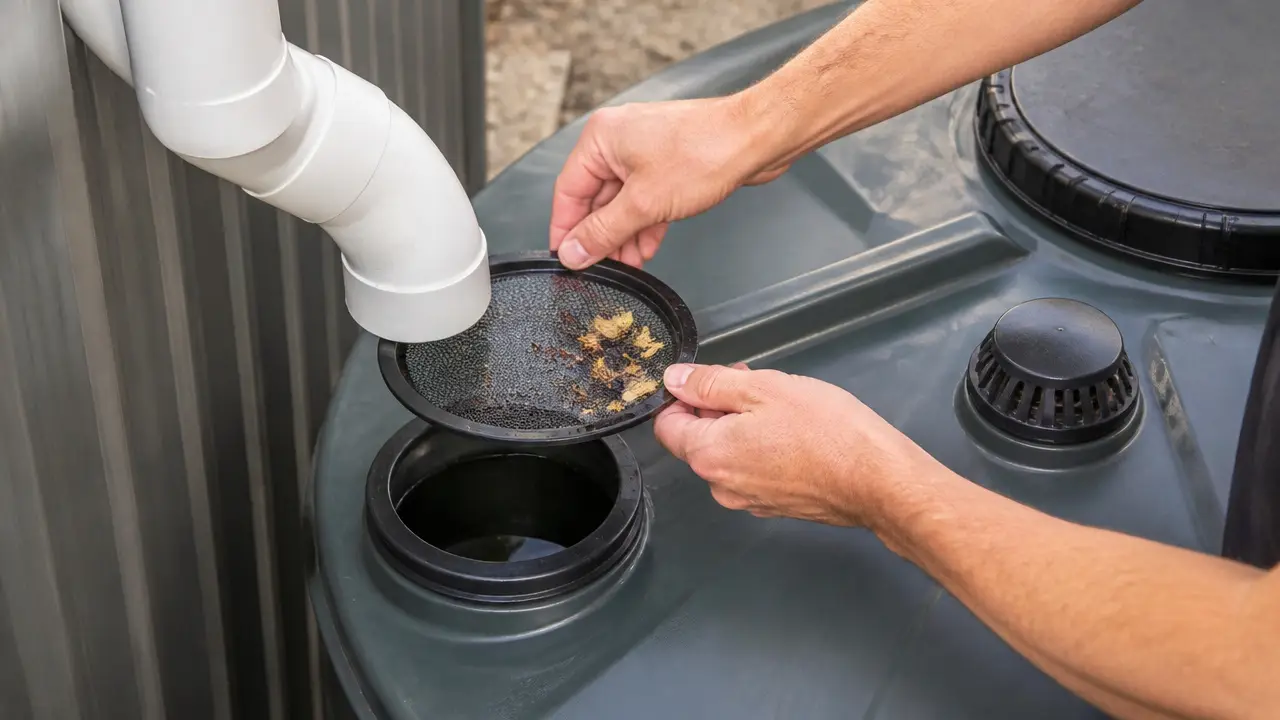
- Kept free of leaves, insects, dirt, and other debris
AcuRite, for example, specifically states that its wireless rain collector needs to be secured to a flat, level surface for accurate measurements.
So a well-installed midrange gauge can give more useful readings than a more advanced station placed under a tree or mounted at an angle.
Which Is Better for a Rainwater Harvesting System?
For rainwater harvesting, you usually do not need every weather measurement a full station can provide.
The most useful feature is often reliable local rainfall history.
Suppose your roof collection area is 1,000 square feet. Your rain gauge tells you that a storm produced 1 inch of rain. That information can help you estimate how much water was available for collection.
The theoretical calculation is:
Gallons = rainfall in inches × roof area in square feet × 0.623
For the example:
1 × 1,000 × 0.623 = about 623 gallons
That is the theoretical amount falling on the roof. Your tank will normally receive less because of first-flush diversion, gutter losses, splash, leaks, overflow, and other system losses.
A first flush device diverts the first portion of roof runoff so some of the dirt and debris washed from the roof does not immediately enter storage.
A rain gauge is therefore useful for planning, but it does not directly measure how many gallons reached your tank.
Reviewing performance of digital rain gauges helps evaluate likely upkeep demands over the system’s service life.
For simple rainwater tracking, La Crosse has a slight practical advantage when you want rainfall history presented clearly on an indoor display along with an expandable home-monitoring system.
For someone who also wants a serious backyard weather station, AcuRite is often the stronger fit.
Do You Need Wi-Fi?
Not necessarily.
If you simply want to know how much rain fell before deciding whether to water the garden, a standalone wireless rain gauge may be enough.
Wi-Fi becomes more useful if you want to:
- Check rainfall while away from home
- View longer-term graphs
- Receive weather alerts
- Compare storms over time
- Share readings with another person
- Monitor several sensors from one app
A cabin or second property may benefit more from remote monitoring than a rain barrel located beside your house.
Do not buy a Wi-Fi system simply because it has more features. Each added connection, sensor, account, and app adds another part that may need setup or troubleshooting.
Think About Sensor Range Before Buying
Wireless range specifications usually describe ideal or open-air conditions.
Walls, metal siding, masonry, appliances, and other obstacles can reduce the real range.
For example, current La Crosse rain sensors advertise long open-air transmission ranges, while some AcuRite standalone rain collectors specify shorter ranges. Exact numbers vary by model.
The feature comparison “4 Best Wireless Rain Gauges for Remote Rainfall Monitoring” clarifies a related design decision that can affect day-to-day operation.
Do not choose based only on the largest advertised number.
Think about the actual path between the rain collector and the display or receiver. A sensor mounted 50 feet away through several concrete walls may have a harder connection than one 100 feet away across an open yard.
What About Freezing Weather?
Automatic rain collectors need extra attention in freezing climates.
Some AcuRite standalone rain collectors specifically state that they should not be used below freezing.
More generally, do not assume a normal tipping-cup rain gauge can correctly measure snow, sleet, or freezing rain as liquid precipitation. Frozen water may sit in the collector instead of flowing through the tipping mechanism.
Check the operating limits for the exact model you are considering.
A weather station's outdoor temperature sensor may continue operating well below freezing even when its rainfall collector cannot correctly measure frozen precipitation. Those are separate functions.
Maintenance Matters With Either Brand
Neither La Crosse nor AcuRite eliminates rain-gauge maintenance.
Check the collector from time to time for:
- Leaves
- Seeds
- Pine needles
- Insects
- Bird debris
- Mud or dust
- A blocked funnel
- A tipping mechanism that cannot move freely
- A collector that has shifted out of level
Also watch the batteries and wireless connection.
If your gauge suddenly reports much less rain than a nearby manual gauge, inspect and clean it before assuming the electronics have failed.
A simple manual rain gauge can even be useful as a comparison tool. If your automatic gauge repeatedly differs by a large amount, check the installation, cleanliness, leveling, and manufacturer calibration instructions.
La Crosse or AcuRite: Which Should You Choose?
Choose La Crosse if you mainly want a clear rainfall display, useful rainfall history, and the option to expand into other home sensors.
Choose AcuRite if you want rainfall to be part of a more complete backyard weather station, especially if wind and other weather readings matter to you.
For a basic rain barrel or garden system, either brand can do the job. You probably do not need the most advanced weather station. A reliable rain gauge with useful rainfall history may tell you everything you need.
Before buying, check three things:
- Does the exact model measure rainfall? Not every weather station does.
- Are the sensor and display compatible? Matching brands do not guarantee compatibility.
- Does it give the rainfall history you need? Daily totals may be enough for irrigation, while monthly records are more useful for tracking a rainwater system over time.
The better choice is the system that measures the information you will actually use and that you can install, clean, and maintain properly.
Frequently Asked Questions
Is La Crosse better than AcuRite?
Neither brand is better for everyone. La Crosse is a strong choice for simple rainfall monitoring and expandable home sensors. AcuRite is especially strong when you want rainfall as part of a complete backyard weather station.
Which is better for measuring rain, La Crosse or AcuRite?
Both offer automatic rain gauges. For rainwater harvesting, look at the exact model's rainfall history, sensor compatibility, wireless connection, and maintenance needs instead of choosing by brand alone.
Are La Crosse and AcuRite rain sensors interchangeable?
No. Do not expect sensors from the two brands to work together. Even sensors from the same brand may only work with certain displays or receivers. Check the manufacturer's compatibility information before adding or replacing a sensor.
Can I use a weather station to estimate rainwater collection?
Yes. Use your measured rainfall together with the roof collection area. One inch of rain falling on 1 square foot is about 0.623 gallon. Actual tank collection will be lower because of first-flush diversion and other losses.
Do automatic rain gauges need to be cleaned?
Yes. Leaves, insects, dirt, and other debris can block the collector or tipping mechanism. A dirty rain gauge may report less rainfall than actually fell.
Will a La Crosse or AcuRite rain gauge measure snow?
Do not assume it will. Standard tipping-cup rain collectors are designed around liquid water, and some models have specific temperature limits. Check the instructions for the exact model if you need winter precipitation measurements.
Do I need Wi-Fi for a rain gauge?
No. A basic wireless rain gauge with an indoor display is enough for many gardens and rainwater systems. Wi-Fi is useful when you want remote readings, graphs, alerts, or longer-term data access.