As an affiliate, we may earn a commission from qualifying purchases. We get commissions for purchases made through links on this website from Amazon and other third parties.
“Food grade” means a material is suitable for contact with food under its intended conditions of use. It does not simply mean the item is made from a certain type of plastic or looks clean.
For rainwater systems, this matters most when choosing tanks, barrels, IBC totes, liners, pipes, hoses, seals, and fittings. A container that once held food may be useful for some rainwater applications, but that fact alone does not make the whole system suitable for drinking water.
What Does Food Grade Mean?
In the United States, the FDA regulates substances that come into contact with food. These are called food contact substances. They can include the materials used in bottles, containers, storage tanks, coatings, seals, adhesives, and food-processing equipment.
A material used for food contact must be suitable for its specific intended use. The FDA considers factors such as:
- What food or liquid touches the material
- How long contact lasts
- Whether the material is heated
- The temperature during use
- Whether chemicals can migrate from the material into the food
That last point is important. A material that works for storing a cool, dry food may not necessarily be suitable for holding a liquid for months or for exposure to high temperatures. FDA food-contact authorizations can include specific conditions of use.
So “food grade” is better understood as suitable for a particular food-contact use, not as a universal property that makes an item safe for every possible purpose.
How Can You Tell If a Container Is Food Grade?
The best evidence comes from the manufacturer or supplier.
Look for documentation stating that the finished container is intended for food contact. This may include a specification sheet, compliance statement, certification, or other documentation tied to the exact container.
Do not rely only on its color, recycling symbol, or plastic type.
The Plastic Type Is Not Enough
Many food containers are made from plastics such as high-density polyethylene, commonly called HDPE. Rain barrels and water tanks are often made from similar materials.
But knowing that a tank is made from HDPE does not prove that the finished tank is food grade.
The complete material can contain:
- Colorants
- Stabilizers
- Processing aids
- Recycled material
- Additives
- Coatings
- Other ingredients
The FDA explains that the regulatory status of a food-contact material depends on the substances that make up the material and how they are used.
This is why two containers made from the same general type of plastic may not have the same approved uses.
Does a Recycling Number Prove a Container Is Food Grade?
No.
A recycling number identifies a general category of plastic. For example, a container marked with a number 2 is generally made from HDPE.
That does not tell you whether the finished container was manufactured for food contact.
It also does not tell you:
- What additives were used
- Whether recycled material was included
- What the container originally held
- Whether the container is suitable for long-term water storage
- Whether its fittings and seals are suitable for the same use
When food-contact suitability matters, check the manufacturer's documentation rather than relying on the recycling symbol.
Is Food Grade the Same as Potable-Water Safe?
No. This distinction is especially important in rainwater systems.
Potable means intended for drinking.
A food-grade container may be suitable for holding certain foods or beverages, but that does not automatically mean the container or every component attached to it is certified for use in a drinking-water system.
For drinking-water equipment, standards specific to potable-water contact may apply. For example, NSF/ANSI/CAN 61 evaluates the health effects of materials and components used in drinking-water systems.
If you are building a system intended to provide drinking water, look beyond a simple “food grade” claim. Check the requirements that apply to the tank, piping, pump, fittings, coatings, seals, and treatment equipment.
And remember that a suitable storage tank does not make collected rainwater drinkable.
Roof runoff can pick up dirt, animal waste, microbes, metals, roofing contaminants, and other material before it reaches the tank. Drinking-water use should be treated as a whole-system decision involving suitable collection materials, prefiltration, treatment, current laboratory testing, maintenance, and applicable local requirements.
Are Food-Grade Barrels Good for Rainwater?
They can be a good choice, especially when you want to reduce uncertainty about what the container material was designed to contact.
For garden irrigation and other non-potable uses, a sound food-grade barrel is often preferable to an unknown industrial container.
But check its history.
A used barrel should have a known previous use. A food-grade barrel that previously held something like a food ingredient is very different from a barrel with an unknown history.
Avoid using containers for water storage when you cannot establish what they previously contained.
Cleaning cannot reliably turn an unknown chemical drum into a suitable water-storage container.
Inspect the Barrel Too
Food-contact status does not mean a used barrel will remain in good condition forever.
Check for:
- Cracks
- Deep scratches
- Damaged seams
- Brittle plastic
- Strong remaining odors
- Unidentified residue
- Damaged lids
- Leaking fittings
Sunlight can also shorten the life of some plastics. An outdoor rain barrel should be suitable for its exposure conditions, not merely for food contact.
Are Used IBC Totes Food Grade?
Some IBC totes are manufactured for food-related uses, but you should verify the specific tote.
An IBC tote, or intermediate bulk container, is a large container commonly used to transport liquids. Many have a plastic inner bottle surrounded by a metal cage.
A tote should not be considered food grade simply because another tote that looks identical was used for food.
Before using a used IBC tote, check its labeling and paperwork if available. Confirm:
- The tote's original intended use
- What it previously contained
- Whether it has been reused for anything else
- Whether the inner bottle is damaged
- Whether the valve and seals are compatible with the planned use
Review a suitable container for storing drinking water to interpret a filtration approach matched to the proposed household use.
For rainwater used only on landscaping, the requirements may be different from those for water that could enter household plumbing.
For drinking-water applications, a used tote needs much more careful evaluation. “Food grade” by itself is not enough to establish that the collected and stored water is potable.
Do Fittings and Hoses Need to Be Food Grade Too?
The intended use of the whole water path matters.
Water may contact more than the tank. It can also touch:
- Tank liners
- Bulkhead fittings
- Valves
- Gaskets
- Sealants
- Pipes
- Hoses
- Pump parts
- Filter housings
A bulkhead fitting is a fitting that passes through the wall of a tank so a pipe, valve, or hose can be connected without simply leaving an open hole.
For garden-only rainwater, ordinary irrigation components may be appropriate when they are rated for the pressure, sunlight, and water conditions involved.
For potable-water systems, use components specifically suitable for drinking-water contact where required. Do not assume that a food-grade tank makes unrelated hoses, sealants, or fittings suitable for potable water.
Does Food Grade Mean BPA-Free?
Not necessarily.
“Food grade” and “BPA-free” describe different things.
Food-contact suitability concerns whether a material is appropriate under specified conditions of use. “BPA-free” only indicates that bisphenol A is not being used in the way covered by that claim.
A BPA-free label does not prove that a container:
- Is approved or suitable for food contact
- Is suitable for drinking water
- Is safe for outdoor storage
- Can withstand hot liquids
- Has compatible seals or fittings
Judge the container by its intended use and supporting documentation, not by one chemical-related marketing claim.
Does Food Grade Mean the Container Is Clean?
No.
Food grade describes material suitability. It does not describe the current cleanliness of a container.
A new food-contact container can become dirty during storage or installation. A used one can contain residue or microbes.
Rainwater tanks also collect sediment over time.
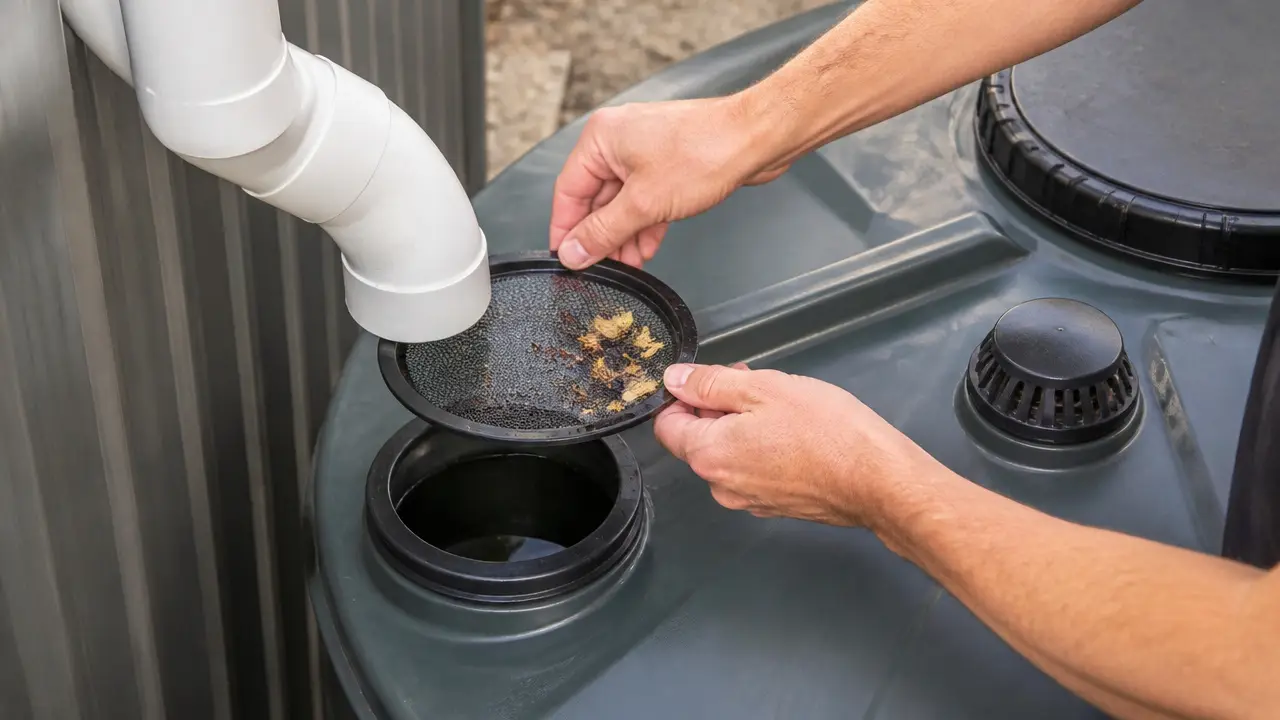
A food-grade tank still needs appropriate installation, inspection, cleaning, screening, overflow management, and maintenance.
What Should You Look for When Buying a Rainwater Tank?
Start with the water's intended use.
For a tank serving garden irrigation, you may care most about:
- Suitable material
- Outdoor durability
- Light blocking
- Secure covers
- Screened openings
- Correct inlet and outlet sizes
- Accessible cleaning points
For household or potable-water applications, material requirements become more important. Ask the manufacturer exactly what the tank is intended and certified for.
Useful questions include:
- Is this finished tank intended for contact with food or drinking water?
- What documentation supports that claim?
- Is the tank rated for outdoor water storage?
- Are the fittings, gaskets, and liner covered by the same intended use?
- Are there temperature or chemical limitations?
- Does the manufacturer specify any cleaning restrictions?
Be cautious when a seller gives only vague phrases such as “food safe plastic” without identifying the intended use or supporting documentation.
Food Grade Does Not Make Rainwater Safe to Drink
This is the most important limitation.
Using suitable storage materials helps prevent the tank itself from adding unwanted contaminants. It does not remove contamination that enters somewhere else.
A rainwater system may include the roof, gutters, screens, a first-flush diverter, storage, pumps, filters, treatment equipment, and plumbing.
A first-flush diverter sends away some of the earliest roof runoff, which often carries more loose debris from the collection surface.
Even with good collection practices, no single food-grade tank, filter, UV unit, purifier, chemical, test strip, or home water meter establishes that roof-collected rainwater is safe to drink.
If drinking water is the goal, use a whole-system approach and follow current health guidance and local requirements. Laboratory testing and qualified professional help may be appropriate depending on the system and intended use.
Frequently Asked Questions
What makes plastic food grade?
Food-contact suitability depends on the substances used to make the plastic and the conditions under which it will contact food. The plastic type alone does not determine whether a finished container is food grade.
Is HDPE automatically food grade?
No. HDPE is a type of plastic commonly used for food containers and water tanks, but an HDPE marking alone does not establish that a particular finished product is suitable for food contact.
Can I use a food-grade barrel for rainwater?
Yes, a suitable food-grade barrel can work well for rainwater storage, especially for garden and other non-potable uses. For a used barrel, confirm what it previously contained and inspect it for damage or residue.
Can I use a food-grade container for drinking water?
Food-grade status alone is not enough. For drinking-water storage, use containers and system components suitable for potable-water contact and follow applicable requirements. The collected rainwater itself also needs appropriate treatment, laboratory testing, and ongoing maintenance.
Does a number 2 recycling symbol mean food grade?
No. Number 2 generally identifies HDPE plastic. It does not prove that the finished container was manufactured or authorized for food-contact use.
Is a used food-grade IBC tote safe for rainwater?
It may be suitable for some non-potable rainwater uses if its history is known and it is in good condition. Do not use an IBC tote with an unknown previous contents simply because the plastic appears suitable.
Does food grade mean chemical-free?
No. Plastics and other food-contact materials contain chemical substances. Food-contact rules address whether those materials are suitable under their intended conditions of use, including potential migration into food.