As an affiliate, we may earn a commission from qualifying purchases. We get commissions for purchases made through links on this website from Amazon and other third parties.
Yes. Food-grade water hoses are available, but if you want a hose for drinking water, the better term to look for is potable-water hose or drinking-water hose.
A hose labeled only “food grade” may be made from materials suitable for contact with food or beverages. That does not automatically mean the complete hose, including its liner and fittings, has been evaluated for use in a drinking-water system.
For rainwater systems, the right hose depends on what you plan to do with the water.
What Is a Food-Grade Water Hose?
A food-grade hose is made from materials intended for contact with food, beverages, or similar products. These hoses are common in food processing, dairies, breweries, beverage systems, and other applications where the hose must not contaminate what moves through it.
The FDA regulates many substances that come into contact with food as food-contact substances. These can include materials used in processing equipment as well as packaging and food-preparation surfaces.
However, “food grade” is a broad description.
If you need to move water that may be used for drinking, cooking, or another potable use, look for a hose specifically identified for potable water.
Potable simply means suitable for drinking.
What Should You Look for in a Drinking-Water Hose?
One useful certification to look for is NSF/ANSI/CAN 61.
This standard covers the health effects of materials and components that come into contact with drinking water. NSF specifically includes pipes, hoses, and fittings among the products covered by the standard.
There are actual flexible hoses listed as certified under NSF/ANSI/CAN 61, so this is not limited to rigid household plumbing.
When choosing a hose for potable water, check for:
- A clear drinking-water or potable-water designation
- A recognized certification such as NSF/ANSI/CAN 61 when appropriate
- Fittings suitable for drinking-water contact
- The correct inside diameter
- A working-pressure rating suitable for your pump or supply
- A temperature rating suitable for the water
- Outdoor and UV resistance if the hose will remain outside
Do not rely only on the hose being white, blue, clear, PVC, rubber, or another particular material. The complete product and its intended use matter more than its color.
Is “Lead-Free” Important?
It can be, especially when the hose uses brass fittings.
NSF/ANSI/CAN 372 covers lead content in drinking-water system components. NSF-certified products meeting the applicable requirements can be identified as conforming to the lead-content requirements for lead-free plumbing.
This is separate from NSF/ANSI/CAN 61.
A simple way to think about the two standards is:
| Standard | What It Mainly Addresses |
|---|---|
| NSF/ANSI/CAN 61 | Health effects of materials that contact drinking water |
| NSF/ANSI/CAN 372 | Lead content of drinking-water components |
A hose may also have plastic or stainless-steel fittings instead of brass. Whatever the material, check that the fittings are intended for the same water use as the hose itself.
Can You Use a Food-Grade Hose With a Rainwater Tank?
Yes.
A suitable hose can be used to transfer rainwater from an IBC tote, rain barrel, cistern, or other storage tank.
The required hose depends partly on how the water will be used.
For Garden Irrigation
If the stored rainwater is strictly non-potable, meaning it is not being used for drinking, the main concerns are usually:
- Hose size
- Fitting compatibility
- Flow rate
- Pump pressure
- Sun exposure
- Kinking
- Freezing
- Keeping the hose dedicated to the rainwater system
For example, a gravity-fed rain barrel may work better with a short, fairly large hose than a very long narrow hose because the system has little pressure available.
For Household Non-Potable Water
A hose used to transfer water to toilets, cleaning systems, or other household uses needs more planning.
You may need pumps, backflow protection, permanently installed plumbing, or separation from the potable plumbing system. Local plumbing requirements can also apply.
A temporary hose connection should not be treated as a substitute for properly designed household plumbing.
For Drinking Water
Use a much higher standard.
A potable-water hose is only one part of the system. It does not make collected rainwater safe to drink.
Roof runoff can contain dirt, microorganisms, animal waste, and chemicals picked up from roofing, gutters, pipes, and storage materials. CDC advises limiting uses that could result in swallowing untreated collected rainwater when safer drinking-water sources are available.
If rainwater is intended for drinking, the whole system needs to be considered, including suitable collection surfaces, debris control, first-flush management where appropriate, storage, treatment, maintenance, and current laboratory testing. Local health and plumbing requirements may also apply.
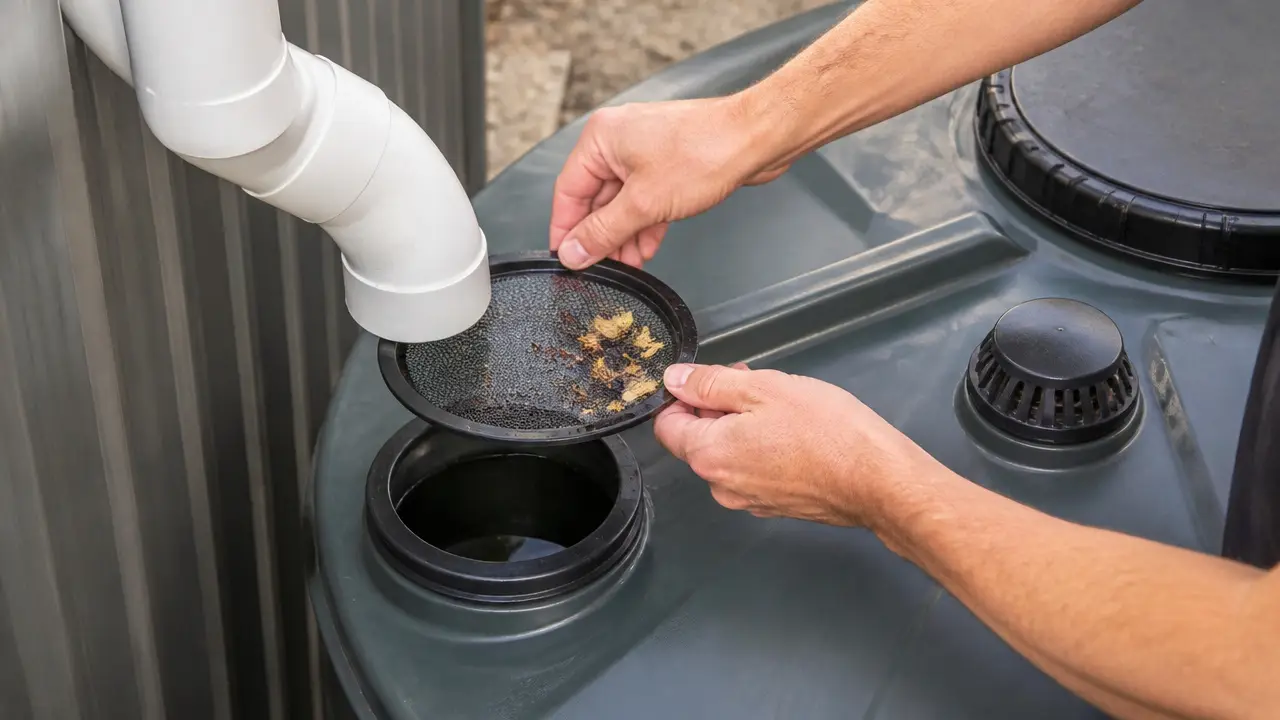
A first flush is a device or arrangement that diverts some of the first roof runoff from a rain event instead of sending it into the tank.
Food-Grade Hose vs. Regular Garden Hose
They may look almost identical, but they should not automatically be treated as interchangeable.
A normal garden hose is designed primarily for outdoor watering. Unless the manufacturer specifically identifies it for potable-water use, do not assume it is suitable for water that will later be consumed.
Evaluating standards that make a hose food-grade helps assess whether the selected fittings work together.
A potable-water hose is the better choice when you are:
- Filling a drinking-water tank
- Transferring potable water
- Supplying an RV or cabin drinking-water system
- Connecting potable storage containers
- Moving water that will contact food
For basic non-potable rainwater irrigation, a certified potable hose usually is not necessary unless you have another reason to require it.
Does Hose Diameter Matter?
Yes, especially with rain barrels and low-pressure systems.
Common hose sizes include 1/2 inch, 5/8 inch, and 3/4 inch. The measurement normally refers to the hose's inside diameter.
A larger hose generally creates less resistance to flow.
That can matter when water is moving only because the tank is higher than the outlet. This pressure comes from head height, which is the vertical distance between the water level and the point where the water leaves the system.
A long, narrow hose connected to a rain barrel may produce disappointing flow even if the tank contains plenty of water.
If you are using a pump, also make sure the hose can handle the pump's pressure and expected flow rate.
Flow rate is simply how much water moves through the hose during a given amount of time, such as gallons per minute.
Check the Connections Before Buying
A drinking-water-safe hose is not useful if it will not connect to your system.
Check both ends of the installation.
A rain barrel may have a garden-hose-thread spigot. An IBC tote may have a much larger valve that requires an adapter. A cistern pump may use pipe threads rather than garden-hose threads.
Pay attention to:
- Hose inside diameter
- Garden hose thread versus pipe thread
- Male and female connections
- Adapter material
- Valve size
- Pump inlet and outlet sizes
Avoid reducing a large tank outlet to a very small hose unless the lower flow is acceptable.
For gravity systems in particular, unnecessarily small fittings can restrict the water almost as much as a small hose.
Keep a Potable-Water Hose Clean
A hose intended for drinking water can still become dirty.
Store it in a way that keeps mud, insects, chemicals, and standing dirty water away from the ends.
Good habits include:
- Keep the hose dedicated to clean-water use.
- Do not use it for fertilizers, pesticides, fuel, waste, or chemicals.
- Keep the ends capped or protected when practical.
- Drain the hose after use when appropriate.
- Do not leave water sitting in a hot hose unnecessarily.
- Inspect the liner and fittings for damage.
- Replace a hose that has become badly cracked, contaminated, or difficult to clean.
In freezing climates, drain hoses and exposed fittings before freezing conditions if the equipment is not designed to remain full through winter.
The Best Label to Look For
If your goal is simply moving drinking water, search for a potable-water hose rather than relying on the words “food grade.”
For greater confidence, check the exact hose model against a recognized certification listing instead of assuming that every hose from the same manufacturer has the same approval. NSF's certification listings identify specific certified hose products and their approved water-contact conditions.
For a rainwater system used only for irrigation, your priorities may instead be fitting compatibility, diameter, pressure, durability, and keeping the hose dedicated to that system.
Frequently Asked Questions
Can you drink water from a food-grade hose?
Possibly, but “food grade” by itself is not enough information. For drinking water, choose a hose specifically intended for potable-water use and look for appropriate third-party certification where available.
What is a potable-water hose?
A potable-water hose is a hose intended for transferring water suitable for drinking. Its water-contact materials and fittings should be appropriate for that use.
Is NSF/ANSI/CAN 61 important for a water hose?
It is a useful certification for drinking-water applications. NSF/ANSI/CAN 61 covers health effects of drinking-water system components, including hoses and related products.
Can I use a potable-water hose on an IBC tote?
Yes, provided the tote valve and hose can be connected with compatible fittings. The tote itself must also be suitable for the intended water use. A potable hose cannot make an unsuitable or contaminated tote safe for drinking-water storage.
Is a regular garden hose food grade?
Do not assume so. Unless the manufacturer specifically identifies the hose for food-contact or potable-water use, treat it as an ordinary outdoor watering hose.
Is a food-grade hose safe for collected rainwater?
It can be suitable for transferring rainwater, but hose quality does not determine whether the rainwater itself is safe. Roof runoff may contain germs and chemicals and requires additional safeguards if drinking-water use is planned.
What size hose should I use for a rain barrel?
The best size depends on the outlet, hose length, required flow, and available head height. A larger-diameter and shorter hose generally helps when the system relies only on gravity.