
As an affiliate, we may earn a commission from qualifying purchases. We get commissions for purchases made through links on this website from Amazon and other third parties.
Best Overall
Best for Longer Runs
Best for Compact Storage
A hose used around collected rainwater should match the water use, connection, length, and pressure of the system. If you are specifically choosing a hose for a water path where drinking-water-rated materials matter, look for relevant drinking-water standards rather than assuming any garden hose is appropriate.
The four hoses here were built for RV and fresh-water service. Camco's two TastePURE hoses use NSF/ANSI 61-certified hose construction and meet NSF/ANSI 372 lead-content requirements. The EvoFlex2 carries NSF/ANSI 372 lead-content certification and uses a fabric-style body that stores more compactly. Valterra's 10-foot AquaFresh hose is made from NSF-listed materials and is the shortest option for a close connection.
Those hose certifications do not make collected rainwater potable. Roof runoff can pick up contaminants before the hose ever sees the water. Drinking-water use still requires a suitable collection, treatment, maintenance, and current testing plan for the whole system.
Quick Comparison
| Hose | Best For | Length | Maximum Pressure | Main Tradeoff |
|---|---|---|---|---|
| Camco TastePURE 25-Foot | General fresh-water connections | 25 ft | 300 psi | Stiff hose and end leaks occur in some installations |
| Camco TastePURE 50-Foot | Longer reaches | 50 ft | Not used as the deciding spec | More length means more handling, coiling, and flow loss |
| Camco EvoFlex2 25-Foot | Compact storage | 25 ft | Not used as the deciding spec | Flexible body can kink or produce uneven flow when folded |
| Valterra AquaFresh | Short hookup | 10 ft | 160 psi | End fittings and hose body have mixed durability |
Where a Drinking-Water-Rated Hose Fits in a Rainwater System
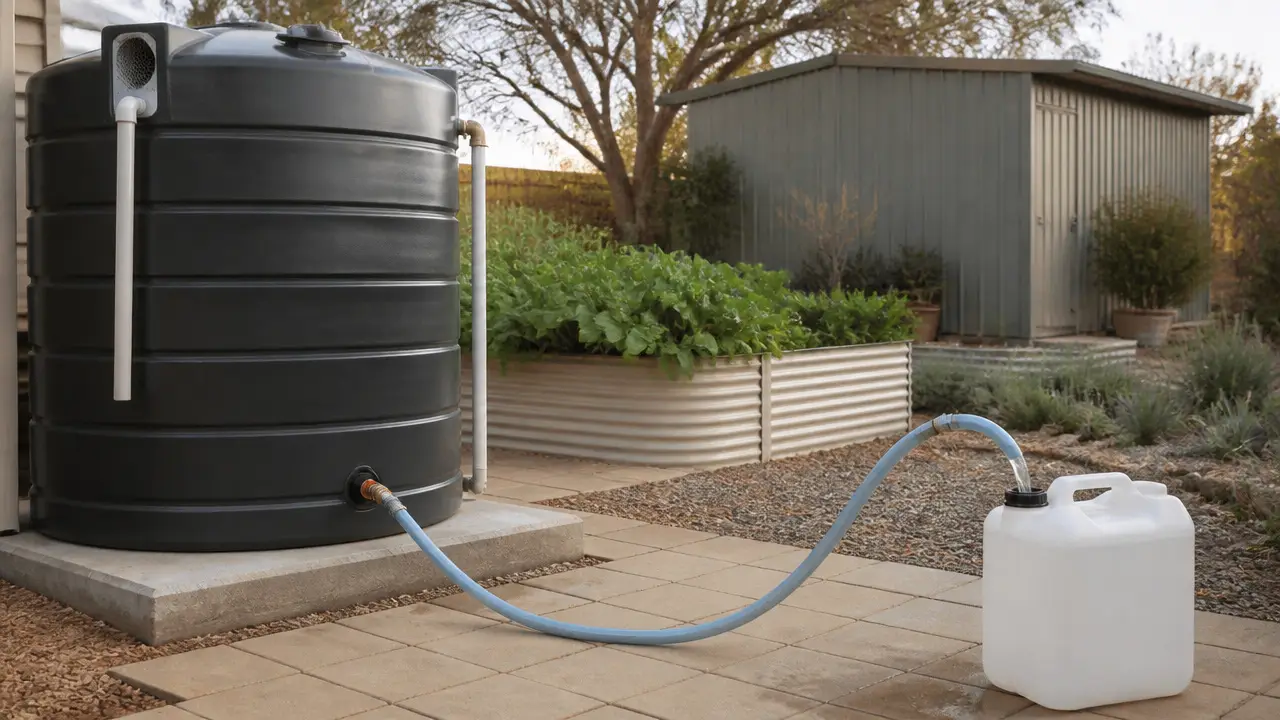
A drinking-water-rated hose can make sense after treated water, around a potable storage setup, or for a fresh-water fill connection where the hose material itself needs drinking-water suitability. It can also be useful for non-potable rainwater simply because these hoses are designed to avoid some of the material concerns found in ordinary utility hoses.
The hose should not be used as a substitute for treatment. If untreated roof runoff is feeding garden irrigation, a certified drinking-water hose does not change the water quality. If treated rainwater is intended for potable use, every wetted component still needs to fit the system's material and sanitation requirements.
Length also matters. A 50-foot hose reaches farther, but it holds more water, creates more resistance, is harder to drain, and takes more space to store. A 10- or 25-foot hose is usually easier when the tank, faucet, or fill point is nearby.
A 25-Foot Hose With Clear Drinking-Water Certifications
1 / 4
Camco TastePURE 25-Foot RV Drinking Water Hose

Length
25 ft
Inside Diameter
5/8 in
Maximum Pressure
300 psi
The 25-foot Camco TastePURE is the most balanced option here for a short-to-medium fresh-water connection. It has a 5/8-inch inside diameter and a maximum pressure of 300 psi. More important for this category, it uses NSF/ANSI 61-certified hose construction and carries CSA lead-free-content certification to NSF/ANSI 372.
At 25 feet, it is long enough to reach between a tank area and a nearby fill point without carrying the handling penalty of a 50-foot line. The reinforced body is built to resist kinking, and the white exterior is less likely than a dark hose to absorb as much solar heat when it is lying in direct sun.
Handling is mixed. The hose can be stiff, especially when new, and leaks can develop around the end fittings or clamp area. Taste can also vary by installation and storage conditions. Drain and store the hose cleanly rather than leaving warm water sitting inside it for long periods.
Why It Works
- NSF/ANSI 61 hose construction and NSF/ANSI 372 lead-content certification support its fresh-water role.
- 25-foot length suits many tank-to-faucet or fill-point layouts without excess hose.
- The 300 psi maximum gives it plenty of pressure margin for ordinary fresh-water hookups when the rest of the system is compatible.
What To Keep In Mind
- Stiffer construction can make tight routing and storage less convenient.
- End fittings and hose-to-fitting joints should be inspected for seepage.
- A drinking-water-rated hose does not make untreated rainwater safe to drink.
A 50-Foot Hose for Longer Connections
2 / 4
Camco TastePURE 50-Foot Premium Drinking Water Hose

Length
50 ft
Inside Diameter
5/8 in
Certification
NSF/ANSI 61 hose / NSF/ANSI 372 lead content
The 50-foot TastePURE is the straightforward choice when 25 feet will not reach. It keeps the same 5/8-inch inside diameter, uses NSF/ANSI 61-certified hose construction, and carries CSA lead-free-content certification to NSF/ANSI 372.
Extra length gives you more placement freedom around a large tank, RV, shed, or treatment area. It also means more hose to coil, more surface exposed to the sun, and more resistance to flow. In a gravity-fed rainwater setup, those losses matter more than they do on a pressurized fresh-water connection.
Durability feedback is mixed. Some long-term outdoor installations have held up through heat and freezing temperatures, while others developed leaks in the hose body or fittings. Kink resistance also varies with how the hose is coiled and how hot the material becomes. A figure-eight storage pattern or large loose loops can help prevent tight twists.
Why It Works
- 50-foot reach solves layouts where the water source and use point are far apart.
- Drinking-water hose and lead-content standards support fresh-water service.
- Reinforced construction and strain-relief fittings are intended for repeated connection work.
What To Keep In Mind
- Longer hose creates more flow loss in gravity-fed systems.
- Coiling and sun exposure can affect kink behavior.
- Inspect the hose body as well as the fittings because leaks can occur away from the ends.
A Flexible Hose That Stores in Less Space
3 / 4
Camco EvoFlex2 25-Foot RV Drinking Water Hose

Length
25 ft
Inside Diameter
5/8 in
Design
Fabric outer / flexible body
The EvoFlex2 is the storage-focused option. It uses a flexible fabric-style outer construction designed to take less storage space than a traditional reinforced PVC hose. For a small shed, pump box, RV compartment, or portable rainwater setup, that reduced bulk can be useful.
The hose still uses a 5/8-inch inside diameter and carries NSF/ANSI 372 lead-content certification. Its flexible body is easy to carry and move compared with a stiff conventional hose, which is helpful when the connection is temporary rather than permanently laid out.
Flexibility brings different failure modes. The hose can arrive with folds that restrict flow until they are worked out, and pulsing or uneven flow can occur when the body does not fully open. Leaks can also develop with frequent full-time use. The exact material blend is uncertain, so focus on the fabric-style construction, hose size, and certification.
Why It Works
- Stores more compactly than a conventional stiff hose.
- 25-foot length keeps it manageable for portable setups.
- Lead-content certification supports its intended fresh-water role.
What To Keep In Mind
- Folds can restrict flow until the hose body is fully opened.
- Frequent constant use can expose weak points sooner than occasional filling work.
- Do not leave the connectors under side load where the hose hangs heavily from a faucet.
A Short 10-Foot Fresh-Water Hookup
4 / 4
Valterra AquaFresh High Pressure Drinking Water Hose, 10-Foot

Length
10 ft
Hose Size
1/2 in
Maximum Pressure
160 psi
The Valterra AquaFresh is the shortest hose in this group at 10 feet. That is its main advantage. If the tank outlet, filter housing, fill port, or fresh-water connection is close by, a short line creates less clutter and is easier to drain and store.
The hose has a 160 psi maximum and is constructed from NSF-listed materials for drinking-water fixtures. A 1/2-inch hose is narrower than the 5/8-inch Camco options, so it may produce more restriction at the same flow, especially in a low-head gravity setup.
The main concern is service life at the ends. Leaks or breaks can develop around the male and female fittings, and the hose can harden or discolor after outdoor exposure. Use it where the short length is genuinely useful and where the connection is supported rather than hanging under constant strain.
Why It Works
- 10-foot length is easy to manage when the connection points are close together.
- The 160 psi rating is more than enough for many compatible fresh-water hookup roles.
- NSF-listed materials support its intended drinking-water-fixture use.
What To Keep In Mind
- 1/2-inch hose creates more restriction than a 5/8-inch line at similar conditions.
- End fittings deserve regular inspection for cracks and leaks.
- Outdoor sun and weather can harden the hose over time.
Length, Flow, and Pressure in a Rainwater Setup
For gravity-fed rainwater, pressure is usually much lower than the hose's maximum rating. The relevant issue is preserving the little pressure you have. Longer and narrower hose adds friction, so a 50-foot run can feel much weaker than a 10-foot run from the same tank.
If a pump supplies the hose, its pressure and flow still have to match the hose, fittings, and connected equipment. A high hose pressure rating does not mean the whole system can safely operate at that pressure.
Use the shortest practical hose and avoid unnecessary reducers. Keep tight coils and kinks out of the water path.
Hose Care Around Stored Water
Drain the hose after use when practical, especially if it will sit in direct sun. Warm stagnant water can develop odors and taste changes even in a hose designed for fresh-water service.
Store the hose with large loops rather than tight bends. Protect the fittings from being stepped on or driven over. In freezing weather, remove trapped water before storage.
For a potable-water path, follow a cleaning and sanitation routine suitable for the whole system. The hose is one wetted component among tanks, filters, valves, pumps, and fixtures.
Frequently Asked Questions
What makes a hose suitable for drinking-water service?
Look for material or product standards intended for drinking-water contact, along with suitable lead-content compliance where applicable. Do not rely only on the words “food grade” or the hose color.
Can I use a drinking-water hose with untreated rainwater?
You can physically use a compatible hose, but the hose does not treat the water. Untreated roof runoff remains untreated roof runoff, regardless of the hose certification.
Is a 25-foot or 50-foot hose better for a rainwater tank?
Use the shortest length that reaches comfortably. A 50-foot hose gives more reach but adds flow resistance, storage bulk, and more hose volume to drain.
Does a 300 psi hose give me more water pressure?
No. A pressure rating tells you what the hose is designed to withstand. The tank elevation or pump creates the actual system pressure.
Why does water taste different after sitting in a hose?
Heat, stagnant water, hose condition, and material interactions can affect taste and odor. Drain and store the hose properly, and do not treat taste alone as a water-safety test.
Can I leave a fresh-water hose connected outside all year?
Long-term sun, heat, freezing conditions, and constant pressure can shorten hose and fitting life. Inspect outdoor hoses regularly and drain them before freezing weather.
Is a certified hose enough for potable rainwater use?
No. Potable rainwater use depends on the complete collection, storage, treatment, plumbing, maintenance, and current testing system. A suitable hose is only one component.
If the tank outlet does not already match a hose, hose adapter kits for rain barrels cover the connection hardware. Systems with larger removable lines may use camlock fittings for water tanks before stepping down to a hose. When water must be moved without household pressure, hand pumps for water barrels show manual options. For water-quality decisions, rainwater test kits explain where home screening helps and where current laboratory testing is still needed.