As an affiliate, we may earn a commission from qualifying purchases. We get commissions for purchases made through links on this website from Amazon and other third parties.
Collected rainwater does not have a fixed expiration date. It may remain useful for weeks or much longer when it is kept in a clean, covered, dark storage tank. But storage time alone does not tell you whether the water is safe.
The biggest question is what you plan to do with the water. Rainwater stored for garden irrigation has different quality needs from water used for bathing, cooking, or drinking. Roof runoff can carry dirt, animal waste, chemicals, and other contaminants into storage, even when the water looks clear.
For most home rainwater systems, the goal should be to keep stored water protected and use it regularly rather than trying to reach a specific shelf life.
There Is No Single Shelf Life for Collected Rainwater
Rainwater does not suddenly become unusable after a set number of days.
Instead, its quality changes based on the collection and storage system. Important factors include:
- How clean the roof and gutters are
- Whether a first-flush diverter is used
- Whether leaves and other debris are screened out
- Whether insects and animals can enter the tank
- How much sunlight reaches the water
- Storage temperature
- How often fresh rain enters the tank
- How much sediment has collected
- What the tank and plumbing are made from
A first-flush diverter sends the first portion of roof runoff away from the tank. That first runoff can contain more dirt, germs, animal droppings, and chemicals that built up on the roof between storms. CDC recommends considering a first-flush diverter as one way to improve collected rainwater quality.
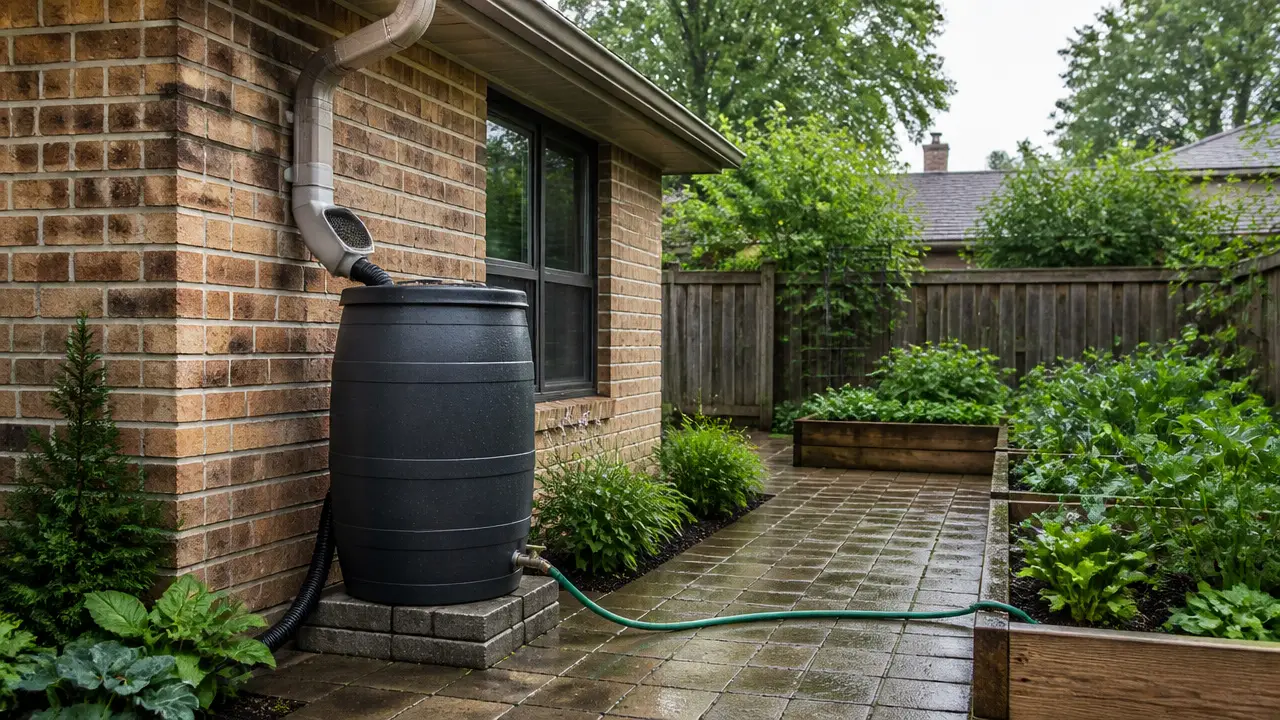
A covered cistern with screened openings and little light exposure can preserve water quality much better than an open barrel filled with leaves and warmed by direct sun.
How Long Can Rainwater Stay in a Rain Barrel?
There is no reliable number of days that applies to every rain barrel.
For normal garden use, it is better to use and replace the water regularly instead of leaving the same water sitting indefinitely.
A barrel should have:
- A secure cover
- A screened inlet
- A screened or protected overflow
- Little or no sunlight reaching the stored water
- A way to drain and clean the bottom
- An overflow route that sends excess water away safely
CDC recommends regularly emptying rain barrels as part of system maintenance. It also recommends either screening the inlet against mosquitoes or emptying the barrel at least every 10 days to help prevent mosquitoes from breeding.
That 10-day recommendation is about mosquito control. It does not mean rainwater automatically becomes unusable on day 10.
How Long Can Rainwater Stay in a Cistern?
A properly designed cistern is better suited to longer storage than a simple open or poorly protected barrel.
Cisterns are commonly designed to hold water between rainy periods. The water may remain in storage for an extended time if the tank is protected from sunlight, animals, insects, surface runoff, and other sources of contamination.
The storage tank should also be maintained. Sediment can slowly build up on the bottom as small particles pass through the collection system. Tank openings should remain protected, and filters or screens need periodic cleaning.
Long storage does not automatically make rainwater bad. However, a closed tank does not automatically make it safe either.
Roof runoff may contain contaminants from:
- Bird and animal droppings
- Dust and soil
- Smoke and airborne particles
- Roofing materials
- Gutters and flashing
- Pipes and fittings
- Storage tank materials
CDC notes that rainwater can contain germs and chemicals even when it looks clean.
What Makes Stored Rainwater Deteriorate Faster?
Several conditions can cause problems much sooner.
Sunlight
Light entering a tank can encourage algae growth. An opaque tank or properly covered cistern limits light exposure.
Heat
Warm stored water can support faster biological growth than cool water. Above-ground tanks exposed to strong sun may become quite warm, so shading and an opaque tank can help.
Organic Debris
Leaves, pollen, insects, and other material can decompose in the water. This may cause odors, discoloration, sediment, and poor water quality.
Leaf screens and inlet filters reduce how much material reaches the tank, but they also need cleaning.
Animal Contamination
Birds, rodents, insects, and other animals can introduce microorganisms into a collection system.
Roof runoff is especially vulnerable because animal droppings can wash directly from the collection surface into the tank.
Open Tank Connections
Loose lids, unscreened vents, damaged overflow screens, and open pipe connections make it easier for insects, animals, dirt, and debris to enter.
Sediment Buildup
Fine material gradually settles to the bottom of many tanks. Heavy sediment buildup can make cleaning harder and may affect stored-water quality.
How Long Does Rainwater Last for Garden Use?
Rainwater stored for landscape irrigation generally does not need to meet drinking-water standards.
If it has been collected from a suitable surface and kept in a reasonably clean, covered tank, stored rainwater can continue to be useful for irrigation between rain events.
Still, inspect the system before using water that has been sitting for a long time.
Look for:
- Strong or unusual odors
- Heavy algae growth
- Dead animals or insects
- Large amounts of decomposing material
- Chemical spills or contamination near the collection area
- Floodwater entering the tank
- Damage to the lid, screens, or pipes
Do not assume that bad water will always smell or look unusual. Some harmful contaminants have no obvious appearance or odor.
Account for spoilage risks in stored rainwater to assess installation planning for dependable ongoing service.
If you are watering edible plants, the way the water contacts the crop also matters. CDC recommends using safer water sources when possible for plants that will be eaten, especially where water may contact the edible portion.
Can Old Rainwater Be Used for Washing?
Possibly, but the intended use matters.
Water used to rinse outdoor tools or clean a driveway does not need the same quality as water used for bathing or cleaning dishes.
The chance of accidentally swallowing water also matters. CDC recommends limiting rainwater use in ways that reduce the chance of ingestion unless the water has been appropriately managed for higher-quality uses.
Indoor rainwater plumbing can also require additional safeguards. Rainwater must not be allowed to flow backward into drinking-water plumbing. Local plumbing and health requirements should be checked before connecting a rainwater system to a building.
How Long Does Collected Rainwater Stay Safe to Drink?
There is no safe drinking-water shelf life that can be determined by storage time alone.
Water collected yesterday could contain harmful contamination. Water that has been stored much longer could still appear perfectly clear. Neither age nor appearance establishes that it is safe to drink.
CDC states that rainwater is not necessarily safe to drink without first addressing germs and chemicals. For rainwater used for drinking, cooking, or bathing, CDC recommends regular testing and appropriate treatment based on the contaminants present.
For a household using rainwater as drinking water, safety should be treated as a whole-system issue. That may include:
- A suitable collection surface
- Clean gutters
- Leaf and debris screening
- A properly sized first-flush system
- A protected storage tank
- Appropriate sediment filtration
- Treatment designed for the contaminants present
- Regular maintenance
- Current laboratory water testing
A single cartridge filter, UV light, purifier, test strip, or water-quality meter cannot by itself prove that roof-collected rainwater is safe to drink.
CDC recommends testing private rainwater used as drinking water at least annually for harmful germs and chemicals, with additional testing when conditions or water quality change. Local health authorities can advise which contaminants should be tested in your area.
Does Adding Fresh Rain Reset the Storage Time?
Not really.
A tank often contains a mixture of older and newer water. Fresh rainfall does not automatically correct contamination already present in the tank.
It can also stir sediment from the bottom, depending on how the inlet is arranged.
Instead of tracking the age of every gallon, focus on keeping the entire system clean and protected.
Regular turnover is useful, but it does not replace maintenance.
When Should You Drain Stored Rainwater?
Consider draining, cleaning, or evaluating the system when you find significant contamination or when the tank has been compromised.
Examples include:
- Floodwater entered the tank
- An animal got inside
- The tank contains heavy decomposing debris
- There is severe algae growth
- A chemical spill may have reached the catchment
- The water has an unexplained major change in appearance or odor
- Large amounts of sediment have accumulated
- The tank or plumbing has been damaged
Floodwater is particularly important. Floods and heavy rains can introduce germs and chemicals into cisterns, and CDC advises that affected cisterns may need cleaning and disinfection before being returned to service.
Do not enter a cistern to clean it. Tanks can be dangerous confined spaces. Use cleaning methods that do not require entering the tank, or hire a qualified professional when internal access is necessary.
How to Help Collected Rainwater Last Longer
Good storage matters more than trying to follow a fixed expiration date.
Keep the roof and gutters reasonably clean. Use screens to stop leaves and larger debris before they reach the tank. A first-flush diverter can reduce the contaminants washed from the roof at the beginning of a storm.
Keep the storage tank:
- Covered
- Opaque or protected from sunlight
- Screened against insects
- Protected from animals
- Protected from floodwater and surface runoff
- Easy to inspect and maintain
Check screens, filters, lids, overflows, pipes, and fittings regularly. Clean accumulated sediment when necessary.
Most importantly, match your water-quality precautions to how you intend to use the water.
Frequently Asked Questions
Does rainwater go bad if it sits too long?
There is no fixed point when rainwater suddenly goes bad. Its condition depends on contamination, sunlight, temperature, debris, tank design, and maintenance. Water stored for long periods should be evaluated based on its intended use rather than age alone.
Can I use year-old rainwater on my garden?
Possibly, if the water has remained protected in a suitable tank and has not been contaminated. Inspect the tank and water before use. Water for edible crops deserves more caution than water used on ornamental landscaping.
Why does stored rainwater smell bad?
Odors can come from decomposing leaves, organic sediment, algae, insects, or other contamination. Cleaning screens, removing debris, reducing sunlight, and maintaining the tank can help prevent these problems.
Should a rain barrel be emptied regularly?
Yes. Regular water turnover and periodic cleaning help keep a barrel manageable. CDC also recommends screened openings for mosquito control or emptying a rain barrel at least every 10 days if necessary to prevent mosquito breeding.
Does a sealed tank make rainwater safe to drink?
No. A sealed tank protects stored water from some new contamination but does not remove germs or chemicals already introduced by the roof, gutters, air, pipes, or storage system. Drinking-water use requires appropriate collection, treatment, maintenance, and testing.
Can boiling make old rainwater safe?
Boiling can address many disease-causing microorganisms, but it does not remove every possible chemical contaminant. Roof runoff can contain both germs and chemicals, so boiling alone cannot establish that collected rainwater is suitable for routine drinking.
How often should drinking rainwater be tested?
CDC recommends testing rainwater used as a drinking-water source at least once each year for harmful germs and chemicals. Additional testing may be appropriate after system changes, contamination events, or noticeable changes in the water. Local health authorities can help determine which tests are appropriate.