As an affiliate, we may earn a commission from qualifying purchases. We get commissions for purchases made through links on this website from Amazon and other third parties.
Mosquitoes can turn a rain barrel, tote, or cistern into a breeding spot if they can reach the water. You can put some mosquito larvicides in stored water, but the best first step is usually to keep mosquitoes from reaching the water at all.
For rainwater that will not be used for drinking, a properly labeled product containing Bti is one of the common options. Bti kills mosquito larvae in the water before they become adult mosquitoes. The EPA and CDC recommend using mosquito larvicides according to the product label.
Do not automatically add bleach, dish soap, vegetable oil, or other household chemicals to stored rainwater. They can create problems for plants, pumps, tanks, animals, or later water treatment.
The Best Mosquito Control Is a Closed Tank
Mosquitoes need access to standing water to lay eggs. If they cannot get into your rainwater tank, you may not need to put anything in the water.
Check every opening, including:
- The tank lid
- Downspout inlet
- Overflow pipe
- Vent
- Inspection opening
- Pump or plumbing openings
Use tight-fitting lids and mosquito-resistant screening where an opening must remain open. The screen openings should be smaller than an adult mosquito.
CDC guidance specifically recommends tightly covering rain barrels, cisterns, buckets, and other water-storage containers.
Pay special attention to the overflow. A screened inlet does little good if mosquitoes can fly into the tank through an open overflow pipe.
Can You Put Bti in a Rain Barrel?
For many non-potable rainwater systems, yes.
Bti stands for Bacillus thuringiensis israelensis. It is a naturally occurring bacterium used as a mosquito larvicide. A larvicide kills the immature mosquito larvae living in water.
Bti products may come as:
- Dunks
- Briquettes
- Tablets
- Granules
- Pellets
- Liquids
The mosquito larvae eat the Bti, which prevents them from developing into adult mosquitoes. It does not work by repelling adult mosquitoes from the tank.
EPA says Bti can be used in standing-water locations where mosquitoes breed, including containers around homes. However, individual products have different approved uses.
That makes the label important.
Do not assume that every Bti dunk, tablet, or granule can be used in every type of rainwater system.
What If You Use the Rainwater on the Garden?
A Bti product labeled for rain barrels or similar water-storage containers can be a practical option when the water is used for things such as landscape irrigation.
Follow the product label for:
- How much to use
- Tank or barrel capacity
- How often it must be replaced
- Approved water uses
- Any restrictions on treated water
Adding extra product does not necessarily give better mosquito control.
Also fix the reason mosquitoes are entering the tank. Otherwise, you may become dependent on repeated larvicide treatment when a screen or lid could solve the problem.
What If the Water May Be Used for Drinking?
Be much more careful.
EPA notes that some Bti products are permitted for certain drinking-water applications, such as some cistern uses, while other Bti products are not intended for drinking water.
Do not put a mosquito-control product into drinking-water storage simply because its active ingredient is Bti.
The exact product label must specifically allow your intended use.
For a rainwater system supplying drinking water, mosquito prevention should primarily come from good system design:
- A sealed storage tank
- Screened inlets and vents
- Screened overflow
- Proper roof-water prefiltration
- Regular tank inspection
- A suitable treatment system
- Current laboratory water testing
- Maintenance appropriate to the treatment equipment
- Compliance with applicable local drinking-water and plumbing requirements
A mosquito larvicide does not make collected rainwater safe to drink.
Should You Put Bleach in Rainwater to Stop Mosquitoes?
Do not use household bleach as a casual mosquito-control treatment.
Chlorine can be part of a properly designed water-disinfection process, but that requires control of concentration, contact time, water quality, equipment, and intended use.
Pouring an estimated amount of bleach into a rain barrel just to discourage mosquitoes is not a substitute for screening the tank or using a mosquito larvicide that is labeled for the application.
This is especially important if the water might later be used for drinking, animals, sensitive plants, ponds, or other uses where water chemistry matters.
What About Vegetable Oil or Cooking Oil?
Avoid it.
You may hear advice to pour vegetable oil onto standing water so it forms a surface layer and interferes with mosquito larvae.
Look closely at mosquito controls for rainwater tanks to evaluate stored supply required between realistic refill opportunities.
That is a poor choice for a rainwater-storage system.
Oil can:
- Turn rancid
- Coat the inside of the tank
- Leave residue on filters and plumbing
- Cause odors
- Create maintenance problems
- Affect later uses of the water
There are registered mosquito-control products designed to work on standing water. Household cooking oil is not a good substitute.
Does Dish Soap Kill Mosquito Larvae?
Soap can affect insects and surface tension, but adding dish detergent to stored rainwater is not a good long-term mosquito-control method.
The detergent remains part of the stored water. That can matter if the water goes through irrigation equipment, reaches plants or soil, is used around animals, or is later treated for another purpose.
Use physical exclusion or an appropriately labeled larvicide instead.
What About Mosquito Dunks?
The term "mosquito dunk" usually describes a slow-release larvicide placed in standing water.
Many contain Bti, but you should still read the label rather than choosing based only on the shape of the product.
Check whether the label covers:
- The type of container you have.
- The amount of water being treated.
- Your intended use for that water.
- The required replacement interval.
A 55-gallon rain barrel and a several-thousand-gallon cistern are very different systems. Do not guess at treatment amounts.
Fix Mosquito Entry Points Before Adding Anything
If you find mosquito larvae swimming in a rain barrel, IBC tote, or cistern, inspect the system.
Look for gaps around the lid and fittings. Then check the inlet, overflow, vents, and any opening around hoses or pump lines.
Also inspect the area around the tank.
Mosquitoes may actually be breeding in:
- Clogged gutters
- Open buckets
- Plant saucers
- Low spots on tank covers
- Water trapped around the tank base
- Unused hoses or containers
- Poorly drained overflow areas
EPA recommends eliminating accessible standing water wherever practical because even small containers can become mosquito habitat.
A Simple Approach for Rain Barrels
For a typical rain barrel used for garden watering:
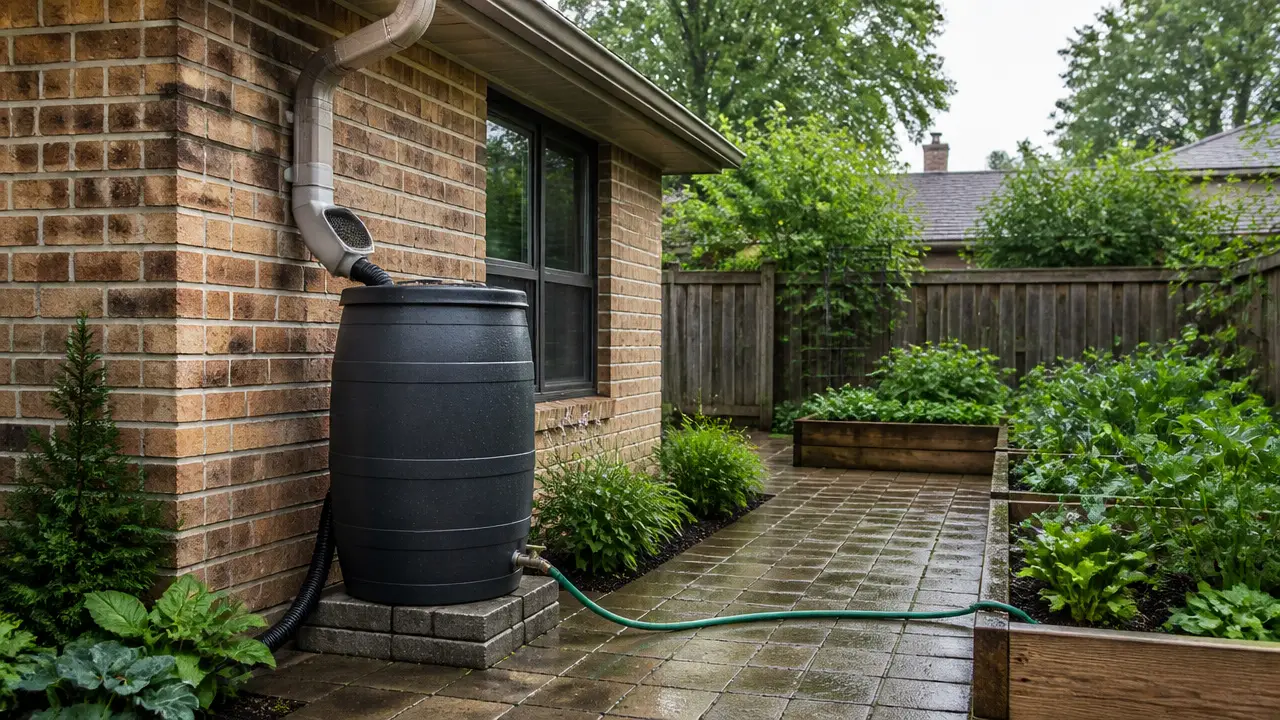
- Install a tight lid. Mosquitoes should not be able to reach the stored water.
- Screen the inlet. Check that water can enter without leaving a mosquito-sized opening.
- Screen the overflow. This is an easy entry point to miss.
- Check the screens regularly. Leaves and debris can damage or move them.
- Remove nearby standing water. The barrel may not be the only breeding location.
- Use an appropriate larvicide if needed. For non-drinking water, a Bti product labeled for your container and water use may provide added control.
CDC recommends larvicides for standing water that cannot reasonably be dumped, covered, or removed, while emphasizing that they should be used according to their labels.
A well-sealed rainwater system should not depend on chemicals alone.
Frequently Asked Questions
What can I put in my rain barrel to prevent mosquitoes?
For non-drinking rainwater, a Bti mosquito larvicide labeled for rain barrels or similar containers is a common option. Follow the exact label instructions. Also cover and screen the barrel so mosquitoes cannot enter.
Are mosquito dunks safe for rain barrels?
Some are labeled for rain barrels and other standing-water containers. Check the specific product label because approved uses vary. If the stored water may be used for drinking, the label must specifically allow that use.
Can I put bleach in a rain barrel for mosquitoes?
Bleach should not be added casually as a mosquito-control treatment. Chlorine disinfection requires controlled dosing and water-treatment practices. Prevent mosquito entry or use a properly labeled larvicide instead.
Can I put vegetable oil in my rain barrel?
It is better not to. Oil can become rancid, coat the tank and plumbing, create odors, and interfere with later water use. Use screens, tight covers, and registered mosquito-control products instead.
Will Bti keep adult mosquitoes away?
No. Bti targets mosquito larvae living in water. It does not act as an adult mosquito repellent. Keeping the tank covered and screened prevents adult mosquitoes from reaching the water to lay eggs.
How do mosquitoes get into a covered rain barrel?
Common entry points include gaps around the lid, an unscreened overflow, damaged inlet screening, vents, and openings around hoses or pipes. Inspect every opening connected to the stored water.
Can mosquito-treated rainwater be used as drinking water?
Do not assume it can. Some mosquito-control products may be approved for certain drinking-water applications, while others are not. Drinking-water rainwater systems also require suitable collection, treatment, maintenance, current water testing, and compliance with local requirements.