As an affiliate, we may earn a commission from qualifying purchases. We get commissions for purchases made through links on this website from Amazon and other third parties.
Yes. Rain barrels can attract mosquitoes because they hold still water, which female mosquitoes may use to lay eggs. The barrel itself is not the main attraction. The problem is accessible standing water.
A properly covered and screened rain barrel should not become a mosquito breeding site. The CDC recommends tightly covering water-storage containers such as rain barrels or using mesh with openings smaller than an adult mosquito.
Why Mosquitoes Like Rain Barrels
Mosquitoes need water during the early stages of their life cycle. Eggs hatch into larvae, often called “wigglers,” and the larvae live in water until they develop into adults. Some mosquitoes can use very small water-filled containers for breeding.
A rain barrel can provide good conditions when it has:
- An uncovered top
- Gaps around the lid
- Torn or missing inlet screens
- An unscreened overflow opening
- Water that sits unused for long periods
- Small puddles around or on top of the barrel
Even a barrel that looks closed can have an opening large enough for mosquitoes to enter.
How to Keep Mosquitoes Out of a Rain Barrel
The best approach is to stop adult mosquitoes from reaching the water in the first place.
1. Keep the Barrel Covered
Use a tight-fitting lid or another cover that does not leave gaps.
Check the lid after storms, cleaning, and maintenance. A lid that has shifted slightly may leave enough room for insects to enter.
A secure cover also helps keep leaves, animals, and larger debris out of the stored water.
2. Screen the Water Inlet
If your downspout empties into an opening at the top of the barrel, cover that opening with fine insect-resistant mesh.
The CDC recommends a screen where water enters a rainwater system and says mesh openings should be smaller than an adult mosquito.
The screen still needs to pass enough water during heavy rain. A screen clogged with leaves or roof debris can make water back up or spill over the barrel.
Check it regularly and clean it when needed.
3. Screen the Overflow
Do not protect only the top opening.
When a barrel fills, excess water usually leaves through an overflow hose or fitting. If mosquitoes can travel through that opening, they may still reach the water even though the lid and inlet are screened.
Use suitable insect screening without blocking the overflow path.
The overflow must remain large enough to handle incoming water. Never solve a mosquito problem by restricting an overflow so much that the barrel can no longer drain safely during heavy rain.
4. Check Every Other Opening
Look around:
- Hose connections
- Spigots
- Access ports
- Inspection covers
- Downspout adapters
- Overflow fittings
- Gaps around pipes
You do not need to make the barrel airtight. Rainwater systems need to move water and air. The goal is simply to prevent mosquitoes from having a clear path to the stored water.
Does Emptying a Rain Barrel Stop Mosquitoes?
It can help, especially if the barrel cannot be screened well.
The CDC recommends either screening the water entering a rain barrel or emptying the barrel at least every 10 days as a way to help prevent mosquito breeding.
For a rainwater harvesting system, however, frequently dumping stored water may defeat the reason you installed the barrel.
A better long-term setup is usually:
- A secure lid
- A screened inlet
- Protected overflow and other openings
- Regular inspection and cleaning
Then you can store water without intentionally leaving it accessible to mosquitoes.
What If There Are Already Mosquito Larvae in the Barrel?
Look at the water surface. Mosquito larvae are small and active and are often described as wigglers.
If you find them, first determine how mosquitoes entered the barrel.
Check the lid, inlet screen, overflow, and fittings. Simply killing the existing larvae without closing the opening means more mosquitoes can return.
If practical, emptying the barrel can remove the current population. Clean the barrel as appropriate before putting it back into service.
Pay attention to wet debris and residue around the water line as well. Some mosquito eggs can remain attached to container surfaces and hatch when covered by water again.
Can You Use Mosquito Dunks in a Rain Barrel?
Larvicides are products designed to control mosquito larvae in water. Some are sold as tablets, dunks, granules, or similar forms.
The CDC lists rain barrels as one type of standing-water container where appropriately labeled larvicides may be used. However, it specifically recommends larvicides for standing water that will not be used for drinking and says to follow the product label.
Do not assume that any mosquito-control product is suitable for your rainwater system.
Factor in practical steps for keeping mosquitoes out of a rain barrel to understand the storage-vessel configuration for the installation area.
Before using one, check:
- The active ingredient
- Whether the label permits use in rain barrels
- How the stored water may be used afterward
- The required amount
- How often it may be reapplied
Do not add extra product because you think a stronger dose will work better.
If your collected rainwater is intended for drinking or other household uses where people may swallow it, do not treat the barrel casually with a mosquito larvicide. Drinking-water rainwater systems require a broader approach to collection, treatment, testing, maintenance, and local requirements.
Will a Filter Keep Mosquitoes Out?
Not necessarily.
A water filter used downstream of the barrel is meant to remove certain material as water leaves the system. It normally does nothing to stop an adult mosquito from entering the storage tank.
Mosquito prevention happens primarily at the storage openings.
Think of the system in this order:
Roof → gutter → downspout → screened inlet → covered barrel → outlet
Screens keep larger debris and insects from entering. Filters used later in the system serve a different purpose.
Do First-Flush Diverters Prevent Mosquitoes?
A first-flush diverter can help improve collected water quality, but it is not a replacement for mosquito screening.
A first-flush diverter directs some of the first roof runoff from a storm away from the storage tank. That first water often carries more dust, dirt, bird droppings, and other material from the roof.
The diverter itself can also hold water, depending on its design. Maintain it according to the system instructions so it does not become another place where water remains accessible to mosquitoes.
Check the Area Around the Barrel Too
Sometimes the rain barrel is screened correctly, but nearby water is producing the mosquitoes.
Look for standing water in:
- Buckets
- Plant saucers
- Clogged gutters
- Wheelbarrows
- Tarps
- Watering cans
- Barrel lids with recessed tops
- Overflow puddles
- Open first-flush chambers
The CDC recommends regularly emptying, scrubbing, covering, turning over, or removing containers that hold standing water.
A mosquito hovering near your rain barrel does not prove that it came from inside the barrel.
A Simple Mosquito-Proof Rain Barrel Setup
For a basic garden rain barrel, aim for these features:
| Part | What to Check |
|---|---|
| Lid | Fits securely with no easy entry gaps |
| Inlet | Covered with fine insect-resistant screen |
| Overflow | Protected from insect entry without restricting flow |
| Spigot | Secure fitting with no large gaps |
| Screen | Clean, intact, and not torn |
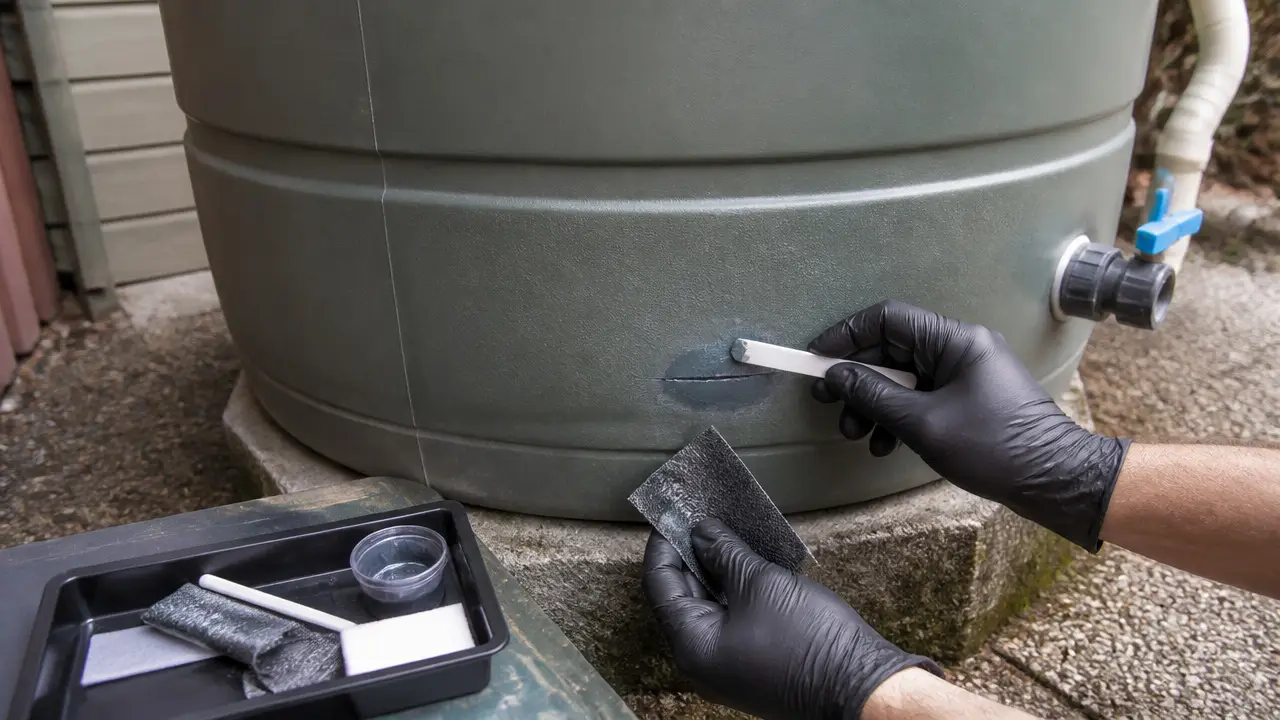
| Barrel | No cracks or unintended openings |
| Surrounding area | No buckets, puddles, or other standing water |
Inspect these points occasionally throughout mosquito season and after making changes to the system.
Rainwater Safety Still Matters
Keeping mosquitoes out does not make rainwater safe to drink.
Roof runoff can contain germs and chemicals picked up from the air, roofing materials, gutters, bird droppings, piping, and storage equipment. The CDC notes that even clear-looking rainwater is not necessarily safe for drinking.
If rainwater will be used for drinking, cooking, bathing, or another higher-risk use, mosquito screening should be only one part of the system. Suitable collection materials, prefiltration, treatment, current water testing, maintenance, and applicable local requirements also matter.
For ordinary non-potable uses such as landscape watering, the main mosquito goal is much simpler: keep adult mosquitoes from reaching the stored water and eliminate other accessible standing water nearby.
Frequently Asked Questions
Do mosquitoes lay eggs in rain barrels?
They can. Female mosquitoes seek water for egg laying, and an uncovered or poorly screened rain barrel can provide suitable habitat for developing larvae.
How do I know if mosquitoes are breeding in my rain barrel?
Look for small, active larvae moving through the water, especially near the surface. Also inspect the inlet, overflow, and lid for openings that could allow adult mosquitoes inside.
Is a lid enough to keep mosquitoes out?
A lid helps, but it may not be enough if the barrel has an open inlet, overflow, access port, or other gap. Protect all practical routes to the stored water.
What kind of screen should I use on a rain barrel?
Use insect-resistant mesh with openings smaller than an adult mosquito. It also needs enough open area to let rainwater flow freely without causing the inlet or overflow to back up.
Should I empty my rain barrel every week?
Not necessarily if the barrel is securely covered and screened. If mosquitoes can reach the water, however, regular emptying is one control option. The CDC recommends screening the inlet or emptying a rain barrel at least every 10 days to help stop mosquitoes from laying eggs.
Can I put mosquito dunks in collected rainwater?
Some appropriately labeled larvicides can be used in rain barrels, but use them only according to the product label and intended water use. The CDC advises using larvicides for standing water that will not be used for drinking.
Why are there still mosquitoes around my screened rain barrel?
Another nearby container may be holding water. Check gutters, buckets, plant saucers, tarps, first-flush components, and puddles around the overflow before assuming the mosquitoes are breeding inside the barrel.