As an affiliate, we may earn a commission from qualifying purchases. We get commissions for purchases made through links on this website from Amazon and other third parties.
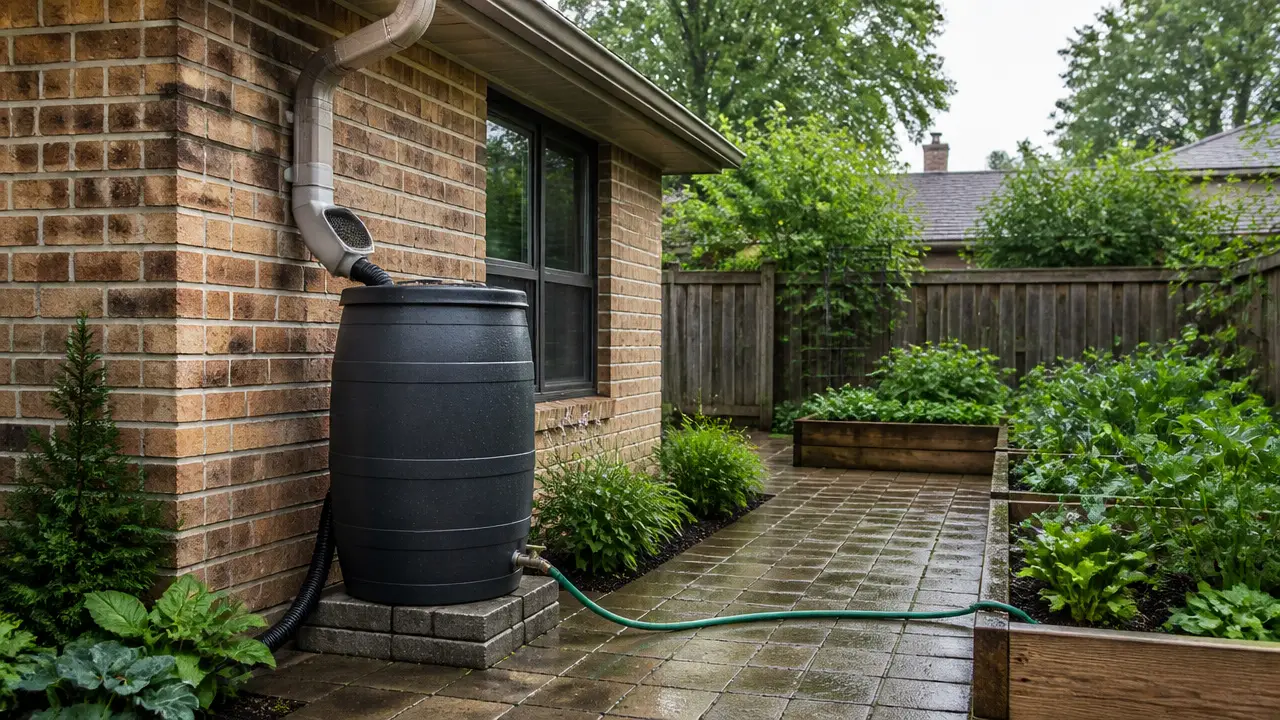
Collecting rainwater is not generally punished in the United States. In most places, homeowners can collect at least some rainwater for uses such as watering plants. Some states even encourage rainwater harvesting.
The confusion comes from states that regulate how much rainwater you can store, where it can come from, and how you can use it. If you ignore those rules, the result could be an order to stop using the system, a requirement to correct it, or enforcement under state water, plumbing, building, or health laws. The exact penalty depends on where you live and what rule was broken.
As of August 31, 2026, there is no single nationwide fine or punishment for collecting rainwater.
Why Would Rainwater Collection Be Regulated?
It may seem strange that a state could regulate water falling on your roof. The reason usually involves water rights.
In some western states, streams, rivers, and groundwater are already divided among people and organizations with legal rights to use that water. Rain falling upstream can eventually reach those supplies.
That does not mean homeowners are usually forbidden from owning rain barrels. Instead, some states created specific exemptions that let people collect reasonable amounts of rooftop runoff.
Other rules have little to do with water rights. A large rainwater system may also involve:
- Building and plumbing requirements
- Backflow protection
- Public drinking-water connections
- Tank installation requirements
- Mosquito control
- Local zoning or property rules
A simple garden barrel normally has fewer requirements than a large cistern connected to household plumbing.
What Is the Typical Punishment for Illegal Rainwater Collection?
There is no standard punishment.
For a small residential system, enforcement is more likely to involve getting the system into compliance than an immediate criminal penalty. An agency might require you to reduce storage, register the system, stop an unauthorized use, disconnect improper plumbing, or follow a state engineer's order.
More serious water-law violations can carry stronger penalties in some states. For example, Nevada law makes certain unauthorized uses of water belonging to another person a misdemeanor. However, Nevada specifically exempts de minimis rooftop precipitation collection from a single-family home for non-potable domestic use from its general water-appropriation rules.
Non-potable means water that is not intended for drinking.
So a news story about penalties for illegal water diversion should not automatically be interpreted as a homeowner being punished for putting a rain barrel under a downspout.
Colorado Shows Why the Details Matter
Colorado is often mentioned in claims that collecting rainwater is illegal.
That description is outdated and too broad.
Colorado allows many homeowners to collect rooftop rainwater using up to two rain barrels with a combined capacity of no more than 110 gallons. The home must generally be a single-family residence or a residential building with four or fewer units. The water must stay on the property and be used outdoors, such as for lawns and gardens.
Under this standard residential allowance, the collected water cannot be used for drinking or indoor household purposes.
Colorado also gives the state engineer authority to curtail rain-barrel use if it is determined to cause material injury to existing water rights.
That is very different from saying, "You will be fined for collecting rain."
A homeowner following the state's rain-barrel requirements is collecting rainwater legally.
Utah Allows More Storage but Has Registration Rules
Utah also allows rainwater harvesting, but the rules change depending on the size of the system.
A person can generally use no more than two covered storage containers without registering if neither container holds more than 100 gallons.
Larger systems can be registered with the state. Current Utah law allows a registered system with a total storage capacity of up to 2,500 gallons per parcel, subject to the state's requirements. The collected water must be beneficially used on the parcel where it was captured.
This is a good example of why tank size matters.
Someone installing a small rain barrel may have almost nothing to file. Someone installing a 1,500-gallon cistern may need to complete registration and meet construction requirements.
Some States Actively Support Rainwater Harvesting
Rainwater laws are not always restrictive.
Texas, for example, has several laws supporting rainwater harvesting. The Texas Water Development Board notes that state law prevents homeowners associations from simply banning rainwater harvesting systems, although associations can impose certain reasonable restrictions. Texas also provides provisions related to tax treatment and the use of rainwater systems.
The important restrictions appear when a rainwater system becomes connected to plumbing or a public water supply.
Texas requires safeguards against cross-connections when certain rainwater systems use a public water supply as an auxiliary source. Larger systems with an auxiliary supply can require backflow protection or an air gap. Potable systems connected with public water can also trigger licensed-plumber requirements.
An air gap is a physical separation that keeps rainwater from flowing backward into drinking-water plumbing.
These rules protect the public water supply. They are not a general ban on rain barrels.
Your Intended Use Can Change the Rules
Consider roof-runoff collection rules to document regional rules relevant to the collection plan.
Collecting rainwater for a flower bed is very different from piping it into a house.
Local requirements may become much more important if you want rainwater for:
| Intended use | Typical concern |
|---|---|
| Watering ornamental plants | Storage limits, mosquitoes, overflow |
| Garden irrigation | Water quality and local use rules |
| Toilet flushing | Plumbing permits and separation from potable pipes |
| Laundry or household reuse | Plumbing, treatment, cross-connections |
| Drinking or cooking | Water quality, treatment, testing, health requirements |
| Large underground cistern | Excavation, structural requirements, permits |
A rain barrel sitting beside a shed is usually the simplest case.
A 5,000-gallon buried cistern connected to pumps, indoor plumbing, and municipal backup water is a different type of system. Even where collecting rain itself is legal, other building, electrical, plumbing, and health rules may apply.
Do Not Assume Legal Collection Means Safe Drinking Water
Legal and safe are separate questions.
A state may allow you to collect roof runoff without making that water safe to drink.
Roof runoff can contain bird droppings, dirt, roofing material residues, metals, chemicals, and microorganisms. The CDC says rainwater is not necessarily safe to drink and recommends appropriate testing and treatment when rainwater is used for drinking, cooking, or bathing.
A first-flush diverter can help reduce some contamination by sending the first portion of roof runoff away from the storage tank. That first water often carries much of the dirt sitting on the roof.
But a first-flush device does not make water potable.
Potable means suitable for drinking.
Drinking-water use should be treated as a complete system involving suitable collection surfaces, prefiltration, treatment designed for the actual contaminants, current laboratory testing, maintenance, and applicable state and local requirements.
How to Avoid Problems Before Installing a System
Before buying a large tank or connecting rainwater to plumbing, check the rules for the actual property.
Start with your state's water resources or state engineer's office. Then check your city or county building and health departments if the system will involve a large tank, underground storage, pumps, indoor plumbing, or drinking-water use.
Pay particular attention to storage capacity. A state may allow a small rain barrel without paperwork but require registration or permits for a cistern.
Also check how the water can be used. Some exemptions apply only to outdoor irrigation or other non-potable uses.
If you use municipal water as a backup supply, make sure the systems are properly separated. Rainwater should never be able to flow backward into potable public-water piping.
The Bottom Line
For most homeowners, there is no automatic fine or punishment simply for collecting rainwater.
The legal issue is usually whether your particular system follows state and local rules.
Small rooftop rain barrels used for irrigation are legal in many places. Restrictions become more important when you increase storage capacity, divert water outside an allowed source, connect the system to household plumbing, use public water as backup, or use collected rainwater for drinking.
Because water laws can change and local rules can add requirements, check the current state and local regulations before installing a large or plumbed system.
Frequently Asked Questions
Can you really go to jail for collecting rainwater?
There is no nationwide law that sends homeowners to jail simply for owning a rain barrel. Some states have penalties for broader violations of water law, but legal residential rainwater collection is specifically allowed in many states. Check the rules that apply to your location and system.
Is collecting rainwater illegal in Colorado?
No. Colorado allows many residential properties to use up to two rain barrels with a combined capacity of no more than 110 gallons. The water generally must come from the residential roof and be used outdoors on the same property.
How much rainwater can you collect in Utah?
Utah allows registered precipitation-storage systems with an aggregate capacity of up to 2,500 gallons per parcel. Registration is generally not required when using no more than two covered containers and neither container exceeds 100 gallons.
Can an HOA stop you from having a rain barrel?
That depends on state law and the property. Some states limit an HOA's ability to prohibit rainwater systems. Texas, for example, restricts HOA bans but still allows certain rules about location and appearance.
Do I need a permit for a rain barrel?
Often not for a small residential barrel, but requirements vary. Larger tanks, underground cisterns, household plumbing connections, pumps, and potable systems can trigger registration, permits, inspections, or construction requirements.
Can I drink water from a legal rain barrel?
Legal collection does not make rainwater safe to drink. Roof runoff can contain germs and chemicals. Drinking-water use requires suitable collection, treatment, current testing, maintenance, and compliance with applicable health and plumbing requirements.
Are rainwater collection laws the same in every state?
No. States can have very different storage limits, allowed uses, registration requirements, and water-right rules. Cities and counties may also have plumbing, building, health, or zoning requirements that apply to the system.