As an affiliate, we may earn a commission from qualifying purchases. We get commissions for purchases made through links on this website from Amazon and other third parties.
Algae in stored water can often be controlled naturally by blocking sunlight, removing existing growth, reducing nutrients, and keeping the water moving when the system allows it. For rain barrels and storage tanks, keeping the container dark is usually the most useful step.
If algae is already growing, physical cleaning is often safer and more reliable than adding a homemade substance to the water. This matters even more when the water will be used on food crops, around animals, or for household purposes.
What Naturally Kills or Controls Algae in Water?
There is no single natural treatment that safely kills every type of algae in every water system. The right method depends on where the water is stored and how you plan to use it.
The main natural approaches are:
- Block sunlight.
- Drain and physically remove algae when practical.
- Reduce leaves, soil, fertilizer, and other nutrients entering the water.
- Add shade or competing plants in ornamental ponds.
- Improve circulation or aeration in suitable ponds.
- Use barley straw cautiously in some ornamental ponds.
Most of these methods work by making conditions less favorable for algae rather than instantly killing it.
Blocking Sunlight Is Usually the Best Solution for Stored Rainwater
Algae needs light to grow. That makes sunlight one of the first things to control in a rain barrel, IBC tote, or cistern.
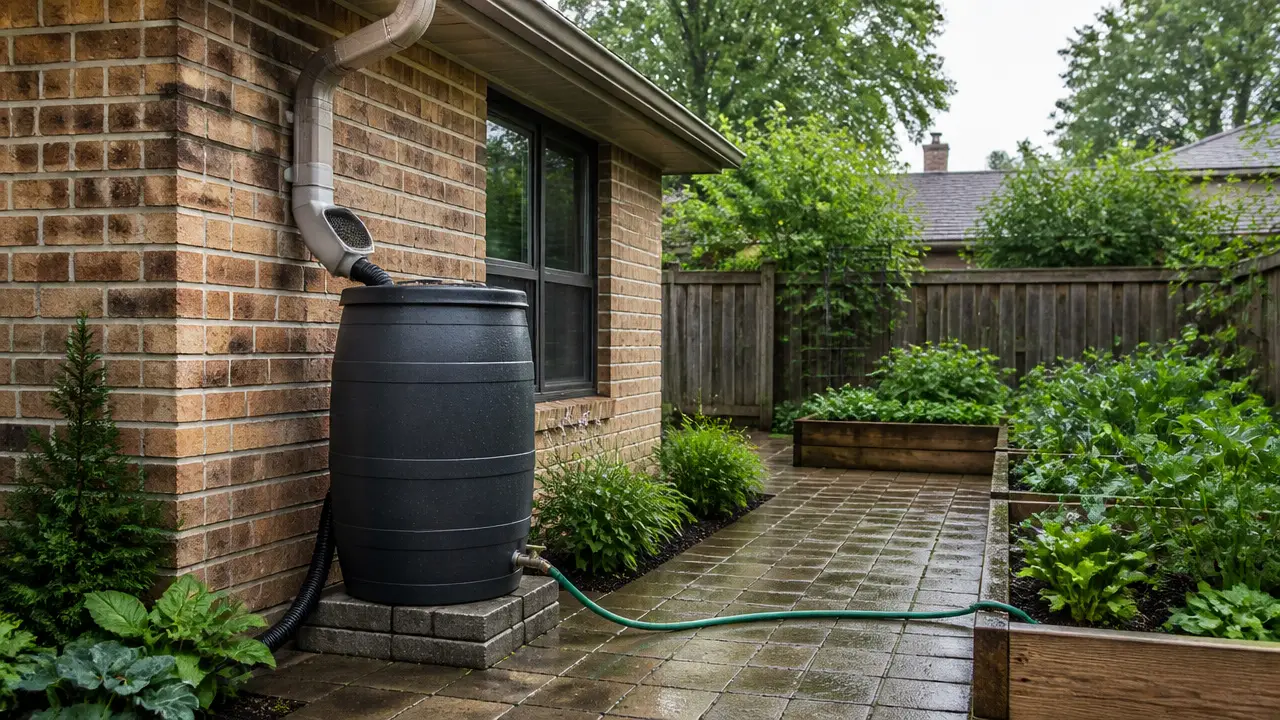
Use an opaque tank whenever possible. A dark container prevents much more light from reaching the water than a clear or translucent container.
If you already have a translucent IBC tote, putting it inside a light-blocking cover or enclosure can help. Make sure the cover does not trap water against electrical equipment, block required vents, or prevent you from inspecting the tank.
Also check openings where sunlight can enter, including:
- Inspection lids
- Overflow openings
- Inlet screens
- Gaps around pipes
- Clear hoses or sight tubes
A small amount of light entering one part of the tank can still support algae growth there.
Blocking light does not remove a heavy layer of algae that is already present. It mainly prevents new growth and slows regrowth after cleaning.
Physical Cleaning Works Well When Algae Is Already Established
For a small non-potable rain barrel, draining and cleaning the container is often the simplest way to deal with a major algae problem.
Remove loose material and rinse or scrub accessible surfaces. Do not enter a large cistern or enclosed tank to clean it. Tanks can be confined spaces with serious safety hazards.
After cleaning, correct the reason the algae developed. Otherwise, it may quickly return.
Common causes include:
- A translucent tank
- An uncovered opening
- Leaves or roof debris entering the tank
- Sediment collecting on the bottom
- Warm, stagnant water
- Long periods between tank cleaning
If the tank is difficult to access safely, use a qualified tank-cleaning service rather than climbing inside.
Reduce the Nutrients That Feed Algae
Algae grows more easily when water contains plenty of nutrients.
In a rainwater system, those nutrients can come from:
- Leaves
- Pollen
- Bird droppings
- Dust
- Soil
- Decomposing insects
- Organic debris from gutters
Good roof and gutter maintenance can therefore help control algae.
A leaf screen or other suitable prefilter can keep larger debris out of the tank. A first-flush diverter may also help in some systems. A first-flush diverter sends the first portion of roof runoff away from the storage tank so some accumulated roof debris does not enter the stored water.
These devices still need regular cleaning. A clogged screen or neglected first-flush system can create new water-quality and overflow problems.
Shade and Plants Can Help in Ponds
An ornamental pond is different from a closed rainwater tank.
Aquatic plants can reduce algae by shading the water and competing for some of the nutrients algae uses. Floating plants and plants with broad leaves can be especially useful for shade where they are suitable for the pond.
Do not assume that adding more plants will fix every algae problem. Excess fertilizer, fish waste, decaying vegetation, and runoff can still provide enough nutrients for algae to grow heavily.
You also need to consider whether a plant is invasive or allowed in your area before putting it in an outdoor pond.
Does Aeration Kill Algae Naturally?
Aeration does not normally kill algae on contact.
It may make a pond less favorable to some types of algae by improving circulation and reducing stagnant areas. It can also help maintain oxygen for fish and other pond life.
Aeration is therefore better viewed as part of algae management rather than as a natural algaecide.
Rainwater tanks usually do not need aeration simply to prevent algae. Keeping light and debris out is generally more important.
Does Barley Straw Kill Algae?
Barley straw is sometimes used in ornamental ponds to discourage algae. As the straw slowly decomposes under suitable conditions, it may create conditions that inhibit some algae.
It is not an instant algae killer. Results can vary depending on water conditions, the type of algae, temperature, and how the straw is used.
Account for practical steps for keeping algae out of a water storage tank to verify cleaning access that supports sediment and odor management.
Do not treat barley straw as a way to make questionable water safe for drinking. It also does not replace normal pond maintenance or nutrient control.
What About Vinegar?
Vinegar can damage algae when applied at a strong enough concentration, but pouring vinegar into stored water is usually a poor algae-control method.
It changes the water's acidity. That can affect:
- Plants
- Fish
- Pumps
- Metal fittings
- Concrete
- Other parts of the water system
Vinegar can be useful for cleaning some empty containers or removable parts when compatible with the material, followed by proper rinsing. It should not be casually dosed into a full rainwater tank.
Does Hydrogen Peroxide Kill Algae?
Hydrogen peroxide can kill or damage algae, but that does not make it a simple "natural" treatment for a rainwater system.
Its effects depend on concentration, water chemistry, organic matter, algae type, and intended water use. Incorrect treatment can harm aquatic life and does not establish that the water is safe for drinking.
For ordinary non-potable rainwater storage, controlling light and physically cleaning the tank are generally simpler ways to address algae.
Be Careful With Water Used for Irrigation
A treatment that kills algae may also harm plants or soil organisms.
This is one reason household substances such as salt, concentrated vinegar, or strong oxidizers should not be added casually to irrigation water.
For garden rainwater systems, focus first on:
- Blocking sunlight.
- Keeping organic debris out.
- Cleaning accumulated sediment.
- Removing established algae when needed.
- Preventing the problem from returning.
Also make sure screens and filters do not become so clogged with algae that they restrict flow to irrigation lines or pumps.
Algae in Drinking Water Needs Different Handling
Visible algae in water intended for drinking should not be treated as only a tank-cleaning problem.
Some freshwater blooms involve cyanobacteria, sometimes called blue-green algae. Certain cyanobacteria can produce toxins. You cannot reliably determine whether a bloom is harmful simply by its appearance.
As of August 2026, EPA guidance treats cyanotoxin control as a multi-stage water-treatment issue. Different treatment processes may be needed to deal with intact cyanobacterial cells and toxins already dissolved in the water.
Do not assume that boiling questionable water solves this problem. CDC specifically warns that boiling water containing cyanobacterial toxins does not remove the toxins and may concentrate them.
For drinking-water use, rainwater should be treated as a whole system. Collection surfaces, prefiltration, storage conditions, treatment stages, maintenance, current laboratory testing, and applicable local requirements all matter. If significant algae or an unexplained bloom appears in water intended for drinking, use another safe drinking-water source until the system has been properly evaluated.
Preventing Algae Is Easier Than Killing It
For most rainwater systems, the best natural algae strategy is prevention.
An opaque tank with screened openings, clean gutters, good debris control, and routine tank inspection removes several of the conditions algae needs.
If you see algae repeatedly, look for the cause instead of repeatedly adding treatments. A translucent tank or sunlight entering around a lid can turn algae into a recurring problem no matter how often the water is treated.
Frequently Asked Questions
What kills algae naturally in a rain barrel?
Blocking sunlight and physically removing existing algae are usually the best options. Keep the barrel opaque, screen its openings, remove organic debris, and clean the barrel when buildup becomes significant.
Will covering a water tank stop algae?
An opaque cover can greatly reduce algae by blocking the light it needs to grow. Existing algae may still need to be removed, and the tank should also be protected from leaves and other organic debris.
Does vinegar kill algae in water?
Vinegar can damage algae, but adding it directly to stored water can change the water's acidity and may harm plants, fish, equipment, or tank materials. It is generally better used, when compatible, for cleaning an empty component rather than dosing a full tank.
Will aeration get rid of algae?
Aeration can help control some pond algae by improving circulation, but it is not an instant algae killer. In closed rainwater tanks, blocking sunlight and keeping debris out are usually more important.
Can barley straw remove algae?
Barley straw may inhibit some algae in ornamental ponds as it decomposes, but it works slowly and results vary. It is not a treatment for making rainwater safe to drink.
Is green rainwater safe for plants?
Green water may contain ordinary algae, but its appearance alone does not tell you everything that is in the water. Avoid adding questionable chemical treatments simply to clear the color. If the water has heavy scum, unusual odors, or signs of a cyanobacterial bloom, avoid using it where people, pets, or edible plant parts could be exposed until the cause is understood.
Can I drink rainwater after removing the algae?
Removing visible algae does not make rainwater potable. Potable means suitable for drinking. Drinking-water use requires appropriate collection, treatment, maintenance, and current water testing, along with compliance with applicable local requirements.