As an affiliate, we may earn a commission from qualifying purchases. We get commissions for purchases made through links on this website from Amazon and other third parties.
Rain barrel water usually starts to smell when leaves, pollen, roof dirt, insects, or other organic material sits in the water and begins to break down. Warm weather and long storage times can make the problem worse.
The best fix is usually to empty and clean the barrel, remove the source of debris, keep light and insects out, and use the stored water more often. Do not try to cover the odor with chemicals. A better long-term solution is to keep unwanted material from reaching the barrel in the first place.
Smell is also not a reliable safety test. Rainwater can contain germs or chemicals even when it looks and smells normal. CDC recommends matching rainwater quality to its intended use and using regular testing and suitable treatment when rainwater is used for drinking, cooking, or bathing.
Why Rain Barrel Water Starts to Smell
A rain barrel is a storage tank, not a treatment system. Anything that washes off the roof can end up inside unless your system removes it first.
Common sources include:
- Leaves and small plant pieces
- Pollen
- Roof dust and dirt
- Bird and animal droppings
- Dead insects
- Algae
- Sediment sitting on the bottom
- Organic material from dirty gutters
- Water that has remained unused for a long time
As this material breaks down, microorganisms can consume it. If the water has little oxygen movement, the barrel can develop a swampy, sour, or rotten smell.
CDC notes that roof runoff can pick up dirt, germs, and chemicals before entering a rainwater collection system. Bird droppings are one example.
What Different Smells May Mean
The odor can sometimes give you a clue, but it cannot tell you exactly what is in the water.
| Smell | Possible cause | What to check |
|---|---|---|
| Swampy or rotten | Organic material breaking down | Sediment, leaves, insects, old water |
| Musty or earthy | Algae or biological growth | Light entering barrel, dirty walls |
| Sour | Stagnant water and decomposing debris | Storage time, bottom sludge |
| Sewage-like | Heavy biological contamination or outside contamination | Roof, gutters, barrel openings |
| Chemical, fuel, or solvent-like | Possible chemical contamination | Roof work, spills, nearby spraying, storage materials |
Treat a chemical or fuel-like smell more seriously than an ordinary musty odor. Stop using the water until you know where the smell came from. Boiling does not remove many chemical contaminants.
How to Get Rid of the Smell
1. Stop Adding New Rainwater
Disconnect or divert the downspout while you work on the barrel.
There is little value in cleaning the barrel while dirty roof runoff continues to enter it.
Check the roof, gutters, downspout, and inlet before reconnecting the system.
2. Empty the Old Water
If the barrel smells strongly, replacing only part of the water often does not solve the problem. Odor-producing material can remain in sediment and slime on the barrel walls.
Drain the barrel completely when practical.
Send the water somewhere that will not:
- Enter a drinking-water system
- Run toward your foundation
- Flood neighboring property
- Cause erosion
- Create another pool of standing water
If you suspect fuel, pesticides, solvents, or another chemical contaminant, do not simply spread the water around the yard. Follow local guidance for handling the suspected contaminant.
3. Remove Sediment and Debris
Look inside the empty barrel if it can be inspected safely.
You may find a layer of dark sediment at the bottom. Remove leaves, insects, sludge, and other loose material.
Sediment matters because it provides a place for organic matter to collect and continue breaking down.
Never climb into a cistern or large tank. Confined spaces can be dangerous. Large storage tanks may require professional cleaning.
4. Clean the Barrel
For a small rain barrel that can be safely accessed from outside, rinse the inside and loosen buildup with a long-handled brush or another tool recommended for the container.
Pay attention to:
- The bottom
- Corners
- The inlet
- The outlet or spigot
- Overflow fittings
- Screens
- Removable lids
Avoid mixing cleaning chemicals. If you use a cleaning or disinfecting product, follow the product label and the barrel manufacturer's instructions for your intended water use.
For rainwater that will become part of a drinking-water system, cleaning and disinfection should be part of a planned treatment and maintenance process rather than an improvised odor fix.
5. Rinse and Drain
Remove loosened debris and cleaning residue before putting the barrel back into service.
Check the outlet while the barrel is empty. Sediment can collect behind the spigot or in a low section of pipe and keep producing odors even after the main barrel looks clean.
Keep Leaves and Roof Debris Out
Preventing debris is easier than repeatedly cleaning a smelly barrel.
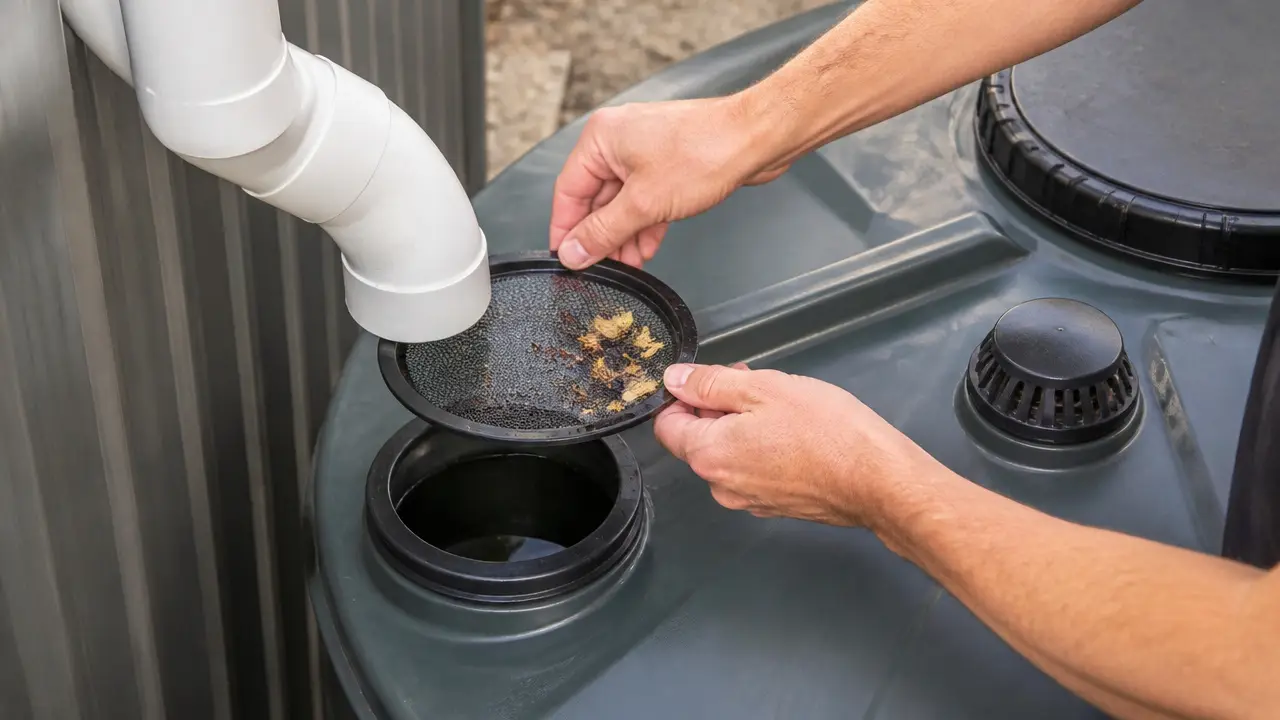
A basic inlet screen can catch larger material before it enters the barrel. The screen should fit tightly enough that insects cannot simply enter around it.
Clean the screen regularly. A clogged screen can cause runoff to overflow or bypass the intended inlet.
Gutters also need attention. A clean barrel will quickly become dirty again if the gutter above it contains decomposing leaves.
Consider a First Flush Diverter
A first flush diverter sends the first part of rainfall away from the storage tank.
That first runoff often carries a larger amount of dust, droppings, pollen, and other material that built up on the roof between storms.
After this initial runoff is diverted, later rain is directed into the barrel.
CDC recommends considering a first flush diverter as one way to improve collected rainwater quality. The amount that should be diverted depends in part on the roof area feeding the system.
A first flush diverter does not make rainwater potable. It is only one prefiltration step.
Keep Sunlight Out of the Barrel
Sunlight can encourage algae growth.
An opaque barrel is usually easier to manage than a clear or translucent container because less light reaches the stored water.
If light is entering through the barrel itself, fittings, or lid, reducing that exposure may help.
Do not simply wrap a barrel in a material that traps moisture, blocks important vents, or causes overheating. Keep access points and overflow paths working as designed.
Do Not Leave Water Sitting Longer Than Necessary
Stored water generally stays easier to manage when it is regularly used and replaced.
EPA maintenance guidance recommends regularly emptying rain barrels rather than allowing water to remain stagnant for long periods. This can also reduce algae and insect problems.
You might use the water for suitable non-potable purposes such as ornamental garden irrigation, depending on your collection surfaces and local guidance.
Non-potable means water that is not intended for drinking.
If your barrel remains full because you rarely need the water, the barrel may simply be larger than your normal use requires. Increasing safe water use or adjusting storage may make more sense than repeatedly treating stagnant water.
Keep Mosquitoes and Other Insects Out
Insects can add organic material to the barrel, and an open barrel can become a mosquito breeding site.
Use causes of unpleasant rainwater odors to verify the compromises that affect the upcoming system choice.
Keep:
- The lid closed
- Inlet openings screened
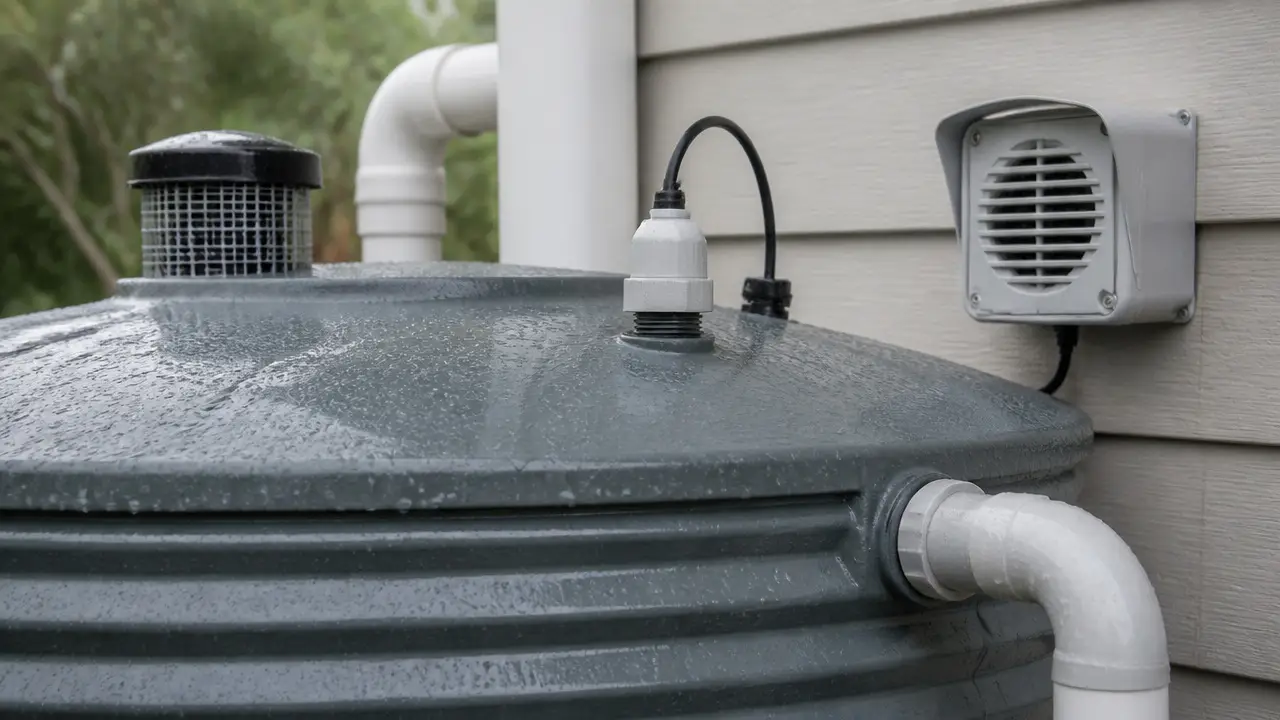
- Overflow openings protected where appropriate
- Gaps around pipes covered
CDC recommends screening the inlet or emptying a rain barrel at least every 10 days to help prevent mosquitoes from laying eggs in it.
EPA also recommends controlling standing-water habitats as part of mosquito prevention.
Check screens after storms because leaves and roof debris can tear them or push them out of place.
Check the Overflow
A poorly designed overflow can cause another odor problem.
If water backs up because the overflow is clogged, debris may remain trapped near the water surface. An open overflow may also allow insects, leaves, or small animals into the barrel.
Make sure the overflow:
- Is large enough to handle excess water
- Is not blocked
- Carries water away safely
- Does not allow easy pest entry
Do not completely seal a barrel in a way that prevents proper venting or overflow.
Clean the Gutters Too
Cleaning only the barrel will not help much if the gutter feeding it contains rotting material.
Check for:
- Leaves
- Pine needles
- Roof grit
- Bird nests
- Animal droppings
- Standing water
- Blocked downspouts
Do not take unnecessary risks on a roof or ladder. If the gutter cannot be reached safely from the ground, use suitable ground-based equipment or hire a qualified professional.
Should You Add Bleach to Stop the Smell?
Do not routinely pour bleach or another disinfectant into a rain barrel just because the water smells bad.
Disinfection is different from cleaning.
A disinfectant may reduce certain microorganisms under the right conditions, but it does not remove leaves, sludge, sediment, chemicals, or the underlying reason the barrel became dirty. Organic material can also interfere with treatment.
Chemical treatment becomes more complicated when the water is used around food crops, animals, plumbing, household fixtures, or people.
For ordinary garden barrels, removing dirty water and physical debris and preventing new contamination is usually the more useful starting point.
For drinking-water systems, use a properly designed treatment process and current water testing rather than guessing at chemical doses.
Does a Filter Fix Smelly Rainwater?
A filter may help, but the correct filter depends on what is causing the problem.
A coarse inlet screen can remove leaves. A sediment filter can remove smaller suspended particles. Other treatment stages may target different contaminants.
No single filter should be assumed to make roof runoff safe to drink.
CDC specifically warns that smell, taste, and appearance cannot establish whether water is safe. Harmful germs and chemicals may be present without producing any noticeable odor.
For potable use, the whole system matters:
- Suitable collection surfaces
- Roof and gutter maintenance
- Debris screening
- First flush or other prefiltration where appropriate
- Clean storage
- Treatment designed for the actual contaminants
- Regular maintenance
- Current laboratory testing
- Compliance with applicable local requirements
Potable means suitable for drinking.
When You Should Discard the Water
Empty the barrel and investigate the system when you find:
- A strong unexplained odor
- Heavy algae or slime
- A dead animal inside
- Large amounts of decomposing material
- Oil or an oily film
- Fuel or solvent odors
- Suspected pesticide contamination
- Runoff following roof coatings or chemical work
- Floodwater entering the barrel
Do not assume that removing the smell also removes the contamination.
This is especially important if the water could be swallowed, sprayed on food, used for bathing, or connected to household plumbing.
How to Prevent the Smell From Coming Back
A simple maintenance routine works better than waiting for odor to develop.
After storms
Check the inlet screen and overflow for leaves or blockage.
Every few weeks during regular use
Look for unusual color, odor, insects, algae, or slow flow at the spigot.
When sediment builds up
Empty the barrel and remove it.
During long dry periods
Check whether old water has been sitting unused. Use or drain it where appropriate rather than allowing the barrel to remain stagnant indefinitely.
Before reconnecting after cleaning
Check the roof drainage path. Make sure debris does not immediately wash back into your clean barrel.
The goal is not to keep stored rainwater sterile. It is to limit the dirt, organic matter, pests, and long storage conditions that commonly cause odor.
Frequently Asked Questions
Why does my rain barrel water smell like rotten eggs?
A rotten or swampy smell often develops when organic material breaks down in stagnant water with little oxygen. Empty the barrel, remove bottom sediment, clean it, and check for leaves, insects, or other debris entering from the roof.
Can I still water plants with smelly rain barrel water?
It depends on why the water smells and what you are watering. Mild odor from old organic material is different from a fuel, pesticide, sewage, or chemical smell. If contamination is unknown, especially around edible plants, stop using the water until you identify the source.
Will a first flush diverter prevent bad smells?
It can help by keeping some of the dirtiest initial roof runoff out of the barrel. It will not prevent every odor problem, so you still need screens, clean gutters, covered storage, regular water use, and periodic cleaning.
Why does my rain barrel smell worse during summer?
Warm temperatures can speed biological activity, while sunlight can encourage algae. Summer water may also remain in the barrel longer between storms. Keeping the barrel shaded from light, limiting debris, and regularly cycling the water can help.
Does bad-smelling rainwater mean it is unsafe?
Not necessarily, but smell cannot tell you whether water is safe. Some harmless substances can create odors, while dangerous germs or chemicals may have no smell at all. Rainwater intended for drinking, cooking, or bathing needs suitable treatment and regular testing.
How often should I clean my rain barrel?
There is no single cleaning schedule that fits every system. Clean it when sediment, slime, algae, or odors develop, and inspect it regularly enough to catch those problems early. Barrels receiving lots of tree debris or roof sediment may need attention more often.
Should I keep my rain barrel completely sealed?
Keep it covered against debris and pests, but do not block required vents or overflow paths. Inlets and other openings should be screened or protected while allowing the system to fill and overflow correctly.