As an affiliate, we may earn a commission from qualifying purchases. We get commissions for purchases made through links on this website from Amazon and other third parties.
A rain barrel should usually be cleaned at least once or twice a year. Clean it sooner if you see heavy sediment, algae, bad odors, insect buildup, or dirty water.
A good time for a full cleaning is at the end of the rainy season or before you begin using the barrel again after winter. Barrels that collect a lot of roof debris may need more frequent cleaning.
How Often Should You Clean a Rain Barrel?
For most home rain barrels, this schedule works well:
| Condition | Cleaning Schedule |
|---|---|
| Normal garden use | Every 6 to 12 months |
| Lots of leaves, pollen, or roof debris | Every 3 to 6 months |
| Visible sludge or algae | Clean as soon as practical |
| Bad smell or unusual water color | Inspect and clean promptly |
| Before seasonal storage | Clean before putting the barrel away |
| After a long period without use | Inspect and clean before using it again |
You do not need to scrub the barrel every time you see a little dirt. A thin layer of sediment often settles naturally at the bottom.
The important part is keeping that material from building into a thick layer that clogs the outlet or starts to smell.
Why Rain Barrels Get Dirty
Rainwater can carry material from the roof into the barrel.
Common debris includes:
- Dust
- Pollen
- Leaves
- Small twigs
- Bird droppings
- Insect material
- Roofing particles
- Dirt from gutters
Much of this material settles to the bottom of the barrel.
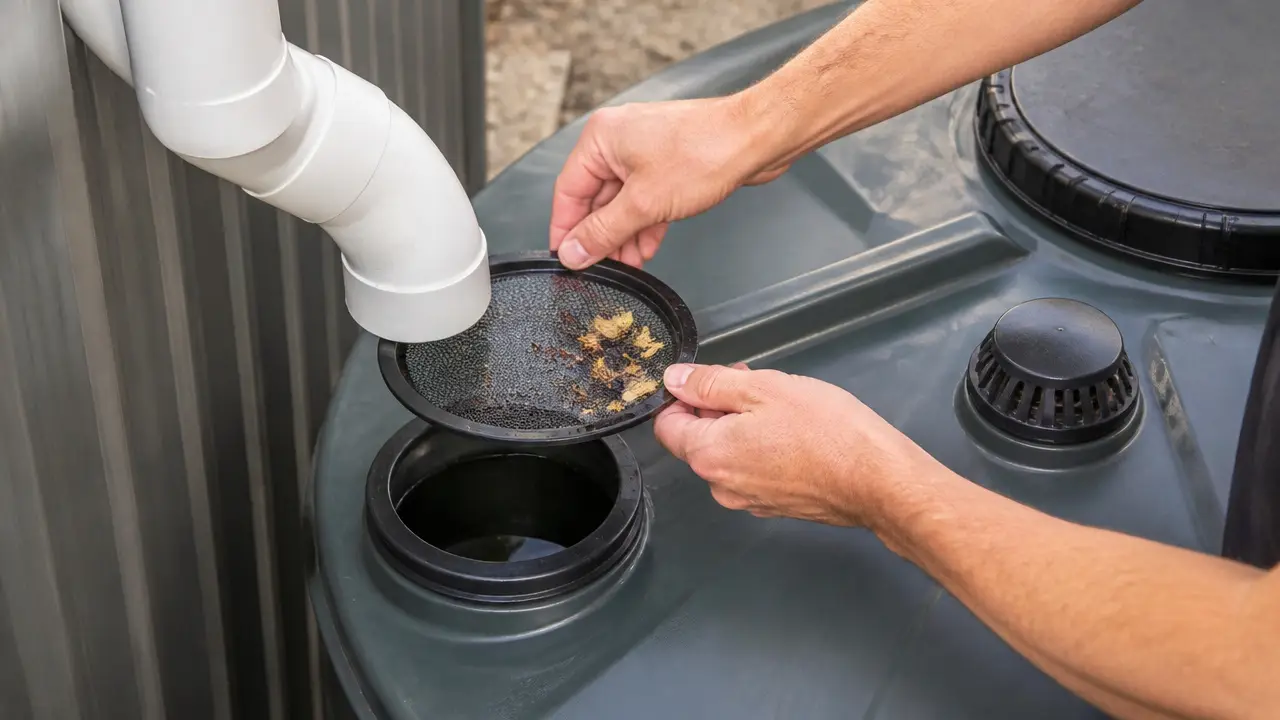
A screen over the inlet helps keep large debris out, but it will not stop fine sediment.
A first-flush diverter can also help. This device sends the first part of a rainfall away from the barrel. That first runoff often contains more roof dust and debris than the water that follows.
Neither a screen nor a first-flush device removes the need for occasional barrel cleaning.
Signs Your Barrel Needs Cleaning
Do not rely only on the calendar. Check the barrel from time to time.
Cleaning may be needed if you notice:
A Thick Layer of Sediment
A small amount of settled dirt is normal.
If sediment becomes deep enough to reach the outlet or gets stirred into the water easily, it is time to remove it.
Poor Water Flow
Sediment, leaves, or algae can collect near the spigot or outlet.
If the flow becomes much weaker than usual, check for a blockage before assuming the barrel is empty or damaged.
Bad Odors
Stored rainwater should not develop a strong rotten or sewage-like smell.
Odors can come from decaying leaves, insects, organic sludge, or water that has been sitting for a long time.
Emptying and cleaning the barrel may help, but you should also find the source of the contamination.
Algae Growth
Algae needs light to grow.
If the inside of the barrel is turning green, sunlight may be reaching the stored water. A dark, opaque barrel usually limits algae better than a clear or translucent container.
Cleaning removes existing growth, but blocking light helps keep it from returning quickly.
Mosquitoes or Other Insects
Mosquitoes should not have open access to stored water.
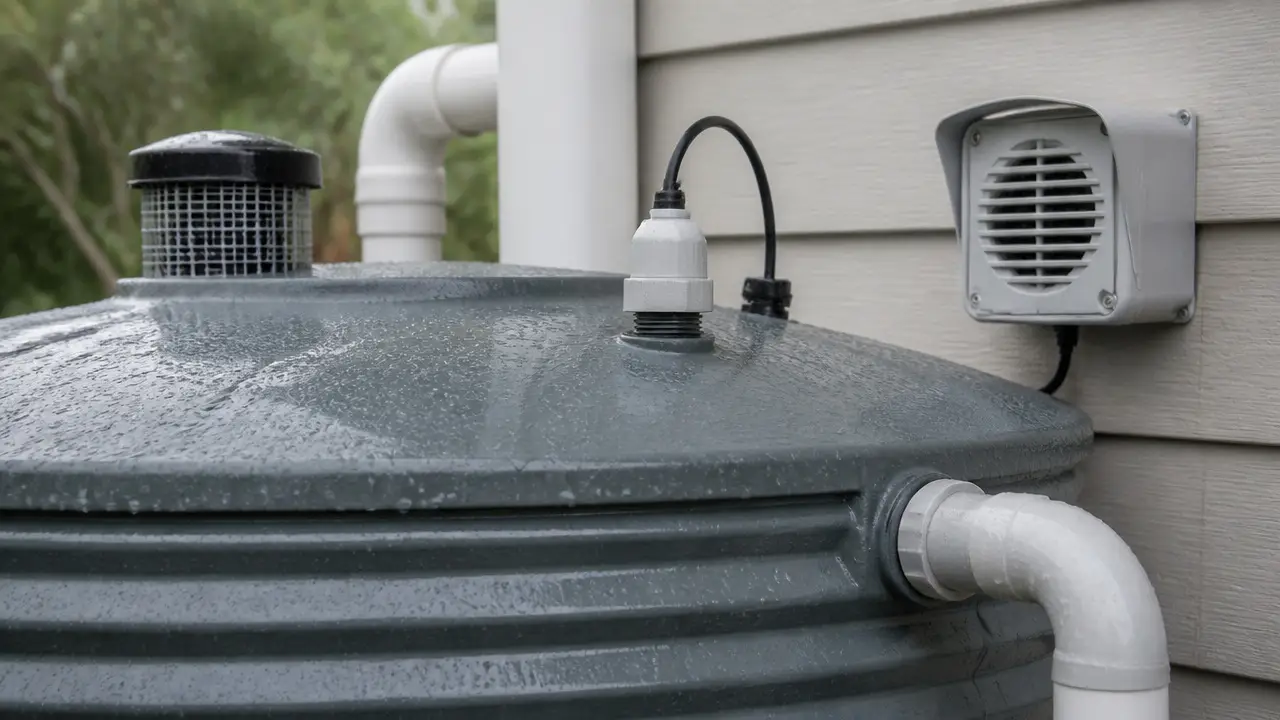
Inspect the inlet screen, overflow opening, lid, and other gaps. Cleaning the barrel without fixing those openings will not solve the problem for long.
How to Clean a Rain Barrel
A basic cleaning is usually a simple DIY maintenance job.
1. Disconnect Incoming Water
Temporarily redirect the downspout or shut off the pipe feeding the barrel.
This keeps new roof runoff from entering while you work.
2. Empty the Barrel
Drain as much water as possible through the outlet.
If the remaining water is suitable for your normal non-potable use, you may be able to use it on ornamental plants or other appropriate areas rather than wasting it.
Do not assume stored roof runoff is safe for drinking.
3. Remove Loose Debris
Open the barrel if its design allows safe access.
Remove leaves, sediment, and other loose material from the bottom.
Do not climb into a tank, cistern, or other enclosed water container. Larger storage tanks can create confined-space hazards and should be handled differently from an ordinary open-access rain barrel.
4. Rinse the Inside
Use clean water to rinse sediment from the walls and bottom.
A soft brush can help remove stuck dirt or algae if you can safely reach the surfaces from outside the barrel.
Pay extra attention to areas around the outlet.
5. Clean the Screen and Fittings
Remove debris from the inlet screen.
Check the:
- Spigot
- Overflow fitting
- Hose connection
- Lid
- Gaskets
- Screens
Make sure insects cannot enter through gaps around these parts.
6. Drain the Dirty Rinse Water
Remove the rinse water and loosened debris.
Avoid sending concentrated dirty water into places where it could enter wells, surface water, or sensitive drainage areas.
7. Reassemble and Inspect
Evaluate practical steps for keeping water fresh in a rain barrel to compare stored supply required between realistic refill opportunities.
Replace screens, lids, and fittings.
Make sure connections are secure before directing the downspout back into the barrel.
Watch the system during the next rainfall if possible. Check for leaks and make sure the overflow moves water away from the building.
You May Not Need to Disinfect the Barrel Every Time
Routine cleaning and disinfection are not the same thing.
For a barrel used only for ordinary outdoor non-potable purposes, removing sediment and organic debris may be the main maintenance need.
Using strong chemicals every time you clean can create other problems, especially if the rinse water will reach plants or soil.
If a barrel has been contaminated by sewage, chemicals, animal remains, floodwater, or another serious contaminant, ordinary rinsing may not be enough. Depending on the contamination, replacing the barrel may be safer than trying to restore it.
Keep the Barrel Cleaner Between Washings
The less debris that enters the barrel, the less often you will need a major cleanup.
Keep Gutters Clear
Clean leaves and roof debris from gutters and downspouts.
A clogged or dirty gutter can send a large amount of organic material into storage.
Maintain the Inlet Screen
Check the screen regularly, especially during periods of heavy leaf fall.
A blocked screen can also make water overflow in the wrong place.
Consider a First-Flush Diverter
A first-flush diverter can reduce the amount of dirt entering storage at the beginning of a storm.
It also needs regular cleaning so it does not become another source of debris.
Keep Sunlight Out
Use an opaque barrel and keep the lid closed.
Reducing light helps slow algae growth.
Prevent Mosquito Access
Cover openings with suitable screening and keep the lid secure.
Do not depend on frequent barrel cleaning as the main form of mosquito control.
Avoid Letting Water Sit for Long Periods
Regular use helps cycle water through the barrel.
If water has been sitting for a long time, inspect it before using it and consider draining and cleaning the barrel before the next collection period.
Cleaning Before Winter
In freezing climates, cleaning often fits naturally into winter preparation.
Before prolonged freezing weather:
- Empty the barrel if required for your setup.
- Remove sediment.
- Clean the inlet screen.
- Disconnect or bypass the collection line if needed.
- Drain hoses and fittings that could hold water.
Water expands when it freezes. Trapped water can damage barrels, valves, hoses, and fittings.
The right winter setup depends on the barrel design and local climate, so follow the manufacturer's instructions when available.
Does the Intended Water Use Change the Cleaning Schedule?
Yes.
A barrel used to water ornamental plants may not need the same level of water-quality control as a system supplying indoor fixtures.
Cleaning alone does not make stored rainwater potable, meaning safe for drinking.
If rainwater will be used for drinking, cooking, or another higher-risk purpose, the entire system matters. That includes the roof surface, gutters, first flush, storage tank, treatment stages, plumbing, maintenance, and current water testing.
A clean-looking barrel does not prove that the water is free of harmful microorganisms or chemicals.
Inspect More Often Than You Clean
You may only need a full cleaning once or twice a year, but a quick inspection should happen more often.
Every few weeks during the collection season, look for:
- Blocked inlet screens
- Mosquito access
- Leaks
- Loose fittings
- Overflow problems
- Unusual odors
- Heavy sediment
- Algae
- Damage to the barrel or lid
These quick checks can prevent small problems from turning into a full barrel cleanup.
Frequently Asked Questions
How often should I clean a rain barrel?
Most rain barrels should receive a full cleaning about every 6 to 12 months. Clean more often if your roof produces a lot of leaves, pollen, dirt, or other debris.
Do I need to empty my rain barrel to clean it?
For a full cleaning, yes. Emptying the barrel lets you remove settled sediment and inspect the bottom, outlet, and fittings.
Is sediment in a rain barrel normal?
Yes. Fine roof debris often settles at the bottom. A small amount is common, but thick sludge should be removed before it blocks the outlet or begins to smell.
Why does my rain barrel smell bad?
Bad odors often come from decaying leaves, insects, organic sediment, or water that has remained stagnant for a long time. Empty the barrel, remove debris, and check the gutter and inlet system for the source.
How can I stop algae from growing in my rain barrel?
Keep sunlight out. An opaque barrel with a closed lid usually limits algae better than a clear container. Cleaning removes existing algae, but reducing light helps prevent it from coming back.
Should I clean my rain barrel before winter?
In freezing climates, it is often a good idea. Cleaning and draining the barrel also gives you a chance to remove sediment and protect fittings from water that could freeze and expand.
Does cleaning a rain barrel make the water safe to drink?
No. Cleaning removes dirt and buildup, but it does not prove that roof runoff is safe to drink. Drinking-water use requires suitable collection, treatment, maintenance, current water testing, and compliance with applicable local requirements.