As an affiliate, we may earn a commission from qualifying purchases. We get commissions for purchases made through links on this website from Amazon and other third parties.
Downspouts should usually be checked and cleaned at least twice a year, often in spring and fall. Homes surrounded by trees may need cleaning every few months during heavy leaf, seed, or pollen seasons.
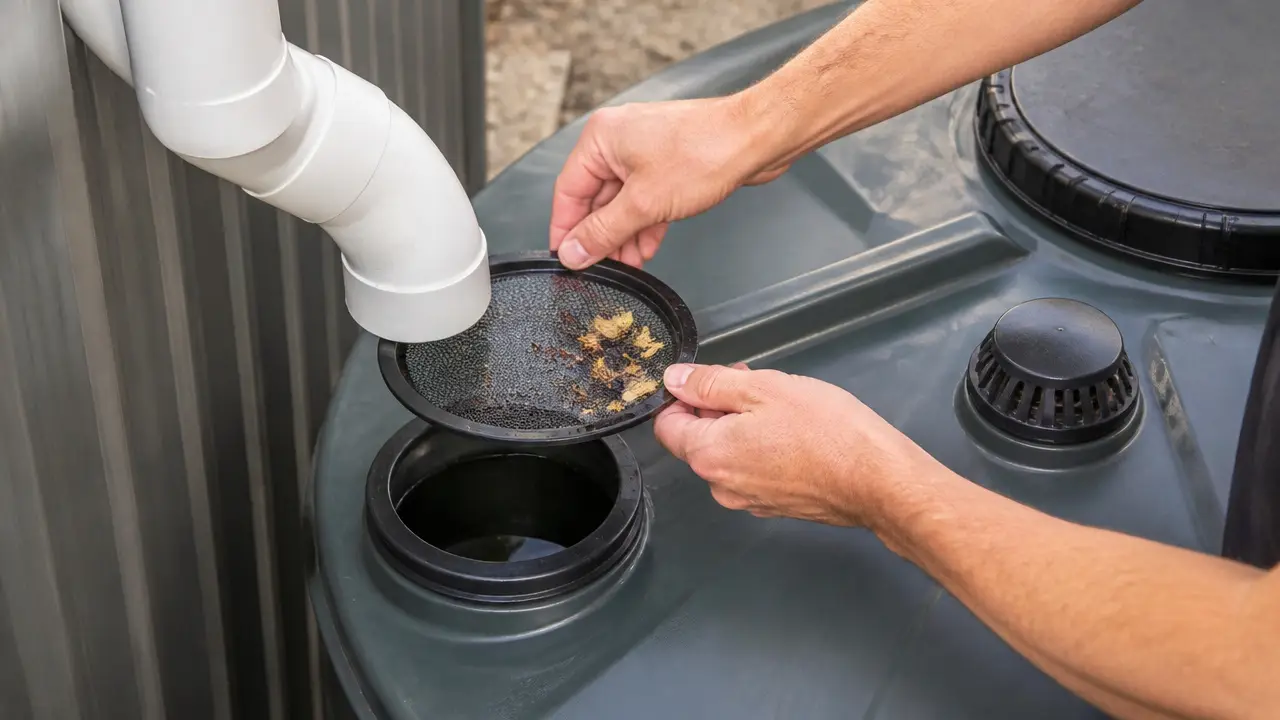
For a rainwater harvesting system, keeping downspouts clear matters even more. A blocked downspout can reduce collection, send water over the gutter edge, and carry built-up debris into your rain barrel, IBC tote, or cistern when the blockage finally breaks loose.
A Practical Downspout Cleaning Schedule
There is no single schedule that fits every house. How often you need to clean depends mostly on nearby trees, roof debris, storms, and how the downspout connects to your rainwater system.
A useful starting point is:
| Situation | Suggested Check |
|---|---|
| Few nearby trees | About twice a year |
| Several nearby trees | Every 2–3 months during debris season |
| Heavy autumn leaf fall | Several times during fall |
| After a major wind or rainstorm | Inspect afterward |
| Rainwater harvesting system | Inspect regularly during the collection season |
| Frequent pine needles, seeds, or blossoms | Check more often |
You may not need to fully clean the downspout every time you inspect it. The goal is to catch buildup before it becomes a blockage.
Why Downspouts Get Clogged
Most downspout problems begin higher in the drainage system.
Leaves, twigs, pine needles, roof grit, seeds, and other material collect in the gutter. Rain moves this debris toward the downspout opening, where it can pack together.
Common blockage points include:
- The gutter outlet at the top of the downspout
- Downspout elbows
- Narrow transitions or adapters
- Screens and strainers
- Connections leading to a rain barrel or tank
- Underground drain connections
Elbows are especially common trouble spots because debris can catch where the water changes direction.
Signs Your Downspout Needs Cleaning
You do not have to wait for your regular maintenance date if the drainage system is showing signs of trouble.
Check the downspout if you notice water overflowing from the gutter near the downspout opening. Also look for unusually slow drainage, water leaking from downspout joints, or little water reaching your rain tank even during steady rainfall.
If you use a rain barrel, another clue is a sudden drop in collection compared with similar storms.
Debris coming out of the downspout can also mean material has been building up upstream.
Rainwater Systems May Need More Frequent Checks
A normal roof drainage system mainly needs to move water away from the building. A rainwater harvesting system also needs to limit the amount of debris entering storage.
That makes routine cleaning important.
Leaves and organic material entering a tank can settle on the bottom and add to the sludge that eventually needs to be removed. Debris can also block inlet screens, pumps, valves, irrigation lines, and filters.
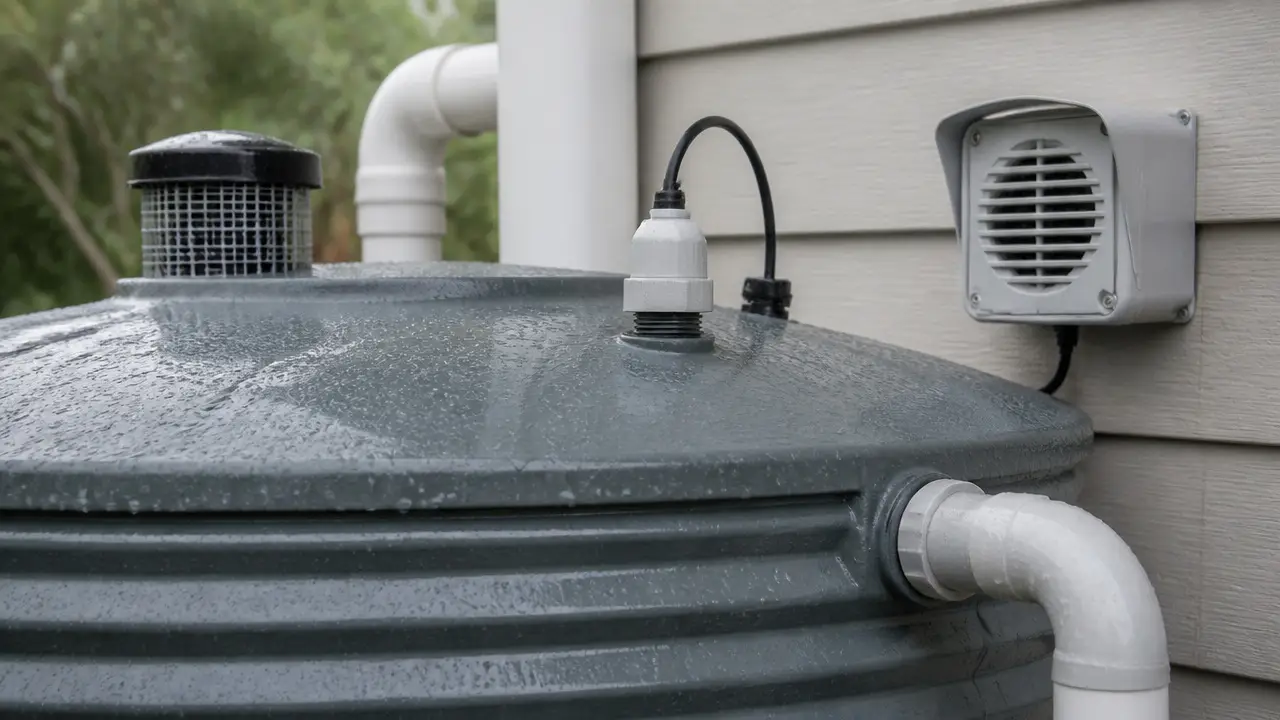
A typical roof-fed system may include several debris-control stages, such as a gutter screen, downspout screen, first-flush device, and tank inlet screen.
A first-flush device diverts some of the first runoff from a roof at the start of a rain event. That early runoff often contains more dust and loose debris than the water that follows.
These parts do not eliminate the need to clean the gutters and downspouts. They work better when large debris is removed before it reaches them.
Clean After Heavy Leaf Fall
Autumn often creates the highest clog risk.
A single cleaning at the end of fall may not be enough if leaves are falling for several weeks. Gutters can fill, clog the downspout opening, and overflow before the season is finished.
In areas with heavy leaf fall, inspect the drainage system several times during the season.
Pine trees can create similar problems. Long needles can pass through some gutter guards and collect inside elbows or screens.
Spring can also bring large amounts of flowers, seeds, pollen, and small plant material.
Check Downspouts After Strong Storms
Windstorms can place a surprising amount of material on a roof.
Branches, leaves, seed pods, and other debris may enter a gutter even if it was recently cleaned. Heavy rain can then push everything toward the downspout at once.
After a strong storm, you usually do not need to dismantle the whole drainage system. A visual inspection may be enough.
During the next safe opportunity, check whether:
- Gutters are draining normally
- Water is entering the downspout freely
- Joints are leaking
- Screens are covered with debris
- Your tank inlet is receiving normal flow
Do not climb onto a wet roof or use an unstable ladder to inspect the system. If the downspout opening cannot be reached safely from the ground or a properly positioned ladder, use a qualified gutter-cleaning service.
How to Keep a Rainwater Downspout Clear
Start by controlling debris before it reaches the narrow parts of the system.
Look closely at practical steps for stoping the gutters from overflowing in heavy rain to coordinate roof discharge relative to available drainage capacity.
Keep the gutter outlet clear and clean any leaf screens or strainers regularly. If your system has removable downspout screens, inspect them before the rainy season and during periods of heavy debris.
If the downspout connects to a first-flush device, rain barrel diverter, or tank inlet, include those connections in the inspection. A clean vertical downspout will not help much if the adapter leading into the tank is plugged.
Flush or clear accessible sections only according to the way your system is built. Avoid forcing tools into concealed pipework where they could separate joints or damage fittings.
Underground drainage pipes can be harder to diagnose. Persistent backups in buried piping may require drain-cleaning equipment or professional help.
Gutter Guards Do Not Remove the Need for Cleaning
Gutter guards can reduce the amount of large debris entering a gutter, but they do not make the system maintenance-free.
Fine leaves, roof grit, seeds, pollen, and organic material can still collect above or below the guard. Some systems also allow debris to accumulate around the downspout opening.
Inspect guarded gutters and downspouts periodically rather than assuming they are clear.
For rainwater collection, also check whether the guard is reducing water flow during heavy rain. A debris-covered screen can cause water to pass over the gutter instead of entering the tank.
Watch the Downspout While It Is Raining
One of the easiest ways to spot drainage trouble is to observe the system during rainfall from a safe location on the ground.
Water should enter the downspout without backing up over the gutter edge. If the downspout feeds a storage tank, you should see normal flow reaching the inlet.
Slow drainage does not always mean the vertical downspout itself is clogged. The restriction could be in an elbow, screen, diverter, first-flush device, tank inlet, or underground pipe.
Follow the water path rather than cleaning the same part repeatedly.
Downspout Cleaning and Water Quality
Keeping roof drainage clean helps reduce the amount of organic debris entering stored rainwater, but cleaning the downspout does not make roof runoff safe to drink.
Roof runoff can contain microorganisms, animal waste, dust, chemicals, and other contaminants that are not visible in the downspout.
If rainwater will be used for drinking, cooking, or other potable uses, water safety should be treated as a whole-system issue. Suitable collection surfaces, debris control, treatment, ongoing maintenance, current laboratory testing, and applicable local requirements all matter.
For non-potable uses such as garden watering, debris control still helps reduce clogged screens, valves, pumps, and irrigation equipment.
Build Downspout Checks Into Your Regular Maintenance
The easiest maintenance schedule is one tied to events you already notice.
Check the system before your main rainy season, after periods of heavy leaf fall, and after unusually strong storms. During rain, occasionally observe whether water is flowing normally.
For many homes, spring and fall cleaning is a reasonable minimum. Homes with heavy tree cover or rainwater collection equipment often benefit from more frequent inspections.
A few minutes spent checking the drainage path can prevent a small pile of leaves from becoming a blocked downspout or a tank inlet full of debris.
Frequently Asked Questions
How often should gutters and downspouts be cleaned?
For many homes, twice a year is a reasonable starting point, usually in spring and fall. Properties with heavy tree cover may need inspections every few months or several times during autumn.
Should I clean my downspouts after every storm?
Usually not. However, it is worth inspecting the system after severe windstorms or unusually heavy rain, especially if branches and leaves have fallen onto the roof.
How can I tell if a downspout is clogged?
Common signs include gutter overflow, slow drainage, leaking downspout joints, or unusually little water reaching a rain barrel or storage tank during rainfall.
Do gutter guards stop downspouts from clogging?
They can reduce large debris, but they cannot prevent every clog. Fine leaves, seeds, needles, roof grit, and other material can still enter or collect around the downspout opening.
How often should rain barrel downspouts be checked?
Inspect them regularly during the collection season. Pay particular attention to screens, diverters, elbows, and connections leading into the barrel because these narrow areas can clog before the main downspout does.
Can a clogged downspout reduce rainwater collection?
Yes. A blockage can cause water to back up and overflow from the gutter instead of reaching the tank. Partially clogged screens and adapters can also reduce flow.
Does cleaning the downspout make rainwater safe to drink?
No. Cleaning removes some physical debris but does not establish that the water is potable. Drinking-water systems require appropriate collection, treatment, maintenance, laboratory testing, and compliance with applicable local requirements.