As an affiliate, we may earn a commission from qualifying purchases. We get commissions for purchases made through links on this website from Amazon and other third parties.
A clogged downspout can often be cleaned from the ground without climbing a ladder. Start by disconnecting the bottom outlet if possible, then use a garden hose, flexible drain-cleaning tool, or wet/dry vacuum to loosen and remove the blockage. Work gently so you do not separate joints or damage thin metal or plastic downspout sections.
If the clog is near the top, packed tightly, or connected to a rainwater collection system, you may need to disconnect sections at ground level or have the gutter and downspout cleaned professionally.
How to Tell If a Downspout Is Clogged
A downspout carries roof runoff from the gutter to the ground, drain, rain barrel, or storage system.
Common signs of a clog include:
- Water spilling over the gutter near the downspout
- Little or no water coming from the bottom outlet during rain
- Water leaking from downspout joints
- Slow drainage into a rain barrel or tank
- Gurgling sounds inside the downspout
- Leaves, twigs, or roof debris visible at the lower opening
If several downspouts are draining poorly, the problem may be in the gutters rather than inside one downspout.
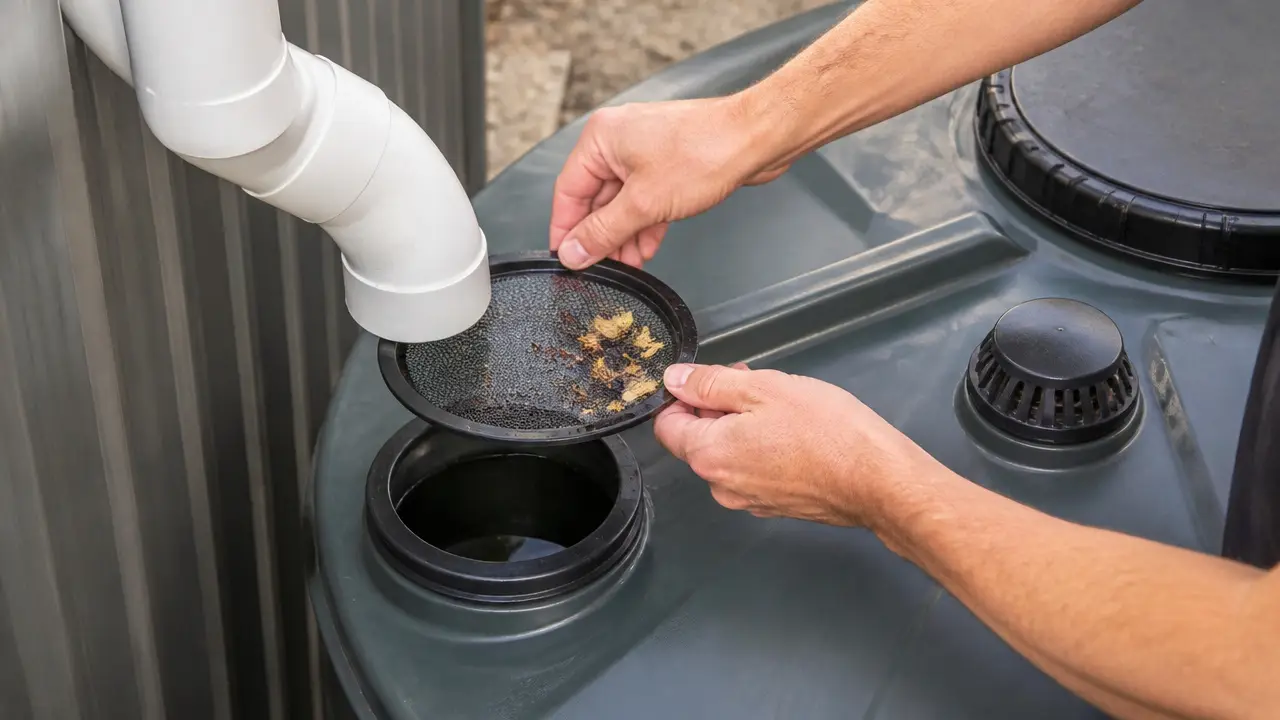
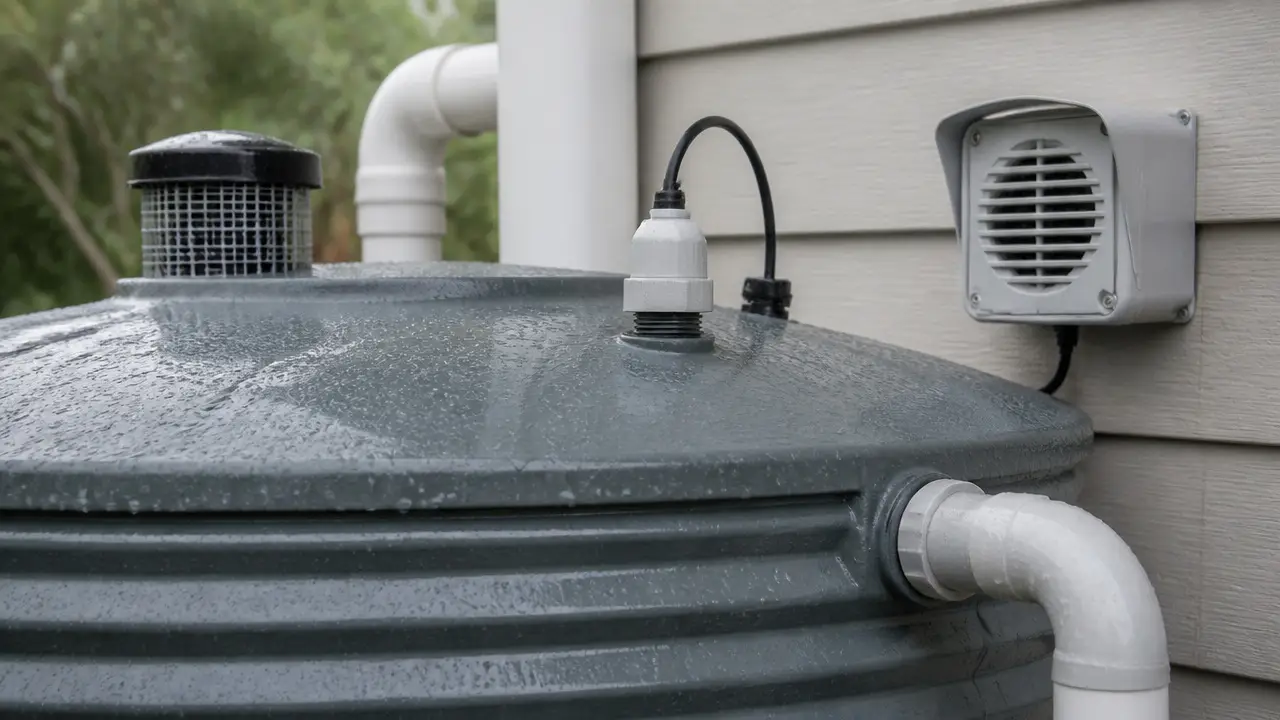
For a rainwater harvesting system, also check any leaf screen, debris filter, or first-flush device. A first flush is a section that diverts the first dirty runoff from the roof before cleaner rainwater enters storage. A blocked screen or diverter can sometimes look like a clogged downspout.
What You Need
Most ground-level downspout cleaning can be done with simple tools.
Useful options include:
- Garden hose with a spray nozzle
- Flexible drain-cleaning rod or plumbing snake
- Wet/dry vacuum
- Gloves
- Bucket or tarp for debris
- Screwdriver or nut driver for removable downspout sections
- Eye protection
Avoid rigid tools that can puncture, crush, or separate the downspout.
Do not use chemical drain cleaners. Downspouts are not household drainpipes, and chemicals can damage materials, harm landscaping, and contaminate collected rainwater.
How to Clean a Clogged Downspout From the Ground
1. Stop Water From Entering the Downspout
Choose a dry period if possible.
Do not try to clear a badly clogged downspout while heavy rain is flowing through it. Water trapped above the blockage can suddenly release when the clog moves.
If the downspout feeds a rain barrel, IBC tote, cistern, or other storage tank, divert the runoff away from storage while cleaning. This keeps loosened leaves, dirt, insects, and sediment out of the tank.
2. Check the Bottom Opening
Look inside the lower end of the downspout.
Debris often collects where the downspout enters:
- An elbow
- An underground drain
- A rain barrel connection
- A flexible extension
- A debris screen
Remove anything you can safely reach from ground level.
If the downspout has a removable extension or elbow, disconnect it. This gives debris a larger opening through which to escape.
3. Use a Garden Hose From the Bottom
Insert a garden hose a short distance into the bottom of the downspout.
Turn the water on gradually.
The goal is to loosen the blockage rather than force maximum pressure into the pipe. Move the hose gently upward as the clog begins to break apart.
You may see:
- Leaves
- Roof grit
- Twigs
- Mud
- Insect nests
- Small pieces of roofing material
coming back out around the hose.
Do not completely seal the hose inside the downspout. Water and debris need room to escape.
If water immediately backs up without moving the clog, turn it off rather than continuing to pressurize the downspout.
4. Try a Flexible Cleaning Tool
For a stubborn blockage, feed a flexible drain rod or plumbing snake upward from the bottom.
Rotate and push it gently.
You are trying to break the debris into smaller pieces, not drill through the downspout.
Pay special attention to elbows. Leaves often pack tightly where the pipe changes direction.
Stop if the tool becomes firmly stuck. Pulling aggressively can separate downspout joints or damage lightweight material.
5. Use a Wet/Dry Vacuum
A wet/dry vacuum can work well when the clog is close to the bottom.
Remove the lower elbow or extension if possible. Place the vacuum hose against the downspout opening and try to pull debris downward.
A temporary loose-fitting seal around the vacuum hose may improve suction, but avoid attaching anything so tightly that you damage the downspout.
Do not use a standard household vacuum around water.
6. Flush the Downspout Again
Once you have removed some debris, flush the downspout with the garden hose.
Water should flow freely from the bottom without backing up.
If the downspout connects directly to a rainwater tank, keep it disconnected or diverted until the dirty flushing water runs clear.
The flushing water is still roof runoff. Do not assume it is safe to drink or use for food preparation.
Cleaning a Downspout With an Underground Drain
A downspout may appear clogged when the real problem is below ground.
To find out, disconnect the downspout from the underground drain if the connection is accessible.
Run water through the downspout.
If it drains normally while disconnected, the obstruction is probably in the underground pipe rather than the downspout.
Do not keep forcing water into a blocked buried drain. It may cause water to back up near the foundation or escape through a damaged pipe.
A long underground line, repeated blockage, or suspected collapsed pipe is usually a better job for a drain-cleaning professional.
Cleaning a Downspout Connected to a Rain Barrel
Rain barrels add a few possible blockage points.
Check:
- The gutter outlet
- Downspout elbows
- Leaf screens
- Diverter fittings
- First-flush components
- Tank inlet screens
A clogged inlet screen can restrict flow even when the downspout itself is clear.
Disconnect or bypass the rain barrel before flushing debris from the downspout. Otherwise, the cleaning process can send concentrated roof sediment into the barrel.
Afterward, inspect the barrel inlet and overflow connection before restoring normal flow.
Cleaning a Downspout Connected to a Cistern or IBC Tote
Consider clearing a clogged underground downspout to understand collection hardware matched to weather and roof litter.
Larger rainwater systems often have more fittings between the roof and storage.
A blockage can develop at:
- Pipe reducers
- Sharp elbows
- Leaf filters
- First-flush chambers
- Small inlet screens
- Tank fittings
If the downspout flows freely after being disconnected from the system, inspect these components separately.
Avoid pushing a snake blindly through filters, valves, or tank fittings. Flexible tools can damage internal screens or become trapped.
Also avoid entering a cistern or other enclosed tank to retrieve debris. Confined spaces can contain serious hazards and require specialized procedures and equipment.
What If the Clog Is Near the Top?
Ground-level methods do not always reach upper clogs.
A common blockage point is the gutter outlet where the gutter connects to the downspout. Wet leaves can form a dense plug there.
You may be able to loosen it by flushing upward from the bottom, but not every blockage will move.
Do not improvise unsafe ways to reach the gutter from the ground, such as standing on furniture, vehicle roofs, unstable platforms, or makeshift extensions.
If the upper opening must be accessed and you cannot do so safely, have a qualified gutter-cleaning professional clear it.
Can You Use a Pressure Washer?
A pressure washer is usually unnecessary.
High-pressure water can:
- Separate downspout joints
- Damage thin metal
- Crack aging plastic
- Force water behind siding
- Spray contaminated roof debris
- Damage rainwater-system screens or fittings
A regular garden hose provides enough water for many clogs.
If gentle flushing does not work, mechanically loosening the obstruction or disconnecting a section is usually safer than adding more pressure.
Can You Use Compressed Air?
Compressed air is also a poor first choice.
A blocked downspout can trap pressure. If the clog suddenly releases, debris or fittings may be expelled unexpectedly.
A hose, flexible rod, or wet/dry vacuum gives you more control.
When to Disconnect a Downspout Section
Some clogs are easier to remove by taking apart an accessible section near ground level.
This can help when debris is trapped inside a lower elbow.
Before removing anything:
- Note how the sections fit together.
- Check whether screws or clips hold them in place.
- Support the pipe so an upper section does not drop.
- Remove debris.
- Reassemble the joints in the same orientation.
Downspout sections are normally arranged so water flows over the lower section rather than into an exposed seam.
If the pipe is brittle, badly corroded, sealed into masonry, or difficult to support, stop before causing more damage.
How to Prevent Future Downspout Clogs
You cannot prevent every blockage, but you can reduce how often they happen.
Keep Large Debris Out
Remove accumulated leaves and twigs from gutters when they can be accessed safely.
Suitable gutter or outlet screens may also help keep large debris from entering the downspout. Screens still need cleaning. A screen covered with leaves can stop drainage just as effectively as a clog inside the pipe.
Inspect Rainwater Prefilters
Rainwater systems often have screens or filters before storage.
Clean them at the interval required by your system and more often during heavy leaf or pollen seasons.
A prefilter should remove debris without restricting the amount of water the downstream piping can handle.
Avoid Unnecessary Tight Bends
Debris is more likely to collect at sharp elbows and narrow transitions.
When repairing or changing a downspout system, keep the path as simple as practical and use compatible fittings.
Watch for Roof Debris
Heavy amounts of roofing grit, needles, blossoms, seed pods, or moss can increase clogging.
The type of debris depends on your roof and nearby vegetation.
When Ground-Level Cleaning Is Not Enough
Stop and consider professional help when:
- The blockage appears to be at the roofline
- Water remains trapped above the clog
- The downspout is several stories high
- Sections are loose or damaged
- The pipe runs inside a wall
- The blockage continues into an underground drain
- A tool becomes stuck
- Electrical wires are close to the work area
- Safe access would require climbing on the roof
Professional cleaning is also worth considering when clogs return frequently. Repeated blockage can point to poor gutter slope, undersized outlets, damaged piping, or a layout that traps debris.
Frequently Asked Questions
Can I unclog a downspout without a ladder?
Yes. Many lower and middle downspout clogs can be cleared from the ground using a garden hose, flexible cleaning rod, or wet/dry vacuum. A blockage at the gutter outlet may still require safe access from above.
Should I run a hose up or down a clogged downspout?
Working upward from the bottom can be useful because loosened debris has a nearby escape path. Use moderate water flow and leave space around the hose so water can drain back out.
Why does my downspout keep clogging?
Common causes include leaves, pine needles, roof grit, small gutter outlets, tight elbows, dirty screens, and nearby trees. Repeated clogs may also indicate a poorly configured gutter or downspout system.
Can I use a plumbing snake in a downspout?
A flexible plumbing snake can help break up debris, especially near lower elbows. Use it gently. Aggressive twisting or pushing can damage joints or thin downspout material.
How do I know whether the downspout or underground drain is clogged?
Disconnect the downspout from the underground drain if the connection is safely accessible. If water then flows freely through the downspout, the underground pipe is probably the problem.
Should I clean a downspout before reconnecting my rain barrel?
Yes. Flush loose dirt and debris away from the rain barrel before reconnecting it. Also clean the barrel's inlet screen, diverter, and any first-flush components.
Will gutter guards stop downspout clogs completely?
No. Guards and screens can reduce the amount of large debris entering the gutter system, but they still need maintenance and can become blocked themselves.