As an affiliate, we may earn a commission from qualifying purchases. We get commissions for purchases made through links on this website from Amazon and other third parties.
A clogged downspout drain can cause gutters to overflow, water to pool near the foundation, or rainwater to back up at the bottom of the downspout. In many cases, you can clear the blockage with a drain snake, also called a plumbing auger.
The safest approach is to disconnect the downspout from the underground drain if possible, remove loose debris first, and feed the snake into the drain slowly. Do not force the cable through a hard obstruction. A buried drain may contain damaged pipe, roots, or a collapsed section that a simple snake cannot fix.
First, Find Out Where the Clog Is
Before using a snake, determine whether the blockage is inside the downspout or farther underground.
Pour a small amount of water into the top of the downspout or gutter while watching the bottom.
If water does not reach the bottom connection, the downspout itself may be clogged.
If water reaches the bottom but backs up where the downspout enters a buried pipe, the underground drain is more likely blocked.
Common causes include:
- Leaves
- Roof grit
- Pine needles
- Small twigs
- Mud
- Shingle granules
- Roots entering damaged underground pipe
- Crushed or separated drain pipe
A snake works best on loose debris and some compacted clogs. It cannot restore a collapsed pipe.
What You Need
For a basic downspout drain cleaning job, you may need:
- Work gloves
- Eye protection
- A hand-operated drain snake or auger
- A garden hose
- A bucket
- Screwdriver or nut driver for downspout fasteners
- Small scoop or hand tool for loose debris
A small hand snake is often enough for short residential drain runs. Longer underground lines may require heavier drain-cleaning equipment.
Powered drain machines can twist suddenly and can injure hands or wrists if used incorrectly. If the blockage is far underground or requires a large powered machine, calling a drain-cleaning professional is usually the safer choice.
How to Snake a Downspout Drain
1. Stop Sending More Water Into the Drain
Work during dry weather when possible.
If the gutter is holding water, remove standing debris carefully before opening the drain connection. This keeps a large amount of dirty water from suddenly spilling out.
Avoid climbing onto the roof just to reach the downspout. Most downspout cleaning should be done from ground level or from a properly used ladder where necessary.
2. Disconnect the Downspout From the Drain
Many homes have a downspout that slips into an underground drain adapter.
Pull the downspout away from the drain opening if it can be removed easily. Some systems are screwed together and may require removing a fastener first.
Once disconnected, look into the opening.
Remove any leaves, mud, or other debris that you can reach safely from the top.
Do not reach deeply into an underground pipe with your hand.
3. Test the Drain With a Small Amount of Water
Pour a little water into the underground drain.
If it drains normally, the clog may have been inside the downspout rather than underground.
If the water rises or drains very slowly, continue with the snake.
Do not keep adding water to a completely blocked drain. You will only fill the pipe and make the work messier.
4. Feed the Snake Into the Drain
Insert the end of the snake several inches into the drain opening.
Slowly feed more cable while rotating the snake according to its instructions.
Keep gentle forward pressure on the cable.
You may feel several different things.
A soft resistance may be leaves or mud. A hard stop may be a fitting, pipe damage, or another obstruction. A springy resistance may sometimes indicate roots or packed debris.
Do not assume every hard stop is a clog.
5. Work the Cable Through the Blockage
When you reach resistance, rotate the cable while moving it slightly forward and backward.
The goal is to break up or grab the blockage, not ram through it.
Avoid forcing the snake aggressively. Excess force can:
- Jam the cable
- Damage thin drain pipe
- Push apart loose fittings
- Make the cable difficult to retrieve
If the snake will not move beyond the same point after several careful attempts, stop and investigate further.
6. Pull the Snake Back Out
Retract the cable slowly.
Leaves, roots, or other debris may come back with the snake.
Remove the material from the cable as it comes out. Wear gloves and keep your face away from the drain opening.
You may need to repeat the process several times.
7. Flush the Drain Carefully
Once the cable moves through more freely, test the drain with a garden hose.
Start with a modest flow.
The water should move through the drain without quickly rising at the inlet.
A drain that accepts water at low flow but backs up when the hose runs faster may still be partly clogged.
Continue cleaning until normal drainage returns.
Do not use high-pressure equipment unless you know the pipe type, condition, and layout. Older, brittle, loose, or damaged drainage pipe can sometimes be harmed by aggressive cleaning.
8. Clean the Downspout Before Reconnecting It
If the downspout was also dirty, flush or clean it before putting the system back together.
Otherwise, debris left inside the downspout may immediately enter the underground drain again.
Reconnect the downspout securely after both sections are flowing properly.
Can You Snake the Drain From the Downspout Without Disconnecting It?
Sometimes, but disconnecting the downspout is usually easier.
Downspouts often contain elbows. A drain snake can have trouble making the sharp turns inside them.
Feeding the snake directly into the underground drain also helps you determine whether the clog is actually underground.
If the downspout cannot be disconnected easily, try clearing the downspout separately before attempting to reach the buried drain.
How to Clear a Clog Inside the Downspout
Regarding clearing a clogged underground downspout, coordinate roof-drainage protection during debris-heavy rainfall.
A vertical downspout commonly clogs near an elbow or at the bottom outlet.
Start by removing accessible debris from both ends.
You can then feed a flexible snake upward from the bottom or downward from an accessible opening.
Do not force the cable around an elbow.
Once the obstruction loosens, flush the downspout with water and confirm that water exits freely before reconnecting it.
What If the Snake Keeps Stopping at the Same Distance?
Pay attention to how much cable has entered the pipe.
If it stops at nearly the same distance every time, there may be more than ordinary leaves in the drain.
Possible problems include:
- A crushed pipe
- A separated joint
- A sharp fitting
- A badly offset pipe
- Heavy root intrusion
- A solid object
- A drain line filled with sediment
For example, if the snake repeatedly stops about 12 feet from the inlet and cannot be worked farther with gentle pressure, forcing another 10 feet of cable is unlikely to solve the problem.
A drain camera can help identify what is actually happening inside the pipe.
What If Roots Are Blocking the Drain?
Small roots sometimes enter buried drains through cracked joints or damaged pipe.
A basic hand snake may pull out a few roots, but root growth usually means there is an opening in the drain system.
Removing the roots may restore flow temporarily without fixing the damaged pipe.
If roots keep returning, the line should be inspected so the damaged section can be located and repaired.
What If the Underground Drain Is Full of Mud?
A snake may make a small path through mud without actually cleaning the pipe.
This can create the impression that the blockage is gone even though much of the drain remains filled with sediment.
If large amounts of soil or mud are coming from the line, consider why they entered.
Possible causes include:
- Broken pipe
- Open joints
- An uncovered drain opening
- Poorly connected fittings
- Soil washing into a damaged section
Repeatedly snaking a pipe that continually fills with soil will not solve the underlying problem.
Should You Snake From the Outlet End?
If you know where the underground drain exits and the outlet is accessible, cleaning from that end can sometimes help.
For example, a downspout drain may discharge:
- At daylight on a slope
- Through a curb outlet
- Into a dry well
- Into another approved drainage system
Never enter a dry well, catch basin, underground vault, or other confined space to reach a drain.
Also make sure you know where the line goes before inserting equipment. Some downspouts connect to drainage systems that homeowners should not open or alter themselves.
Avoid Using Chemical Drain Cleaners
Chemical drain cleaners are generally a poor choice for downspout drains.
Outdoor drainage clogs are usually caused by leaves, mud, roots, or pipe problems rather than the grease and organic buildup found in some household drains.
Chemicals may also remain trapped in a blocked line and create a hazard when the pipe is later opened or mechanically cleaned.
Mechanical debris removal and proper pipe repair are usually more appropriate.
When a Garden Hose Can Help
A garden hose is useful for testing and flushing a drain after debris has been loosened.
It should not be treated as a guaranteed clog remover.
Do not tightly seal a hose inside a blocked drain and attempt to build pressure. Buried drainage systems are not necessarily designed to withstand high pressure.
A hose works best when water already has somewhere to go.
Preventing Future Downspout Drain Clogs
Keeping debris out of the drain is easier than removing a deep blockage.
Clean gutters often enough that large amounts of leaves and sediment do not enter the downspouts.
Also inspect:
- Downspout strainers or screens
- Gutter outlets
- Downspout elbows
- Underground drain entrances
- Accessible drain outlets
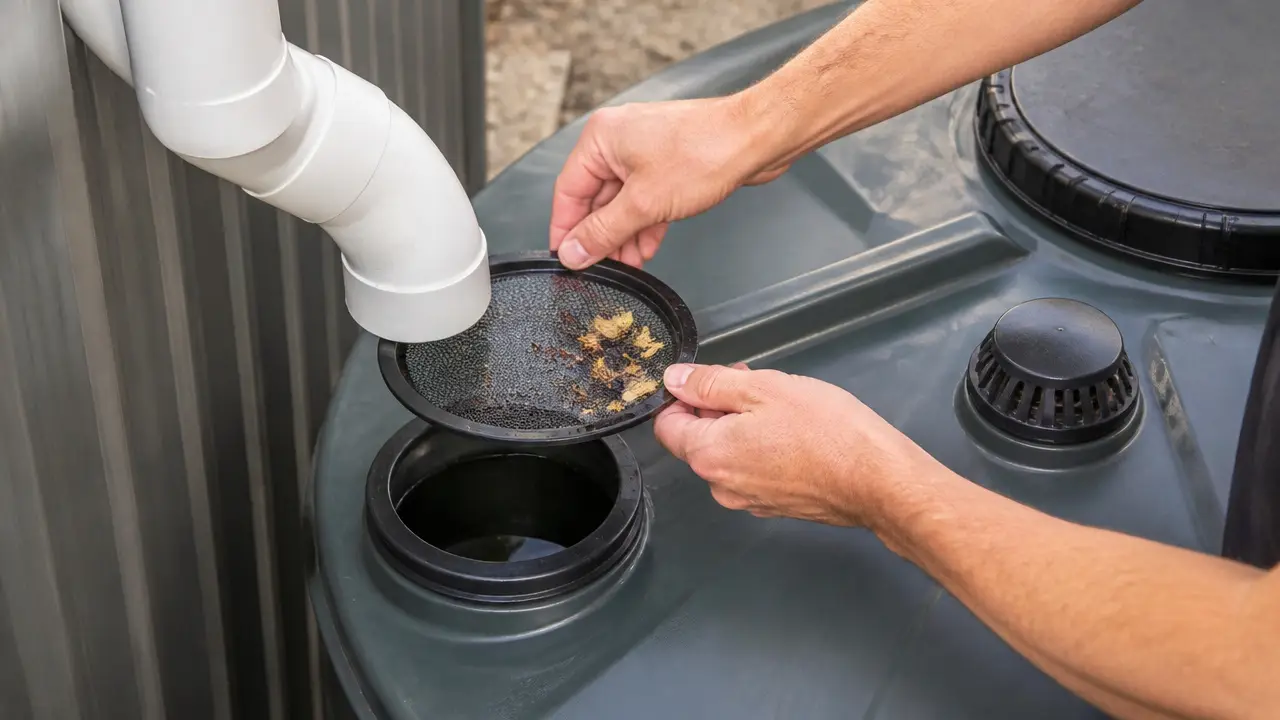
Screens can reduce large debris, but they also need cleaning. A clogged screen can cause gutter overflow even when the drain below it is clear.
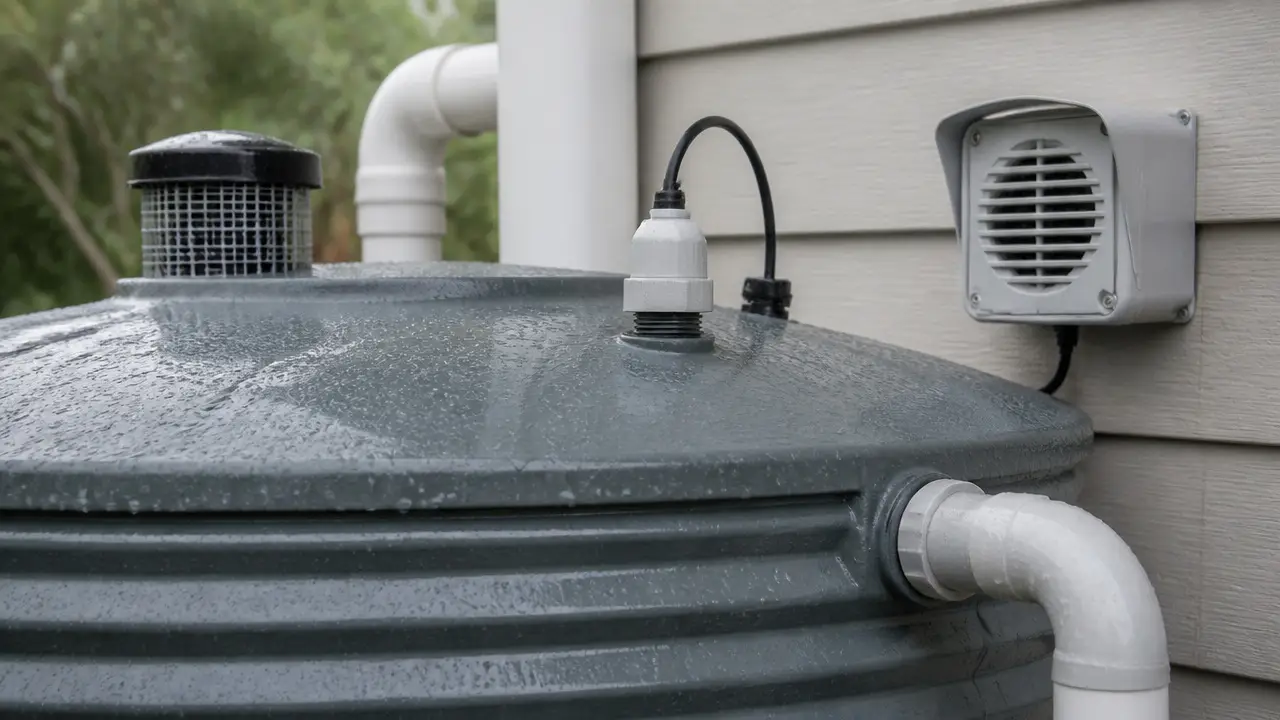
If the downspout is part of a rainwater collection system, debris control becomes even more important. Leaf screens and other prefiltration can reduce material entering tanks and pipes, but every component must remain accessible for cleaning.
When to Call a Professional
Stop trying to snake the drain if:
- The cable repeatedly hits a hard obstruction
- The snake becomes stuck
- Large roots keep coming out
- Soil is entering the pipe
- The drain reclogs soon after cleaning
- The pipe may be collapsed
- You do not know where the buried line goes
- The job requires large powered drain-cleaning equipment
- Excavation may be necessary
A drain camera inspection is often useful when the same blockage keeps returning.
The goal is not just to make a small opening through the clog. The drain should have a clear path that can carry runoff away without repeatedly backing up.
Frequently Asked Questions
Can I use a plumbing snake on a downspout drain?
Yes. A hand-operated plumbing snake can clear many downspout drains clogged with leaves and loose debris. Feed it slowly and avoid forcing it through hard resistance.
Should I snake a downspout from the top or bottom?
For an underground drain, disconnecting the downspout and snaking directly into the drain opening is usually easiest. For a clog inside the downspout itself, access from the bottom may help avoid working from the roof.
How far should I snake a downspout drain?
Feed enough cable to reach and pass the suspected blockage, but do not use distance alone as a goal. If the cable repeatedly stops at the same location, the pipe may need inspection instead of more force.
Can I use a pressure washer to unclog a downspout drain?
High-pressure drain-cleaning attachments can damage weak, separated, or unknown pipe systems. They are best used only when the pipe type, condition, route, and equipment are suitable. A professional may be a better choice for buried lines.
Why does my downspout drain keep clogging?
Repeated clogs may come from heavy gutter debris, sediment, roots, broken joints, poor pipe slope, or damaged underground pipe. Recurring problems usually need more than repeated snaking.
Can I pour drain cleaner into a clogged downspout?
Chemical drain cleaners are generally not a good solution for outdoor downspout drains. These drains commonly contain leaves, soil, or roots that are better addressed by mechanical cleaning and pipe repair.
How do I know if my underground downspout pipe is collapsed?
Signs can include a snake stopping at the same location every time, soil entering the pipe, very poor drainage after cleaning, or frequent recurring clogs. A drain camera inspection can confirm the condition of the buried pipe.