As an affiliate, we may earn a commission from qualifying purchases. We get commissions for purchases made through links on this website from Amazon and other third parties.
How Much Does It Cost to Get Your Gutters Vacuumed?
Getting residential gutters professionally vacuumed will usually cost about $100 to $250 for a typical U.S. home. Larger, taller, or heavily clogged homes can cost $300 to $400 or more.
There is limited nationwide pricing data specifically for the vacuum method. In practice, many contractors price gutter vacuuming much like other professional gutter cleaning. Current 2026 gutter-cleaning data puts typical professional cleaning at about $0.50 to $2.50 per linear foot, depending on height, access, and the amount of debris. Angi reports a typical range of $119 to $234 per visit, while HomeGuide reports $100 to $250 for most homes.
A gutter vacuum uses a powerful wet/dry vacuum and long poles to remove leaves, pine needles, moss, dirt, and other debris. The operator can often work from the ground instead of walking on the roof.
Typical Gutter Vacuuming Cost
A useful starting budget is:
| Home or job | Typical professional cleaning cost |
|---|---|
| Small, easy-to-access one-story home | $70–$200 |
| Typical one- or two-story home | $100–$250 |
| Two-story home | $100–$275 |
| Three-story or difficult home | $130–$400+ |
| By gutter length | $0.50–$2.50 per linear foot |
These ranges cover professional gutter cleaning generally. A company that routinely uses gutter vacuums may charge within the same range rather than adding a special vacuum fee.
For comparison, Angi's August 2026 data puts single-story professional gutter cleaning at roughly $0.95 to $1.25 per linear foot, with higher rates as the building gets taller.
What Makes Gutter Vacuuming Cost More?
The cleaning method is only one part of the quote. Contractors usually care more about how much work is involved.
Gutter Length
More gutter means more debris to remove.
A compact house might have relatively short, simple gutter runs. A large house with attached garages, porches, and several roof sections can have much more gutter even if both homes have similar floor areas.
Professional gutter cleaning commonly runs from about $0.50 to $2.50 per linear foot.
Number of Stories
Height can raise the price even when a vacuum lets the worker stay on the ground.
Higher gutters may require longer poles, more careful positioning, and special equipment. Buildings beyond the practical reach of the vacuum system may require other access equipment.
Current national estimates put basic gutter cleaning at roughly:
- $70 to $200 for a one-story home
- $100 to $275 for a two-story home
- $130 to $400 for three stories or more
Amount and Type of Debris
A thin layer of dry leaves is easier to remove than gutters packed with years of wet organic material.
Expect more work if the gutters contain:
- Compacted leaves
- Wet silt
- Moss
- Pine needles
- Roof grit
- Small plants or roots
- Debris trapped around gutter guards
Some hardened material may need to be loosened before a vacuum can remove it.
Downspout Blockages
Do not assume that gutter vacuuming includes clearing every downspout.
The vacuum may clear debris around the downspout opening while a blockage farther down the pipe requires separate tools. Some contractors include this work. Others charge extra.
HomeGuide estimates that heavily clogged downspout clearing can add about $60 to $150 when billed separately.
Ask specifically whether the quote includes checking that water can move through the downspouts.
Gutter Guards
Gutter guards do not eliminate maintenance.
Depending on their design, workers may need to clean debris off the guards, work through openings, or remove sections before reaching material underneath. That extra labor can increase the quote.
Access Around the House
Vacuum poles need enough room to reach the gutters.
Fences, narrow side yards, steep ground, decks, conservatories, trees, power lines, and other obstacles may make certain sections harder to reach.
A straightforward two-story house can therefore cost less than a complicated one-story house with poor access.
What Should a Gutter Vacuuming Service Include?
Before comparing quotes, check exactly what each contractor considers a complete cleaning.
A useful service may include:
- Vacuuming leaves, dirt, moss, and loose debris
- Cleaning the full accessible gutter run
- Checking downspout openings
- Collecting the removed material
- A basic visual check for obvious gutter problems
- Before-and-after photos or camera views
Some vacuum systems use a small camera near the top of the pole. This lets the operator see material that would otherwise be hidden from the ground.
Do not assume that gutter washing, exterior gutter whitening, roof cleaning, repairs, downspout dismantling, or underground drain cleaning are included.
Is Vacuuming More Expensive Than Regular Gutter Cleaning?
For key facts about the average price to clean out gutters, first understand runoff volume against the site’s drainage limit.
Not necessarily.
Professional vacuum equipment costs more than basic hand tools, but it can also make debris removal faster and reduce the need for roof access on suitable buildings. Some companies therefore charge about the same whether they use a vacuum or another cleaning method.
One gutter-vacuum service, for example, states that it charges the same for vacuum cleaning as for its standard cleaning method. That does not mean every contractor prices services this way, so compare the scope of work rather than the equipment alone.
The most useful question is not simply, "Do you use a vacuum?"
Ask, "What will be clean and flowing when the job is finished?"
Is Gutter Vacuuming Worth It?
It can be a good choice when you want debris physically collected rather than blown onto the ground.
It is especially useful for gutters that contain a mix of leaves, dirt, moss, and wet material that a blower may not remove well.
Ground-based vacuum systems can also reduce the amount of roof and ladder access needed. That can be useful on taller homes or roofs that should not be walked on unnecessarily.
However, vacuuming has limits. A severe downspout blockage, damaged gutter, failed joint, sagging section, or inaccessible roof area may require different equipment or hands-on repair.
What About Gutters Feeding a Rainwater Tank?
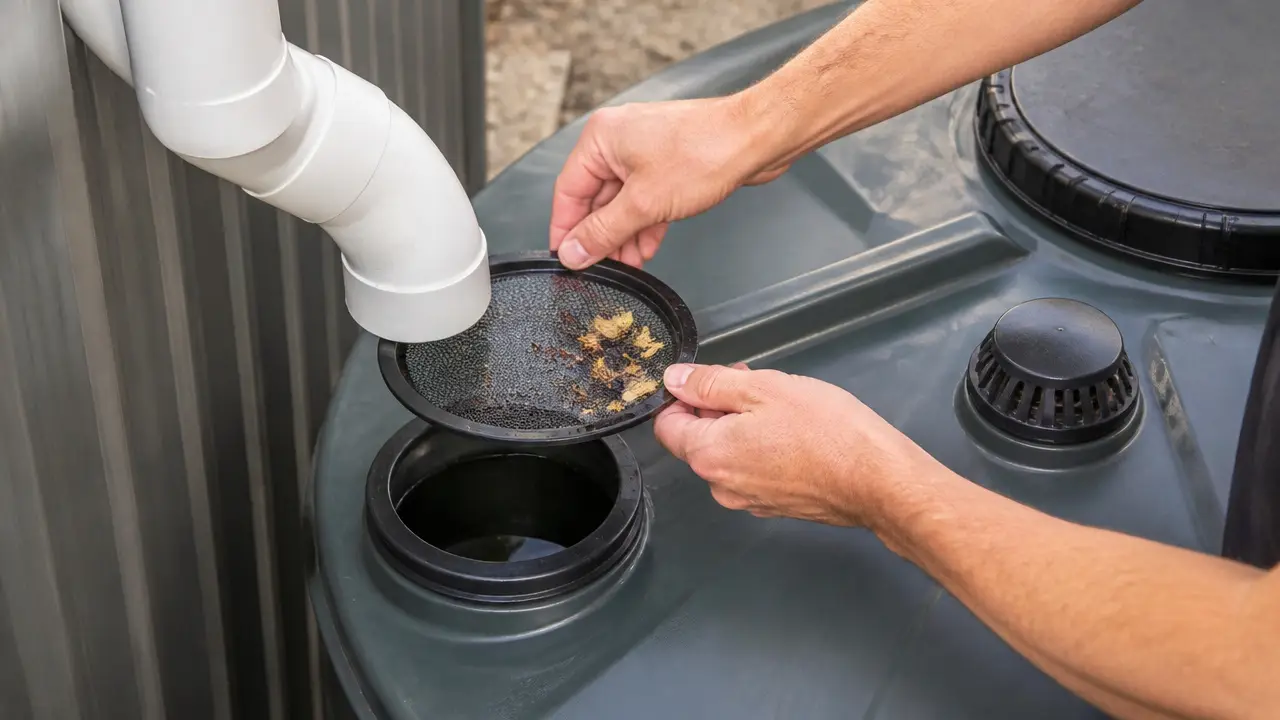
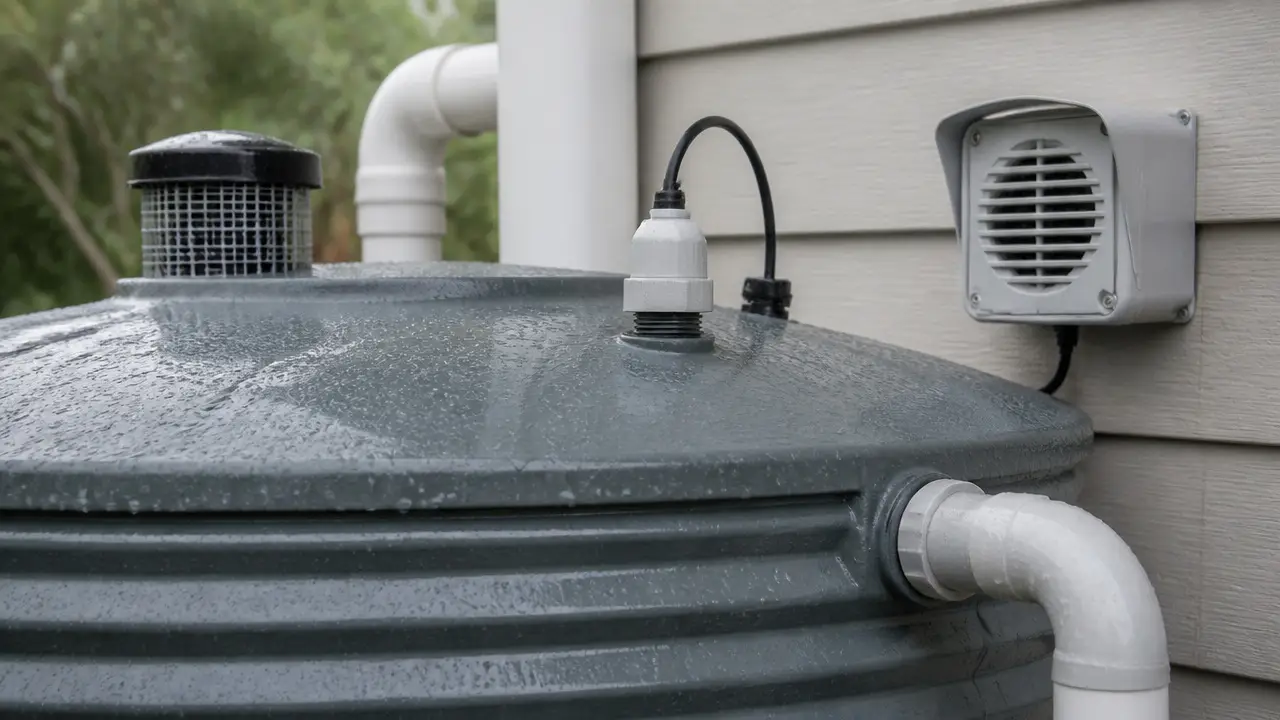
Clean gutters are particularly important when the downspouts feed a rain barrel, IBC tote, cistern, or other rainwater storage system.
Leaves and roof debris entering the tank can increase sediment and make screens, first-flush devices, and filters require more frequent cleaning.
A first-flush device diverts some of the initial roof runoff away from storage. That first runoff often carries a higher load of loose roof and gutter debris.
When having collection gutters cleaned, also check the accessible parts of the rainwater system, including:
- Gutter screens
- Downspout screens
- First-flush devices
- Tank inlet screens
- Overflow screens
- Prefilters
Gutter vacuuming helps control physical debris. It does not make roof runoff clean, sterile, or safe to drink. Drinking-water use requires a suitable collection and treatment system, ongoing maintenance, current water testing, and compliance with applicable local requirements.
How Often Should Gutters Be Vacuumed?
Many homes need gutter cleaning around two times per year, but there is no schedule that fits every property.
You may need more frequent cleaning if the roof is surrounded by trees, especially where leaves, needles, flowers, seeds, or small branches collect quickly. Angi and HomeGuide both note that nearby trees and local conditions can affect cleaning frequency and workload.
For a rainwater harvesting system, it makes sense to inspect the gutters before an important rainy period. A clean collection path reduces the amount of loose debris sent toward the tank.
How to Get a More Accurate Quote
The fastest way to get useful quotes is to give the contractor enough information about the house.
Tell them:
- How many stories the house has
- Roughly how much gutter you have
- Whether gutters surround attached garages or porches
- Whether gutter guards are installed
- When the gutters were last cleaned
- Whether water currently overflows anywhere
- Whether any downspouts appear blocked
- Whether access around the house is difficult
- Whether the gutters feed a rainwater collection system
Photos of the house can also help a contractor identify difficult sections before arriving.
When comparing quotes, make sure each company is quoting the same work. A low quote that covers only loose debris in the gutter is not directly comparable with one that also checks downspouts and provides before-and-after inspection photos.
Frequently Asked Questions
How much does gutter vacuum cleaning usually cost?
For a typical U.S. home, budgeting about $100 to $250 is reasonable. Small, simple one-story jobs may cost less, while tall, large, heavily clogged, or difficult homes can reach $300 to $400 or more.
How much does gutter cleaning cost per foot?
Professional gutter cleaning generally costs about $0.50 to $2.50 per linear foot. Height, gutter condition, access, and local labor rates affect the final amount.
Does gutter vacuuming include the downspouts?
Not always. A contractor may clear the gutter and downspout opening without clearing a blockage farther down the pipe. Ask whether downspout testing and blockage removal are included.
Is gutter vacuuming better than cleaning by hand?
Neither method is best for every house. Vacuuming is useful for collecting loose and wet debris from the ground, while hand access may still be needed for compacted material, repairs, or areas the vacuum cannot reach.
Can a gutter vacuum remove wet leaves and mud?
Professional wet/dry gutter vacuums can remove many types of wet debris, including leaves and loose silt. Very compacted material may first need to be broken up.
Do gutter guards eliminate the need for vacuum cleaning?
No. Leaves and fine debris can collect on top of guards or pass underneath them. Guards can reduce some debris but still need inspection and periodic cleaning.
Should I clean gutters if I collect rainwater?
Yes. Keeping gutters, screens, first-flush components, and tank inlets maintained reduces the amount of physical debris entering the system. Cleaning the gutters does not by itself make collected rainwater safe to drink.