As an affiliate, we may earn a commission from qualifying purchases. We get commissions for purchases made through links on this website from Amazon and other third parties.
A clogged downspout usually shows itself during rain. Water may spill over the gutter, drain slowly, back up at the downspout opening, or come out of seams instead of the outlet.
You can often confirm a clog without taking the downspout apart. Start with the easiest checks at ground level, then work toward the gutter only if you can do so safely.
Common Signs of a Clogged Downspout
Watch the drainage system during moderate rain if possible. A blocked downspout often causes one or more of these signs:
- Water pours over the gutter near the downspout.
- The gutter fills faster than nearby sections.
- Very little water comes from the bottom of the downspout.
- Water leaks from downspout joints or elbows.
- You hear water gurgling but see little flow.
- Water backs up around a rain barrel diverter.
- Leaves or other debris are packed into the top opening.
- The downspout drains normally at first, then slows as rain continues.
A completely blocked downspout may release almost no water. A partial clog can be harder to notice because some water still gets through.
Check the Bottom of the Downspout First
Start where the downspout discharges.
During rain, look at how much water is coming out. Compare that flow with the amount of water reaching the gutter.
If the roof is shedding a lot of water but only a trickle comes from the downspout, there is probably a restriction somewhere upstream.
Also check whether the outlet itself is blocked by:
- Leaves
- Mud
- Pine needles
- Roof granules
- Insect nests
- Ice
- Debris in an attached drain pipe
Remove only debris that you can reach safely from ground level.
If the downspout empties into an underground drain, the blockage may be in the buried pipe rather than the downspout.
Look for Overflow at the Gutter
Overflow near a downspout is one of the clearest warning signs.
When the downspout cannot carry water away fast enough, water collects in the gutter. Once the gutter fills, it spills over the edge.
However, overflow does not always mean the downspout is clogged. The same problem can happen if:
- The gutter itself is full of leaves.
- The gutter does not slope toward the downspout.
- The downspout is too small for the roof area and rainfall.
- A gutter guard is keeping water from entering properly.
- An underground drain is backing up.
- Heavy rainfall exceeds the system's drainage capacity.
The location of the overflow can help. Water repeatedly spilling close to the downspout often points to a blockage at the outlet or inside the downspout.
Listen for Gurgling or Trapped Water
A partially clogged downspout may make unusual sounds.
You might hear:
- Gurgling
- Bubbling
- Intermittent rushing
- Water dripping long after the rain stops
These sounds can happen when water is trying to move around a blockage and trapped air.
After the storm ends, a clear downspout should usually stop carrying water once the gutter has drained. Persistent dripping can mean water is being held behind debris.
Check the Downspout Elbows
Elbows are common clog points because leaves and twigs can catch where the pipe changes direction.
Typical trouble spots include:
- The elbow directly below the gutter
- Offset bends used to reach the wall
- The elbow near ground level
- Connections to rain barrels or diverters
If one section feels unusually heavy or you can hear water sitting inside it, debris may be trapped there.
Do not climb, pull, or disconnect elevated downspout sections unless you have safe access and know the section can be removed without damaging the gutter.
Test the Downspout With Water
If conditions are safe, water can help confirm whether the downspout is draining.
A garden hose can be used to introduce a moderate amount of water into an accessible gutter or disconnected downspout section. Watch the outlet.
A clear path should allow water to move through steadily. If water backs up or comes out much more slowly than it goes in, something is restricting the pipe.
Do not force high-pressure water into a blocked downspout. Pressure can separate joints, damage weak fittings, or push debris farther into another drain.
Avoid roof access just to perform this test. A wet roof, ladder, or gutter edge can create a serious fall risk.
Tell a Downspout Clog From a Gutter Clog
The symptoms can look similar.
A gutter clog
Debris may be spread across part of the gutter channel. Water can overflow before it ever reaches the downspout.
You may see leaves, sludge, or standing water along a long section of gutter.
A downspout clog
The gutter may look fairly clear, but water collects around the downspout outlet. Little water exits below.
A blockage immediately inside the top of the downspout is especially common because debris carried along the gutter can pile up at the smaller opening.
Check Rain Barrel and Tank Connections
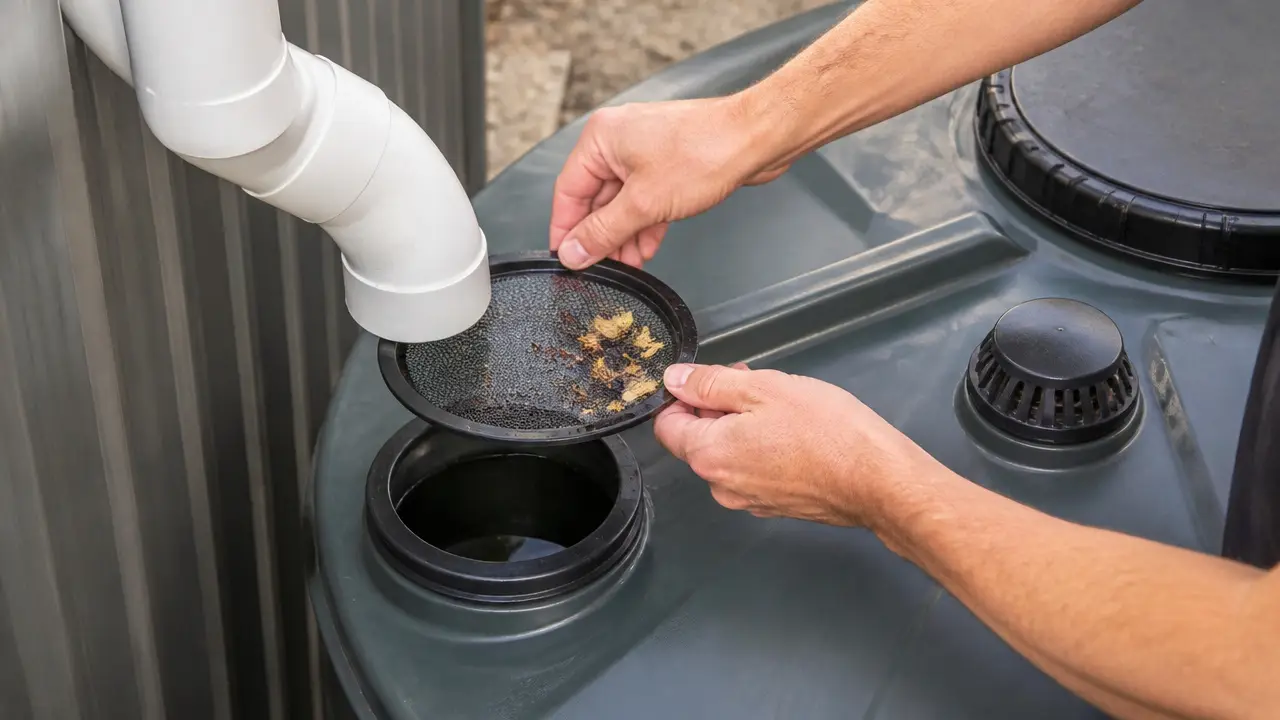
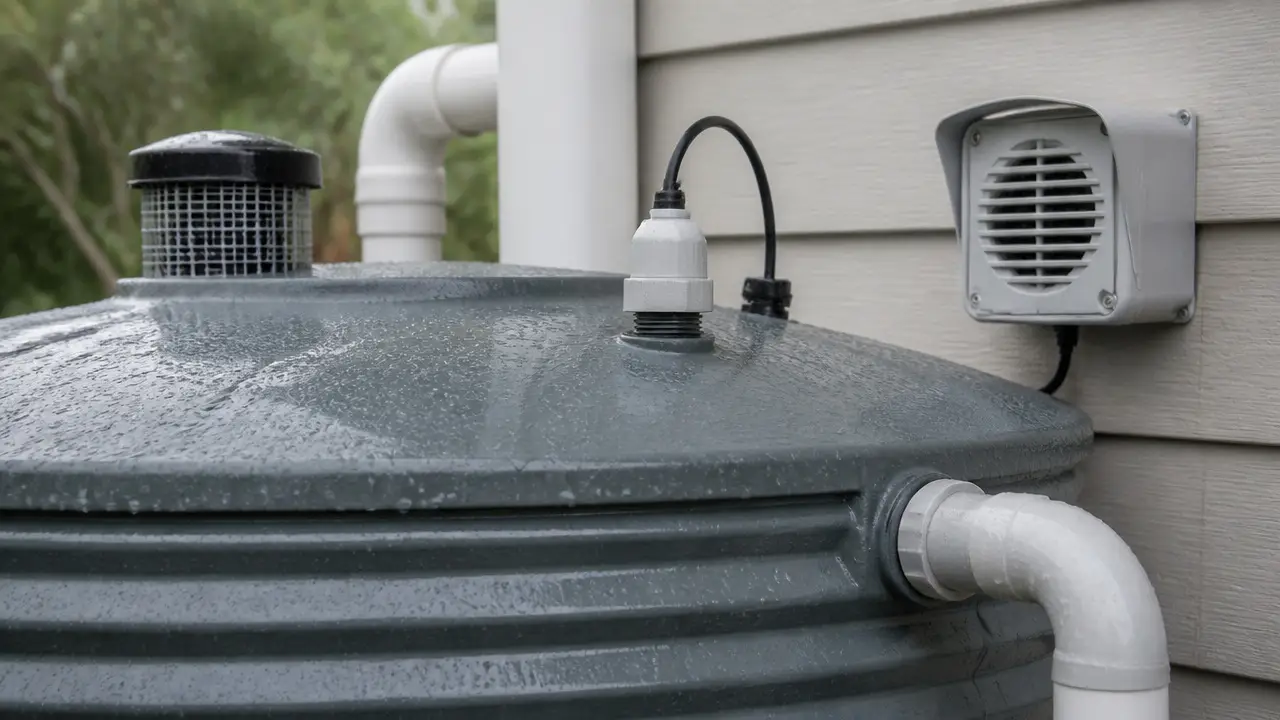
If your downspout feeds a rain barrel, IBC tote, or larger rainwater tank, check the connection before assuming the downspout itself is blocked.
Evaluating practical steps for cleaning out a clogged downspout helps assess measures that prevent blocked or overflowing gutters.
A problem may occur at:
- A downspout diverter
- A screen
- A leaf filter
- A first-flush device
- An inlet pipe
- A tank overflow
A first-flush device diverts some of the first runoff from the roof so dirt and debris are less likely to enter storage.
Screens and first-flush components can collect debris quickly. If they block, water may back up even when the main downspout is clear.
Check these parts according to the system's design and keep screens clean enough for water to pass freely.
What If the Downspout Connects to an Underground Drain?
A downspout can appear clogged when the real blockage is below ground.
A useful clue is what happens when the downspout is separated from the buried drain, if the connection is designed to be disconnected safely.
If water flows freely from the downspout after separation, the downspout is probably clear and the underground line needs attention.
Other signs of a buried drain problem include:
- Water rising around the downspout base
- Water coming back out of another connected drain
- Soggy ground near the underground pipe
- Slow drainage even after the visible downspout is cleaned
Buried drain problems may require drain-cleaning equipment or professional inspection, especially if roots, crushed pipe, or damaged fittings are involved.
What Can Clog a Downspout?
Leaves are common, but they are not the only cause.
Possible blockages include:
- Leaves and twigs
- Pine needles
- Moss
- Roof grit
- Seeds and seed pods
- Bird nesting material
- Insect nests
- Shingle fragments
- Small pieces of gutter sealant
- Frozen water
- Debris trapped behind screws inside the pipe
Several small materials can combine into one dense plug.
Can a Downspout Be Partially Clogged?
Yes.
Partial blockages are common and may only become obvious during heavier rain.
For example, a downspout might handle light rain normally but overflow during a stronger storm. Debris inside the pipe reduces the amount of water it can carry.
Before replacing the downspout with a larger one, make sure the gutter, outlet, elbows, and downstream drain are clear.
When to Stop DIY Troubleshooting
Many visible clogs can be found from the ground. Problems higher on the building require more caution.
Consider calling a gutter or drainage professional if:
- The clog cannot be reached without unsafe ladder or roof work.
- The downspout serves a second-story or higher gutter.
- Water is entering walls, soffits, or the building.
- A buried drain remains blocked.
- The downspout repeatedly clogs after cleaning.
- Sections are crushed, badly corroded, or pulling away from the building.
- You suspect frozen piping that could split as it thaws.
Do not work from a ladder during rain, strong wind, or icy conditions.
How to Reduce Future Downspout Clogs
Regular maintenance makes clogs easier to prevent.
Keep gutters, screens, and rainwater collection inlets free of accumulated debris. Pay particular attention after leaf fall, storms, or periods when seeds and needles are dropping.
If your system feeds stored rainwater, keeping roof debris out also reduces the amount of material that reaches filters and tanks.
A gutter guard may reduce some types of debris, but it does not make the drainage system maintenance-free. Guards and screens can clog too.
Frequently Asked Questions
How do I know if my downspout is completely blocked?
During rain, the gutter may fill and overflow while little or no water comes from the bottom of the downspout. Water may also leak from joints or back up at the top opening.
Can I check a downspout when it is not raining?
Yes. You can inspect the outlet, elbows, and accessible openings for debris. A moderate water-flow test can also reveal a restriction if it can be done safely.
Why does my downspout work in light rain but overflow in heavy rain?
It may be partially clogged. The reduced opening can handle a small amount of water but not the higher flow from a strong storm. An undersized drainage system can cause similar symptoms.
Where do downspouts usually clog?
Common locations are the opening below the gutter, upper elbows, offset bends, lower elbows, rain barrel diverters, and connections to underground drains.
Can a clogged downspout damage a house?
It can contribute to problems. Backed-up water may overflow near walls, fascia, soffits, foundations, or other areas that were not meant to receive concentrated runoff. The problem should be corrected rather than allowing repeated overflow.
Can a rain barrel make a downspout look clogged?
Yes. A blocked diverter, screen, inlet, or overflow can cause water to back up even when the downspout itself is clear. Check each part of the collection path.
How often should I check my downspouts?
There is no single schedule that fits every property. Check them whenever you see poor drainage or overflow, and inspect the system after periods of heavy leaf, needle, seed, or storm debris.