As an affiliate, we may earn a commission from qualifying purchases. We get commissions for purchases made through links on this website from Amazon and other third parties.
Consumer Reports has found that simple DIY screen-style gutter guards can work very well, and homeowners do not necessarily need a professionally installed system. In its major gutter-guard testing, Consumer Reports named the Amerimax 85198 and Amerimax 854054 as CR Best Buy choices for DIY installation.
There is an important catch: those model-specific results come from Consumer Reports testing published in 2010 and 2011. They should not be treated as a current 2026 ranking of products now on store shelves. The more useful lesson today is what the testing found about gutter-guard design.
For most DIY installations, a well-fitted screen or fine-mesh guard is the type to look at first. Consumer Reports found that fine-mesh screens did a better job with small debris than screens with larger openings, while foam and brush-style inserts performed poorly at keeping debris out.
What Consumer Reports Found in Its Gutter-Guard Tests
Consumer Reports tested gutter guards outdoors for about 16 months. The systems were exposed to leaves, pine needles, other debris, and heavy simulated rainfall. Both DIY and professionally installed systems were included.
The main findings were straightforward:
| Consumer Reports finding | What it means for a DIY system |
|---|---|
| Some inexpensive screens performed very well | A complicated guard is not automatically better |
| Fine mesh beat screens with larger openings | Smaller openings can help with pine needles and small debris |
| Foam and brush inserts did poorly | Easy installation does not guarantee good debris control |
| Some guards struggled with very heavy rain | Water-handling capacity matters as much as leaf control |
| Guards still needed maintenance | No gutter guard should be treated as maintenance-free |
Consumer Reports also found that some professional systems were excellent at shedding leaves but only moderate at handling severe rainfall. In other words, keeping leaves out is only one part of the job. The guard also has to let enough water reach the gutter.
Which DIY Gutter Guards Did Consumer Reports Rate Best?
The historical DIY standouts were Amerimax 85198 and Amerimax 854054. Consumer Reports identified both as CR Best Buy choices in its 2010 testing.
That does not mean you should search specifically for those model numbers today. Products, materials, designs, and manufacturing can change over many years.
Instead, use the Consumer Reports results as a guide to the features that mattered in testing.
Start With a Screen-Style Guard
A screen covers the open top of the gutter. Rain passes through the holes while larger debris stays above the gutter.
Consumer Reports found that some basic homeowner-installed screens performed well even compared with much more complicated systems.
For a typical DIY installation, this is usually the simplest place to start.
Consider Fine Mesh for Small Debris
Fine-mesh guards have much smaller openings than ordinary screens.
Consumer Reports found that fine-mesh screens performed better than screens with larger holes. This can matter when a roof receives:
- Pine needles
- Small leaves
- Seed pods
- Shingle grit
- Other fine debris
Fine mesh has a tradeoff. Small openings can collect pollen, dirt, and organic material on top. Consumer Reports specifically noted that some fine-mesh systems may require brushing or other cleaning.
A finer screen therefore does not eliminate gutter maintenance. It changes where some of the debris collects.
Why Foam and Brush Inserts Are Less Convincing
Foam inserts sit inside the gutter. Brush guards use stiff bristles to catch leaves while allowing water to move through.
Both are attractive to DIY homeowners because installation can be simple.
Consumer Reports' testing was much less favorable toward inserts. It reported that none of the inserts it tested did a good job of keeping debris out.
There are also practical reasons to think carefully before using an insert. Fine organic material can settle inside or around the insert, making the gutter harder to inspect and clean.
For a rainwater harvesting system, easy gutter inspection is especially useful because material trapped upstream can eventually affect the water reaching your tank.
Water Flow Matters as Much as Debris Removal
A gutter guard should not simply block leaves. It must also allow rain to enter the gutter fast enough.
This becomes important during short, hard storms.
Consumer Reports found that even some otherwise effective systems had trouble containing severe rainfall.
Before choosing a DIY guard, consider:
Roof Area
A large roof can send a lot of water toward one gutter section.
The larger the roof area draining to that section, the more important good flow becomes.
Roof Pitch
Water can move quickly down a steep roof. A guard that works during gentle rain may allow fast-moving water to pass over its surface during a harder storm.
Valleys
Roof valleys concentrate water from several roof surfaces into a narrow area. These spots may overwhelm a guard before the rest of the gutter has any trouble.
Debris on the Guard
A clean screen can pass more water than one covered with leaves, pollen, or roof grit.
Any gutter-guard system should therefore be judged in its normal dirty condition, not just when freshly installed.
Check Your Existing Gutters First
Reviewing comparing Leaf Guard and LeafFilter helps compare safety testing and treatment aligned with the planned application.
A gutter guard cannot correct a gutter system that is already in poor condition.
Consumer Reports recommends inspecting gutters for problems such as clogs, corrosion, damaged fasteners, incorrect slope, and gaps at connections.
Before adding guards, check that:
- Gutters are securely attached.
- Water flows toward the downspouts.
- Downspouts are open.
- Joints are not leaking badly.
- Gutters are not heavily rusted or damaged.
- The guard will fit the gutter profile.
- Installation will not interfere with the roof or gutter warranty.
If the gutters need significant repair, deal with that first.
The Best Gutter Guard for Rainwater Harvesting
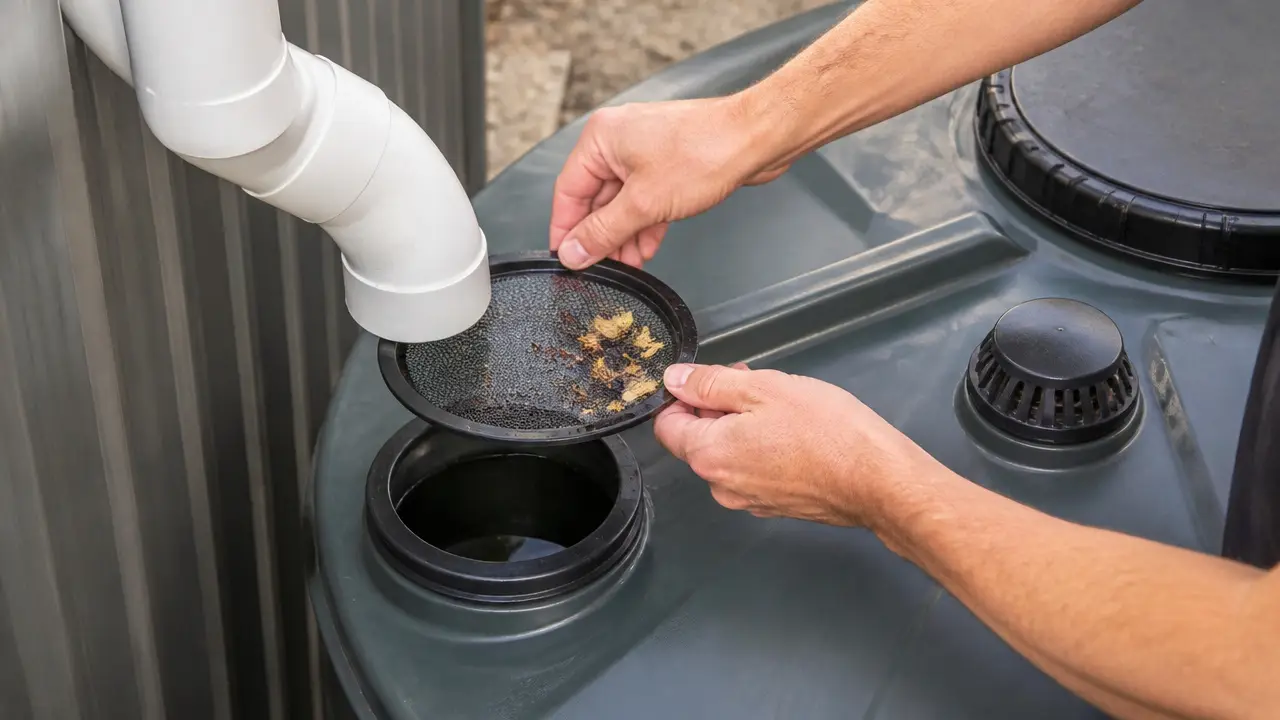
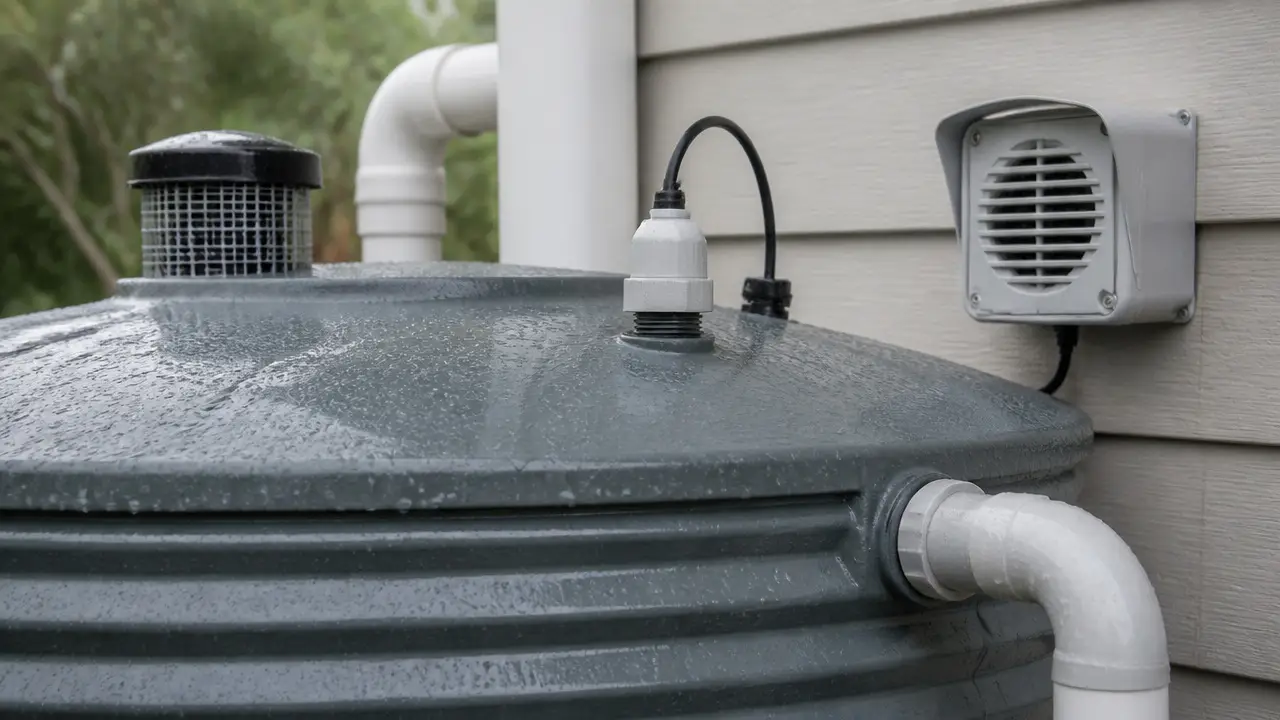
If your gutters feed a rain barrel, IBC tote, cistern, or other rainwater tank, gutter guards should be treated as debris control, not water treatment.
A screen may stop leaves and twigs, but much smaller material can still reach the downspout. That can include:
- Dust
- Pollen
- Bird and animal contamination
- Very small organic particles
- Roofing particles
- Airborne pollutants
A gutter guard therefore does not make roof runoff clean, sterile, or drinkable.
A rainwater system may also use an inlet screen and other prefiltration. Some systems include a first-flush device, which diverts an initial portion of roof runoff that may carry a heavier load of roof debris.
The right setup depends on what the water will be used for. Garden irrigation generally has different treatment needs from indoor household use. Drinking-water use requires a whole-system approach that can include suitable collection surfaces, prefiltration, treatment, current laboratory testing, maintenance, and local requirements.
DIY Installation Is Not Always a DIY Job
The guard itself may be simple to install. Reaching the gutter may not be.
Consumer Reports repeatedly warns about the risks involved in working from ladders and notes that hiring a professional may be worthwhile when a homeowner is uncomfortable working at height.
Consider professional installation when gutters are:
- On a second or higher story
- Above steep or uneven ground
- Difficult to reach safely
- Close to electrical lines
- Attached to damaged fascia
- Along a roof that needs repair
A simple snap-in guard is not worth taking a serious fall risk.
Gutter Guards Still Need Cleaning
One of the most important Consumer Reports findings is that gutter guards do not remove maintenance completely.
Leaves may remain on top. Fine mesh may collect pollen. Small particles may enter the gutter. Downspouts can still become blocked.
Consumer Reports specifically advised homeowners to check maintenance requirements before choosing a system.
For a rainwater collection system, inspections are especially useful before and during the main rainy season. Check the gutters, guard surfaces, downspouts, tank inlet screens, and overflow path.
The goal of a good guard is to reduce gutter cleaning, not make inspection unnecessary.
What to Look for in a DIY Gutter Guard Today
The old Consumer Reports test does not provide a reliable 2026 model-by-model shopping list. Its testing does provide a useful checklist.
For most homeowners, look for a guard that:
- Uses a screen or fine-mesh design suitable for your local debris.
- Fits your gutter without leaving large gaps.
- Allows strong water flow during heavy rainfall.
- Can be removed or accessed when the gutter needs cleaning.
- Does not require questionable changes to the roofing.
- Has clear maintenance instructions.
- Works with your downspouts and rainwater collection equipment.
If your main problem is large leaves, an ordinary screen may be enough. If pine needles and small debris are the problem, finer mesh may be more useful.
The smallest mesh is not automatically the best choice. A design that clogs quickly with pollen or roof grit can create its own maintenance problems.
Frequently Asked Questions
What DIY gutter guards did Consumer Reports recommend?
Consumer Reports identified the Amerimax 85198 and 854054 as CR Best Buy DIY gutter guards in its 2010 testing. Those results are old, so they should be viewed as historical findings rather than current 2026 product recommendations.
What type of gutter guard performed best?
Consumer Reports found that screens could perform very well and that fine-mesh screens generally did better than screens with larger openings at blocking small debris.
Are foam gutter guards good?
Consumer Reports was not impressed with the inserts it tested. It reported that none did a good job of keeping debris out.
Do gutter guards work with rain barrels?
Yes. A gutter guard can reduce the amount of large debris entering a downspout that feeds a rain barrel. It should not replace the barrel's inlet screen or other appropriate prefiltration, and it does not make collected rainwater potable.
Do gutter guards stop pine needles?
Fine-mesh guards generally have a better chance of stopping pine needles than screens with large openings. Consumer Reports found that fine-mesh designs performed better than larger-hole screens in its testing.
Can gutter guards handle heavy rain?
Some can handle heavy rainfall better than others. Consumer Reports found that even some effective debris-shedding systems had difficulty containing severe downpours. Roof area, roof pitch, valleys, screen cleanliness, gutter capacity, and downspout capacity all matter.
Do gutters still need cleaning after guards are installed?
Yes. Leaves, pollen, dirt, roof grit, and other material can collect on or beneath a guard. Consumer Reports recommends checking maintenance requirements rather than assuming a gutter guard eliminates cleaning.