As an affiliate, we may earn a commission from qualifying purchases. We get commissions for purchases made through links on this website from Amazon and other third parties.
A rain chain does not always have to be attached to a gutter, but it needs a reliable way to catch and guide roof runoff. In most homes, the simplest and most effective setup is to hang the rain chain from a gutter outlet where a downspout would normally go.
You can also use a rain chain on a roof without gutters. The results depend on the roof shape, where the water naturally leaves the roof, and how well you control splash and drainage at ground level.
How a Rain Chain Normally Connects to a Gutter
A rain chain is often used in place of a regular downspout.
The usual water path is:
roof → gutter → gutter outlet → rain chain → basin or drain
The gutter gathers runoff from a wide section of roof. It then sends that water toward one outlet. The rain chain hangs directly below that opening and guides the concentrated flow downward.
Depending on the setup, the chain may hang from:
- a rain-chain gutter adapter
- a bracket across the gutter outlet
- a suitable hook or hanger
- hardware designed for the existing gutter opening
The important part is not whether the chain physically touches the gutter. It is whether the chain is securely supported and centered under the water coming through the outlet.
Can You Install a Rain Chain Without Gutters?
Yes. A rain chain can hang directly from an eave or another secure support.
However, there is an important limitation: without a gutter, the chain does not collect runoff from the whole roof edge.
Water may leave the roof along several feet of the eave rather than at one point. A chain hanging in just one location will catch only the water that naturally reaches that spot.
A gutter solves this problem by collecting scattered runoff and concentrating it at the chain.
When a Gutterless Rain Chain Can Work
A rain chain without a gutter may work well when the roof naturally directs water toward one location.
Examples include:
- a roof valley that concentrates runoff
- a small porch roof with a clear drainage point
- an architectural roof edge designed to discharge at one spot
- a small shelter or shed where limited collection is acceptable
Watch the roof during actual rain before choosing the chain location. A spot that looks correct when dry may not be where most of the runoff travels during a storm.
Do Not Hang the Chain From the Gutter Edge
If you have gutters, avoid simply hooking a heavy rain chain over the front lip unless the gutter and mounting system are specifically designed for that load.
Rain chains can become much heavier when wet. Ice can add even more weight in freezing climates.
The support should carry the chain's weight without:
- bending the gutter
- pulling the gutter away from the fascia
- enlarging the outlet hole
- allowing the chain to swing loose
The chain should normally be supported at or around the gutter outlet using suitable mounting hardware.
The Bottom of the Rain Chain Matters Too
Installing the top of the chain is only half the job.
Water still needs somewhere safe to go after it reaches the ground.
Common options include:
- a decorative catch basin
- a gravel-filled drainage area
- a drain connected to an appropriate discharge point
- a rain barrel or other collection container
Do not let large amounts of roof runoff repeatedly discharge next to the foundation.
A rain chain reduces the uncontrolled fall of water, but it does not make the water disappear. The drainage area still has to handle the volume coming from the roof.
Can a Rain Chain Drain Into a Rain Barrel?
Yes. A rain chain can direct runoff toward a rain barrel, especially when a gutter concentrates the water above the chain.
But the chain and barrel opening must line up well. Wind and heavy rain can cause water to splash away from a small opening.
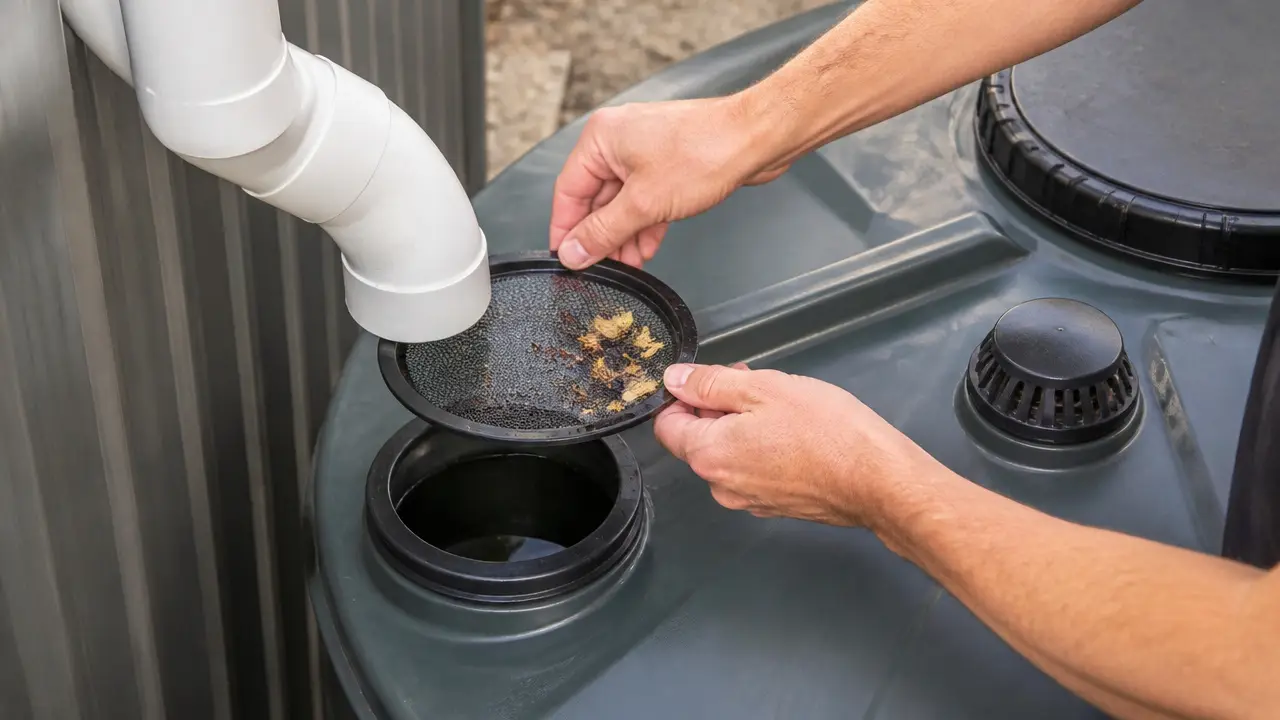
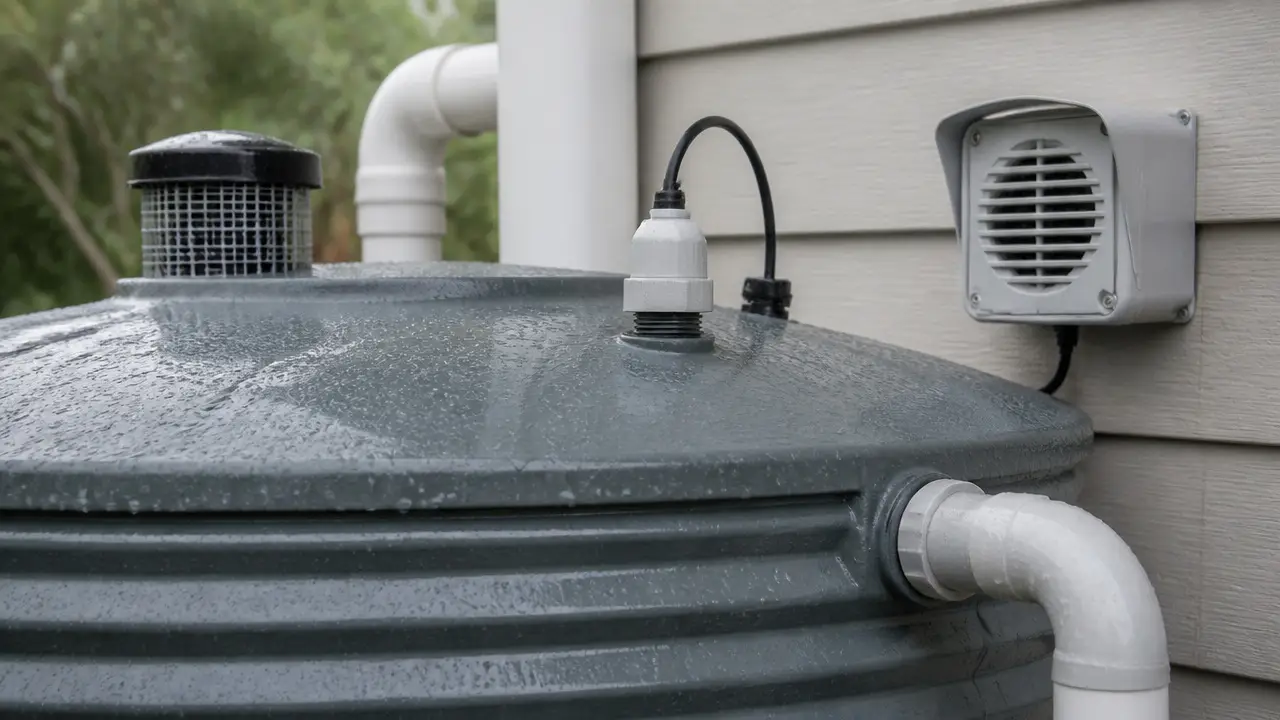
The barrel also needs a screened inlet and a properly planned overflow route. Once the barrel is full, every additional gallon entering it needs somewhere to go.
Collected roof runoff should not be assumed to be clean or drinkable. Roofing materials, bird droppings, dust, insects, and other contaminants can enter the water.
For garden or other non-potable uses, choose the collection and treatment setup based on how the water will be used.
Rain Chains Can Splash More Than Downspouts
A closed downspout contains water inside a pipe. A rain chain leaves the water exposed.
Explore installing a DIY rain chain without gutters to evaluate the conveyance path from the roof surface into the tank.
That means some splashing is normal.
Splash becomes more noticeable when:
- rainfall is very heavy
- the roof area feeding the chain is large
- the chain is not centered under the outlet
- strong wind pushes water sideways
- the chain hangs far from a wall or anchor point
- water hits a hard surface at the bottom
Cup-style rain chains can capture and guide water differently from simple link chains, but no open rain chain completely contains runoff like a closed downspout.
If the area is next to a doorway, walkway, siding, or foundation, consider whether splash will create a problem before replacing the downspout.
How to Position a Rain Chain
If you already have a gutter, the most practical location is generally the existing downspout outlet.
Before installation, check that:
- The gutter slopes toward the outlet.
- The outlet is large enough to drain normally.
- The chain can hang directly below the water path.
- The mounting point can support the chain.
- The bottom has a suitable drainage or collection area.
- Overflow cannot send water toward the building.
The chain should hang mostly straight rather than at a strong angle.
Some installations anchor the bottom lightly to reduce movement in wind. Any anchor should still allow the system to drain and should not place excessive tension on the gutter.
What If the Gutter Does Not Have an Outlet?
A chain hanging below a solid section of gutter will not receive much water.
You need a controlled opening that allows water to leave the gutter and enter the chain.
Creating or modifying a gutter outlet can be a reasonable DIY job when the gutter is easy to reach and the mounting method is straightforward. Roof-edge work can involve fall hazards, however. If safe access requires working high above the ground or from an unstable position, have a qualified installer handle it.
Should You Replace Every Downspout With a Rain Chain?
Not necessarily.
Rain chains are best treated as part of the drainage system, not simply as decoration.
A conventional downspout may be a better choice where:
- a large roof area creates heavy runoff
- water must be carried several feet away from the building
- the location experiences strong winds
- splash would be a problem
- freezing and ice buildup are significant concerns
- the downspout connects directly to underground drainage
You can also use rain chains selectively. For example, a porch or visible courtyard might use a rain chain while other roof sections keep conventional downspouts.
The Main Rule
A rain chain does not have to be attached to a gutter. It does need to be securely supported beneath a predictable stream of roof runoff.
For most houses, a gutter outlet provides the best setup because the gutter collects water from the roof and delivers it to one controlled point.
Without a gutter, first confirm that the roof naturally sends enough water to the location where you plan to hang the chain. Then make sure the water has a safe place to drain once it reaches the ground.
Frequently Asked Questions
Can I hang a rain chain directly from my roof?
It can be hung from a secure point near the roof edge, but the support must be suitable for the chain's wet weight. More importantly, the chain needs to be positioned where runoff actually leaves the roof.
Can a rain chain work without a downspout?
Yes. Replacing a downspout is one of the most common uses for a rain chain. The gutter outlet remains in place, and the chain guides water downward instead of a pipe.
Does a rain chain need a gutter adapter?
Not every installation requires one, but an adapter or suitable hanger can help support the chain and direct water from the gutter outlet onto it. The hardware should fit the gutter and chain correctly.
Can I put a rain chain anywhere along a gutter?
Not effectively. The chain should normally be located at a gutter outlet. Hanging it under a solid part of the gutter will not give water a controlled path onto the chain.
Does a rain chain need to touch the ground?
No. It can end above a basin, gravel bed, drain, or collection container. It should extend low enough that falling water does not create excessive splash.
Can a rain chain replace a downspout during heavy rain?
Sometimes, but its performance depends on roof drainage area, gutter capacity, chain design, rainfall intensity, and wind. An open rain chain generally controls splash less effectively than a closed downspout.
Can I use a rain chain with a rain barrel?
Yes. The chain can guide gutter runoff toward a rain barrel. Use a screened inlet, keep the chain aligned with the opening, and provide an overflow route that carries excess water safely away from the foundation.