As an affiliate, we may earn a commission from qualifying purchases. We get commissions for purchases made through links on this website from Amazon and other third parties.
Rain chains are not the only way to move roof runoff from a gutter to the ground or a rainwater storage system. Good alternatives include standard downspouts, decorative downspouts, gutter scuppers, rainwater diverters, open channels, and simple splash blocks.
The best choice depends on what you want the water to do. If you need reliable drainage or want to collect rainwater, a closed downspout usually works better than an open rain chain. If appearance matters more and the runoff volume is modest, an open decorative system may work well.
Why Replace a Rain Chain?
A rain chain guides water downward from a gutter outlet. Water runs along linked chains, cups, or other decorative shapes instead of traveling through a closed pipe.
They can look attractive, but they have limits.
You may want an alternative if:
- Water splashes onto siding or windows.
- Wind blows water away from the chain.
- Heavy runoff overwhelms it.
- Ice forms on the chain in winter.
- You want to route water farther from the foundation.
- You want to send runoff into a rain barrel or cistern.
- You prefer a lower-maintenance drainage system.
The most important question is not what replaces the chain. It is where the roof water needs to go.
Standard Downspouts
A conventional downspout is usually the simplest rain-chain alternative.
It connects directly to the gutter outlet and carries runoff through a closed vertical pipe. The bottom can discharge onto a splash block, connect to an extension, or feed another drainage or collection system.
Downspouts work well when you need:
- Reliable handling of roof runoff
- Less splashing near walls
- Better control over where water exits
- A connection to a rain barrel
- A connection to underground drainage
- Better performance during windy weather
A closed downspout is also easier to adapt when building a rainwater harvesting system.
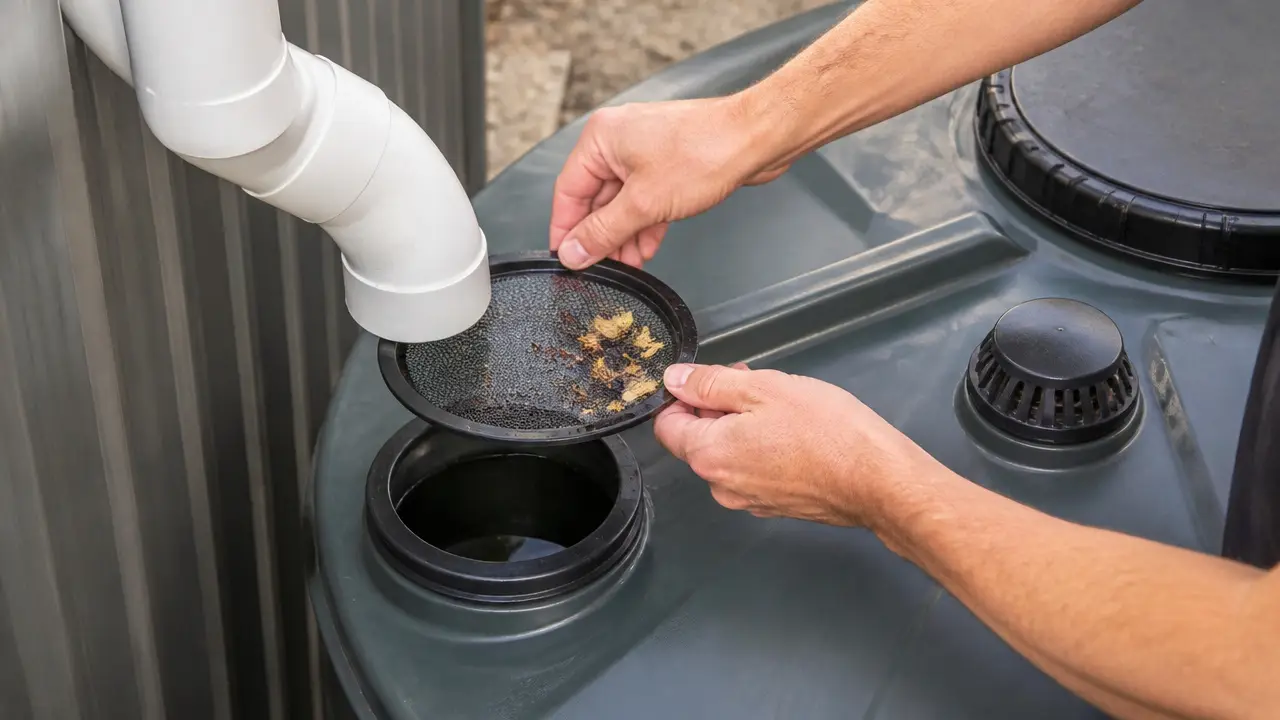
For example, you can place a debris screen or rainwater diverter in the downspout before sending water toward storage.
Decorative Downspouts
If you like the appearance of a rain chain but want more control over runoff, consider a decorative downspout.
These work like standard downspouts but may use different shapes, finishes, or architectural details.
They provide a middle ground between appearance and function. Because the water remains enclosed, they usually create less splash than an open chain.
The important part is making sure the downspout fits the gutter outlet and can carry the runoff from the roof area feeding it.
Rainwater Diverters
A rainwater diverter can be a better choice when the main goal is filling a rain barrel or other storage container.
A diverter is installed in a downspout. It directs some of the flowing water through a hose or pipe toward a storage tank.
When properly designed, the main downspout can continue carrying excess runoff away once the storage system cannot accept more water.
This gives you more control than hanging a rain chain over an open barrel.
A diverter can help reduce:
- Splash around the barrel
- Water loss during windy rain
- Overflow problems at the barrel opening
- Large openings that mosquitoes could enter
The barrel or tank still needs a safe overflow route. A diverter does not remove the need to plan where excess water goes.
Open Gutters or Water Channels
A short open channel can provide some of the visual effect of moving water without using a hanging chain.
For example, runoff can leave a gutter outlet and enter a sloped metal, stone, or other weather-resistant channel.
These systems are sometimes used as architectural features.
They work best when the water has a clear path and cannot spill against the building.
Open channels are usually less suitable when you need to move water a long distance or send it directly into a closed storage tank.
Scuppers
A scupper is an opening that lets water leave a roof edge, parapet, gutter, or similar structure.
Depending on the building, a scupper may discharge through a short projecting outlet rather than a vertical downspout.
Scuppers can work well with:
- Splash blocks
- Drainage channels
- Collection basins
- Decorative water features
They are not a direct replacement for every rain chain. The roof and gutter arrangement must be designed to drain correctly through the opening.
Changing roof drainage openings can also affect building drainage performance, so major modifications are better treated as part of the roof-drainage system rather than as simple decoration.
Splash Blocks
If you do not need to collect the water, a downspout and splash block may be one of the simplest alternatives.
A splash block sits below the downspout outlet and helps direct runoff away from the building.
It should send water toward an area where it can drain safely rather than allowing it to collect beside the foundation.
A splash block will not solve poor grading. If the ground slopes toward the house, the water may simply flow back toward the foundation.
Downspout Extensions
A downspout extension carries water farther away from the building.
Extensions may be above ground or connected to a suitable drainage system.
They are useful when a rain chain currently drops water too close to the foundation.
The discharge point still matters. Moving water several feet does little good if the extension ends in a low spot where runoff pools or flows back toward the house.
Dry Creek Beds and Landscape Channels
A landscaped channel can carry runoff across a yard while also serving as a design feature.
These are sometimes built with stone to resemble a dry creek bed. Water enters at one end and follows the graded channel toward a suitable drainage area.
This approach can work well when you want to make roof runoff visible rather than hide it inside a pipe.
The landscape must still be able to handle the water. Avoid directing concentrated roof runoff toward neighboring property, structures, septic areas, or places where erosion could become a problem.
Catch Basins
A catch basin can receive water below a downspout or other outlet and send it into a drainage pipe.
Guidance on key facts about some alternatives to downspout extensions helps assess runoff controls suited to local storms and contamination.
This can be useful when you want the vertical drainage system to remain visible but want the water moved underground after it reaches ground level.
Catch basins can collect leaves, sediment, and other debris, so they need periodic cleaning.
They should not be confused with rainwater storage tanks. Their main job is usually drainage rather than storing usable water.
Rain Barrels and Storage Tanks
A rain barrel can replace the open basin sometimes placed below a rain chain, but the barrel still needs a controlled way to receive water.
A downspout connection is usually easier to manage than simply letting a chain empty into an uncovered barrel.
A basic collection path may look like this:
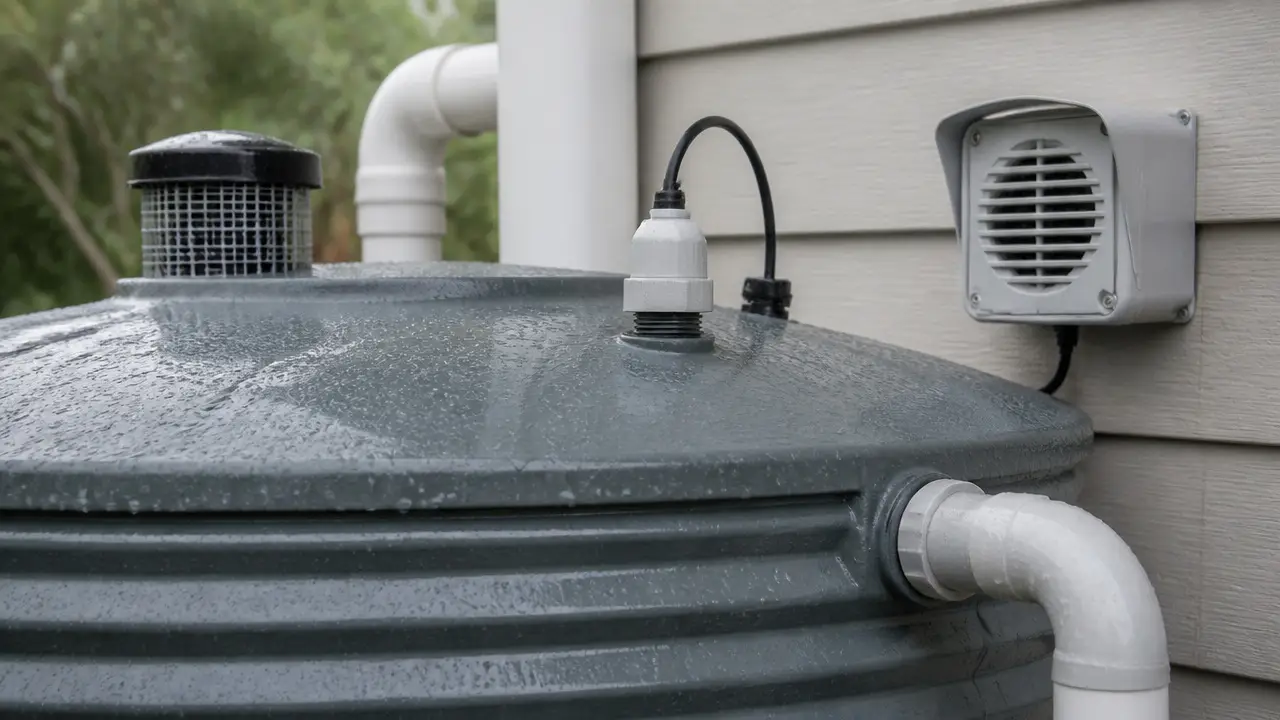
Roof → gutter → debris control → downspout → diverter → rain barrel → overflow
Larger systems may include additional prefiltration and storage components.
Collected roof runoff should not be assumed to be safe to drink. Roofing materials, animal waste, dust, debris, and other contaminants can enter the water. Drinking-water systems require suitable collection materials, treatment, maintenance, current water testing, and compliance with applicable local requirements.
Which Rain-Chain Alternative Is Best?
The right option depends on your goal.
| Your goal | Good option |
|---|---|
| Control heavy roof runoff | Closed downspout |
| Reduce splash near siding | Closed downspout |
| Keep a decorative appearance | Decorative downspout or open channel |
| Fill a rain barrel | Downspout with rainwater diverter |
| Move water away from the house | Downspout extension |
| Create a landscape feature | Dry creek bed or open channel |
| Connect runoff to underground drainage | Downspout and catch basin |
| Drain through a roof or parapet opening | Properly designed scupper |
For most homes, a standard downspout is the most practical starting point.
Consider Roof Runoff Volume
A small roof section and a large roof section can send very different amounts of water through the same gutter outlet.
Rain chains expose the flowing water to wind and splashing. A closed downspout contains it.
That difference becomes more important when a large roof area drains through one outlet or when intense rainfall occurs.
If an existing gutter already overflows during storms, replacing the rain chain alone may not fix the problem. The gutter, outlet, downspout capacity, debris buildup, roof drainage layout, or discharge route may also need attention.
Think About the Foundation First
Whatever alternative you choose, avoid concentrating water beside the foundation.
Check where the runoff goes after it reaches the ground.
A good drainage path should avoid:
- Pooling beside walls
- Flowing toward crawl spaces
- Washing soil away
- Soaking areas that already drain poorly
- Creating slippery walkways
- Sending water toward neighboring property
Roof water can be a useful resource, but it still has to be managed when storage is full.
Consider Freezing Weather
Rain chains can form large amounts of visible ice because water flows over an exposed surface.
Closed downspouts are less exposed, but they can also freeze if water becomes trapped inside them.
In freezing climates, avoid arrangements that leave standing water in hoses, low sections, valves, filters, or storage connections.
Rain barrels and seasonal collection equipment may also need winter preparation depending on their design and climate.
Do not assume that replacing a rain chain automatically provides freeze protection.
If You Want to Harvest the Rainwater
A closed downspout usually gives you more options for rainwater collection.
It can be connected to equipment such as:
- Leaf and debris screens
- First-flush devices
- Rainwater diverters
- Storage tanks
- Overflow piping
A first flush device diverts some of the initial roof runoff before water enters storage. That early runoff can contain a higher concentration of dust and debris that accumulated on the collection surface.
A first-flush device is only one part of water-quality management. It does not make stored rainwater potable, meaning safe for drinking.
For irrigation and other non-potable uses, which means uses that do not require drinking-quality water, the system can often be simpler. Even then, screens, covered storage, overflow control, and regular cleaning remain important.
When a Rain Chain Still Makes Sense
You do not necessarily need to replace a rain chain just because a closed downspout is more efficient.
A rain chain can still make sense when:
- The roof area feeding it is suitable.
- Splash is not damaging nearby surfaces.
- Water drains safely at the bottom.
- Wind is not causing major problems.
- You like seeing and hearing the moving water.
- The system remains easy to inspect and maintain.
The key is treating it as part of the drainage system, not just as decoration.
Frequently Asked Questions
Can I replace a rain chain with a regular downspout?
Yes. A standard downspout is one of the most practical replacements. The gutter outlet and downspout connection need to fit properly, and the bottom of the downspout needs a safe drainage route.
What works better than a rain chain in heavy rain?
A properly sized closed downspout generally provides better control because it keeps the water inside the pipe. Gutter and outlet capacity also matter, so changing only the chain may not solve an undersized or clogged drainage system.
What is the best alternative if I want to collect rainwater?
A downspout connected to a rainwater diverter is often easier to manage than an open rain chain. It can send water into a rain barrel or tank while maintaining a controlled overflow path.
Can I use a decorative channel instead of a rain chain?
Yes. A sloped open channel can guide runoff and create a visible water feature. Make sure it directs water away from the building without causing splash, erosion, or pooling.
Do I need a splash block under a downspout?
Not always, but the downspout needs some way to discharge water safely. A splash block is one simple option when the water can drain across the surface away from the foundation.
Are rain chains bad in freezing climates?
They are not necessarily bad, but exposed water can form ice on the chain and surrounding surfaces. Closed drainage systems can freeze too, especially where water becomes trapped, so winter drainage should be planned for the whole system.
Can a rain-chain replacement send water underground?
Yes. A downspout can connect to a properly designed catch basin or drainage system. Underground drainage needs a suitable outlet and should be installed so it does not create backups or foundation problems.