As an affiliate, we may earn a commission from qualifying purchases. We get commissions for purchases made through links on this website from Amazon and other third parties.
Water valves control, stop, or adjust the flow of water through a pipe. Three of the most common types are ball valves, gate valves, and globe valves.
For most rainwater systems, a ball valve is the simplest choice when you need to turn water fully on or off. Gate valves can also isolate sections of pipe, while globe valves are better when you need to adjust flow more precisely.
1. Ball Valves
A ball valve uses a round ball with a hole through its center. Turning the handle rotates the ball.
When the hole lines up with the pipe, water flows through. Turn the handle 90 degrees, and the solid part of the ball blocks the pipe.
Ball valves are good for:
- Rain barrel outlets
- IBC tote plumbing
- Cistern isolation valves
- Garden irrigation lines
- Pump inlet and outlet plumbing
- Drain connections
A ball valve is usually either fully open or fully closed. Although you can partly close one to reduce flow, it is generally better suited to shutoff duty than fine flow adjustment.
One useful feature is that the handle clearly shows the valve position. A handle parallel with the pipe normally means open. A handle across the pipe normally means closed.
Main advantages
Ball valves open and close quickly and usually provide little resistance to water when fully open.
They are especially useful in gravity-fed rainwater systems where every restriction can reduce an already modest flow rate.
2. Gate Valves
A gate valve stops water by moving a flat or wedge-shaped gate into the water path.
You normally turn a round handle several times to raise or lower the gate.
Gate valves are good for:
- Isolating larger pipes
- Tank plumbing
- Main water lines
- Systems where the valve normally stays fully open or closed
A fully open gate valve can allow water to pass with relatively little restriction.
However, gate valves are not a good choice for regularly adjusting water flow. Leaving the gate partly closed can cause wear, vibration, or poor control.
They also take longer to operate than ball valves because the handle may require several turns.
For a rain barrel or small garden system that you operate often, a ball valve is usually easier to use.
3. Globe Valves
A globe valve uses a movable plug or disc that presses against a seat inside the valve.
Turning the handle moves this part gradually, allowing you to increase or decrease the opening.
Globe valves are good for:
- Adjusting water flow
- Controlling flow through equipment
- Applications where gradual regulation matters
Unlike a ball or gate valve, a globe valve is designed to work well at partly open positions.
The tradeoff is greater resistance to flow. Water has to change direction as it passes through the valve body.
That pressure loss can matter in a low-pressure rainwater system.
For example, a gravity-fed tank may already have limited pressure. Adding a restrictive valve can reduce the amount of water reaching a hose or irrigation line.
Ball Valve vs. Gate Valve vs. Globe Valve
| Valve type | Best use | How it operates | Flow restriction when open |
|---|---|---|---|
| Ball valve | Quick shutoff | Quarter-turn handle | Usually low |
| Gate valve | Pipe isolation | Multi-turn handle | Usually low when fully open |
| Globe valve | Flow adjustment | Multi-turn handle | Higher |
Which Valve Is Best for a Rainwater System?
For many basic rainwater systems, a ball valve is the most practical general-purpose valve.
It works well where you need to:
- Shut off a tank before maintenance
- Control an outlet from a rain barrel
- Isolate a pump
- Drain part of a system
- Disconnect irrigation equipment
Choose a valve based on what you want it to do rather than simply matching the pipe size.
A shutoff valve and a flow-control valve serve different purposes.
Make Sure the Valve Fits the Rest of the System
Valve size alone does not guarantee compatibility.
Before installing one, check the:
Pipe size
A 1-inch valve needs plumbing connections that match your actual pipe or fittings.
Be careful with fittings described by nominal pipe size. The labeled size does not always equal the measured outside diameter.
Thread type
Threaded valves must use compatible threads.
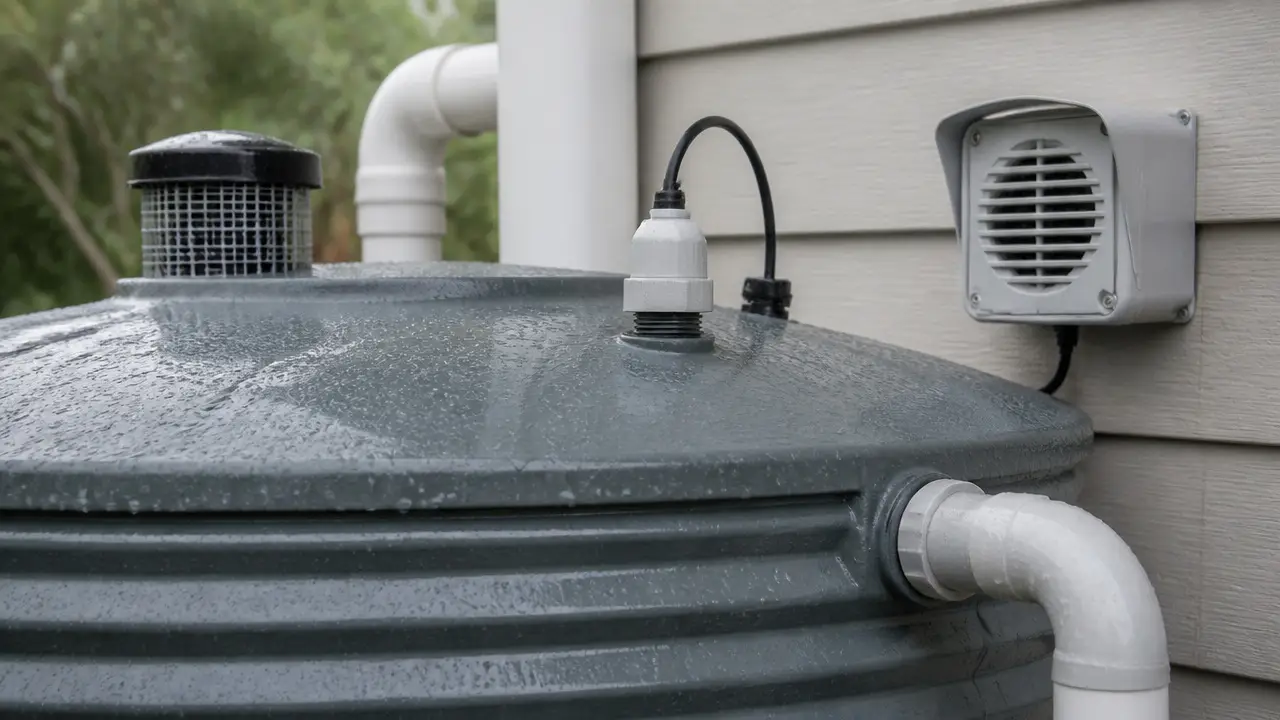
Use recommended ball valves for rainwater tanks and large PVC lines to assess long-term tank ventilation with dependable overflow handling.
Forcing together similar-looking but different thread standards can damage fittings and cause leaks.
Connection style
Valves may connect using:
- Threaded fittings
- Slip or solvent-weld fittings
- Compression fittings
- Flanges
- Hose-style connections
For tanks, you may also need a bulkhead fitting. A bulkhead fitting passes through a tank wall and creates a sealed connection for a valve or pipe.
Material
Make sure the valve material is suitable for the pipe, water use, pressure, temperature, and outdoor conditions.
If water is intended for drinking, every wetted component should also be appropriate for that intended use. A valve alone does not make collected rainwater potable.
Potable means suitable for drinking.
Do Not Forget Check Valves
A check valve is another very common water valve, but it serves a different purpose from the three valves above.
A check valve automatically allows water to move in one direction while helping prevent reverse flow.
You may see one used:
- After a pump
- In certain suction lines
- Between parts of a pressurized system
- Where unwanted backflow could occur
It normally has no handle because water pressure opens and closes it automatically.
Whether a check valve is needed depends on the pump and plumbing layout.
Valve Size Can Affect Water Flow
A valve that is too small can restrict flow.
This is especially important in gravity-fed rainwater systems.
Water pressure from a tank depends partly on head height, which is the vertical distance between the water surface and the outlet.
A low tank may have very little pressure available. Small fittings, long hoses, restrictive valves, filters, and sharp pipe bends can reduce flow further.
When possible, avoid unnecessarily reducing pipe diameter immediately before or after a valve.
Valves Need Maintenance Too
Outdoor water valves can eventually become stiff, clogged, or damaged.
Check them periodically for:
- Leaks around the stem
- Cracked bodies
- Loose fittings
- Sediment buildup
- Handles that are difficult to move
- Freeze damage
Sediment is especially important around rainwater tanks. Dirt that settles at the bottom of a tank can enter a low outlet and interfere with valves.
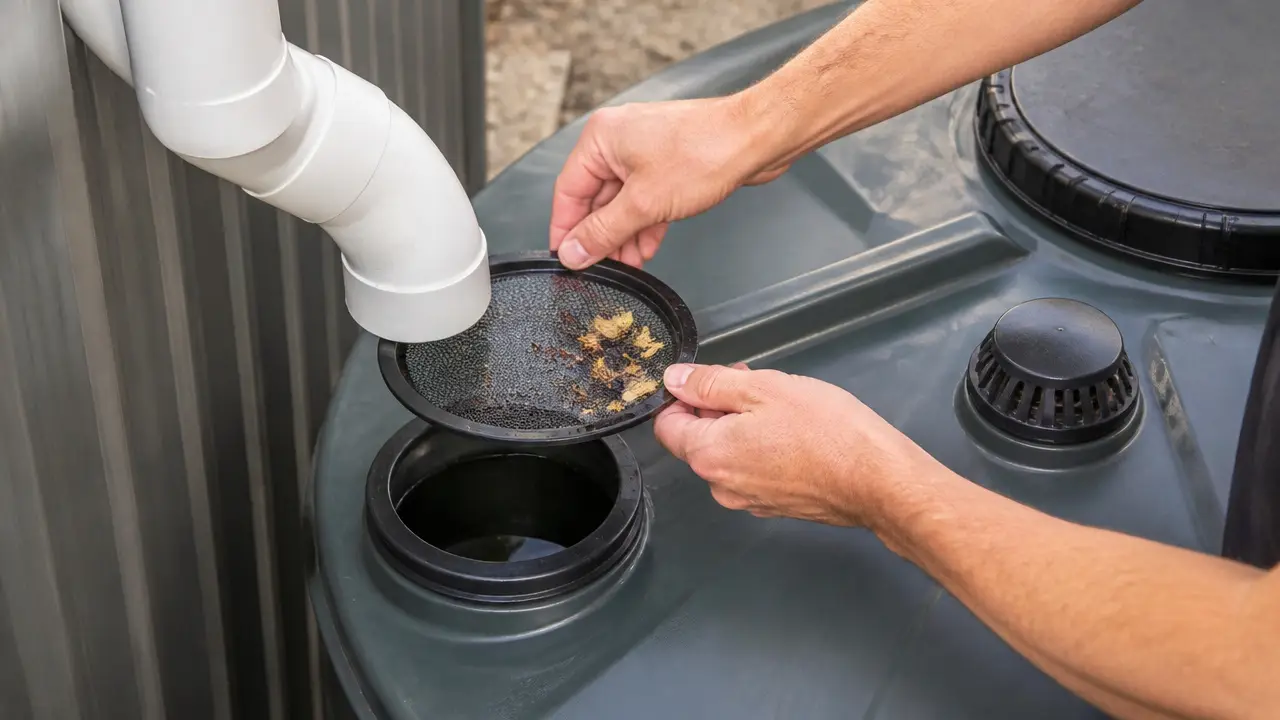
Keeping roof debris out of the tank and periodically removing accumulated sediment can help.
In freezing climates, water trapped inside exposed valves and pipes may freeze and expand. Drain or protect the system according to the design and local climate rather than assuming a closed valve provides freeze protection.
Frequently Asked Questions
What are the three main types of water valves?
Three common water valves are ball valves, gate valves, and globe valves. Ball valves are commonly used for quick shutoff, gate valves for isolation, and globe valves for adjusting flow.
What is the best valve for a rain barrel?
A ball valve is often the simplest option for a rain barrel because it opens and closes with a quarter turn and usually creates little flow resistance when fully open.
Is a ball valve better than a gate valve?
Neither is better for every application. Ball valves are quicker and easier to operate. Gate valves can work well for isolating larger pipes that normally remain fully open or fully closed.
Can I use a ball valve to control water flow?
You can partly close a ball valve to reduce flow, but standard ball valves are generally better for shutoff service. A valve designed for throttling, such as a globe valve, gives more gradual control.
What type of valve prevents water from flowing backward?
A check valve allows water to flow mainly in one direction and closes when flow tries to reverse. It is commonly used with pumps and other plumbing equipment.
Does valve size affect water pressure?
A properly sized open valve does not create pressure, but a restrictive or undersized valve can cause pressure loss while water is flowing. This can noticeably reduce flow in low-pressure gravity systems.
Can any water valve be used for drinking water?
No. For drinking-water systems, valves and other wetted components should be suitable for potable-water service. Collected rainwater also requires an appropriate whole-system approach to collection, treatment, testing, maintenance, and applicable local requirements before drinking use is considered.