As an affiliate, we may earn a commission from qualifying purchases. We get commissions for purchases made through links on this website from Amazon and other third parties.
For most cold water tanks, the ball valve should be the same nominal size as the tank outlet and the pipe connected to it. If the tank has a 1-inch outlet, use a 1-inch ball valve unless there is a specific reason to reduce the pipe size.
This matters most on gravity-fed tanks. A smaller valve can restrict flow and make an already low-pressure system perform poorly.
How to Choose the Right Ball Valve Size
Check these three parts before buying a valve:
- The size of the tank outlet or bulkhead fitting.
- The size of the pipe you plan to use.
- The type of thread or connection on both sides.
For example, if your tank has a 3/4-inch threaded outlet and you are running 3/4-inch pipe, a 3/4-inch ball valve is usually the straightforward choice.
Do not measure only the outside diameter of a threaded fitting. Plumbing sizes are nominal sizes, so a fitting labeled 1 inch will usually measure more than 1 inch across the threads.
Common Ball Valve Sizes for Cold Water Tanks
| Tank or pipe size | Typical ball valve size | Common use |
|---|---|---|
| 1/2 inch | 1/2 inch | Small lines and low-flow outlets |
| 3/4 inch | 3/4 inch | Rain barrels and small storage tanks |
| 1 inch | 1 inch | Garden supply and general tank outlets |
| 1-1/4 inches | 1-1/4 inches | Higher-flow tank systems |
| 1-1/2 inches | 1-1/2 inches | Larger storage and transfer lines |
| 2 inches | 2 inches | Cisterns, IBC totes, and high-flow transfer |
The correct size depends on your actual fittings rather than the tank's total capacity. A large tank can still have a relatively small outlet.
Should the Ball Valve Match the Tank Outlet?
Usually, yes.
Keeping the valve the same size as the outlet avoids adding an unnecessary restriction. This is especially useful when water leaves the tank by gravity.
For example:
1-inch tank outlet → 1-inch ball valve → 1-inch pipe
This keeps the water path consistent.
You can reduce the pipe size after the valve if the equipment farther downstream requires a smaller connection. However, every reduction can limit how much water the system can deliver.
Why Valve Size Matters on Gravity-Fed Tanks
A tank without a pump has very little pressure compared with household plumbing.
The pressure comes from head height, which means the vertical distance between the water surface in the tank and the outlet or fixture receiving the water.
Because pressure is limited, restrictions matter.
A small valve, narrow pipe, long pipe run, or several elbows can noticeably reduce flow. Using a valve that matches the tank outlet helps preserve the available flow.
For a gravity-fed garden system, using a 1-inch valve and 1-inch main line will generally allow more water to move than reducing the outlet immediately to 1/2 inch.
That does not mean a larger valve creates pressure. It simply reduces resistance.
Choose a Full-Port Ball Valve
A full-port, also called full-bore, ball valve is often a good choice for tank outlets.
Inside a full-port valve, the opening through the ball is close to the diameter of the connected pipe. This produces less restriction than a reduced-port valve.
That can help with:
- Gravity-fed water systems
- Pump suction lines
- Tank draining
- Garden irrigation supply
- Water transfer between tanks
A reduced-port valve can still work where flow is not important, but it may unnecessarily restrict a tank outlet.
Check the Connection Type
Two valves labeled with the same nominal size may still not connect to each other.
Common connections include:
- Female threaded
- Male threaded
- PVC socket
- Compression
- Hose thread
- Camlock
- Tank-specific adapters
You may also encounter different thread standards. A fitting that appears to be the correct diameter may not seal properly if its thread type is different.
Before ordering a valve, identify the tank outlet fitting rather than assuming that a measured diameter equals a standard pipe size.
Ball Valve Size for an IBC Tank
Many IBC totes use a large outlet valve with an adapter that reduces the outlet to common plumbing sizes.
The original IBC connection is not always a standard household pipe thread. Thread styles and outlet fittings vary between containers.
A common arrangement is:
IBC outlet → compatible adapter → ball valve → garden or transfer pipe
Choose the valve based on the pipe size you want after the correct IBC adapter.
If you want strong gravity flow, a larger line such as 1 inch can be more practical than reducing immediately to a small garden-hose connection.
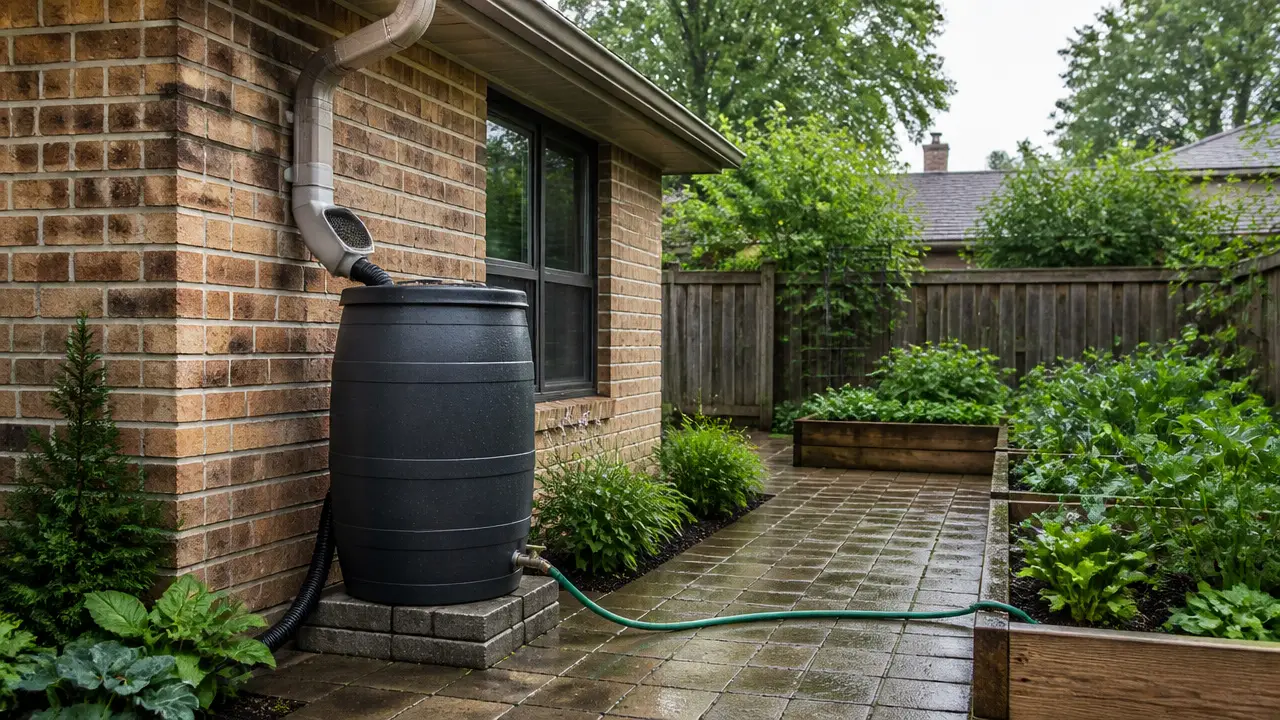
Ball Valve Size for a Rain Barrel
Rain barrels commonly use smaller outlets because they supply garden hoses, watering cans, or short irrigation lines.
A 1/2-inch or 3/4-inch outlet may be adequate for simple watering. A larger outlet can provide better flow where the barrel feeds a larger hose or irrigation manifold.
Examine key facts about the difference between a type 1 and type 2 ball valve to verify practical alternatives for the next planning step.
Again, match the valve to the barrel's bulkhead or outlet fitting unless you intentionally plan to change pipe size.
A bulkhead fitting is a fitting that passes through the tank wall and creates a sealed connection for a pipe, valve, or other fitting.
What Size Should You Use With a Pump?
The pump connection size matters as much as the tank outlet.
On the suction side of a pump, avoid unnecessarily reducing the pipe or valve size. A restrictive suction line can reduce pump performance and may contribute to operating problems.
For example, if a pump has a 1-inch suction connection, using a 1-inch full-port valve and suitable 1-inch pipe is generally more appropriate than feeding it through a long 1/2-inch line.
However, pipe sizing also depends on:
- Pump flow rate
- Pipe length
- Vertical lift
- Number of fittings
- Pump manufacturer's requirements
Flow rate means how much water moves through the system over a period of time, commonly measured in gallons per minute or liters per minute.
Follow the pump manufacturer's minimum suction-pipe requirements rather than choosing the valve size alone.
Does a Bigger Ball Valve Increase Water Pressure?
No.
A larger valve does not create additional pressure.
It can reduce resistance and allow more of the available flow to pass through the system. This is useful on gravity-fed tanks, but the pressure itself mainly depends on water height or the pump supplying the system.
If the water pressure is too low, simply installing a larger valve may not solve the problem.
Check the Valve Material
For ordinary non-potable cold-water storage, several valve materials may be suitable depending on the rest of the system. Common options include PVC, polypropylene, and suitable metal valves.
Make sure the valve is compatible with:
- The stored water
- The pipe material
- Outdoor exposure
- Expected pressure
- Expected temperature
For water intended for drinking, use components specifically suitable for potable-water service. Potable means water intended to be safe for drinking. Do not assume that a valve is suitable for drinking-water systems simply because it can hold water.
Collected rainwater also does not become potable because potable-rated plumbing parts are used. Drinking-water rainwater systems require suitable collection, treatment, maintenance, testing, and compliance with applicable local requirements.
Consider Freezing Conditions
A ball valve can trap water inside its body even when the surrounding pipe appears drained.
In freezing climates, trapped water can expand and damage the valve or connected fittings.
If the tank and plumbing remain outdoors through winter, the entire layout needs a suitable freeze-protection and drainage plan. Insulating a valve alone does not guarantee protection against freezing.
A Simple Sizing Rule
For most cold water tank installations:
Tank outlet size = ball valve size = main pipe size
Use reducers only where the system actually needs a smaller connection.
For a gravity-fed system, keeping the outlet and main pipe reasonably large helps preserve flow. For a pumped system, make sure the valve and pipe also meet the pump manufacturer's connection and flow requirements.
Frequently Asked Questions
Can I put a 3/4-inch ball valve on a 1-inch tank outlet?
Yes, with the correct reducer, but it will create a smaller point in the water path. If good gravity flow is important, keeping a 1-inch valve and pipe is usually better.
What size ball valve should I use on a 1-inch tank outlet?
A 1-inch ball valve is normally the simplest choice. A full-port valve will generally create less restriction than a reduced-port valve.
Is a bigger ball valve better for a water tank?
Not automatically. The valve should normally match the tank outlet and pipe. Installing a valve larger than the connected fitting usually provides little benefit because the smaller fitting still limits the water path.
Should I use a full-port ball valve on a water tank?
A full-port valve is a good choice when you want to minimize restriction, especially for gravity flow, tank draining, or pump supply lines.
What size valve should I use for a rain barrel?
Match the valve to the barrel's outlet or bulkhead fitting. Small rain barrels often use 1/2-inch or 3/4-inch plumbing, while larger gravity-fed systems may benefit from a larger outlet.
Will a larger ball valve increase gravity-fed pressure?
No. A larger valve can reduce flow restriction, but it does not increase the pressure created by the water's height above the outlet.
Can I connect a standard ball valve directly to an IBC tote?
Sometimes an adapter is needed. IBC tote outlet threads vary and are not always the same as standard household pipe threads. Identify the outlet before choosing the adapter and valve.