As an affiliate, we may earn a commission from qualifying purchases. We get commissions for purchases made through links on this website from Amazon and other third parties.
Rain barrel and water-tank overflows are not one standard size. The outlet diameter, thread type, and fitting style can vary between barrels, IBC totes, cisterns, and DIY tanks.
That matters when you replace an overflow fitting or connect several tanks together. A fitting that looks close may still have the wrong thread, hole size, or hose connection.
What Does an Overflow Do?
An overflow gives excess water a controlled way to leave the tank after it is full.
Without a suitable overflow, water may spill over the rim or collect around the tank base. A good overflow can send extra water toward a garden, drainage area, or another storage tank.
The overflow also needs enough capacity to handle incoming water during heavy rain. A very small outlet can become a bottleneck if the roof and downspout deliver water faster than the outlet can drain it.
Why Overflow Sizes Vary
There is no single overflow fitting used on every rainwater system.
The size can depend on:
- Tank design
- Tank capacity
- Roof drainage rate
- Downspout size
- Manufacturer
- Fitting type
- Whether the overflow connects to a hose or solid pipe
- Whether several tanks share the same drainage route
A small rain barrel may use a relatively small hose-style overflow. A larger cistern may use a much larger pipe connection.
Do not assume two tanks with similar capacities use interchangeable overflow fittings.
Nominal Size Is Not the Same as Actual Diameter
Plumbing sizes can be confusing because the stated size of a fitting does not always match the diameter you measure with a ruler.
For example, a fitting may be described using a nominal pipe size. Nominal means it belongs to a named plumbing size rather than having exactly that measurement across every part of the fitting.
Threads make things more complicated. Two fittings can appear to have about the same diameter but use different thread systems or pitches.
For that reason, measuring only the outside diameter is not always enough to identify a replacement.
What to Check Before Buying an Overflow Fitting
If you need to replace or modify an overflow, check the entire connection rather than just the pipe diameter.
Tank Hole Size
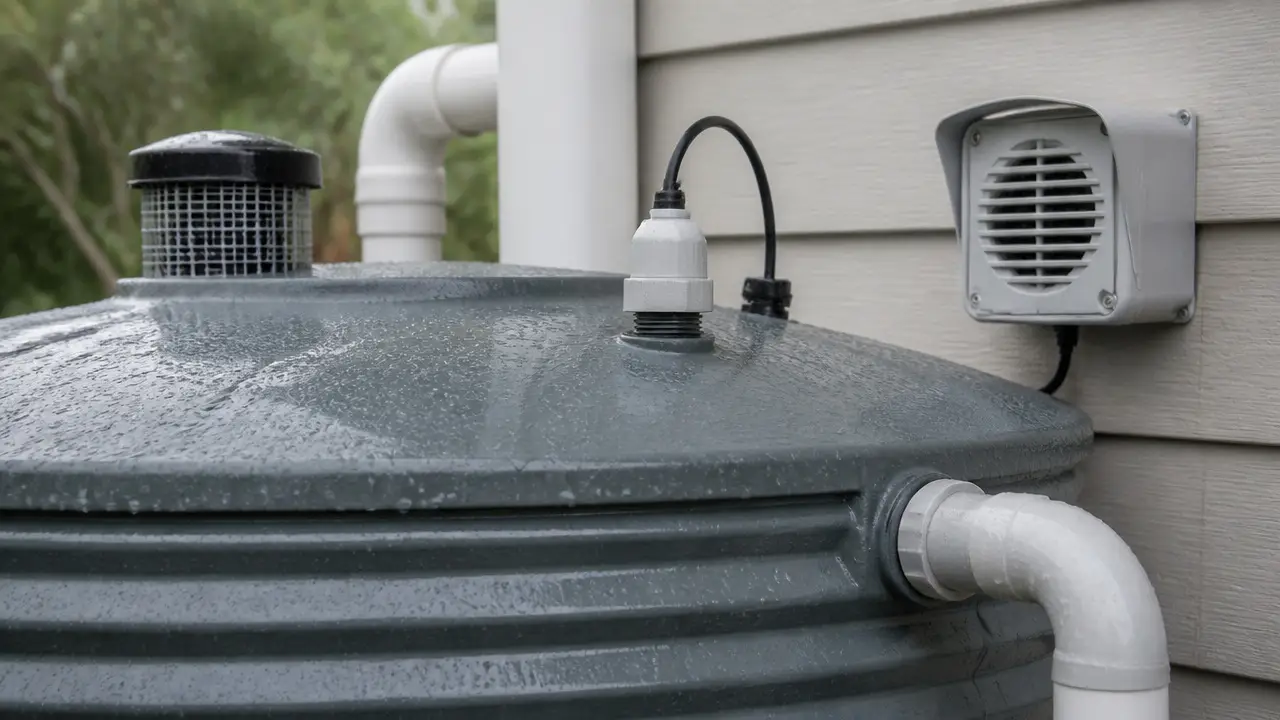
Many rainwater tanks use a bulkhead fitting.
A bulkhead fitting passes through a hole in the tank wall and seals against the wall with a gasket. The hole required for the fitting is normally larger than the pipe or hose connection it provides.
Do not enlarge the tank hole until you know the exact hole size required by the new fitting. A hole that is too large can be difficult to seal reliably.
Thread Type
Check whether the fitting uses:
- Pipe threads
- Hose threads
- Slip or solvent-weld connections
- Barbed hose connections
- Proprietary tank connections
Similar-looking threads are not necessarily compatible.
Inside and Outside Clearance
A bulkhead fitting needs room on both sides of the tank wall.
Inside the tank, the fitting may have a flange, gasket, screen, or elbow. Outside, you may need space for a nut, adapter, hose, or pipe.
Check the available space before drilling or changing fittings.
Overflow Hose or Pipe Size
The hose or pipe connected to the tank must also match the fitting.
Reducing a large overflow opening immediately into a much smaller hose can restrict drainage. The system is only as capable as its most restrictive section.
Should the Overflow Be as Large as the Inlet?
There is no universal rule that every overflow must exactly match the inlet diameter. However, the overflow should be able to discharge water fast enough that the tank does not back up during expected rainfall.
Consider the whole path:
roof → gutter → downspout → tank inlet → tank overflow → discharge area
A large roof can send a surprising amount of water toward a tank during a strong storm. If the overflow is much more restrictive than the inlet, water may rise faster than it can escape.
Bends, screens, long hoses, small adapters, and partially clogged fittings can reduce effective flow even when the stated pipe size seems adequate.
Rain Barrel Overflows
Rain barrels often have simpler overflow arrangements than large cisterns.
Common designs include:
- A hose connected near the top of the barrel
- A bulkhead fitting with an elbow
- A short pipe directed away from the barrel
- An overflow connected to another barrel
Explore practical steps for preventing water tank overflow to compare tank venting and overflow control during extended storage.
If you are replacing the original fitting, measure the existing parts and identify the connection type before ordering anything.
When linking barrels, remember that a small connecting hose may move water too slowly during heavy rainfall. Water can sometimes reach the top of the first barrel before the next barrel fills effectively.
IBC Tote Overflows
IBC totes deserve extra attention because their large lower outlet is not the same thing as an overflow.
The large valve near the bottom is normally intended for draining the tote. An overflow is usually added near the top if the tote is being adapted for rainwater collection.
DIY overflow fittings for IBC totes vary widely. The tote wall thickness, fitting shape, gasket placement, and hole diameter all need to work together.
Also make sure any tote used for rainwater has a known previous use appropriate for your intended water use. A tote that previously held an unknown or unsuitable substance should not be treated as safe simply because it has been washed.
Large Cistern Overflows
Large storage tanks may use substantially larger overflow pipes because they can receive water from larger roof areas and downspouts.
The overflow also needs to discharge somewhere suitable. Sending a large volume of stormwater directly beside the foundation, tank base, or an erosion-prone slope can create a different problem.
For buried tanks or systems tied into stormwater drainage, local requirements may affect where overflow water can go. Check current local plumbing and stormwater rules before connecting a rainwater tank to a building drainage system.
Do Not Forget an Overflow Screen
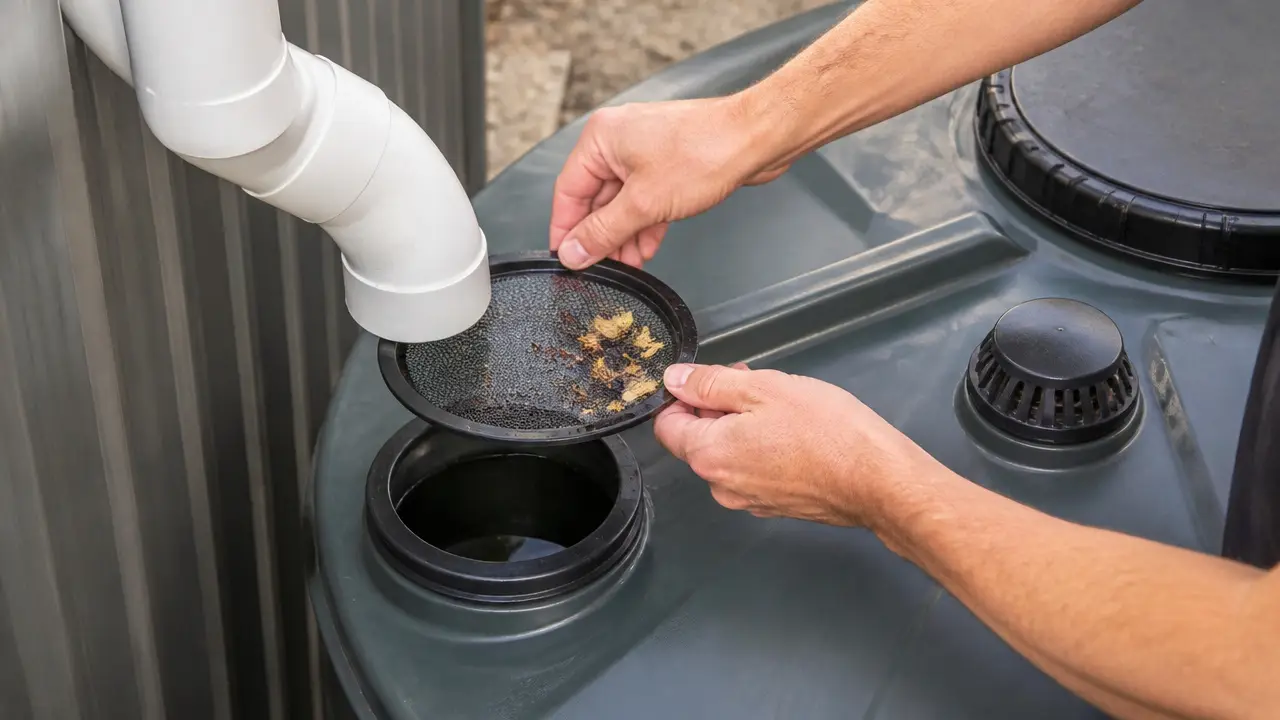
An open overflow can provide an entry point for mosquitoes, insects, leaves, and small animals.
A suitable screen or protected outlet can reduce that risk. The screen still needs regular inspection because debris can reduce flow.
This is especially important with rain barrels. A screened inlet does not protect the barrel if mosquitoes can enter through an uncovered overflow opening.
How to Measure an Existing Overflow
If you are trying to match an existing fitting, examine more than one measurement.
Check:
- The outside diameter of the connected pipe or fitting.
- The inside diameter where practical.
- The diameter of the hole through the tank.
- Whether the fitting is threaded, barbed, or smooth.
- The thread type if it is threaded.
- The wall thickness of the tank.
- The size of the hose or pipe connected downstream.
If the original fitting is still available, taking it to a plumbing or irrigation supplier can be more reliable than choosing a replacement from diameter alone.
Can You Make an Overflow Larger?
Often, but changing the hole in a tank should be treated as a permanent modification.
Before enlarging it, confirm:
- The new bulkhead fitting's required hole size
- The tank wall is suitable for the fitting
- There is enough flat surface for the gasket
- The fitting will not interfere with the lid or tank structure
- The downstream hose or pipe can handle the added flow
Curved barrel walls can make sealing harder because some bulkhead fittings work best on relatively flat surfaces.
Avoid drilling into a tank while it contains water. Large tanks should also be secured and safely accessible before work begins.
A Simple Way to Choose the Right Overflow
Start with compatibility rather than searching for a supposedly standard rain-barrel overflow.
Identify the tank opening and fitting type first. Then make sure the hose or pipe attached to it can carry the expected overflow without creating a major restriction.
For a small garden barrel, this may be a simple hose connection. For a large roof-fed cistern, overflow sizing becomes part of the overall drainage design and may warrant help from someone experienced with stormwater or rainwater systems.
Frequently Asked Questions
Are all rain barrel overflow fittings the same size?
No. Rain barrels use different hole sizes, threads, bulkhead fittings, hose connections, and pipe sizes. Check your specific barrel before buying a replacement.
Can I measure the overflow with a ruler?
A ruler or caliper helps, but diameter alone may not identify the fitting. Plumbing fittings can use nominal sizes, and threaded fittings also need the correct thread type and pitch.
Can I connect a garden hose to any rain barrel overflow?
No. Some overflows are made for hose connections, while others use pipe threads, barbs, or slip fittings. An adapter may be needed.
Should I use a larger overflow on a big rainwater tank?
Larger collection systems often need greater overflow capacity, but the correct size depends on incoming flow, piping layout, restrictions, and where the water is discharged. The whole drainage path needs to work together.
Can an overflow be too small?
Yes. If incoming water reaches the tank faster than the overflow can discharge it, water can back up or spill from other openings. Small hoses, adapters, bends, and clogged screens can all restrict flow.
Does an IBC tote already have an overflow?
Usually not in the form needed for a rainwater system. The large valve near the bottom is a drain outlet. A rainwater overflow is normally installed near the upper part of the tote.
Should a rain barrel overflow have a screen?
It is a good idea to protect overflow openings from mosquitoes, insects, and debris. The screen should also be inspected and cleaned so it does not become a flow restriction.