As an affiliate, we may earn a commission from qualifying purchases. We get commissions for purchases made through links on this website from Amazon and other third parties.
Yes. IBC totes use several different fitting types, thread sizes, valves, adapters, and connection styles. Two fittings that both look like “2-inch IBC fittings” may not fit each other.
The safest approach is to identify the fitting already on your tote before buying an adapter. Check the outside diameter, thread shape, thread pitch, and connection type. Do not assume every 275- or 330-gallon IBC tote uses the same outlet.
Common Types of IBC Fittings
Most rainwater systems use fittings in a few main groups:
- IBC-specific threaded fittings
- Pipe-thread adapters
- Camlock fittings
- Garden hose adapters
- Reducers
- Bulkhead fittings
- Caps and plugs
- Gaskets and seals
- Top-lid and vent fittings
The right one depends on where you are connecting and what comes next in the system.
IBC-Specific Outlet Threads
The large valve near the bottom of an IBC tote often has an unusual thread made for industrial containers.
S60x6 is one of the most common IBC outlet threads. It is a coarse buttress-style thread with roughly a 60 mm outside diameter and a 6 mm thread pitch. However, IBC totes can also use larger S100x8 threads, M80x3 metric threads, NPS pipe threads, camlock connections, and other designs.
That variety is why an adapter sold simply as an "IBC adapter" is not enough information.
An adapter must match your particular valve.
What Is a Buttress Thread?
A buttress thread has large, coarse threads that look different from normal plumbing pipe threads.
These threads are commonly used where a strong plastic connection needs to be attached and removed easily.
The S60x6 connection found on many IBC valves is an example.
Do not try to force a regular pipe fitting directly onto a buttress thread. Even if the diameters look close, the thread shapes can be completely different.
NPT and BSP Pipe Fittings
After the IBC-specific adapter, many systems change over to a more familiar pipe connection.
Two common types are NPT and BSP.
NPT means National Pipe Thread. It is widely used in North American plumbing.
BSP means British Standard Pipe. It is common on equipment made for many other markets.
These threads can look very similar, but they are not automatically interchangeable. Their thread geometry differs, and mixing them can cause poor engagement, damaged threads, or leaks.
For example, you might build a connection like this:
IBC valve → S60x6 adapter → NPT fitting → pipe or valve
Once you reach a normal plumbing thread, it becomes much easier to connect pumps, filters, irrigation lines, and other equipment.
Camlock Fittings
Camlock fittings, also called cam-and-groove fittings, are quick-connect fittings.
Instead of threading a hose connection on and off each time, you insert the matching fitting and close two cam arms.
They are useful when you frequently:
- Connect and remove transfer hoses
- Move water between totes
- Connect a portable pump
- Drain a tote through a large hose
- Disconnect equipment for winter storage
IBC valves may have a camlock fitting already installed, or an adapter can sometimes convert the tote's threaded outlet to a camlock connection. Two-inch camlock connections are among the outlet arrangements used with IBC systems.
The camlock size still needs to match the hose and mating fitting.
Garden Hose Adapters
For small rainwater systems, one of the simplest choices is an IBC-to-garden-hose adapter.
A typical setup may look like:
IBC outlet → IBC adapter → garden hose connection
This can work well for:
- Filling watering cans
- Hand watering
- Supplying a short garden hose
- Feeding some low-flow irrigation systems
Keep flow limitations in mind.
A large IBC valve may have a roughly 2-inch outlet. Reducing it immediately to a garden hose connection creates a much smaller passage. That can greatly limit flow compared with keeping a larger pipe or hose.
Gravity also creates only modest pressure unless there is significant height between the water level and the outlet.
For long irrigation lines or equipment that needs steady pressure, a pump may be needed.
IBC Reducers
A reducer changes from one connection size to another.
For example:
IBC outlet → 2-inch adapter → 1-inch reducer → irrigation pipe
or:
IBC outlet → 2-inch adapter → 3/4-inch garden hose
Reducers are useful, but it is usually better not to reduce the pipe size earlier than necessary.
Keeping a larger line near the tote helps reduce flow restriction. You can reduce the size closer to the equipment that actually requires the smaller connection.
Bulkhead Fittings
A bulkhead fitting creates a sealed connection through the wall of a tank.
It normally has:
- An inner section
- An outer section
- A gasket
- A nut or threaded body
The parts clamp around the tank wall.
Bulkhead fittings are useful when adding a new:
- Outlet
- Overflow
- Tank-to-tank connection
- Drain
- Return line
A bulkhead fitting is different from an adapter that screws onto the tote's factory valve.
Installing one normally means drilling the IBC bottle. The hole must be correctly sized and located on a suitable flat area. A poorly installed bulkhead fitting can leak or damage the container.
Whenever possible, use existing factory openings instead of drilling additional holes unnecessarily.
Top-Lid Fittings
IBC totes also have fittings at the top.
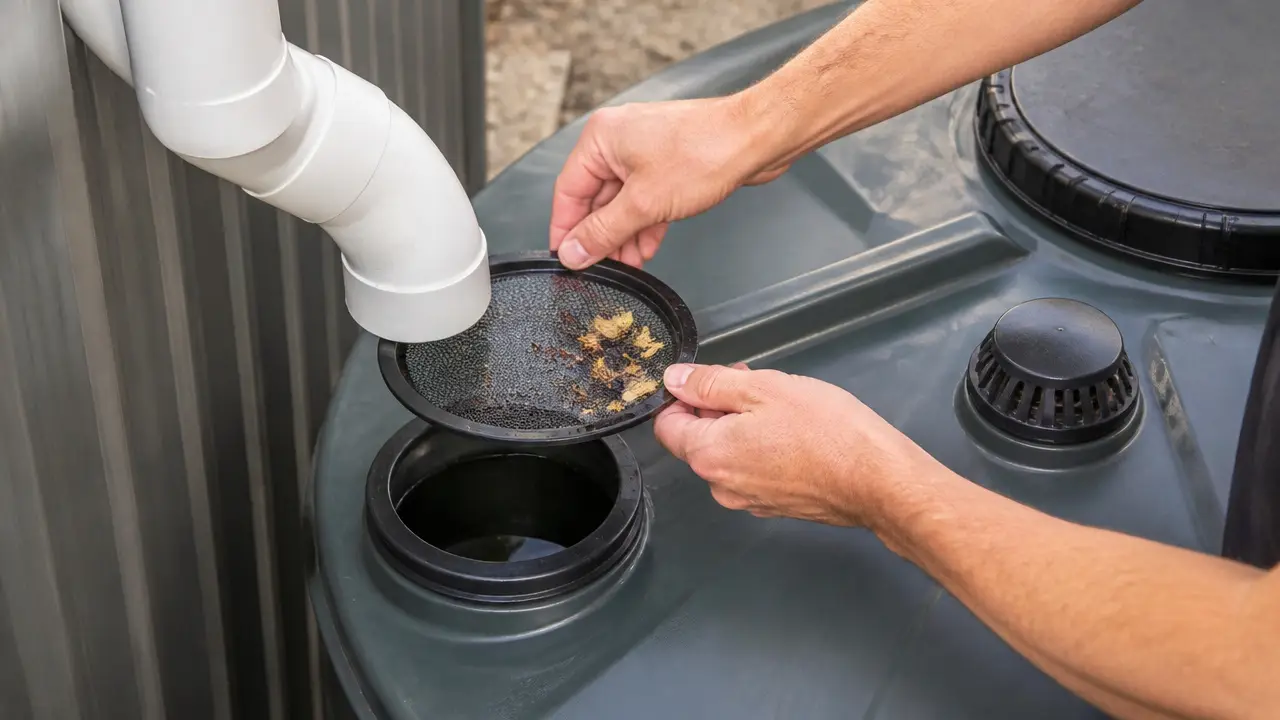
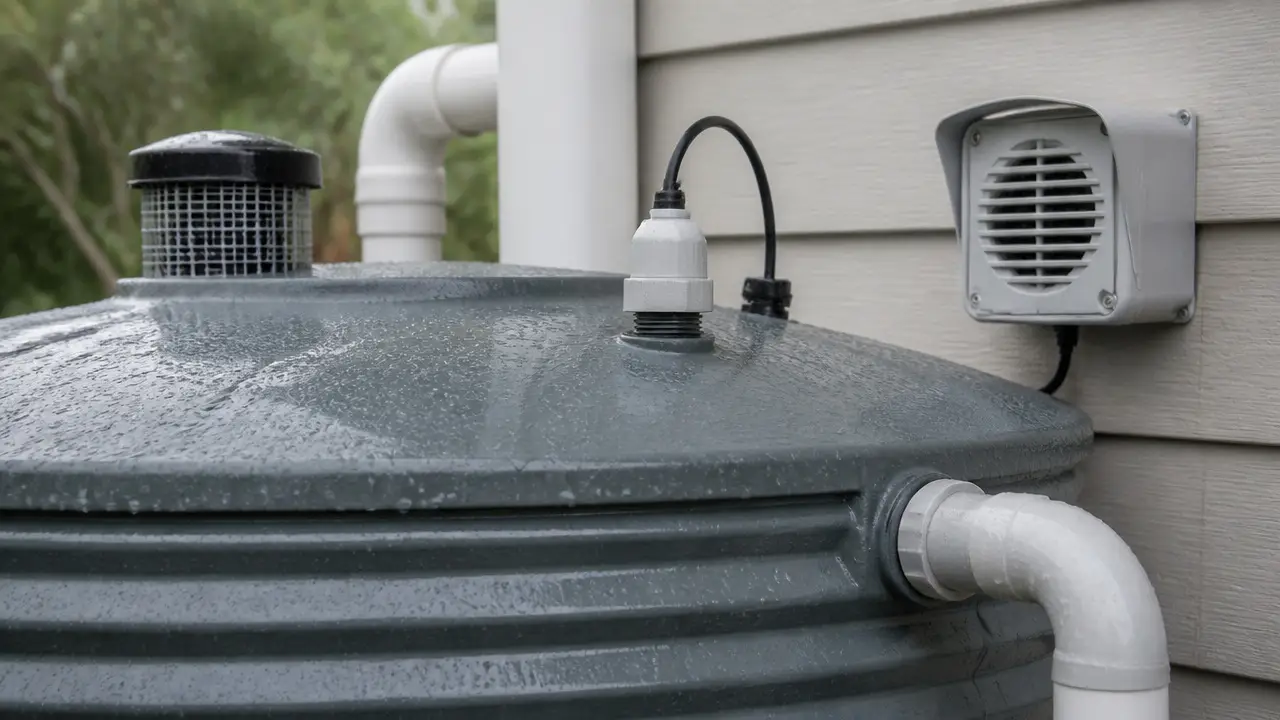
The large opening is mainly used for filling, inspection, and cleaning. Depending on the tote, the lid may include a smaller vent or threaded opening.
Top fittings may be used for:
- Rainwater inlet plumbing
- Vents
- Screened air openings
- Pump suction tubes
- Level sensors
- Inspection access
Do not assume the top cap uses the same thread as the bottom valve. They are separate parts of the container and can use completely different connections.
For rainwater collection, the inlet should also keep leaves, insects, and other debris from easily entering the tank.
Caps and Plugs
Caps and plugs close unused connections.
They may be useful when:
- Storing an empty tote
- Closing an unused outlet
- Winterizing a system
- Removing a pump temporarily
- Preventing dirt from entering disconnected plumbing
Some caps rely on a gasket rather than the threads themselves to create the seal.
Evaluate standard IBC tote thread sizes to compare this decision within the complete collection path.
If a cap leaks, replacing the gasket may solve the problem without replacing the entire fitting.
Gaskets Matter as Much as the Fitting
Many IBC connections depend on a gasket or O-ring.
The fitting threads may provide the clamping force while the gasket creates the actual seal.
Common gasket materials vary by fitting and intended liquid. Do not replace a gasket based only on size if the tote will hold anything besides ordinary rainwater.
For a rainwater system, also inspect old gaskets for:
- Cracks
- Flattening
- Hardening
- Cuts
- Dirt
- Missing sections
A damaged seal can cause a connection to drip even when the threads are correct.
Tightening the fitting harder is not always the answer. Excessive force can damage plastic threads or deform the seal.
How to Identify Your IBC Outlet
Do not order an adapter based only on the tote's capacity.
A 275-gallon tote and a 330-gallon tote can have different outlet valves.
Instead, check the actual connection.
1. Look at the Existing Valve
Start with the valve at the bottom of the tote.
Determine whether the end has:
- Large external threads
- Internal threads
- A camlock connection
- A cap over another type of fitting
Remove only parts that are meant to be removed.
2. Measure the Outside Diameter
Measure across the widest part of the male thread.
Millimeters are especially useful because many IBC fittings use metric dimensions.
An S60x6 connection, for example, is commonly described as having an outside diameter around 60 mm and a 6 mm pitch. Other IBC fittings can be much larger.
A measurement alone is not enough, however. Several different thread types can have similar diameters.
3. Check the Thread Pitch
Thread pitch is the distance from one thread peak to the next.
Large IBC buttress threads often have a much coarser pitch than common plumbing threads.
Checking both diameter and pitch greatly reduces the chance of buying the wrong adapter.
4. Check the Thread Shape
Look at the profile of the threads.
A coarse IBC buttress thread looks quite different from a fine pipe thread.
Do not force a fitting because it starts to turn. A mismatched fitting may engage for a turn or two before binding.
5. Check the Valve Manufacturer or Markings
Look for molded names, numbers, or specifications on:
- The valve
- Valve cap
- Tote label
- Top lid
Those markings can sometimes identify the original valve or connection standard.
Common IBC Connection Choices
| What you want to connect | Common fitting approach |
|---|---|
| Garden hose | IBC outlet adapter to garden hose thread |
| Irrigation pipe | IBC adapter to NPT/BSP, then appropriate pipe fitting |
| Transfer hose | IBC adapter to camlock |
| Pump | IBC adapter to pipe thread or camlock |
| Second tote | Large pipe, hose, or suitable tank connection |
| New overflow | Existing top opening or properly installed bulkhead |
| Drain line | Factory valve adapter or bulkhead connection |
These are connection approaches rather than universal sizes. The exact adapter still depends on your tote.
Should You Use the Factory IBC Valve?
For most simple rainwater systems, yes.
Keeping the original bottom valve has several advantages.
It avoids drilling another hole and gives you a large shutoff point directly at the tank.
A common setup is:
IBC tote → factory valve → correct IBC adapter → plumbing system
You can then add another valve downstream if you want easier control.
Replace the factory valve if it is cracked, badly worn, leaking from the valve body, or unsuitable for the intended system.
Be Careful With Used IBC Totes
The fitting is only one part of choosing an IBC tote for rainwater.
If the tote is used, find out what it previously contained.
Do not assume that washing a tote makes it suitable for every type of water use. Some previous contents can make a container unsuitable for garden use, household use, or drinking-water systems.
For water intended for drinking, the entire system needs more consideration than choosing a food-grade-looking fitting. Collection surfaces, storage materials, prefiltration, treatment, maintenance, current laboratory testing, and local requirements all matter.
A filter or new adapter does not make an unknown used IBC tote safe for potable water.
Choosing the Right IBC Fitting
Before buying anything, work from the tote outward.
Identify:
- The existing valve connection.
- The thread diameter and pitch.
- Whether it is buttress, NPT, BSP, camlock, or another design.
- The connection you want on the other end.
- The pipe or hose diameter needed for your desired flow.
- Whether the fitting and gasket are appropriate for water and your intended use.
In many rainwater systems, the small adapter between the IBC valve and normal plumbing is the most important fitting to identify correctly.
Once that connection is correct, the rest of the plumbing can often use familiar pipe, hose, valve, and irrigation fittings.
Frequently Asked Questions
Are all IBC tote fittings the same size?
No. IBC totes can use several outlet sizes and thread types. S60x6 is common, but larger buttress threads, metric threads, pipe threads, and camlock connections also exist. Measure and identify your valve before ordering an adapter.
What is an S60x6 IBC fitting?
S60x6 is a coarse buttress-style thread commonly found on IBC outlet valves. The name refers to a thread size around 60 mm with a 6 mm pitch. An S60x6 adapter converts this connection to another type of plumbing fitting.
Can I connect a garden hose directly to an IBC tote?
Usually you need an adapter between the IBC valve and the garden hose. The adapter must match the tote's outlet thread on one side and garden hose thread on the other.
Are BSP and NPT fittings interchangeable?
They should not be treated as interchangeable. BSP and NPT have different thread geometry. A mismatched connection may start threading together but can leak or damage the fittings.
What is a camlock fitting on an IBC tote?
A camlock is a quick-connect hose fitting. The matching pieces lock together using cam arms rather than requiring the entire hose fitting to be threaded on and off.
Can I add another outlet to an IBC tote?
A bulkhead fitting can create another tank connection, but installation requires drilling the bottle and creating a reliable gasket seal. Using an existing factory opening is usually simpler when it meets the system's needs.
How do I know which IBC adapter I need?
Check the outlet's outside diameter, thread pitch, thread shape, valve markings, and connection style. Then choose an adapter that matches that exact outlet and converts it to the plumbing connection you need.