
As an affiliate, we may earn a commission from qualifying purchases. We get commissions for purchases made through links on this website from Amazon and other third parties.
Best Overall
Best Premium Set
Best Hex-Shank Bit
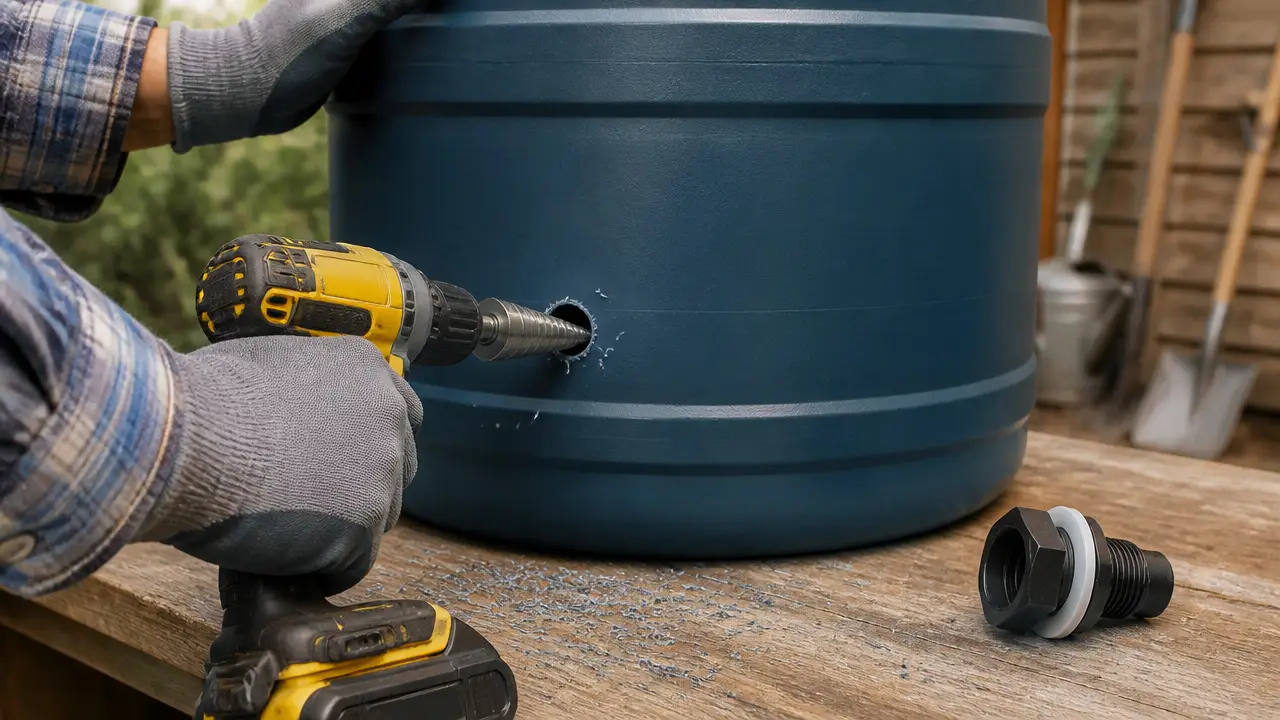
A step drill bit is useful for rain-barrel work because one bit can start a small hole and enlarge it gradually until a spigot, bulkhead, or grommet fits. That is especially handy in thin plastic, where jumping straight to an oversized hole can leave a rough edge or remove more material than the gasket can cover.
The five options here range from multi-bit sets with dozens of step sizes to a compact hex-shank bit for controlled drilling. For most rain-barrel projects, the important questions are the largest hole you need, whether the steps are easy to read, how securely the shank sits in the drill, and whether the bit cuts plastic cleanly without grabbing.
A step bit is not always the best tool for a large final opening. When a bulkhead requires a fixed hole larger than the step bit's range, a properly sized hole saw is usually the cleaner choice. Use the fitting's actual hole requirement as the target rather than drilling until a part "looks close."
Step Drill Bits at a Glance
| Product | Best For | Key Strength | Tradeoff |
|---|---|---|---|
| ZELCAN Five-Piece Set | Wide range of DIY barrel holes | Five bits cover many step sizes and reach about 1.38 inches | Cutting quality can vary, especially in tougher metal |
| IRWIN Three-Piece Set | Long-term tool use | Strong cutting performance and clearly marked steps | More tool than many one-barrel projects need |
| Klein Hex-Shank Step Bit | Drill or impact-driver convenience | 1/4-inch hex shank and spiral flute design | Exact size/material fields conflict and isolated early failure exists |
| Neiko Three-Piece Set | Smaller holes and general DIY work | Three bits replace many individual sizes | Durability is inconsistent between users |
| Five-Piece HSS Titanium Set | Broad low-cost size coverage | Five bits and storage case | Material field conflicts and cutting performance is mixed |
Know the Final Hole Size Before You Drill
Rain-barrel fittings often require a wall opening larger than their nominal plumbing size. A 3/4-inch spigot may need a hole over 1 inch across because the bulkhead body has to pass through the plastic. That is why the fitting instructions—not the thread label—should decide the final step.
Mark the needed hole size before drilling. If the step bit has laser or stamped size markings, stop at the correct step rather than testing the fitting after every pass. On thin plastic, enlarge the hole gradually and keep the drill square to the wall.
If the required opening sits between two steps, do not automatically oversize it. A hole saw, reamer, or another controlled tool may be more appropriate for the final fit.
A Five-Bit Set for a Wide Range of Barrel Openings
1 / 5
ZELCAN Five-Piece Step Drill Bit Set

Pieces
5 step bits
Largest Cutting Diameter
1.38 in
Shank
3-flat
The ZELCAN set has the broadest practical hole coverage for rain-barrel work in this group. Five step bits provide many incremental sizes, and the largest cutting diameter is about 1.38 inches. That reaches into the range used by several common barrel spigots and smaller bulkhead fittings.
A three-flat shank helps the drill chuck grip the bit without slipping as easily as a fully round shank. The set also includes an automatic center punch, which is more useful on metal than plastic but can help mark a precise starting location on a separate bracket or thin sheet part.
Matching the drilled opening to standard barrel connector sizes helps prevent loose or oversized fittings.
Performance is the tradeoff. The set can make clean gradual holes in plastic and thin metal when used at controlled speed, but cutting quality varies on harder metal. For rain-barrel plastic, the broad step range is the reason to choose it. Do not use high speed and heavy pressure simply because the bit is rated for metal.
Why It Works
- Five bits cover a wide range of opening sizes.
- The largest cutting diameter reaches about 1.38 inches.
- Three-flat shanks give the drill chuck a positive gripping surface.
- Clearly stepped sizes make gradual enlargement easier than swapping many twist bits.
What To Keep In Mind
- Cutting durability is less consistent in tougher metal.
- Stop at the fitting's required hole rather than using the largest possible step.
- Plastic can grab or melt if drilled too aggressively.
A Three-Piece Set for Repeated Tool Use
2 / 5
IRWIN Three-Piece Step Drill Bit Set

Pieces
3
Shank
Straight
Finish
Titanium nitride
The IRWIN set is the strongest fit for someone who expects the bits to live in the toolbox after the rain-barrel project is finished. Three bits cover multiple step sizes, with clearly marked steps and a fast-starting design rather than a one-off disposable cutting setup.
A straight shank is conventional and works well in a properly tightened drill chuck. The bits can cut clean holes in steel and handle repeated work without rapid dulling, giving this set a better durability record than the cheaper multi-bit choices.
For plastic barrels, that durability does not mean you should drill faster. Thin polyethylene needs control more than power. Use the bit to enlarge the opening gradually, support the barrel wall, and stop as soon as the correct step passes through.
Why It Works
- The three-bit set covers multiple hole sizes without carrying a large assortment.
- Step markings make it easier to stop at a planned diameter.
- The bits can handle repeated cutting in tougher materials.
- The set can remain useful for metal and shop work after the barrel project.
What To Keep In Mind
- It may be unnecessary for someone drilling only one plastic barrel.
- Keep the bit square to the wall so a clean round step becomes the final opening.
- Let the cutting edge work instead of forcing the bit through plastic.
A Hex-Shank Bit for Quick Tool Changes
3 / 5
Klein Tools Hex-Shank Step Drill Bit

Shank
1/4 in hex
Flutes
Spiral double flute
Use
Thin metal, plastic, aluminum and wood
The Klein bit stands out because of its 1/4-inch hex shank. It can lock positively into compatible drills and impact drivers, making it convenient if your installation work already uses hex-shank tools. The spiral double-flute design is intended to clear chips and pull through thin material more smoothly.
The exact material and full cutting range are uncertain. Its clear strengths are the hex-shank format and suitability for thin metal, plastic, aluminum, and wood. For a rain barrel, that makes it useful when the required hole falls within the actual marked steps on the bit you receive.
The bit can cut very quickly, but an isolated first-use failure raises a durability concern. Inspect it before starting and avoid hammering or impact action through a thin plastic barrel just because the shank fits an impact driver.
Why It Works
- A 1/4-inch hex shank gives a positive tool connection.
- Spiral flutes help remove chips during gradual enlargement.
- The bit is designed to cut plastic as well as thin metal, aluminum, and wood.
What To Keep In Mind
- Exact material and the full cutting range are uncertain.
- Do not use impact action aggressively on a flexible barrel wall.
- Make sure the needed step exists before drilling the pilot hole.
A Compact Three-Bit Set for Smaller Openings
4 / 5
Neiko Three-Piece Titanium Step Bit Set

Pieces
3
Size Range
Up to 3/4 in
Shank
3-flat
The Neiko set is better suited to smaller holes, pilot enlargement, and general DIY work than to the largest rain-barrel bulkheads. Its three included bits cover several SAE step ranges, including one that reaches 3/4 inch. That is useful for small fittings, vents, cable pass-throughs, or starting holes that will later be finished with another tool.
The bits use three-flat shanks and a two-flute design. Their exact base material is uncertain, so the recommendation rests on the set ranges, shank style, and cutting layout rather than the material label.
Durability varies sharply. Some bits have stayed useful for years, while others dulled quickly. For a plastic rain barrel, moderate speed and light pressure are easier on both the bit and the container.
Why It Works
- Three pieces cover many smaller hole sizes.
- Three-flat shanks reduce chuck slippage.
- The set is compact enough for occasional DIY use.
What To Keep In Mind
- The included ranges are less useful for large bulkhead openings.
- Cutting life has been inconsistent between users.
- Check the package before use because missing parts have occurred.
A Five-Bit Set With One-Inch Coverage
5 / 5
Five-Piece Titanium Step Drill Bit Set

Pieces
5
Cutting Diameter
1 in
Shank
3-flat
This five-piece set provides broad size coverage and includes a 1-inch cutting diameter, making it potentially useful for spigots and smaller tank fittings that fall within that range. A storage case keeps the bits together between projects.
The exact material is uncertain. The useful details are the five-piece layout, 3-flat shanks, dual-flute cutting design, and 1-inch diameter. Cutting performance is mixed, especially on metal.
For plastic rain barrels, it can still serve as a low-complexity DIY set when the required hole is within the marked steps. It ranks last because its edge quality and durability are less consistent than the higher picks.
Why It Works
- Five bits cover many incremental sizes.
- A 1-inch cutting diameter reaches common small fitting holes.
- The storage case keeps the set organized.
What To Keep In Mind
- Exact material is uncertain.
- Cutting performance is inconsistent in tougher materials.
- Check the required final hole before assuming a 1-inch maximum is large enough.
How to Drill a Rain Barrel With a Step Bit
Empty and Stabilize the Barrel
Do not drill a container that is full of water or unstable on a stand. Place the empty barrel where it cannot roll or flex excessively while you work.
Mark the Center Carefully
Choose a smooth wall area away from molded ribs, seams, and tight curves. Mark the center of the fitting hole and check handle or pipe clearance before drilling.
Start Small
Use the bit's point or a small pilot hole as appropriate. Keep the drill square to the wall. Let the next step widen the hole rather than pushing sideways.
Stop at the Planned Step
Watch the size markings. As soon as the correct step has fully passed through the wall, stop. Continuing one more step can make a bulkhead hole too large to seal.
Clean the Edge
Remove loose plastic curls and burrs without enlarging the opening. The gasket needs a clean, smooth contact area.
Step Bit or Hole Saw?
A step bit is excellent when you want to approach the final size gradually or when several small-to-medium fitting sizes are possible. It is also convenient for thin plastic because one tool can make the pilot and enlarge the opening.
A hole saw is better when the fitting calls for one exact larger diameter and you want a straight-sided opening in one operation. This often applies to 1-inch bulkheads and other fittings whose wall hole is larger than the nominal thread.
If the step bit does not include the exact required diameter, do not choose the next larger step just to finish faster. Use the right cutting tool for the fitting.
Drilling Plastic Without Cracking or Melting It
Use controlled speed. High RPM can heat the plastic and soften the edge. Heavy pressure can make a step bit grab as it breaks through.
Support the wall when possible and let chips clear between steps. If the plastic starts smearing rather than cutting cleanly, reduce speed and stop to let the bit and wall cool.
Wear eye protection. Plastic chips and curls can come off quickly when a larger step engages.
Common Step Drill Problems
The Hole Became Too Large
The bit went one step past the required size. A gasket may not cover the mistake. Do not assume extra sealant can repair an oversized structural opening.
The Bit Grabs the Plastic
Reduce pressure and speed. Keep the drill straight and support the wall so the bit does not suddenly pull through.
The Chuck Slips
Tighten the drill correctly and use the shank surfaces as intended. Three-flat and hex shanks can help reduce spinning.
The Plastic Edge Melts
The bit is moving too fast or staying in one place too long. Slow down and clear chips so heat does not build.
The Step Markings Are Hard to Read
Mark the target step with a removable marker before drilling or measure the bit in advance. Do not guess once the bit is inside the barrel wall.
Frequently Asked Questions
Are step drill bits good for plastic rain barrels?
Yes. They are useful for thin plastic because they enlarge a hole gradually. Use moderate speed and stop at the exact size required by the fitting.
What size step bit do I need for a rain barrel spigot?
Use the wall-hole requirement for the exact spigot or bulkhead. The nominal plumbing size does not equal the hole diameter.
Is a step drill bit better than a hole saw?
It depends on the opening. A step bit is flexible for several sizes and gradual enlargement. A hole saw is often better for one exact larger diameter.
Can I use an impact driver with a step bit?
Some bits have hex shanks that fit impact drivers, but thin plastic should be drilled with controlled rotation rather than aggressive impact action.
How do I keep a step bit from grabbing plastic?
Use light pressure, keep the drill square, support the wall, and reduce speed as larger steps engage.
Can I enlarge an existing rain barrel hole with a step bit?
Yes when the existing hole is centered and the target size is one of the bit's steps. Enlarge gradually and stop before removing more wall than the fitting requires.
If your fitting needs a larger fixed opening, hole saw kits for water tanks cover that cutting method. For the fitting that goes into the hole, bulkhead fittings for rain barrels compare common through-wall options. If the goal is a usable faucet, rain barrel spigots cover the valve and hose-connection side. For cutting PVC pipe after the tank outlet is installed, PVC pipe cutters for rainwater systems compare cleaner alternatives to sawing small pipe by hand.