As an affiliate, we may earn a commission from qualifying purchases. We get commissions for purchases made through links on this website from Amazon and other third parties.
A DIY rainwater filter can remove leaves, grit, insects, and other visible debris before the water reaches a rain barrel or tank. For garden watering and other non-potable uses, a simple system can work well.
The key is to filter rainwater in stages instead of expecting one filter to do everything. Start by keeping debris out at the gutter, divert the dirtiest first runoff, then filter smaller particles before storage or use.
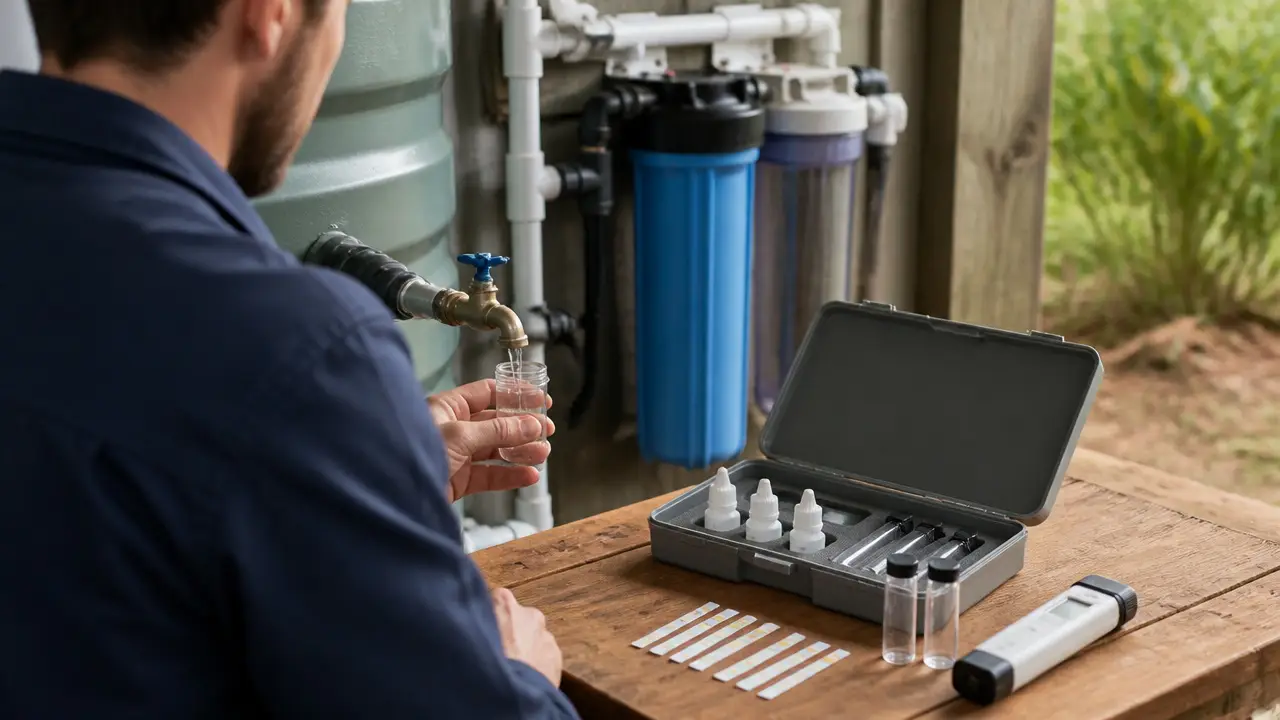
A homemade filter does not automatically make roof runoff safe to drink. Rainwater can pick up germs and chemicals from the air, roof, gutters, pipes, and storage tank. The CDC recommends treatment and regular testing when collected rainwater is used for drinking, cooking, or bathing.
A Simple DIY Rainwater Filter Setup
For a basic rain barrel or garden system, use this order:
Roof → gutter screen → first flush diverter → debris filter → storage tank → outlet filter → garden
Each stage handles a different problem.
1. Install a Gutter or Downspout Screen
Start with the largest debris.
A screen placed over the gutter outlet or downspout can catch:
- Leaves
- Twigs
- Pine needles
- Seed pods
- Insects
- Large roof debris
Use a corrosion-resistant screen that allows rain to pass without overflowing the gutter.
The screen needs to be easy to remove. Leaves can quickly block a screen during heavy rain, so check it regularly.
This first stage reduces the amount of material that reaches everything farther downstream.
2. Add a First Flush Diverter
A first flush diverter sends the first portion of roof runoff away from your storage tank.
That first water often carries more:
- Dust
- Bird droppings
- Pollen
- Dirt
- Roof particles
- Organic debris
The CDC specifically recommends considering a first flush diverter because the beginning of a rain event can carry more dirt, germs, and chemicals from the collection surface.
A simple DIY diverter can use a vertical section of pipe connected below the downspout. The first runoff fills this pipe. Once it fills, later rain continues toward the storage tank.
The diverter needs a way to drain after the storm so it is empty before the next rainfall.
Do not treat a first flush diverter as a complete water treatment device. It reduces contamination entering the system but does not remove everything.
3. Build a Coarse Debris Filter
The next stage removes material that gets through the gutter screen.
One simple design uses a covered bucket or container installed between the downspout and tank.
You will need:
- A durable plastic container with a lid
- Inlet and outlet fittings
- Removable plastic or stainless-steel mesh
- A support for the mesh
- Watertight bulkhead fittings where needed
A bulkhead fitting is a fitting that passes through the wall of a tank or container while creating a sealed connection.
How to Assemble It
Make an inlet near the top of the filter container.
Install an outlet on the opposite side or slightly lower than the inlet.
Place removable mesh between the inlet and outlet so water must pass through it before leaving the container.
Keep enough open screen area for heavy rainfall to pass. A tiny filter surface can clog quickly and cause the downspout to back up.
The lid should prevent insects and animals from getting inside while still allowing you to open the filter for cleaning.
Include a safe overflow route. A clogged filter should send excess water away from the house rather than toward the foundation.
Should You Use Gravel and Sand?
You can build a filter with layers of washed gravel and sand, but it is usually not necessary for a basic rain barrel.
Sand can remove some suspended particles and make cloudy water look clearer. However, homemade sand and gravel filters have several drawbacks.
They can:
- Become clogged
- Develop channels that let water bypass the media
- Hold decaying organic material
- Reduce flow
- Become difficult to clean
- Support microbial growth
Most importantly, clearer water is not the same as safe drinking water.
For ordinary garden-water collection, removable screens and sediment filters are usually easier to maintain than a large homemade sand filter.
4. Let Sediment Settle in the Tank
Your storage tank itself can provide another useful treatment stage.
Small particles that pass through the inlet filter often settle toward the bottom.
Try to avoid drawing water from the very lowest point if sediment commonly collects there. The exact arrangement depends on the tank design.
A tank should also have:
- A screened inlet
- A screened overflow
- A secure cover
- An accessible cleaning point
- An outlet positioned for the intended plumbing
Keeping sunlight out also helps limit algae growth.
EPA guidance notes that roof runoff can contain bacteria, metals, hydrocarbons, nutrients, and other contaminants depending on the collection surface and surrounding conditions.
5. Add an Outlet Sediment Filter
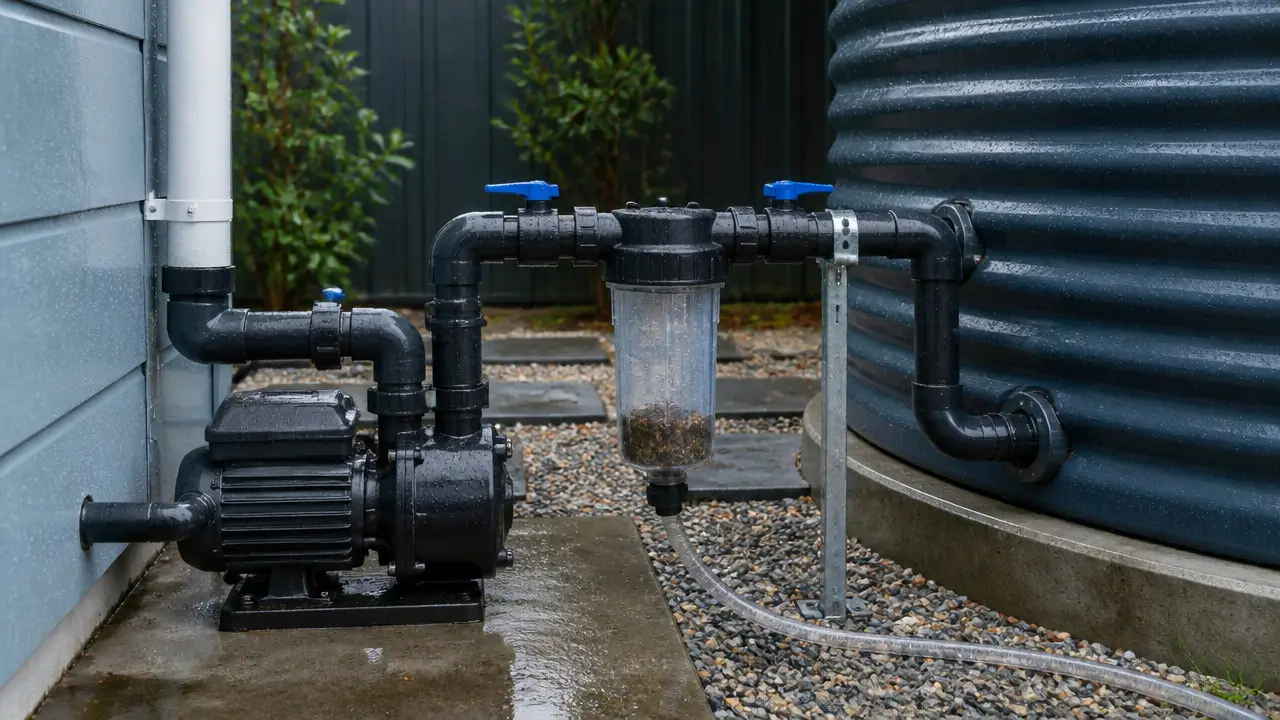
If you want cleaner water going to a hose, pump, or irrigation system, add another filter after the tank.
This filter protects equipment from particles that settled in the tank or entered during storage.
Common choices include:
- Washable mesh filters
- Screen filters
- Disc irrigation filters
- Replaceable sediment cartridges
Match the filter to whatever comes next.
For example, drip irrigation emitters have small passages and usually need finer filtration than a basic garden hose.
What Does Micron Rating Mean?
A micron rating describes the approximate size of particles a filter is designed to capture.
A micron is one-thousandth of a millimeter.
A smaller micron number means the filter catches smaller particles, but it also usually means:
- More resistance to water flow
- Faster clogging
- More frequent cleaning or replacement
Do not automatically choose the finest filter available.
Use a filter fine enough to protect your pump, valves, irrigation emitters, or other equipment without restricting the required flow.
Filtering Before or After the Rain Barrel
For most systems, doing both works best.
Before the tank
Use coarse filtration to stop debris from entering storage.
Evaluate drinking properly filtered rainwater to understand a domestic filter configuration based on measured water quality.
This reduces sludge and makes tank maintenance easier.
After the tank
Use finer filtration to protect whatever uses the stored water.
This arrangement prevents a small, fine filter from having to handle every leaf and piece of roof debris.
A practical garden system might therefore look like:
Gutter screen → first flush diverter → tank inlet screen → rain barrel → washable irrigation filter → hose or drip line
Make Sure the Filter Can Handle the Water Flow
A common DIY mistake is building a filter that works during light rain but cannot handle a storm.
Water entering from a roof can arrive much faster than expected.
The filter housing, inlet, outlet, screen area, and overflow all need enough capacity for the incoming flow.
If the outlet is too small or the screen clogs, water may back up into the downspout.
Whenever possible, build the system so an overflow safely carries excess water away from:
- The house foundation
- Doors
- Crawl spaces
- Electrical equipment
- Slopes that could erode
Never depend on a filter remaining unclogged.
Filtering Rainwater for a Pump
If a pump draws water from your storage tank, filtration becomes especially important.
Debris can damage or block:
- Pump impellers
- Check valves
- Pressure switches
- Sprinklers
- Drip emitters
Place coarse filtering before storage and suitable sediment filtering on the supply side of the system.
Be careful with very fine filters placed before a pump. A clogged filter can restrict the pump's water supply.
That can contribute to poor flow, loss of pressure, or pump damage.
Check the pump manufacturer's requirements for inlet size, required flow, allowable suction conditions, and filtration.
Can a DIY Rainwater Filter Make Water Drinkable?
Not by itself.
Roof runoff that looks clear can still contain harmful microorganisms or chemicals. Taste, smell, and appearance cannot reliably tell you whether the water is safe.
Water intended for drinking requires a whole-system approach that may include:
- A suitable collection surface
- Clean gutters
- Debris screening
- First flush diversion
- Protected storage
- Sediment removal
- Treatment selected for the actual contaminants present
- Regular maintenance
- Current water testing
Different treatment methods address different contaminants. A sediment filter, for example, may remove suspended particles without removing dissolved chemicals or reliably controlling disease-causing microorganisms.
The CDC recommends regularly testing rainwater for germs and chemicals when it is used for drinking, cooking, or bathing, and recommends getting guidance from the local health department about appropriate testing and treatment.
Local plumbing and rainwater-use requirements can also apply, especially when rainwater is connected to household plumbing.
How to Maintain a DIY Rainwater Filter
A filter only works well when it stays clean.
Check the system more often during seasons with heavy leaves, pollen, dust, or frequent storms.
Clean the roof and gutters
Remove accumulated leaves and organic debris before they wash into the system.
Do not take unnecessary risks working on a roof. Clean gutters from a safe position or use a qualified professional where roof access is unsafe.
Clean inlet screens
Remove leaves and debris before they completely cover the screen.
Check the first flush diverter
Make sure it drains and resets between storms.
A diverter that stays full cannot properly capture the first runoff from the next storm.
Wash reusable filters
Remove accumulated sediment according to the filter design.
Never assume that a filter that looks clean internally is free from microbial growth.
Inspect the tank
Look for:
- Sediment
- Algae
- Insects
- Damaged screens
- Loose lids
- Leaks
- Blocked overflows
The CDC recommends keeping rainwater collection systems clean, maintaining damaged components, and using screened openings to help keep mosquitoes out.
A Good DIY Filter for Most Garden Systems
For rainwater used mainly for landscape watering, you usually do not need an elaborate homemade treatment system.
A practical arrangement is:
- Keep the roof and gutters reasonably clean.
- Install a coarse gutter or downspout screen.
- Add a first flush diverter.
- Install a removable inlet screen before the rain barrel or tank.
- Keep the storage container covered and screened.
- Allow sediment to settle.
- Add a washable sediment or irrigation filter before small irrigation outlets.
This approach is simple enough to maintain while protecting the storage tank and watering equipment.
The most important part is not how complicated the filter looks. It is whether every stage matches the intended use of the water and whether you can easily inspect and clean it.
Frequently Asked Questions
What can I use as a homemade rainwater filter?
For non-potable garden water, removable plastic or stainless-steel mesh works well for catching leaves and larger debris. A washable sediment or irrigation filter can remove smaller particles after the storage tank.
Can I use sand and gravel to filter rainwater?
Yes, sand and gravel can remove some suspended material, but they require careful maintenance and do not make rainwater automatically safe to drink. For simple rain barrel systems, removable screens are often easier to clean.
Should I filter rainwater before it enters the tank?
Yes. Removing leaves and larger particles before storage reduces sediment buildup and makes the tank easier to maintain. A gutter screen, first flush diverter, and tank inlet screen provide useful stages of prefiltration.
Do I still need a filter after the rain barrel?
You may need one if the water feeds a pump, sprinkler, drip irrigation system, or other equipment with small passages. An outlet sediment filter can prevent particles from clogging or damaging downstream components.
How often should I clean my rainwater filter?
Inspect it regularly and after storms that carry a lot of leaves or debris. Clean it whenever debris starts restricting flow. The required schedule depends on your roof, surrounding trees, rainfall, screen size, and filter design.
Does filtering rainwater make it safe to drink?
Not necessarily. A DIY sediment filter mainly removes particles. Rainwater can also contain germs and dissolved chemicals that require other treatment. Water intended for drinking should be treated for the contaminants present and regularly tested using appropriate laboratory methods.
Where should a rainwater filter go?
Use coarse filtering before the storage tank and finer filtering after storage when needed. A common arrangement is gutter screen, first flush diverter, inlet screen, storage tank, then an outlet filter before the pump, hose, or irrigation system.