As an affiliate, we may earn a commission from qualifying purchases. We get commissions for purchases made through links on this website from Amazon and other third parties.
Best Overall
Best Lightweight Group Filter
Best Countertop UF
Gravity filters are useful when you want filtered water without a pump or electrical supply. Fill an upper bag or chamber, let water move through the filter under its own weight, and collect the treated water below. That simple idea covers very different products, from backpacking hollow-fiber filters to countertop carbon and ceramic systems.
Those formats are not interchangeable. Some portable filters are designed around bacteria and protozoa reduction. One LifeStraw purifier here also carries virus-reduction claims. Countertop systems may add activated carbon, ceramic media, or ultrafiltration for different treatment goals. A carbon-only gravity unit should not be treated as a microbial purifier just because it improves taste or reduces chlorine.
Rainwater adds another layer of caution. Roof runoff can contain sediment, microbes, metals, chemicals, and animal waste. A gravity filter should be chosen as part of a complete collection and treatment plan. For drinking-water use, suitable prefiltration, treatment for the actual hazards, current laboratory testing, and applicable local requirements still matter.
Gravity Water Filters at a Glance
| Product | Best For | Key Strength | Main Tradeoff |
|---|---|---|---|
| LifeStraw Peak Gravity Purifier | Highest-risk portable treatment role here | Ultrafilter membrane includes virus, bacteria, and parasite reduction claims | Larger hanging load and membrane life still depend on source-water clarity |
| Platypus GravityWorks | Lightweight group camping | Fast hollow-fiber flow with separate dirty and clean bags | Does not carry a virus-removal role |
| Purewell Gravity System | Countertop ultrafiltration | 0.01-micron UF plus carbon and stainless chamber | Spigot leakage and slow dispensing need attention |
| LifeStraw Peak Gravity Filter | Durable camp filtration | Rugged hanging bag with versatile hollow-fiber filter | Tannins and sediment can clog flow quickly |
| British Berkefeld Doulton | Ceramic countertop filtration | Ceramic candles in stainless gravity housing | Flow can be very slow and capacity fields conflict |
| Waterdrop King Tank | Carbon-focused countertop use | Compact stainless system with NSF/ANSI material and chlorine-reduction certifications | Carbon-focused treatment should not be mistaken for full microbial purification |
Best Overall: LifeStraw Peak Series Gravity Purifier
1 / 6
LifeStraw Peak Series Gravity Purifier

Purification
Ultrafilter membrane
Flow Claim
30 L/hr
Membrane Life Claim
18,000 L
The LifeStraw Peak purifier stands apart because it is the only portable gravity product here with explicit virus-reduction claims in addition to bacteria and parasite reduction. Its ultrafilter membrane is presented for emergency, travel, and outdoor use where the source may carry higher microbial risk than treated tap water.
The stated gravity flow is 30 liters per hour, so there is no hand pumping once the bag is hung and the system is primed. The membrane life claim is 18,000 liters. The prepared capacity fields conflict, so this guide does not use an exact bag-volume claim even though the product family is designed for group water treatment.
A purifier still needs cleaner input to maintain useful flow. Mud, roof grit, tannins, and organic debris can shorten membrane performance. Rainwater should be screened and settled or prefiltered before it reaches a fine membrane when possible. Hanging a large water bag also puts a heavy load on the tree branch, hook, or support point.
Why It Works
- Its ultrafilter membrane includes supported virus, bacteria, and parasite reduction claims.
- Gravity flow removes the need for pumping or electricity.
- The membrane has a long stated service capacity compared with many portable cartridges.
- The system packs down for emergency or travel use.
What To Keep In Mind
- Exact bag capacity is omitted because the prepared fields conflict.
- Dirty or tannin-heavy water can reduce flow and increase cleaning frequency.
- The hanging point must safely carry the full water load.
- Even a portable purifier should not replace current testing and whole-system planning for regular rainwater drinking use.
Best Lightweight Group Filter: Platypus GravityWorks
2 / 6
Platypus GravityWorks Group Water Filter

Dirty Reservoir
4 L
Clean Reservoir
4 L
Flow Claim
1.75 L/min
The Platypus GravityWorks is the easiest option for a small group that wants fast gravity filtration without carrying a countertop tank. The kit includes separate four-liter dirty and clean reservoirs, tubing, a hollow-fiber microfilter, a shutoff clamp, and a storage sack.
Its stated flow is 1.75 liters per minute, with a four-liter batch taking about 2.5 minutes under ideal conditions. Product-specific trips show useful group-scale flow without hand pumping, and the clean bag keeps filtered water separate from the source-water bag.
The filter carries bacteria and protozoa reduction performance aligned with EPA/NSF guidelines, but it is not presented here as a virus purifier. That distinction matters for rainwater. If virus risk or other contaminants are part of the treatment goal, this hollow-fiber stage may need additional treatment rather than being used alone.
Why It Works
- Separate dirty and clean bags reduce cross-use confusion.
- Fast gravity flow serves several people without repeated pumping.
- The four-liter reservoirs balance group capacity and carrying weight.
- The replaceable hollow-fiber cartridge is compact for camping and emergencies.
What To Keep In Mind
- The dirty-bag closure can be awkward to seal.
- Prefiltering cloudy or debris-heavy rainwater helps preserve membrane flow.
- It is not the virus-removal pick in this group.
- Clean and dirty hoses and bags need to remain separated during storage and use.
Best Countertop UF: Purewell Gravity Water Filter System
3 / 6
Purewell Gravity Water Filter System

Capacity
2.25 gal
Membrane
0.01 micron UF
Media
Activated carbon / silver ion / hollow fiber
The Purewell is the strongest countertop choice here when you want a stainless gravity dispenser with an ultrafiltration stage instead of a portable hanging bag. The two-chamber system holds about 2.25 gallons and uses activated carbon, a silver-ion membrane, and a 0.01-micron hollow-fiber UF membrane.
Its black carbon filter carries NSF/ANSI 42 certification information, and the system also presents NSF/ANSI 372 material certification. The filter does not lower TDS, which is an important limit: dissolved minerals and salts can pass even when suspended particles and some other contaminants are reduced.
Spigot assembly is the main practical issue. Product-specific use includes leaks that stopped after the gasket was reoriented and tightened correctly, while other units later developed leakage. Do not refill the upper chamber when the lower chamber is already full, because gravity systems can overflow through the seam between chambers.
Why It Works
- A 0.01-micron UF stage adds finer membrane filtration than basic carbon gravity systems.
- Stainless chambers suit a fixed countertop setup.
- Carbon media adds chlorine-reduction capability for treated-water use.
- The system works without electricity.
What To Keep In Mind
- Spigot seals need careful assembly and periodic inspection.
- The filter does not reduce TDS.
- The lower chamber must have room before more water is added above.
- Roof-collected rainwater still needs hazard-specific treatment and current testing before regular drinking use.
Best Rugged Camp Filter: LifeStraw Peak Series Gravity Filter
4 / 6
LifeStraw Peak Series Gravity Water Filter

Filtration
Hollow-fiber ultrafiltration
Bag
840-denier reinforced fabric
Use
Gravity / storage / straw modes
This LifeStraw Peak model is a filtration system rather than the virus-rated purifier above. Its main advantage is a tough hanging bag built from 840-denier, double TPU-laminated reinforced fabric. The system can work as a gravity filter, water storage bag, or with the filter used in other portable configurations.
Its hollow-fiber filtration claims include bacteria, parasite, microplastic, silt, sand, and cloudiness reduction. The prepared capacity fields conflict, so the exact bag volume is not used here. The wide cap helps with filling and cleaning, which matters when the source water carries organic debris.
Clogging is the main weakness. Tannin-stained or debris-heavy water can slow the filter after only a short period, and product-specific use includes hose-attachment and flow complaints. For rainwater, use a coarse prefilter and avoid sending roof debris straight into the membrane.
Why It Works
- Reinforced bag construction is designed for repeated outdoor handling.
- The hollow-fiber filter covers common bacteria and parasite risks in outdoor water.
- Gravity operation serves a group without hand pumping.
- The wide opening simplifies filling and cleaning.
What To Keep In Mind
- It is not the virus-rated LifeStraw purifier in this comparison.
- Exact bag capacity is omitted because the prepared fields conflict.
- Tannins and suspended debris can slow flow quickly.
- Replacement-filter planning matters on longer trips.
Best Ceramic Countertop: British Berkefeld Doulton
5 / 6
British Berkefeld Doulton Gravity Water Filter

Media
Ultra Sterasyl ceramic candles
Housing
Stainless steel
Power
Gravity
The British Berkefeld is the traditional ceramic option in this group. Water sits in the upper stainless chamber and moves through two Ultra Sterasyl ceramic candles into the lower storage chamber. The ceramic elements can be replaced, and the system requires no electricity.
The product carries a wide set of reduction claims tied to the Ultra Sterasyl elements, including fine-particle and nanoplastic reduction. Exact storage capacity and dimensions are omitted here because the prepared fields conflict across variants. Filter life is presented around six months or 400 gallons for the referenced candles.
Flow is the largest tradeoff. Product-specific use ranges from long-term satisfaction to extremely slow filtration measured over many hours. The system can also leak around the faucet or between chambers when the lower chamber is full. This is better for a patient countertop routine than for producing several liters quickly at camp.
Why It Works
- Ceramic filter candles provide a replaceable treatment stage in a stainless gravity housing.
- No power or pumping is required.
- The design is well suited to countertop batch treatment.
- Replacement elements are a defined part of the system rather than an improvised insert.
What To Keep In Mind
- Flow can be much slower than bag-style hollow-fiber systems.
- Exact chamber capacity is omitted because the prepared fields conflict.
- Do not keep filling the upper chamber when the lower section is full.
- Spigot and lid parts should be inspected for fit before relying on the system.
Best for Already-Treated Water: Waterdrop King Tank
6 / 6
Waterdrop King Tank Gravity Water Filter
Media
Activated carbon
Housing
304 stainless steel claim
Certifications
NSF/ANSI 42 and 372 claims
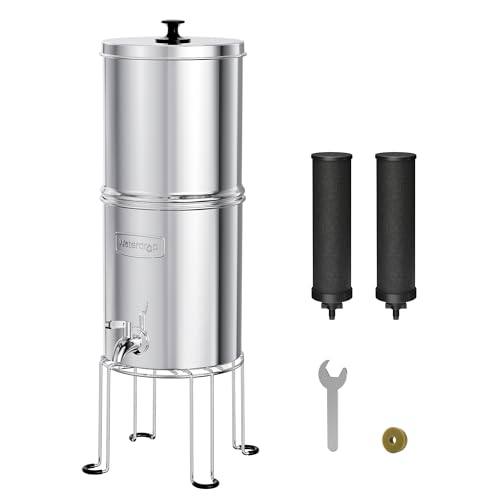
The Waterdrop King Tank is the most carbon-focused system here. Its two black carbon elements are intended to reduce chlorine and other listed impurities, while the stainless gravity housing stores filtered water without electricity. That makes it a better fit for polishing already-treated water than for being the only microbial barrier on raw roof runoff.
The system carries IAPMO R&T certification information against NSF/ANSI 372 for lead-free materials, with filter certification claims against NSF/ANSI 42. Those standards are useful, but they do not turn a carbon gravity filter into a universal rainwater purifier.
Product-specific use is mixed around the spigot. Some systems have operated well for years, while others developed leaks or visible rust around the dispensing area. The prepared capacity fields conflict, so this guide does not rely on the nominal tank volume for ranking.
Why It Works
- Carbon filtration can improve treated-water taste and reduce chlorine where that is the target.
- Stainless construction suits countertop or freestanding use.
- The system runs entirely by gravity.
- NSF/ANSI certification information provides defined material and chlorine-reduction references.
What To Keep In Mind
- Carbon alone should not be treated as the microbial treatment for raw rainwater.
- Exact storage capacity is omitted because the prepared fields conflict.
- Inspect the spigot for leakage or corrosion.
- Filter replacement should follow actual use and the element instructions.
How to Choose a Gravity Filter for Rainwater
Separate Filtration From Purification
A filter may remove sediment, bacteria, or protozoa without addressing viruses. Carbon can reduce chlorine and some taste or odor compounds without serving as the primary microbial barrier. Read the treatment claim for the exact element rather than assuming every gravity system does the same job.
Prefilter Dirty Rainwater
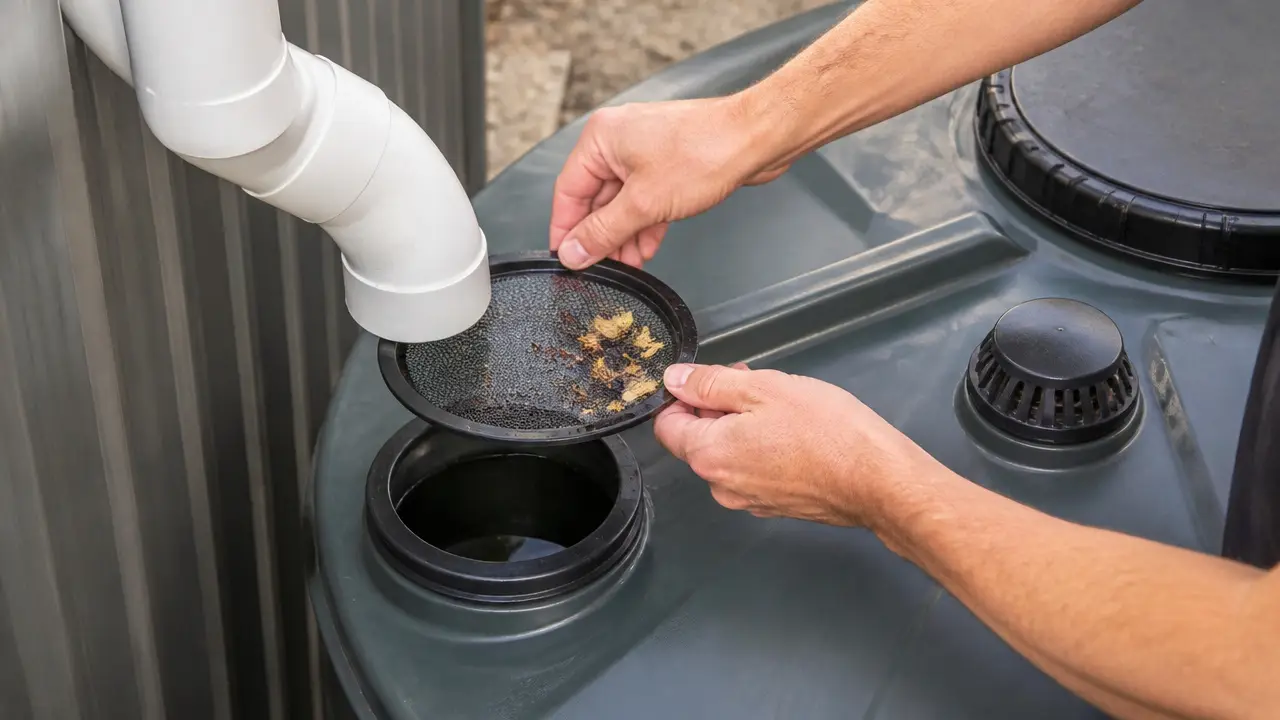
Roof grit, leaves, tannins, and tank sediment can clog fine membranes. Use gutter screens, tank inlet screens, settling, and coarse sediment filtration before sending dirty rainwater through a portable or countertop gravity filter.
Match Flow to Household Demand
Bag systems such as Platypus and LifeStraw can produce water quickly for a camp. Ceramic countertop systems can be much slower. A household using gravity treatment every day needs enough output to avoid constantly running the upper chamber dry.
Keep Clean and Dirty Sides Separate
Portable bag systems often include dirty-water and clean-water components. Do not let untreated hoses, caps, or hands contaminate the clean-water side after filtration.
Countertop systems also need clean lower chambers, spigots, and storage routines.
Frequently Asked Questions
Can a gravity filter make rainwater safe to drink?
Some gravity purifiers can address specific microbial hazards, but rainwater drinking safety depends on the entire collection, treatment, storage, and testing system. No single filter should be assumed to cover every roof-runoff contaminant.
What is the difference between a gravity filter and a gravity purifier?
A purifier is designed to address a broader microbial range, often including viruses. Many ordinary hollow-fiber filters target bacteria and protozoa but not viruses.
Do gravity filters need electricity?
No. Water pressure comes from the height difference between the upper water source and the lower outlet. Some systems need enough hanging height to maintain useful flow.
Why does a gravity filter slow down?
Sediment, tannins, organic material, trapped air, or membrane fouling can reduce flow. Prefiltering and the product's cleaning or backflushing routine can restore performance when the media is still serviceable.
Does activated carbon reduce TDS?
Ordinary activated-carbon gravity filters do not generally lower total dissolved solids. TDS measures dissolved ions that require a different treatment process when reduction is actually needed.
Are gravity filters good for emergency water storage?
They can be useful because they operate without power, but the filter and stored water still need safe handling, clean containers, replacement elements, and a treatment plan suited to the water source.
For fixed coarse-to-fine particle removal before a gravity unit, sediment filters for rainwater protect fine media from roof grit. Reusable sediment filters reduce recurring cartridge use at that first stage. If your need is only water-quality screening rather than treatment, rainwater test kits cover limited home-test roles and their boundaries.