As an affiliate, we may earn a commission from qualifying purchases. We get commissions for purchases made through links on this website from Amazon and other third parties.
Gravity filtration can take a few minutes to several hours, depending on the filter type, water volume, filter condition, and the height of the water above the filter.
A small gravity filter may process a few liters fairly quickly. A large rainwater system with fine filtration may take much longer. The important number is usually the filter's flow rate, not a fixed amount of time.
What Controls Gravity Filtration Time?
Gravity filtration works without a powered pump. Water moves through the filter because the water level above it creates pressure.
Several things affect how fast that happens.
Filter Flow Rate
Flow rate tells you how much water can pass through the filter in a given time. It may be listed in:
- Liters per minute
- Gallons per minute
- Liters per hour
- Gallons per hour
If a gravity filter can pass 2 gallons per minute under your actual conditions, filtering 20 gallons would take about:
20 gallons ÷ 2 gallons per minute = 10 minutes
Real systems may run slower than the maximum stated flow rate.
Filter Micron Rating
A micron rating describes the approximate size of particles a filter is designed to catch.
Finer filters often create more resistance to flow. For example, water will usually move more easily through a coarse sediment screen than through a very fine filter element.
This does not mean a smaller micron number automatically makes water safe to drink. Particle filtration is only one part of water treatment.
Water Height
Gravity systems depend on head height, which is the vertical distance between the water surface and the filter or outlet.
More head height generally creates more pressure.
For example, a filter connected near the bottom of a tall cistern may receive more pressure when the tank is full than when it is nearly empty. Flow can therefore slow as the water level falls.
Filter Condition
Filters become harder for water to pass through as they collect:
- Dirt
- Roof debris
- Sediment
- Algae
- Organic material
A clean filter might work quickly, while the same filter may take much longer after weeks or months of use.
A noticeable drop in flow is often a sign that the filter needs cleaning or replacement according to its instructions.
How Long Does It Take to Gravity Filter Rainwater?
There is no single filtration time for collected rainwater.
A simple system used for garden water might only use a coarse screen or sediment filter. Water can move through these relatively quickly.
A system using several stages may be much slower. For example, water might pass through:
- A leaf screen.
- A first-flush device.
- A sediment filter.
- A finer filter.
- Additional treatment appropriate for the intended use.
A first flush diverts some of the initial roof runoff so dirt and debris that collected on the roof are less likely to enter storage.
Each additional restriction can reduce overall flow.
For drinking-water applications, filtration speed should not be treated as proof that treatment is working. Roof runoff can contain microorganisms, chemicals, animal waste, and other contaminants that may not be removed by ordinary gravity filters.
How to Estimate Your Filtration Time
If you know the actual flow rate, the basic calculation is simple:
Filtration time = Water volume ÷ Flow rate
For example, suppose you want to filter 30 gallons and your measured flow is 0.5 gallon per minute:
30 ÷ 0.5 = 60 minutes
The batch would take about one hour.
For a 100-gallon batch flowing at 1 gallon per minute:
100 ÷ 1 = 100 minutes
That is about 1 hour and 40 minutes.
These are estimates. Flow can change as the water level drops or the filter becomes dirty.
Measure the Real Flow Rate
The easiest way to estimate gravity filtration time is often to measure your own system.
Place a container under the filtered outlet and measure how much water comes out during a set period. You could measure the volume collected in one minute and use that as your approximate flow rate.
Test the system under normal operating conditions. A full rain barrel may flow faster than one that is almost empty.
If the filter feeds an irrigation system, also check whether the remaining flow is enough for the emitters or watering devices. A filter that technically passes water may still restrict flow too much for the system to work well.
Why Is My Gravity Filter So Slow?
Reviewing practical steps for calculating filter size helps understand a treatment standard based on the final water application.
Slow flow does not always mean something is wrong. Some gravity filters are designed to operate slowly.
Unexpectedly slow filtration, however, can result from:
- A clogged filter element
- Sediment buildup
- Low water level
- Too little head height
- Small tubing or fittings
- A partly closed valve
- Kinked hose
- Air trapped in the system
- Several restrictive filters installed in series
- A filter designed for pump pressure rather than gravity pressure
Check the entire path from the storage tank to the outlet. The narrowest or most restrictive part of the system can limit the final flow.
Can You Make Gravity Filtration Faster?
Sometimes.
Increasing the vertical distance between the water surface and the filter can increase available pressure. Larger tubing and less restrictive fittings may also help.
Keeping prefilters and screens clean can prevent larger debris from plugging finer filters.
Do not remove required treatment stages simply to increase flow. Also, do not exceed a filter's stated operating limits.
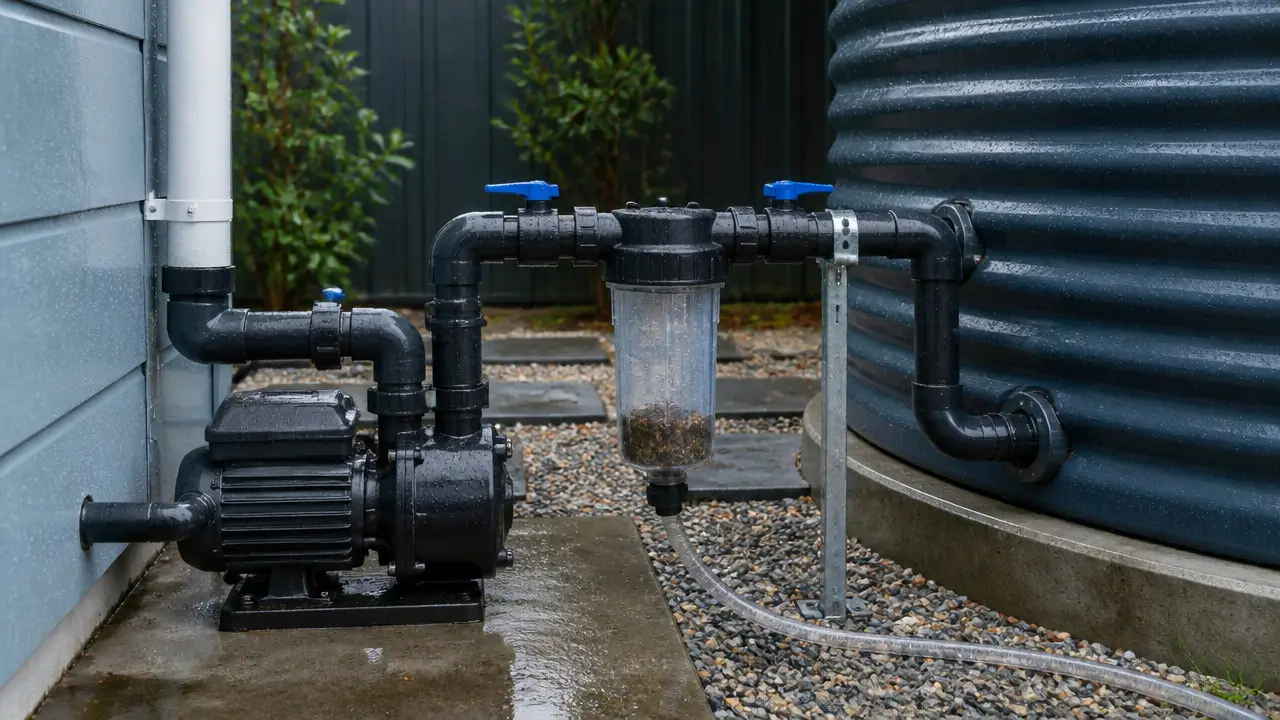
If the required flow cannot be achieved safely with gravity alone, a properly sized pump may be more appropriate.
Gravity Filtration for Rain Barrels
Rain barrels often have limited pressure because they are not very tall.
Flow may be acceptable when the barrel is full but become noticeably weaker as the water level drops. Fine filters can make this effect more obvious.
For garden watering, it often makes sense to remove leaves and larger sediment before water reaches a restrictive filter. This can reduce clogging and help maintain usable flow.
If you are trying to run drip irrigation from a rain barrel, make sure the filter, tubing, valves, and emitters can all operate at the low pressure available from gravity.
Gravity Filtration for Cisterns and IBC Totes
Larger tanks can provide better gravity flow when the outlet has enough vertical drop.
An elevated IBC tote, for example, may create more usable pressure than the same tote sitting at ground level.
However, raising a large water container introduces a serious structural issue. Water is heavy. A support platform must safely carry the full weight of the filled container. Do not place a large tank on an improvised stand simply to increase filtration speed.
Does Slow Filtration Mean Better Filtration?
Not necessarily.
Some filters require a certain contact time or work best within a specific flow range. Others simply become slow because they are clogged.
You should not judge treatment quality by how slowly water moves.
Follow the filter manufacturer's operating requirements and match the filter to the intended water use.
What If the Water Will Be Used for Drinking?
Gravity filtration by itself does not establish that collected rainwater is potable.
Potable means suitable for drinking.
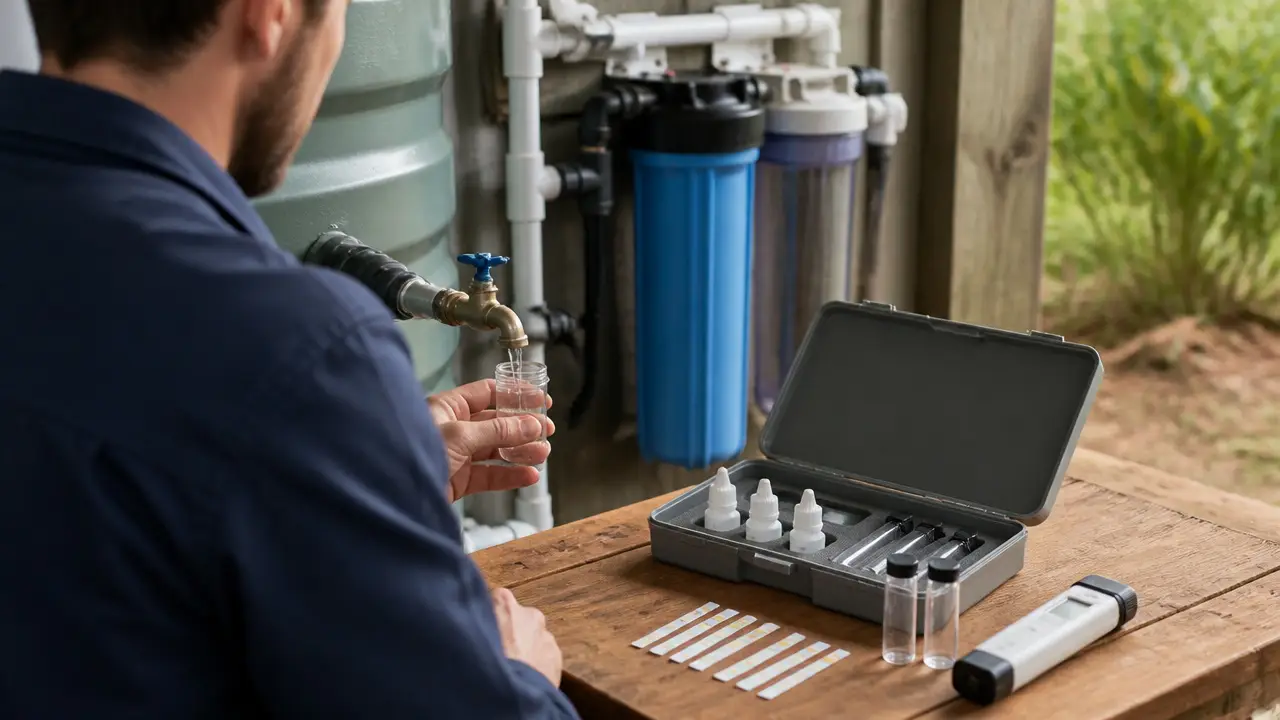
Roof runoff can contain contaminants that are invisible and may pass through ordinary sediment filters. A drinking-water system may require suitable collection practices, prefiltration, treatment designed for the contaminants of concern, regular maintenance, and current laboratory testing.
Local plumbing and drinking-water requirements can also apply.
If you plan to use collected rainwater for drinking, cooking, or other potable uses, treat the entire collection and treatment system as one system rather than relying on filtration time or a single filter.
Frequently Asked Questions
How long does it take to gravity filter one gallon of water?
It depends on the filter's actual flow rate. At 1 gallon per minute, one gallon takes about one minute. At 0.25 gallon per minute, it takes about four minutes.
Why does my gravity filter get slower over time?
Sediment, dirt, algae, and organic material can collect in the filter and restrict water movement. Low water levels can also reduce the pressure available to push water through the filter.
Does a finer filter take longer?
Often, yes. Finer filtration generally creates more resistance to flow, although filter size, design, surface area, and water pressure also matter.
Does raising a rain barrel make filtration faster?
Increasing the vertical height between the water surface and the filter can increase gravity pressure and may improve flow. Any elevated tank must be supported by a structure designed for the full weight of the water.
Can gravity filtration work without electricity?
Yes. Gravity filtration relies on elevation rather than an electric pump. However, some complete water-treatment systems may include powered equipment such as pumps or UV treatment.
Can I gravity filter water directly from an IBC tote?
In many systems, yes, if the fittings, tubing, filter, and required flow are compatible with the available gravity pressure. Fine or restrictive filters may greatly reduce the flow.
Is gravity-filtered rainwater safe to drink?
Not automatically. A gravity filter may remove certain particles or contaminants, depending on its design, but it does not by itself establish that roof-collected rainwater is safe to drink. Potable use requires a suitable whole-system treatment approach, maintenance, testing, and compliance with applicable requirements.