As an affiliate, we may earn a commission from qualifying purchases. We get commissions for purchases made through links on this website from Amazon and other third parties.
Yes. A rainwater system can use an ultraviolet, or UV, water treatment unit to reduce microorganisms in the water. But a UV unit is usually not placed inside the rainwater tank. It is installed in the water line after the tank, pump, and sediment filters.
UV is also more accurately called a disinfection system, not a filter. It does not strain dirt out of the water. Instead, UV light passes through the water and inactivates many microorganisms so they cannot reproduce.
For rainwater that may be used for drinking, UV should be only one part of a complete treatment system. It should not be treated as proof that the water is safe to drink.
How UV Treatment Works With a Rainwater Tank
A typical setup looks like this:
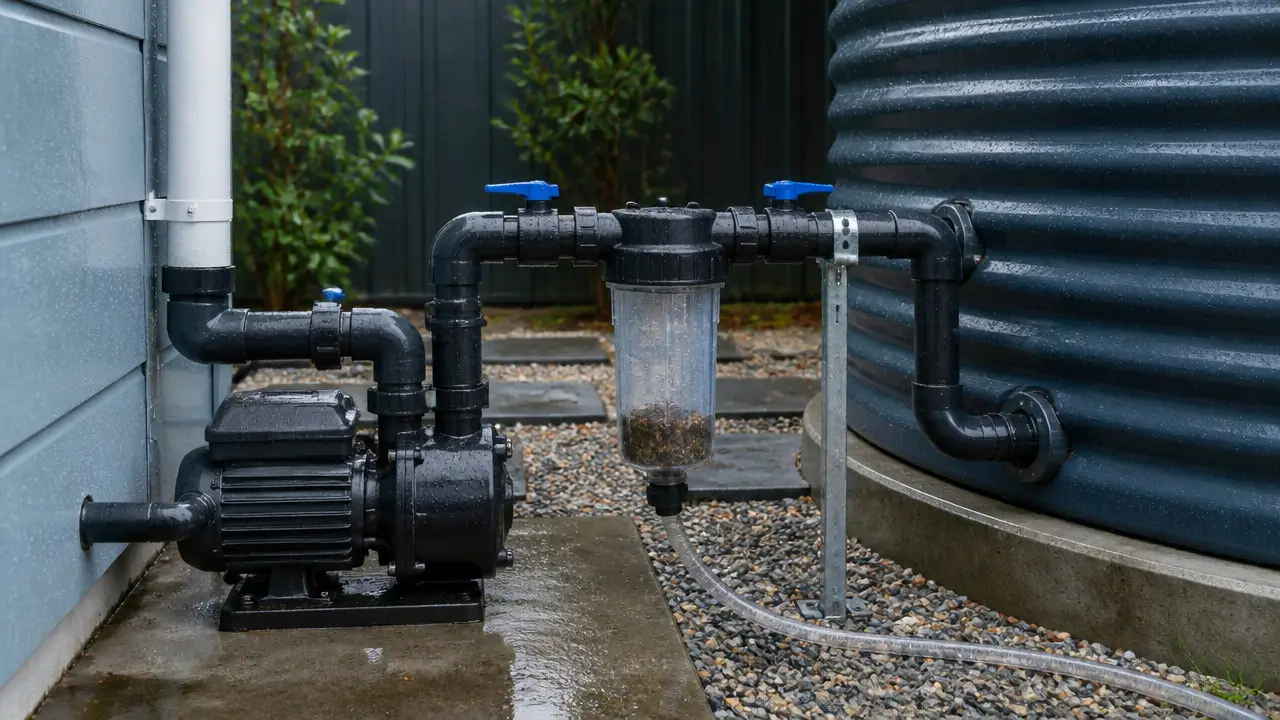
Roof → gutters → debris screening → rainwater tank → pump → sediment filtration → UV unit → fixtures
Some systems may have additional treatment stages depending on the water source and intended use.
The UV chamber contains a lamp or another UV light source. Water flows through the chamber while the light is operating.
UV works best when the water is clear enough for the light to pass through it. Dirt, sediment, organic material, and some dissolved substances can interfere with UV treatment by blocking or absorbing the light. EPA guidance therefore places UV treatment after filtration, and CDC information on household UV treatment also lists prefiltration as part of the treatment process.
You Usually Do Not Put the UV Unit in the Tank
It may sound simpler to shine a UV lamp directly into a rainwater tank, but that is generally not how household rainwater UV systems are designed.
Water inside a storage tank can contain:
- settled sediment
- floating debris
- biofilm on tank surfaces
- cloudy water after a storm
- areas that receive little or no UV exposure
An inline UV chamber gives the equipment better control over how much water passes the lamp and how quickly it moves.
The tank itself still needs good rainwater management. That can include screened inlets, protected openings, suitable overflow arrangements, debris control, and periodic inspection and cleaning.
UV treatment downstream does not make poor tank maintenance unimportant.
What UV Can and Cannot Do
UV is mainly a microbiological treatment stage.
Properly designed UV systems can inactivate microorganisms including bacteria and some protozoa. EPA guidance also notes that UV effectiveness differs among microorganisms and that some viruses can require higher UV doses.
UV does not normally remove:
- sediment
- rust or mineral particles
- pesticides
- metals
- salts
- most dissolved chemicals
- unpleasant particles or cloudiness
It also does not physically remove dead or inactive microorganisms.
Another important limitation is that UV leaves no lasting disinfectant residual in the plumbing. Once the water leaves the UV chamber, the UV light is no longer protecting it. EPA guidance notes this limitation for water distribution systems.
That means dirty pipes, untreated storage after the UV unit, or other contamination downstream can defeat the purpose of the treatment.
Prefiltration Is Important
A UV unit should receive reasonably clear water.
For a basic rainwater system, this often means using sediment filtration before the UV chamber. The exact filtration setup depends on the water quality, flow requirement, and UV manufacturer's instructions.
A filter's micron rating describes the approximate size of particles it is designed to capture. One micron is one-thousandth of a millimeter.
Smaller micron ratings generally catch smaller particles, but they can also restrict flow more easily and may need more frequent replacement.
Do not simply install the finest filter you can find. The filters, pump, UV unit, plumbing size, and required flow all need to work together.
If a filter becomes clogged, pressure and flow can fall sharply.
Size the UV Unit by Flow Rate, Not Tank Size
A common mistake is choosing UV treatment based on how many gallons or liters the rainwater tank holds.
The more important figure is usually the maximum flow rate through the UV chamber.
Flow rate means how much water passes through the system during a certain amount of time, such as gallons per minute or liters per minute.
For example, a 5,000-gallon tank does not automatically need a larger UV unit than a 1,000-gallon tank. If both homes require the same peak plumbing flow, their UV flow requirements may be similar.
You need to consider how many fixtures may operate at the same time.
A system supplying one cabin faucet has very different flow needs from one supplying:
- several faucets
- showers
- toilets
- a washing machine
- outdoor taps
Do not exceed the UV unit's rated treatment flow. Faster water movement reduces the time water receives UV exposure.
Check the Pump and Pressure Too
Most inline UV systems require water to be pushed through them by a pump or pressurized plumbing system.
Check:
- required flow rate
- operating pressure
- pipe connection size
- pressure loss through filters
- pressure loss through the UV chamber
- pump capacity
A pump may appear large enough until several filters and treatment components are added.
If you are building a whole-house rainwater system, treat the pump, filters, pressure tank, UV unit, and plumbing as one connected system rather than choosing each part separately.
Does a UV Unit Need Electricity?
Most UV treatment systems need a continuous source of electrical power while treating water.
If the power fails, you should not assume that water passing through the chamber received proper UV treatment.
Review practical UV purification for rainwater explained to interpret what the reading establishes without overstating certainty.
Systems designed for higher-risk uses may include features such as:
- lamp-status indicators
- UV intensity monitoring
- audible alarms
- automatic shutoff valves
The exact features vary by system.
For cabins or off-grid rainwater systems, power consumption and backup power should be considered before choosing UV treatment.
Electrical equipment should be installed in a dry, suitable location and according to the manufacturer's instructions. Use a qualified electrician where the installation requires fixed wiring or other electrical work outside normal DIY limits.
Does UV Make Rainwater Safe to Drink?
Not by itself.
Roof runoff can pick up contaminants from roofing materials, dust, bird and animal waste, insects, leaves, smoke, and other environmental sources.
A UV system addresses only part of that problem.
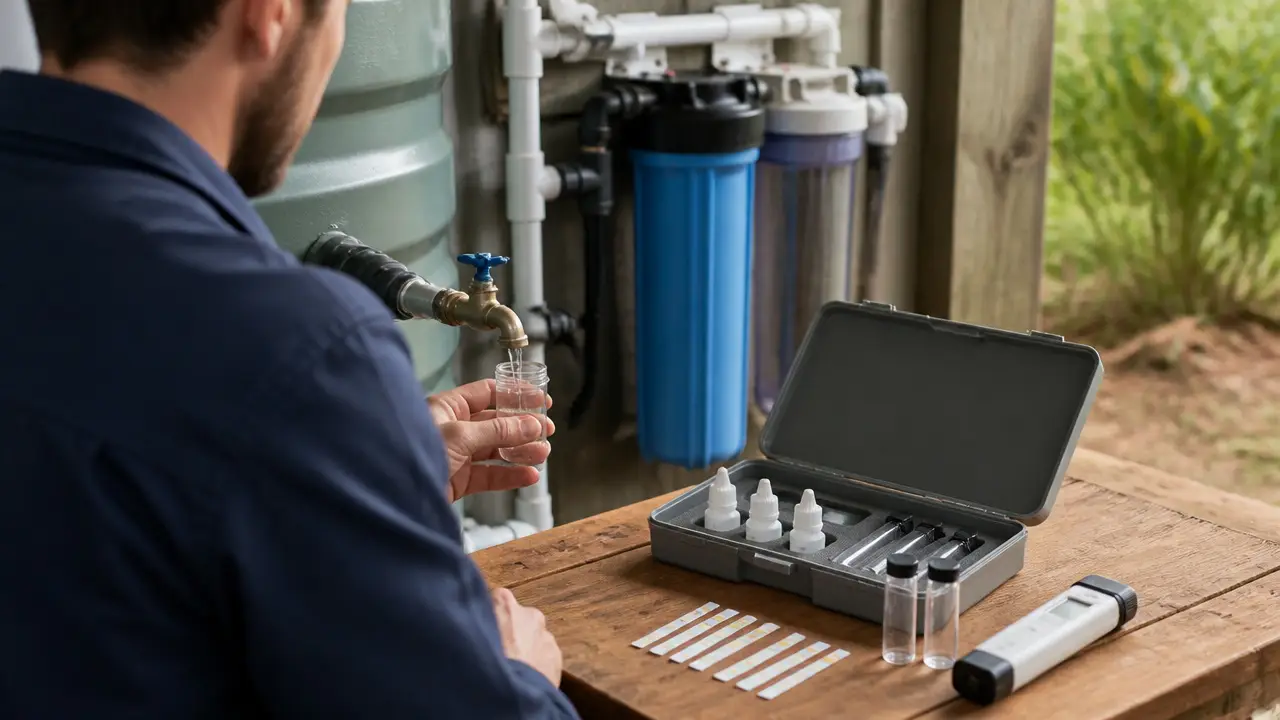
For drinking-water use, the whole system needs to be considered. That includes suitable collection surfaces, debris control, prefiltration, storage, treatment, plumbing materials, maintenance, and current laboratory testing.
Water should also be evaluated for chemical contaminants that UV treatment does not remove.
NSF/ANSI 55 is a standard covering ultraviolet microbiological water treatment systems. NSF describes Class A systems as systems intended to inactivate or remove microorganisms from contaminated water, while Class B systems are intended to reduce normally occurring non-disease-causing bacteria in already disinfected drinking water.
If drinking rainwater is your goal, do not choose a UV unit simply because it has a UV lamp. Look for treatment claims and certifications appropriate for the intended use, and verify the current certification rather than relying only on marketing language.
Also check current health and plumbing requirements where you live. Rules for potable rainwater systems vary by location.
Potable means water intended to be safe for drinking and food preparation. Non-potable means water that is not intended for drinking.
Is UV Worth Using for Garden Rainwater?
Usually, UV is unnecessary for a simple rain barrel or garden irrigation system.
If you are collecting roof runoff only to water ornamental plants, adding pumps, filters, electricity, and UV treatment may create more maintenance without providing much practical benefit.
Good debris screening, mosquito control, tank protection, and regular cleaning are generally more important.
UV makes more sense when rainwater is being supplied to plumbing where microbiological treatment is required as part of the planned use.
Where Should the UV Unit Be Installed?
For many pumped rainwater systems, the UV chamber goes near the end of the treatment train.
A simplified system may be:
- Rainwater enters the storage tank.
- A pump draws water from the tank.
- Sediment filters remove suspended material.
- Any other required treatment takes place.
- Water passes through the UV chamber.
- Treated water goes directly to the intended fixtures.
Putting untreated storage tanks after the UV unit is generally undesirable because the water can be contaminated again before use.
Follow the UV manufacturer's required orientation, clearance, plumbing arrangement, and flow direction.
Leave enough working room to remove the lamp and clean or replace the quartz sleeve.
UV Systems Need Regular Maintenance
UV treatment is not maintenance-free.
Depending on the system, upkeep may include:
- replacing sediment filters
- cleaning the UV chamber or quartz sleeve
- replacing the UV lamp
- checking alarms and indicators
- inspecting for leaks
- checking actual water flow
- cleaning the rainwater tank and collection system as needed
A quartz sleeve is a clear tube that separates the UV lamp from the water in many UV systems. Mineral deposits or other buildup on this sleeve can reduce the amount of UV light reaching the water.
EPA guidance notes that UV lamps require periodic cleaning and replacement.
Do not judge lamp condition simply by whether you can see light. A lamp may still glow while no longer providing the required treatment performance.
Follow the replacement interval specified for the particular unit.
Frequently Asked Questions
Can I put a UV light directly inside my rainwater tank?
Household UV treatment is normally done with an inline UV chamber rather than a lamp placed directly in the storage tank. The inline design controls water flow and exposure more reliably. The tank still needs proper screening, cleaning, and contamination control.
Does UV remove bacteria from rainwater?
UV does not physically filter bacteria out of the water. It uses ultraviolet light to inactivate susceptible microorganisms so they cannot reproduce. Its effectiveness depends on the UV dose, flow rate, water clarity, and system condition.
Do I need a filter before a rainwater UV system?
Usually, yes. Sediment and cloudy water can interfere with UV light. Prefiltration helps produce clearer water before it reaches the UV chamber. Follow the UV manufacturer's water-quality and filtration requirements.
How large a UV unit do I need for a rainwater tank?
Choose it mainly by required flow rate rather than tank capacity. Determine the maximum amount of water that may pass through the treatment system at one time and select equipment rated for that flow under the expected water conditions.
Can UV-treated rainwater be used for drinking?
UV alone does not establish that roof-collected rainwater is safe to drink. Drinking-water use requires a complete collection and treatment approach, suitable equipment, maintenance, current laboratory testing, and compliance with applicable local requirements.
Will a UV system work during a power outage?
Most UV systems require electricity. If the lamp is not operating correctly, water passing through the chamber should not be assumed to have received the intended UV treatment. Systems used for higher-risk applications may include alarms or automatic shutoff features.
Do I need UV treatment for a rain barrel used for plants?
Usually not. For ordinary non-potable garden irrigation, keeping debris and mosquitoes out of the barrel and maintaining the storage system is generally more useful than installing an inline UV treatment system.