As an affiliate, we may earn a commission from qualifying purchases. We get commissions for purchases made through links on this website from Amazon and other third parties.
Water quality testing is usually divided into three main types: physical, chemical, and microbiological testing. Each looks at a different part of water quality.
For rainwater systems, you may need one, two, or all three types. The right tests depend on how you plan to use the water. Water used for garden irrigation does not need the same level of testing as water intended for drinking.
1. Physical Water Quality Testing
Physical testing looks at water features you can often see or measure without identifying a specific contaminant.
Common physical checks include:
- Color
- Odor
- Turbidity
- Temperature
- Visible sediment
Turbidity means how cloudy the water is because of tiny suspended particles. High turbidity may come from dirt, organic matter, roof debris, or sediment in a storage tank.
Physical testing can help you spot changes in a rainwater system. For example, water that suddenly becomes cloudy may point to sediment buildup, poor prefiltration, tank disturbance, or contamination entering the system.
However, clear water is not automatically safe water. Harmful germs and chemicals can be present even when water looks and smells normal.
Where physical testing helps in a rainwater system
Physical checks are useful when inspecting:
- Roof runoff
- First-flush water
- Rain barrels
- IBC totes
- Cisterns
- Filtered water
- Irrigation water
A first-flush diverter sends the first part of rainfall away from the tank. That early runoff often carries more dust, leaves, droppings, and other material from the roof.
Physical testing is useful for maintenance, but it cannot confirm that rainwater is safe to drink.
2. Chemical Water Quality Testing
Chemical testing measures substances or chemical properties in the water.
Common tests can include:
- pH
- Nitrate and nitrite
- Hardness
- Chloride
- Iron
- Manganese
- Lead
- Arsenic
- Other metals
- Certain pesticides or organic chemicals
The exact list depends on the water source, nearby contamination risks, plumbing materials, and intended use.
What pH tells you
pH shows how acidic or alkaline water is.
It does not tell you whether water is safe to drink. It is only one water-quality measurement.
In rainwater systems, pH can matter because acidic water may interact with some roofing, tanks, fittings, pipes, and other materials.
What about TDS meters?
A total dissolved solids meter estimates the amount of dissolved material in water, usually by measuring electrical conductivity.
Total dissolved solids, or TDS, include dissolved salts, minerals, and other substances.
A TDS meter cannot tell you exactly which substances are present. It also cannot detect many important contaminants or prove that water is safe to drink.
For example, two water samples could have similar TDS readings while containing very different substances.
Chemical laboratory testing is needed when you must identify specific chemicals and determine their concentrations.
3. Microbiological Water Quality Testing
Microbiological testing looks for bacteria, parasites, viruses, or indicators that suggest possible contamination by harmful germs.
Common drinking-water tests include:
- Total coliform bacteria
- E. coli
Coliform bacteria are often used as indicators of possible contamination. Finding certain indicator organisms can signal that contamination has entered the water system.
Roof-collected rainwater can be exposed to bird droppings, animal waste, insects, leaves, dust, and other material. Germs can also enter during storage or through poorly sealed tank openings.
CDC notes that private water sources such as wells, cisterns, and storage tanks may contain germs or chemicals and may not receive routine public-system monitoring.
Home bacteria tests have limits
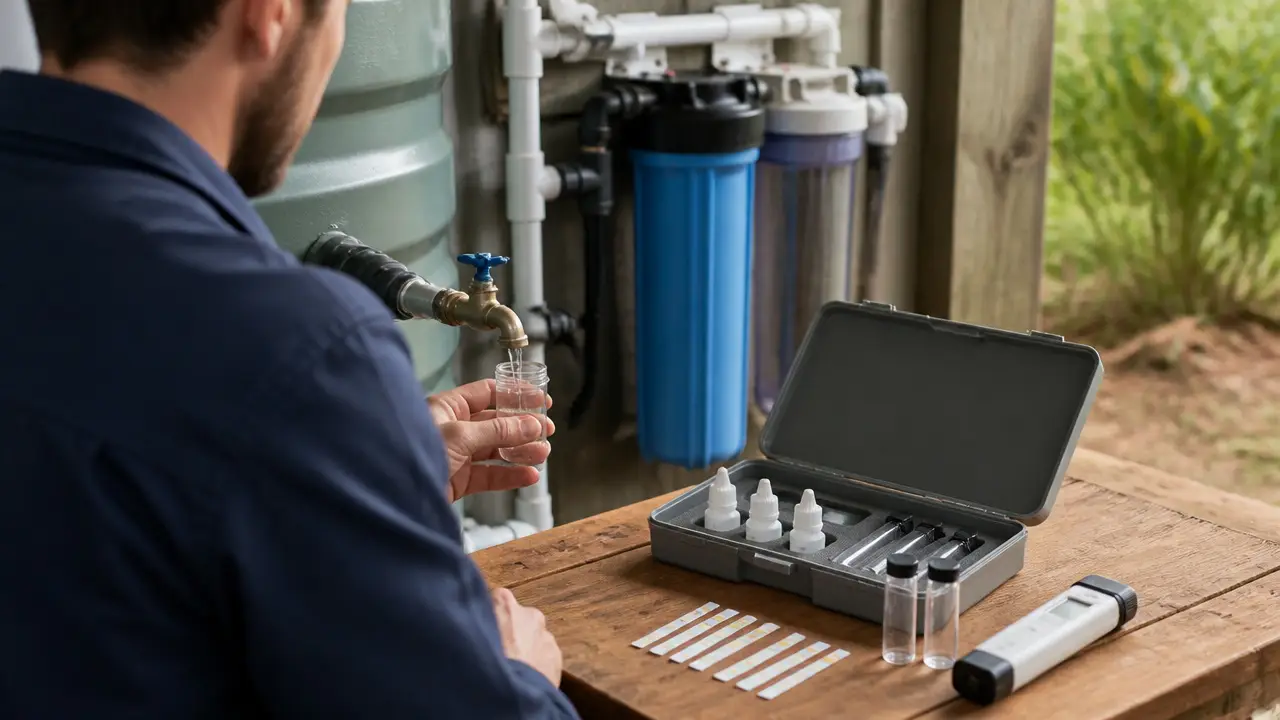
Some home kits can screen for certain bacteria. They can be useful for basic monitoring when used correctly.
They should not be treated as a complete drinking-water safety assessment.
If rainwater will be used for drinking, cooking, brushing teeth, or other potable uses, use an appropriate certified laboratory and follow current public-health guidance. Potable means water intended to be safe for drinking.
CDC recommends working with a health department or certified laboratory to determine which germs and chemicals should be tested when drinking-water safety is a concern.
The Three Types at a Glance
| Type of testing | What it examines | Examples |
|---|---|---|
| Physical | Water's visible or measurable physical condition | Turbidity, color, odor, temperature |
| Chemical | Chemicals and chemical properties | pH, nitrate, metals, hardness |
| Microbiological | Germs or indicators of contamination | Total coliform, E. coli |
Look closely at practical steps for identifying if the water has bacteria in it to assess testing methods and treatment stages matched to the final use.
These categories are a useful way to organize household water testing. Laboratories may divide tests differently. For example, radiological testing may be treated as a separate category when radioactive contaminants are a concern.
Which Tests Does Rainwater Need?
Start with how you will use the water.
Garden irrigation
For ordinary outdoor irrigation, testing needs may be fairly simple unless you have a known contamination concern.
Testing for pH, salinity, or other chemical conditions may matter for sensitive plants or soils. Water from questionable roofing or nearby pollution sources may require additional investigation.
Do not assume that water safe for plants is also safe for people.
Toilet flushing and other non-potable uses
Non-potable water is water that is not intended for drinking.
Testing needs depend on the system and how people might be exposed to the water. Indoor systems may also be subject to local plumbing, labeling, backflow-prevention, and cross-connection requirements.
Drinking water
Drinking-water testing is more demanding.
A single bacteria test, TDS meter, pH strip, filter, or UV unit cannot establish that roof-collected rainwater is safe to drink.
A drinking-water system must be considered as a whole. That includes:
- Collection surface
- Gutters and screens
- First-flush control
- Storage tank condition
- Prefiltration
- Treatment stages
- Plumbing materials
- Regular cleaning
- Treatment maintenance
- Appropriate laboratory testing
- Applicable local requirements
EPA recommends certified laboratory testing when evaluating private drinking-water supplies and notes that testing should target both routine indicators and contaminants that may be relevant to the location.
Why One Water Test Is Usually Not Enough
Water-quality problems are not all detected in the same way.
A turbidity test cannot tell you whether E. coli is present. A bacteria test does not tell you whether lead is present. A TDS reading cannot identify nitrate, pesticides, or specific metals.
Testing should therefore match the question you are trying to answer.
For example:
- Why is my tank water cloudy? Start with physical conditions and system inspection.
- Could my plumbing be adding metals? Chemical testing may be needed.
- Has animal waste contaminated my stored water? Microbiological testing becomes important.
- Is this rainwater safe to drink? A broader laboratory testing and treatment assessment is needed.
Testing After Something Changes
Water should also be reconsidered when the system changes.
Testing may be appropriate after:
- Flooding
- Major roof work
- Tank contamination
- Plumbing replacement
- Treatment-system failure
- Long periods without use
- Major changes in color, taste, or odor
CDC advises testing private water supplies when contamination is suspected or when water changes noticeably in color, taste, or smell.
Do not use appearance alone to judge safety. Some important contaminants produce no obvious smell, taste, or color.
Frequently Asked Questions
What are the three main types of water quality testing?
The three broad types are physical, chemical, and microbiological testing. Physical testing checks features such as turbidity and color. Chemical testing measures substances such as nitrate or metals. Microbiological testing looks for germs or indicators such as total coliform and E. coli.
Can a TDS meter tell me if rainwater is safe to drink?
No. A TDS meter estimates dissolved material in the water. It does not identify individual contaminants, reliably detect harmful germs, or provide a complete drinking-water safety assessment.
Is clear rainwater safe to drink?
Not necessarily. Water can look perfectly clear while containing harmful germs or chemicals. Drinking-water decisions should be based on suitable collection and treatment, proper maintenance, appropriate laboratory testing, and local requirements.
What is microbiological water testing?
Microbiological testing checks water for microorganisms or indicators of contamination. Common drinking-water tests include total coliform and E. coli. The correct tests depend on the water source and intended use.
Is pH testing enough for rainwater?
No. pH tells you how acidic or alkaline the water is. It does not tell you whether bacteria, metals, pesticides, or other contaminants are present.
Do I need laboratory testing for a rain barrel?
Not always. A rain barrel used only for suitable outdoor irrigation may not need the same testing as a drinking-water system. Testing becomes more important when there are contamination concerns, sensitive uses, or greater human exposure.
How often should drinking water be tested?
The correct schedule depends on the source, treatment system, local conditions, previous results, and applicable health guidance. EPA recommends annual testing of private wells for several basic indicators and additional testing when specific contamination is suspected. Rainwater systems may have different risks, so drinking-water testing should be planned with a qualified laboratory or local health authority rather than relying on a single fixed schedule.