As an affiliate, we may earn a commission from qualifying purchases. We get commissions for purchases made through links on this website from Amazon and other third parties.
The U.S. Environmental Protection Agency (EPA) lists 500 milligrams per liter (mg/L) as the secondary drinking water standard for total dissolved solids, or TDS. For most water, 500 mg/L is also roughly described as 500 parts per million (ppm).
The important detail is that 500 mg/L is not a federal health-based drinking water limit. It is a Secondary Maximum Contaminant Level (SMCL). EPA secondary standards mainly deal with water qualities such as taste, color, staining, deposits, and other noticeable effects. As of August 31, 2026, the EPA still lists the TDS secondary standard at 500 mg/L.
What Does the EPA TDS Standard Mean?
EPA's guideline is:
TDS: 500 mg/L
TDS stands for total dissolved solids. It is the combined amount of dissolved material in water. This can include minerals and salts such as calcium, magnesium, sodium, chloride, and sulfate.
EPA lists TDS under its National Secondary Drinking Water Regulations. These secondary standards are generally not federally enforceable. States may choose to adopt their own requirements or make secondary standards enforceable.
That makes the 500 mg/L number different from a primary Maximum Contaminant Level, or MCL. Primary standards are intended to protect public health from specific regulated contaminants.
Why Does EPA Use 500 mg/L for TDS?
High TDS can affect how water tastes and behaves.
EPA notes that TDS above its secondary level can be associated with:
- Hardness
- Mineral deposits
- Colored water
- Staining
- Salty taste
These problems can make water less pleasant to drink or use. Dissolved minerals may also leave scale on fixtures, plumbing, kettles, pumps, and other equipment.
However, the TDS number by itself does not tell you which substances are dissolved in the water.
That distinction matters.
Two water samples could both measure 400 mg/L TDS while containing very different dissolved materials.
Does TDS Below 500 ppm Mean Water Is Safe to Drink?
No.
A TDS result below 500 mg/L does not prove that water is safe to drink.
TDS is a general measurement of dissolved material. It does not provide a complete test for:
- Bacteria
- Viruses
- Parasites
- Lead
- Arsenic
- Pesticides
- Many industrial chemicals
- Other specific contaminants
Water can have a low TDS reading and still contain something that makes it unsafe.
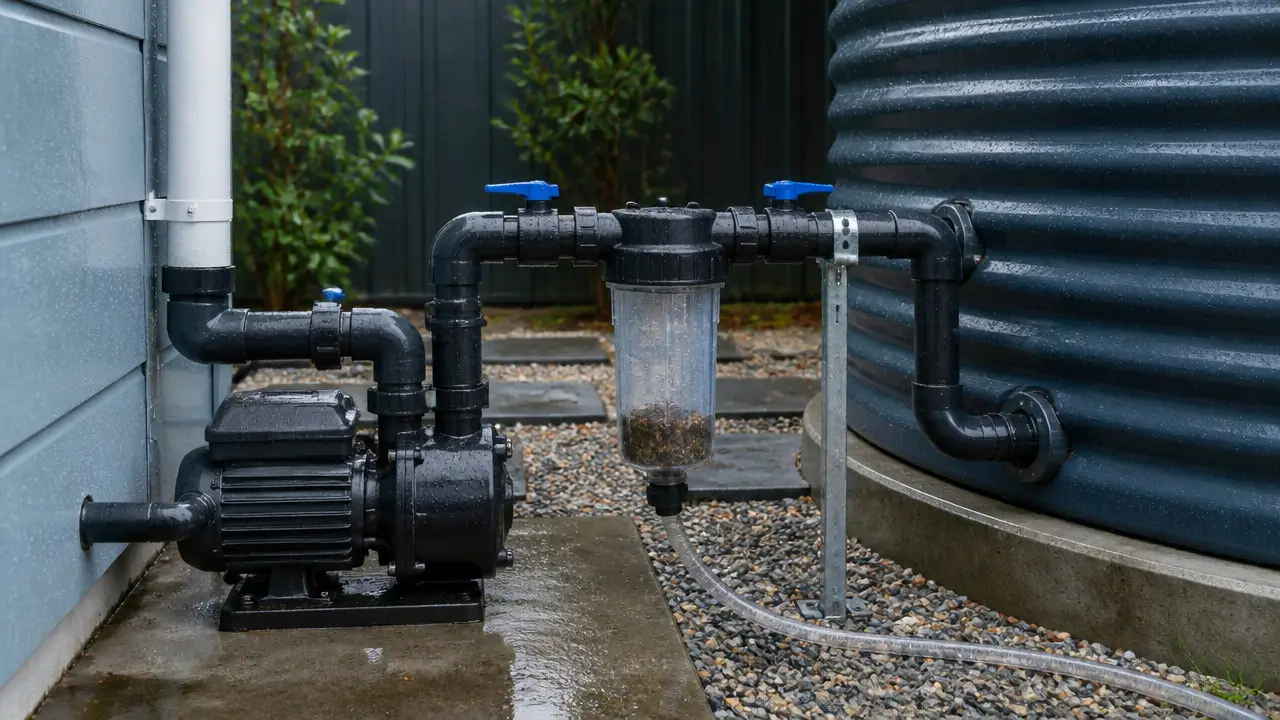
This is especially important with collected rainwater. Roof runoff might have relatively low TDS while still picking up bird droppings, dust, roofing material, airborne pollution, or microorganisms. A low reading from a handheld TDS meter does not make that water potable.
Potable means suitable for drinking.
If rainwater will be used as drinking water, water quality should be treated as a whole-system issue. Collection surfaces, debris removal, first-flush management, storage, treatment, maintenance, current laboratory testing, and local requirements can all matter.
What Does a TDS Meter Actually Measure?
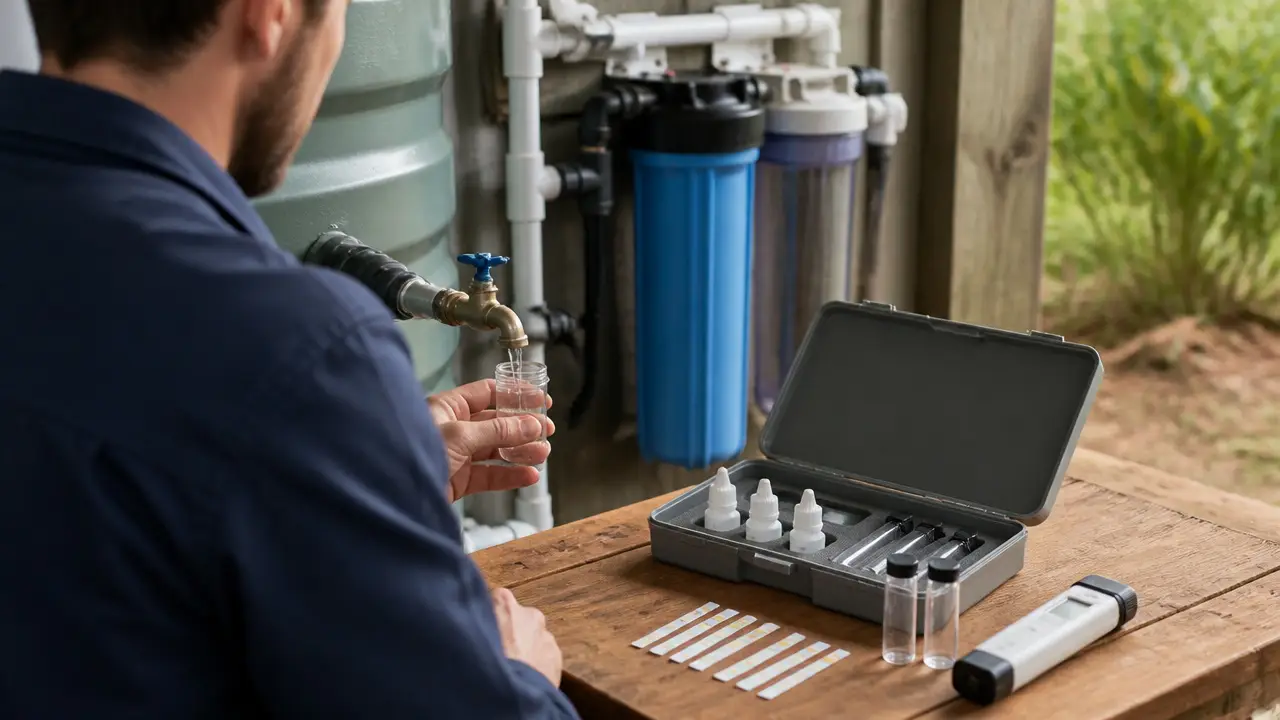
Many handheld TDS meters do not directly count every dissolved solid.
Instead, they measure the water's electrical conductivity. Dissolved ions allow water to conduct electricity. The meter then uses a conversion factor to estimate TDS.
This makes a TDS meter useful for watching general changes.
For example, it can help you notice that:
- One water source has much more dissolved mineral content than another.
- TDS has changed over time.
- A treatment system is producing water with a different dissolved-solids level.
But it cannot tell you exactly what those dissolved solids are.
A reading of 350 ppm does not tell you whether those dissolved materials are mostly calcium, sodium, chloride, or something else.
Is 500 ppm TDS a Legal Limit?
Not necessarily.
At the federal level, EPA classifies the 500 mg/L TDS value as a secondary standard rather than a federally enforceable primary drinking water standard. EPA recommends secondary standards to water systems, but generally does not require compliance with them. States can adopt their own rules.
With a low TDS result in drinking-water screening, you can assess safety controls aligned with potable or non-potable use.
If you need to know whether a TDS limit applies to a public water system, private well, rainwater system, building permit, or other specific use, check your current state and local requirements.
Do not assume the federal 500 mg/L guideline is the only rule that applies where you live.
What If Your TDS Is Above 500 mg/L?
First, decide what you use the water for.
For garden irrigation or other non-potable uses, a TDS reading above 500 mg/L does not automatically mean the water cannot be used. The types of dissolved salts, plant sensitivity, soil conditions, drainage, and intended use may matter more than the TDS number alone.
For household water, high TDS may contribute to taste problems, scale, staining, or deposits.
For drinking water, do not select treatment based only on the TDS reading. A proper water test can identify which constituents are present and help determine whether treatment is needed.
Treatment methods that can reduce dissolved minerals include processes such as reverse osmosis and distillation. However, treatment should match the actual water chemistry and intended use. A sediment filter, for example, mainly removes suspended particles and generally is not a solution for dissolved minerals.
TDS Is Different From Turbidity
TDS is sometimes confused with turbidity.
TDS measures dissolved material.
Turbidity measures how cloudy water is because of suspended particles.
Clear-looking water can have high TDS. Cloudy water can have relatively low TDS.
A sediment filter may reduce turbidity by trapping particles, but that does not mean it will significantly lower TDS. Dissolved salts are small enough to pass through ordinary sediment filters.
This is why water testing and treatment should be based on the specific problem instead of one meter reading.
What the EPA's 500 mg/L Number Can and Cannot Tell You
The EPA TDS guideline is useful for judging general water quality, but it has limits.
| TDS result | What it tells you |
|---|---|
| Below 500 mg/L | Below EPA's secondary TDS guideline, but not proof that the water is safe |
| 500 mg/L | EPA's secondary TDS level |
| Above 500 mg/L | Above EPA's secondary guideline and may be associated with taste, deposits, staining, hardness, or other noticeable effects |
| Any TDS reading | Does not identify individual contaminants or prove drinking-water safety |
The safest way to use a TDS reading is as one piece of information, not as a pass-or-fail drinking-water test.
For rainwater in particular, TDS can be useful for monitoring changes, but drinking-water decisions require suitable collection, treatment, maintenance, laboratory testing, and compliance with applicable local requirements.
Frequently Asked Questions
What is the EPA limit for TDS in drinking water?
EPA lists 500 mg/L, or roughly 500 ppm, as the Secondary Maximum Contaminant Level for total dissolved solids. It is a secondary water-quality guideline rather than a federally enforceable health-based primary standard.
Is 300 ppm TDS safe to drink?
A reading of 300 ppm is below EPA's 500 mg/L secondary guideline, but the reading alone cannot show that the water is safe to drink. TDS does not identify bacteria, lead, arsenic, or many other possible contaminants.
Is 500 ppm TDS dangerous?
EPA does not classify 500 mg/L TDS as a health-based danger point. It uses 500 mg/L as a secondary standard related mainly to noticeable water-quality effects such as taste, staining, hardness, and deposits.
Does a low TDS reading mean rainwater is safe?
No. Rainwater with low TDS may still contain microorganisms or contaminants picked up from the roof, gutters, storage tank, or surrounding environment. TDS should not be used to determine whether collected rainwater is potable.
Can a regular water filter lower TDS?
Ordinary sediment filters generally remove particles rather than dissolved salts, so they may have little effect on TDS. Processes designed to remove dissolved material, such as reverse osmosis, work differently. Treatment should be selected based on the actual water chemistry and intended use.
Is ppm the same as mg/L for TDS?
For dilute water solutions, 1 mg/L is commonly treated as approximately 1 ppm. This is why a TDS guideline of 500 mg/L is often described as about 500 ppm.
Can a TDS meter detect harmful contaminants?
Not specifically. A TDS meter estimates the total amount of dissolved ionic material, usually from electrical conductivity. It cannot tell you which chemicals are present or provide a complete assessment of drinking-water safety.