As an affiliate, we may earn a commission from qualifying purchases. We get commissions for purchases made through links on this website from Amazon and other third parties.
The water with the highest total dissolved solids (TDS) is generally brine, not ordinary seawater. Brine is water with a very high amount of dissolved salts and minerals.
Seawater is about 35,000 mg/L TDS on average. Some natural underground brines and other highly saline waters can exceed 100,000 mg/L TDS.
There is no single TDS number that represents the highest possible value for all water. The limit depends on which substances are dissolved in the water, their concentration, temperature, and other conditions.
What Does TDS Mean?
TDS stands for total dissolved solids. It is the combined amount of dissolved material in water.
These dissolved solids can include:
- Sodium
- Chloride
- Calcium
- Magnesium
- Sulfate
- Bicarbonate
- Potassium
- Other dissolved minerals and salts
TDS is commonly reported in milligrams per liter (mg/L). At lower concentrations, mg/L is often close to parts per million, or ppm. At very high concentrations, such as seawater and brine, the two units should not automatically be treated as identical because water density changes.
A high TDS reading does not tell you exactly which substances are present. It only gives an estimate or measurement of their combined concentration.
Which Types of Water Have the Highest TDS?
Water becomes higher in TDS as more minerals and salts dissolve into it.
A useful comparison is:
| Water type | General TDS level |
|---|---|
| Freshwater | Usually below 1,000 mg/L |
| Brackish water | Often about 1,000–10,000 mg/L |
| Highly saline water | Can reach tens of thousands of mg/L |
| Seawater | About 35,000 mg/L |
| Brine | Can exceed 100,000 mg/L |
The exact boundaries vary depending on how the terms are being used. USGS materials describe seawater at about 35,000 mg/L and use the term brine for water that is more concentrated than seawater or, in some classifications, above 100,000 mg/L.
Brine
Brine generally has the highest TDS of the common water categories.
Brine can form naturally underground when water remains in contact with salt-rich rock for long periods. Evaporation can also concentrate dissolved salts.
Some underground formation waters associated with deep geologic deposits can contain much more dissolved material than seawater.
Because brines vary greatly in chemical makeup, there is no useful single TDS value that applies to all of them.
The technical overview “What Is the EPA Standard for TDS in Water?” connects the measurement to a practical water-safety decision.
Seawater
Normal seawater contains roughly 35,000 mg/L of dissolved solids. Sodium and chloride make up much of this dissolved material, along with magnesium, sulfate, calcium, potassium, and other ions.
That makes seawater much higher in TDS than normal freshwater, but it is not the highest-TDS water that can occur.
Brackish Water
Brackish water falls between freshwater and seawater.
USGS notes that definitions vary, but brackish groundwater is commonly considered to contain roughly 1,000 to 10,000 mg/L of dissolved solids.
It can occur where freshwater mixes with seawater or where groundwater dissolves minerals as it moves through rock.
Does High TDS Mean the Water Is Unsafe?
Not by itself.
A TDS reading tells you how much dissolved material is present, but not what that material is.
For example, two samples could both have a TDS reading of 500 mg/L. One might contain mostly calcium and magnesium. The other could contain a very different mix of dissolved substances.
That is why a TDS meter cannot determine whether water is safe to drink.
In the United States, EPA lists 500 mg/L TDS as a secondary drinking-water standard. Secondary standards mainly address issues such as taste, staining, deposits, color, and other aesthetic effects. The 500 mg/L value is not a general safety cutoff proving that water below it is safe to drink.
Water can have low TDS and still contain harmful microorganisms or contaminants that a basic TDS meter cannot detect.
How Does Rainwater Compare?
Rainwater normally starts with far fewer dissolved minerals than seawater or mineral-rich groundwater.
The related explainer “What Is the Best TDS Value for Water?” clarifies when testing or treatment is needed before household use.
That does not mean collected rainwater is automatically clean or safe.
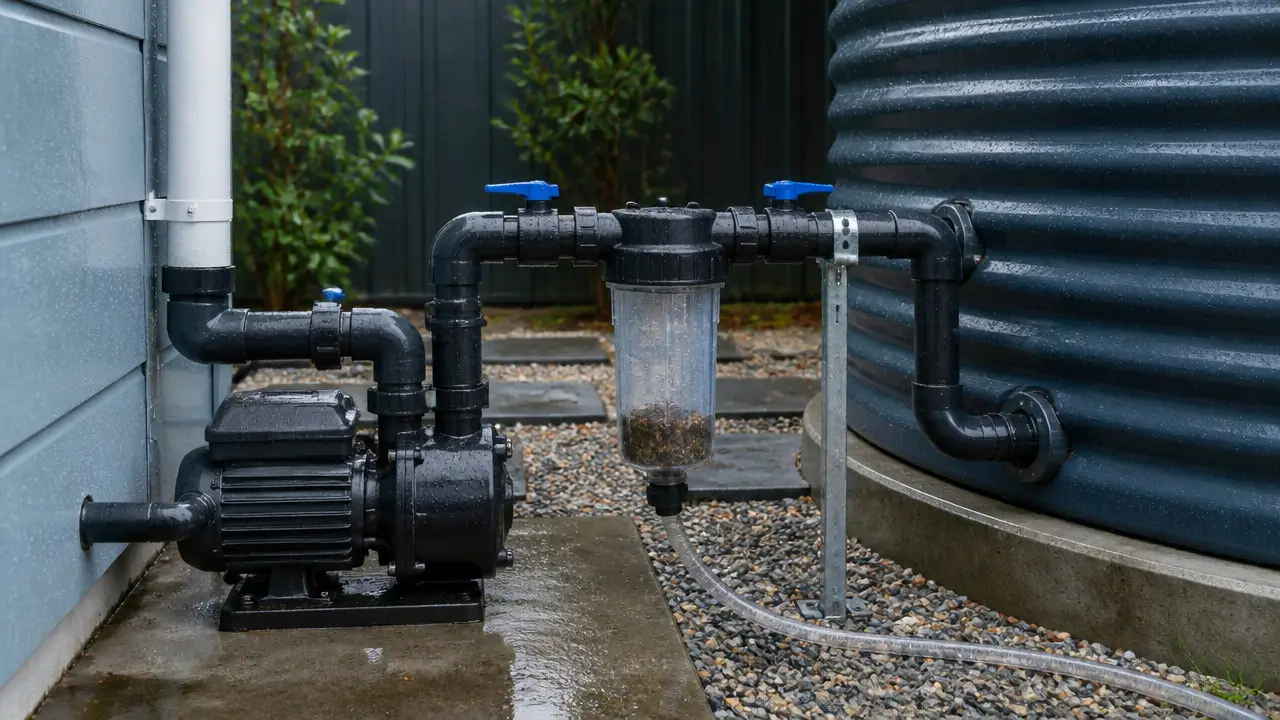
Once rain falls onto a roof, it can contact:
- Dust
- Bird and animal waste
- Roofing materials
- Pollen
- Smoke particles
- Leaves and organic debris
- Metals from gutters or fittings
Regarding health considerations for 20 TDS water, understand a treatment train sized for the actual domestic demand.
Some of these materials may affect TDS. Others may create water-quality problems without causing a large change in the TDS reading.
For a rainwater harvesting system, TDS is therefore only one small part of water-quality monitoring.
If the water is only being used for suitable non-potable uses, such as some forms of irrigation, the important questions include plant salt tolerance, soil conditions, and what contaminants may be entering the tank.
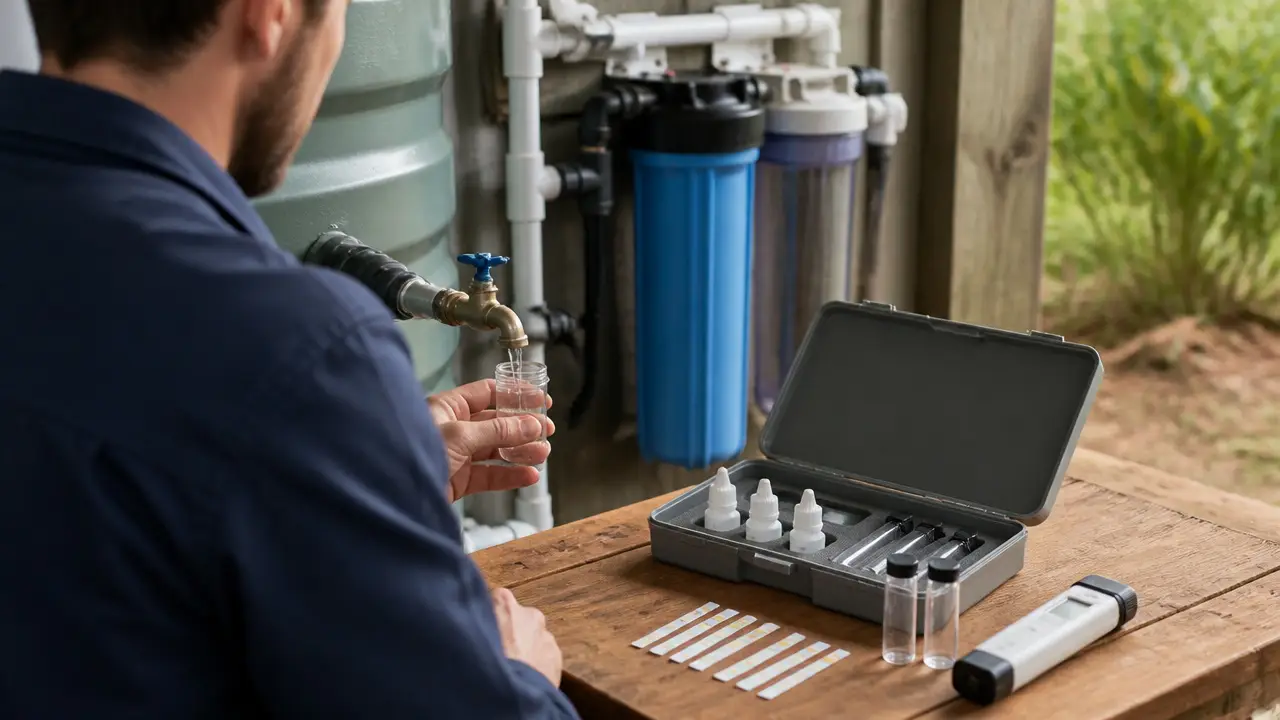
If collected rainwater is being considered for drinking, do not use TDS as a pass-or-fail test. Drinking-water use requires suitable collection, prefiltration, treatment designed for the actual risks, proper maintenance, current laboratory testing, and compliance with applicable local requirements.
Can a TDS Meter Measure Very Salty Water?
Not every meter can.
Most handheld TDS meters estimate TDS by measuring electrical conductivity. Dissolved ions allow water to conduct electricity, so the meter converts conductivity into an estimated TDS value.
That works reasonably well within the meter's designed range, but several problems appear with very salty water.
A meter may:
- Reach its maximum reading
- Display an overload warning
- Become less accurate outside its intended range
- Use a conversion factor that does not match the water's chemistry
This matters with seawater and especially with concentrated brine.
Check the meter's measurement range before using it on high-TDS water. A meter designed for ordinary freshwater may not be suitable for measuring seawater or concentrated brine.
Is Lower TDS Always Better?
No.
Very low TDS simply means the water contains relatively little dissolved material. It does not prove that the water is clean, healthy, or potable.
A low-TDS sample could still contain bacteria, viruses, some chemicals, or other contaminants that a simple conductivity-based meter cannot identify.
The use-case discussion in “Is a TDS Level of 400 Safe for Drinking Water?” clarifies when testing or treatment is needed before household use.
Likewise, moderately higher TDS may come largely from common minerals.
The useful question is not just:
"What is the TDS?"
It is also:
"What is dissolved in the water, and what will the water be used for?"
That distinction is especially important with harvested rainwater.
Frequently Asked Questions
What water has the highest TDS?
Highly concentrated brine generally has the highest TDS. Some brines contain more than 100,000 mg/L of dissolved solids, much higher than normal seawater.
What is the TDS of seawater?
Average seawater contains about 35,000 mg/L of dissolved solids. The exact amount varies by location and conditions.
Is seawater considered high-TDS water?
Yes. Seawater has very high TDS compared with freshwater. However, some brines contain much more dissolved material than seawater.
Is 500 ppm TDS safe to drink?
A reading of 500 ppm does not establish whether water is safe to drink. EPA uses 500 mg/L as a secondary drinking-water guideline related mainly to aesthetic effects. A TDS meter does not identify microorganisms or individual contaminants.
Can rainwater have high TDS?
Collected rainwater can gain dissolved material after contacting roofs, gutters, tanks, sediment, and other parts of a harvesting system. TDS can therefore change during collection and storage. A TDS reading alone cannot establish rainwater safety.
Does boiling water reduce TDS?
No. Normal boiling removes water as vapor while most dissolved minerals and salts stay behind. Continued evaporation can actually increase their concentration in the remaining water.
Can a TDS meter tell if rainwater is drinkable?
No. A TDS meter measures or estimates the amount of dissolved ionic material. It cannot provide a complete assessment of bacteria, viruses, chemicals, metals, or other possible hazards. Potable rainwater systems require a broader treatment and testing approach.