As an affiliate, we may earn a commission from qualifying purchases. We get commissions for purchases made through links on this website from Amazon and other third parties.
Rainwater pH tells you how acidic or alkaline the water is. It is useful for spotting changes in a rainwater system, checking irrigation water, and understanding possible corrosion or treatment issues.
Fresh rain is naturally a little acidic. Normal rainfall is often around pH 5.6 because carbon dioxide in the air dissolves into water and forms a weak acid.
That does not mean collected rainwater should always read 5.6. Once rain lands on a roof and moves through gutters, pipes, tanks, and treatment equipment, its pH can change.
Most importantly, pH alone cannot tell you whether rainwater is safe to drink. Water with a normal-looking pH can still contain bacteria, viruses, metals, chemicals, or other contaminants.
What Does Rainwater pH Mean?
The pH scale runs from 0 to 14.
- A pH below 7 is acidic.
- A pH of 7 is neutral.
- A pH above 7 is alkaline, also called basic.
The scale is logarithmic. This means a change of one whole pH number represents a tenfold change in acidity.
For example, pH 5 water is much more acidic than pH 6 water. The numbers may look close, but the chemical difference is significant.
For a rainwater owner, however, you usually do not need to calculate acidity. The main value of a pH test is knowing whether your water is unusually acidic or alkaline and whether its pH is changing over time.
What Is the Normal pH of Rainwater?
Clean rainfall is commonly described as having a pH of about 5.6. Rain is naturally slightly acidic because it absorbs carbon dioxide from the atmosphere.
Actual rainfall can be different.
Its pH may be affected by:
- air pollution
- dust
- sea spray
- smoke
- local geology
- industrial emissions
- volcanic emissions
- other airborne particles and gases
Acid rain can have a substantially lower pH. The U.S. EPA notes that acid rain commonly has a pH around 4.2 to 4.4.
But rainfall pH and stored rainwater pH are not necessarily the same thing.
Why Does Collected Rainwater Have a Different pH?
Rain changes as soon as it reaches your collection surface.
A sample taken directly from rainfall may therefore give a different result from water taken out of your rain barrel or cistern.
Roof materials and roof dust
Rainwater can dissolve or carry small amounts of material from the roof.
Dust, leaves, pollen, bird droppings, roofing materials, and particles that settled during dry weather may all change the chemistry of the runoff.
A first-flush diverter can reduce some of this material. A first-flush diverter sends the first portion of roof runoff away from the storage tank instead of storing it.
It can improve collected-water quality, but it does not guarantee a particular pH or make rainwater safe to drink.
Gutters and plumbing
Water also contacts gutters, downspouts, fittings, pumps, valves, and pipes.
The effect on pH depends on the materials and on how chemically aggressive the water is.
Low-pH water may also contribute to corrosion problems in some plumbing systems. The U.S. EPA associates lower pH with increased corrosion concerns.
Storage tank materials
A tank can affect water chemistry.
For example, mineral-based surfaces such as concrete may make water more alkaline, particularly when the surface is new. Plastic tanks usually interact with water differently.
You should not assume that two tanks receiving rain from the same roof will always produce identical pH readings.
Organic material
Leaves, sediment, insects, and other organic material can break down inside a poorly maintained tank.
This can change several water-quality characteristics, including pH.
Keeping gutters screened, removing accumulated debris, managing sediment, and cleaning the system when needed can reduce these problems.
Treatment
Water-treatment equipment may also change pH.
For example, some treatment media are specifically intended to alter water chemistry. Chemical treatment can also change pH.
Do not add chemicals simply because a home test shows a number you do not like. If the water is intended for household or drinking use, pH adjustment should be considered as part of the entire treatment system.
What pH Should Stored Rainwater Have?
There is no single correct pH for every rainwater system.
The useful range depends on what you plan to do with the water.
Garden irrigation
For most simple rain-barrel irrigation systems, you usually do not need to make rainwater exactly neutral.
Plants differ in the soil conditions they prefer, and soil often changes the effect of irrigation water after it is applied.
If plants are healthy and the pH is reasonably stable, adjusting stored rainwater may accomplish little.
If you are having plant or soil problems, consider the whole situation rather than testing rainwater alone. Soil pH, drainage, fertilizer, salts, and the needs of the specific plants may be more important.
Pumps, pipes, and household equipment
Very acidic or alkaline water deserves more attention when it will repeatedly pass through plumbing or equipment.
Lower pH can contribute to corrosive conditions. Corrosion can damage system parts and may allow metals from some plumbing materials to enter the water.
Water chemistry is more complicated than pH alone, though. Alkalinity, mineral content, dissolved salts, temperature, and the materials in the system also affect corrosion.
Drinking water
For U.S. public drinking-water systems, the EPA lists pH 6.5 to 8.5 as a secondary drinking-water guideline. Secondary standards mainly address issues such as taste, deposits, staining, and corrosion rather than serving as primary health-based contaminant limits.
Do not use that range as a test for whether collected rainwater is drinkable.
A sample reading pH 7.0 could still contain harmful germs or chemicals.
The CDC advises people who use collected rainwater for drinking, cooking, or bathing to regularly test it for relevant germs and chemicals and to select treatment that addresses the actual contaminants present.
Drinking-water use should be treated as a whole-system decision involving suitable collection materials, debris control, prefiltration, appropriate treatment, maintenance, current laboratory testing, and local requirements.
Does a Low pH Mean Rainwater Is Contaminated?
Not necessarily.
Slightly acidic rain is normal. A pH near 5.6 can occur even when rain falls through relatively clean air.
A low reading can still be useful as a warning sign when it is unexpected.
For example, investigate if water that normally stays near the same pH suddenly becomes much more acidic.
Possible causes include:
- a change in the collection surface
- unusual airborne contamination
- accumulated roof debris
- changes inside the tank
- a new treatment process
- inaccurate testing equipment
Do not try to identify a contaminant from the pH number alone.
Does a High pH Mean Rainwater Is Safe?
No.
High pH does not mean clean water, and neutral pH does not mean clean water.
A pH meter measures acidity and alkalinity. It does not directly tell you whether the water contains:
- bacteria
- viruses
- parasites
- lead
- copper
- pesticides
- fuel or solvents
- other unwanted chemicals
Alongside identifying whether rain is acidic, interpret whether the test results point to cleaning or filter service.
The CDC specifically warns that collected rainwater can contain germs and chemicals even when it looks clean. Contamination can come from the atmosphere, roofing materials, gutters, pipes, storage materials, animals, and debris.
Think of pH as one measurement, not a water-safety test.
How to Test Rainwater pH
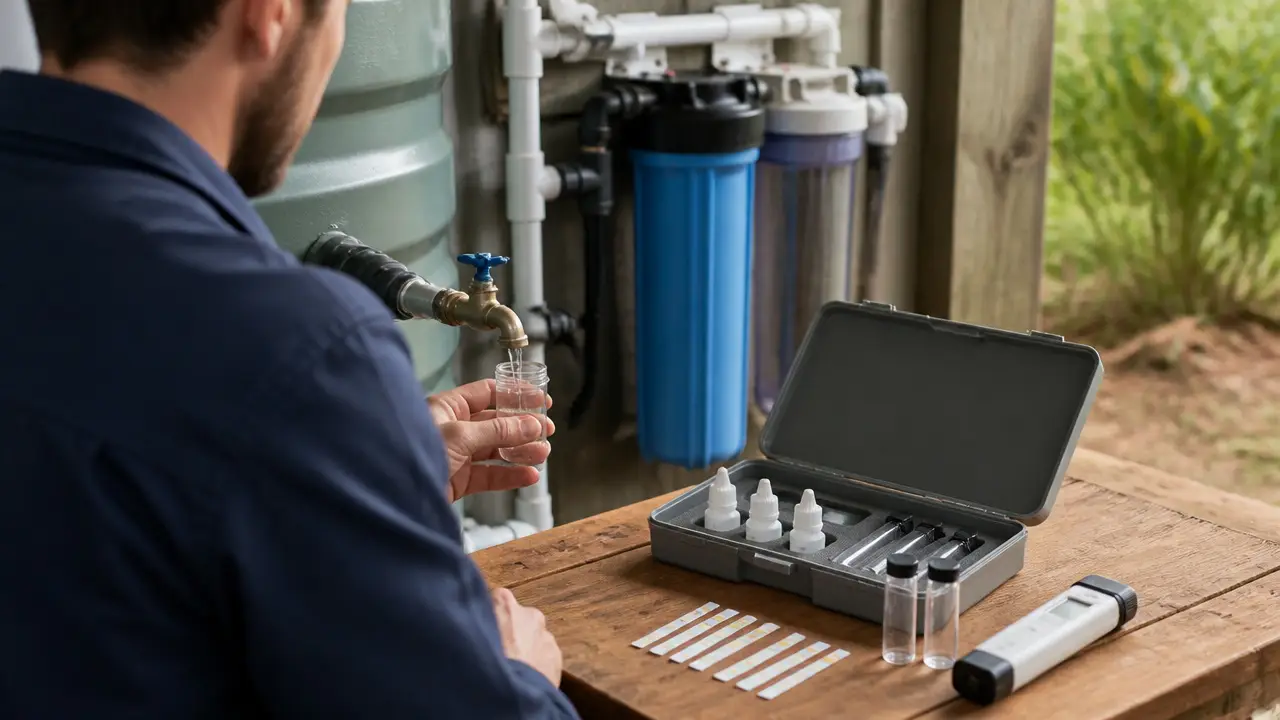
Homeowners generally use either test strips or an electronic pH meter.
pH test strips
Test strips are simple and useful when you only need an approximate reading.
You dip the strip into the sample according to its instructions and compare the resulting color with the supplied chart.
They work well for basic checks but can be difficult to read precisely, especially when two colors on the chart look similar.
Digital pH meters
A digital meter can provide a more precise reading, but only when it is used and maintained correctly.
Meters normally need calibration using known pH buffer solutions. Follow the instructions for your particular meter for:
- calibration
- probe cleaning
- probe storage
- temperature requirements
- replacement intervals
A meter that has not been calibrated can produce convincing-looking numbers that are wrong.
Take samples consistently
If you are tracking your rainwater system, test samples from the same location in similar conditions.
For example, do not compare a sample taken directly from the downspout during one storm with a sample taken from the bottom of a month-old storage tank and assume the difference represents a problem.
You might instead track:
- incoming roof runoff after the initial dirty runoff has passed
- stored tank water
- treated water, if your system includes treatment
This can help you identify where a major change occurs.
Why pH Can Change During Storage
Stored rainwater is not chemically frozen in time.
Its pH can change as water interacts with:
- air
- tank surfaces
- sediment
- minerals
- organic material
- plumbing components
- treatment media
Water chemistry can also vary as new rain enters a partly filled tank and mixes with older water.
Because of these variables, a single pH reading is less useful than a pattern of readings taken consistently.
If a system normally stays around the same level and suddenly changes significantly, inspect the system before trying to chemically correct the water.
pH Is Not the Same as Alkalinity
pH and alkalinity are related, but they are not the same measurement.
pH tells you how acidic or alkaline the water is at that moment.
Alkalinity describes the water's ability to resist becoming more acidic.
Rainwater often contains fewer dissolved minerals than many groundwater supplies. Because there may be relatively little buffering material present, its pH can sometimes change more easily.
This is one reason two water samples with the same pH can behave differently when they move through plumbing or receive chemical treatment.
pH Is Also Different From TDS
A TDS meter does not measure pH.
TDS, or total dissolved solids, is a broad measure related to dissolved substances in water. Home TDS meters usually estimate this from electrical conductivity.
You can have:
- low TDS and low pH
- low TDS and neutral pH
- higher TDS and neutral pH
- many other combinations
Neither a pH meter nor a TDS meter can provide a complete assessment of rainwater safety.
When Should You Investigate a pH Reading?
An unusual number deserves investigation when it could affect how you use the water.
Pay particular attention when:
- the pH changes sharply from its normal pattern
- metal plumbing shows signs of corrosion
- fixtures develop unusual deposits
- treatment equipment requires a particular incoming-water range
- irrigation problems appear after a water-system change
- water will be used for drinking or other household purposes
Start by repeating the measurement with properly maintained testing equipment.
Then inspect the collection and storage system. Look for changes such as debris accumulation, new plumbing parts, maintenance work, contamination around the roof, or treatment changes.
If the water is intended for drinking, do not diagnose the system from pH alone. Use appropriate laboratory testing and professional or local health-department guidance.
Should You Adjust Rainwater pH?
Often, no adjustment is needed.
For basic garden watering, a slightly acidic pH may be completely normal.
Adjusting pH becomes more relevant when water chemistry is causing a known problem or when a treatment process requires water within a specific operating range.
Avoid casually adding lime, acids, bases, or other chemicals to a household rainwater tank. Chemical dosing can overshoot the target and may introduce new water-quality or equipment problems.
For potable water, chemical adjustment should be designed around the complete water analysis and treatment system.
The Most Useful Way to Think About Rainwater pH
Do not treat pH as a pass-or-fail test.
Use it as one clue about what is happening inside your rainwater system.
A reading can help you:
- notice changes in collected water
- investigate corrosion
- understand irrigation conditions
- check whether treatment equipment is operating within its required range
- compare water at different points in a system
But it cannot tell you whether rainwater is free of harmful germs or chemicals.
For most rainwater owners, a consistent testing method and an understanding of intended water use are more useful than trying to force every tank to a particular pH number.
Frequently Asked Questions
What is the normal pH of rainwater?
Normal rain is commonly around pH 5.6. It is slightly acidic because carbon dioxide from the atmosphere dissolves into the water and forms weak carbonic acid. Actual rainfall can vary because of local air conditions and other factors.
Why is my rainwater pH below 7?
A reading below 7 does not automatically mean something is wrong. Fresh rain is naturally slightly acidic. Roof materials, airborne particles, stored debris, treatment, and tank conditions can also influence the final pH.
Is rainwater with a pH of 5.5 safe for plants?
It may be suitable for many garden uses, but pH alone cannot answer whether the water is appropriate for a particular plant. Plant needs, soil pH, soil buffering, salts, and other water-quality factors also matter.
Is rainwater with a pH of 7 safe to drink?
Not necessarily. A neutral pH does not rule out bacteria, viruses, metals, or chemicals. Drinking rainwater requires suitable collection and treatment plus appropriate laboratory testing and maintenance.
What pH should drinking rainwater have?
The U.S. EPA lists pH 6.5 to 8.5 as a secondary guideline for public drinking water, but this is not a test of whether collected rainwater is safe to drink. Potable rainwater requires a much broader water-quality assessment and treatment plan.
Can a plastic rain barrel change water pH?
Stored-water pH can change over time even in a plastic barrel because the water still interacts with air, incoming runoff, sediment, organic debris, and any new rain added to the barrel. Tank material is only one factor.
Are pH strips accurate enough for rainwater?
They can be useful for approximate checks. A properly calibrated digital pH meter is generally more useful when you need to track smaller changes. Whichever method you use, consistent sampling and correct test procedures are important.
Should I add something to my rain barrel to raise the pH?
Usually not unless you have identified a specific reason for adjustment. Slightly acidic rainwater is normal. Adding chemicals without understanding the rest of the water chemistry can create new problems, especially in household or potable-water systems.