
As an affiliate, we may earn a commission from qualifying purchases. We get commissions for purchases made through links on this website from Amazon and other third parties.
Best Overall
Best for Long-Range Monitoring
Best for Aqara Homes
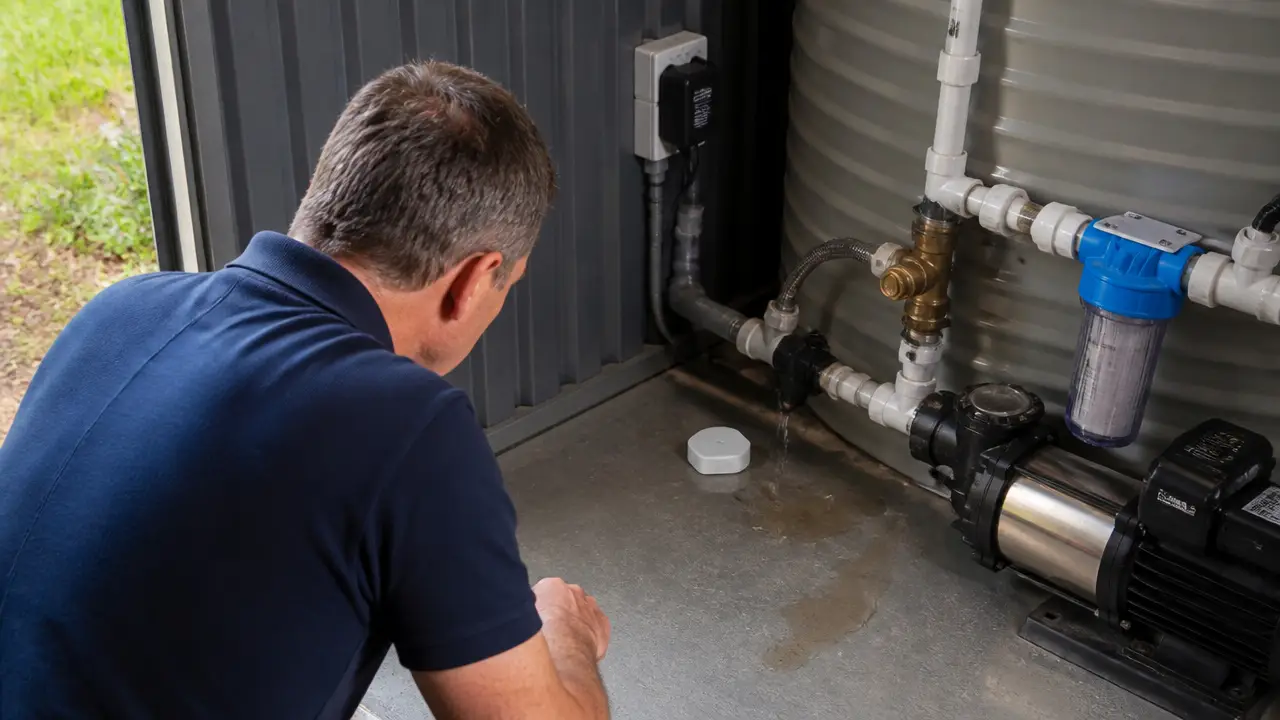
A smart water leak detector is most useful when the part of a rainwater system you worry about is not always in sight. A small leak around a pump, filter housing, tank fitting, indoor supply line, or utility-room connection can run for hours before anyone notices it. A sensor placed at the lowest likely collection point can turn that hidden leak into an audible alarm or phone notification much sooner.
The four systems here take different approaches. YoLink and GoveeLife emphasize long-range communication for sensors spread around a property. Aqara uses a very compact Zigbee sensor that makes the most sense when you already have an Aqara hub. The older GoveeLife Detector 2 package adds long-range LoRa coverage and a four-sensor bundle, but gateway reliability and setup complexity deserve extra attention.
These are leak alarms, not rainwater-system controls by themselves. A detector can tell you water is where it should not be, but it does not replace a correctly sized overflow, a reliable float valve, a pump controller, or routine inspection of fittings and hoses.
Quick Fit Checklist Before You Buy
- Decide where alerts must reach. A sensor near an indoor pump is different from one in a detached shed or distant tank enclosure.
- Check the hub requirement. Some sensors only work with their own gateway or ecosystem.
- Plan for internet outages. If remote alerts are critical, understand what still works locally when Wi-Fi or internet service fails.
- Place sensors where leaked water will actually travel. Under the highest fitting is not always useful if the floor slopes away from it.
- Test notifications before relying on them. Trigger every sensor with a controlled water test and make sure both the audible and phone alerts work.
- Keep monitoring separate from prevention. Fix weak fittings, overflows, hoses, and valves rather than treating a detector as the primary safeguard.
Smart Water Leak Detectors at a Glance
| Product | Best For | Key Strength | Tradeoff |
|---|---|---|---|
| YoLink Water Leak Starter Kit | Multi-point monitoring around a property | Hub plus four sensors, long-range LoRa, app/email/SMS alerts, and local device-to-device options | Requires the YoLink ecosystem |
| GoveeLife Upgraded Smart Water Leak Detector 1s | Long runs between sensor and gateway | Sub-1G long-range communication, phone alerts, and loud local alarm | Wi-Fi pairing and instructions can take extra setup time |
| Aqara Water Leak Sensor | Existing Aqara smart-home systems | Very small 1.97 x 1.97 x 0.59-inch body | Requires an Aqara hub and can be more sensitive to pairing/ecosystem issues |
| GoveeLife Smart Water Leak Detector 2 | Four-sensor long-range coverage | LoRa system, phone alerts, and multiple sensing probes | Gateway reliability and setup documentation are the main concerns |
Which Smart Leak Detector Fits Your Rainwater System?
For a rainwater setup with several monitoring points, the YoLink Water Leak Starter Kit has the clearest all-around role. The package includes a hub and four sensors, so one purchase can cover a pump, filtration area, indoor plumbing connection, and another high-risk location. Long-range LoRa communication is also useful when those points are not all close to the router.
The GoveeLife Upgraded Smart Water Leak Detector 1s is a strong alternative when communication distance is the deciding concern. Its documented Sub-1G system is designed for long-range sensor-to-gateway communication, and each sensor combines phone notifications with a loud local alarm. Setup can require patience, so it is worth completing a full alert test before placing the sensors in hard-to-reach areas.
The Aqara Water Leak Sensor is the easiest to physically place. At roughly two inches square and well under an inch thick, it can sit under a compact pump platform, near a filter housing, or beside an indoor tank fitting without taking much room. Its main limitation is ecosystem dependence: it requires an Aqara hub, so it makes much more sense as an addition to an existing Aqara system than as a standalone rainwater purchase.
The GoveeLife Smart Water Leak Detector 2 is another multi-sensor long-range package with strong specifications on paper. Its LoRa communication, multiple sensing probes, local alarm, and remote notifications suit distributed monitoring. Customer evidence, however, raises more concern about gateway disconnections and pairing, so it belongs lower in the ranking unless its ecosystem already fits your property.
Best Overall: YoLink Water Leak Starter Kit
1 / 4
YoLink Water Leak Starter Kit

Package
Hub + 4 sensors
Alerts
App / email / SMS
Wireless
LoRa long-range
YoLink is the most complete starting package here for a rainwater owner who wants to watch several leak-prone points at once. It includes one hub and four Leak Sensor 4 units, and each sensor has its own audible alarm. That means the system can provide a local warning even before you check the app.
The long-range LoRa link is particularly useful for rainwater systems because tanks, pumps, and treatment equipment are often spread between the house, garage, basement, or an outdoor utility area. The manufacturer documents open-air range up to a quarter mile, although buildings, walls, terrain, and installation location will affect real-world coverage.
Another useful distinction is YoLink's device-to-device capability. Compatible YoLink devices can communicate locally for some automations even when internet service is unavailable. That can matter if you later add a compatible siren or shutoff device. Treat that as an ecosystem feature rather than assuming this starter kit automatically shuts off water by itself.
Customer evidence is encouraging on basic detection and setup. Reports include sensors noticing very small leaks and phone alerts arriving quickly during testing. The main compromise is commitment to another hub-based ecosystem.
Why It Works
- The hub and four included sensors cover several risk points without buying each sensor separately.
- LoRa communication is better suited than short-range Wi-Fi for widely separated monitoring locations.
- Audible alarms plus app, email, and SMS options provide more than one alert path.
- The platform can expand into additional YoLink devices if the system grows later.
What To Keep In Mind
- The sensors depend on the YoLink ecosystem for remote smart functions.
- Open-air range claims should not be treated as guaranteed range through buildings or underground spaces.
- Test each sensor from its final location before trusting it for unattended monitoring.
Best for Long-Range Monitoring: GoveeLife Upgraded Smart Water Leak Detector 1s
2 / 4
GoveeLife Upgraded Smart Water Leak Detector 1s
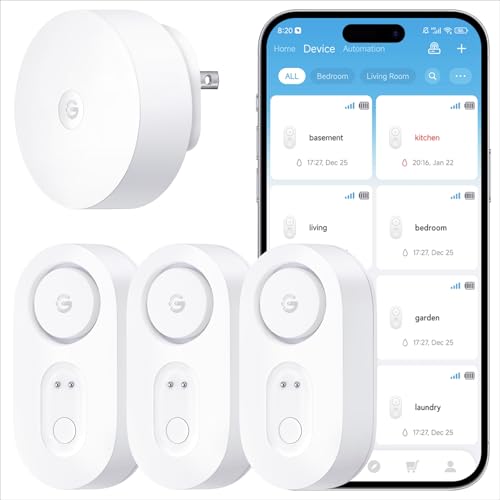
Power
Battery
Alarm
Up to 105 dB
Compatible Devices
Alexa / Google / Smartphone
This GoveeLife package is built around long-range Sub-1G communication rather than asking every sensor to maintain a direct Wi-Fi link. That layout is useful for a rainwater pump in a basement, a tank area farther from the house, or multiple utility locations where ordinary Wi-Fi sensors may struggle.
The sensors are battery powered, waterproof, and designed to provide both a loud local alarm and remote notifications through the app. Multiple email addresses can be added, which is helpful when more than one person should know about a leak.
The practical caution is setup. Customer notes include both successful leak alerts and difficulty linking the system to Wi-Fi. A smart detector that has not been properly paired is just a local alarm, so test the gateway connection, app notification permissions, and alert delivery before installation is considered finished.
Why It Works
- Long-range Sub-1G communication suits separated tanks, pumps, and utility spaces.
- A local alarm provides an alert even when your phone is not nearby.
- Remote app and email notifications make unattended monitoring more useful.
- Battery operation lets the sensor sit where no outlet is available.
What To Keep In Mind
- Initial pairing can take more effort than the hardware suggests.
- Remote alerts still depend on a properly connected gateway and notification settings.
- Long advertised range does not eliminate the need to test from the final installation location.
Best for Aqara Homes: Aqara Water Leak Sensor
3 / 4
Aqara Water Leak Sensor
Size
1.97 x 1.97 x 0.59 in
Power
Battery
Hub
Aqara Hub required
Aqara's leak sensor is the compact option in this group. Its body measures 1.97 x 1.97 x 0.59 inches, allowing it to fit under equipment or into a narrow utility space where a larger detector would be awkward.
The sensor uses Zigbee and requires an Aqara hub. Once it is inside that ecosystem, it can participate in smart-home automations and pass alerts through compatible services. That makes it appealing for someone who already uses Aqara hardware and wants to add leak sensing around a rainwater pump, indoor tank connection, or filtration equipment.
It is less compelling as a first smart-water purchase. Customer notes raise issues with pairing, sensors going offline, and inconsistent reliability in some installations. Those problems do not mean every unit will fail, but they make regular status checks and test alarms especially important.
Why It Works
- The small body fits under or beside compact plumbing and pump equipment.
- Zigbee is appropriate for an existing Aqara mesh rather than adding another Wi-Fi device.
- Aqara automations can connect leak detection with other compatible smart-home actions.
What To Keep In Mind
- An Aqara hub is required.
- Do not assume compatibility with another brand's Zigbee hub.
- Pairing and offline-device reports make periodic test alarms important.
A Four-Sensor GoveeLife Alternative
4 / 4
GoveeLife Smart Water Leak Detector 2

Pack
4 sensors
Wireless
LoRa
Alarm
Up to 100 dB
The GoveeLife Smart Water Leak Detector 2 package is designed for broad coverage. Its sensors use top and bottom probes, the gateway provides remote app, email, and SMS alerts, and the LoRa connection is designed for long sensor-to-gateway distances.
That combination looks well suited to a property with several leak-prone locations. The issue is not the intended function; it is setup reliability. Customer evidence includes successful real-world leak detection, but it also includes gateway disconnections, failed pairing attempts, and frustration with documentation.
If you already use this GoveeLife generation and know the gateway works well at your property, adding sensors can make sense. If you are starting from zero, the YoLink package has the stronger overall case here.
Why It Works
- Four sensors provide useful coverage for several plumbing and rainwater-system locations.
- LoRa communication is designed for longer distances than direct Wi-Fi sensing.
- Multiple sensing probes can detect drips or pooled water around the device.
What To Keep In Mind
- Gateway reliability is the main concern in the customer evidence.
- The gateway supports 2.4 GHz Wi-Fi, which matters during setup.
- Complete a controlled leak test after any router, gateway, or app change.
Where to Put Leak Detectors Around a Rainwater System
A leak sensor is only useful if escaping water can reach it. Put the detector on a stable surface at a likely low point rather than simply beside the most expensive component.
Good candidates include the floor below an above-ground pump, underneath indoor filter housings, beside pressure-system fittings, near a tank outlet or bulkhead that enters a building, and below any automatic make-up-water connection. If the tank itself is outside on soil or gravel, a smart floor sensor may be less useful because rain and normal outdoor moisture can create false or meaningless alerts.
Do not put a sensor where normal splashing, condensation, or irrigation overspray will repeatedly trigger it unless the product and alert strategy are designed for that environment.
What Smart Leak Detectors Cannot Do
They Do Not Replace an Overflow
A full rain barrel or tank needs a correctly sized overflow path. A floor sensor that tells you the tank overflowed inside a building is only reporting a problem that should have been managed hydraulically first.
They Do Not Show Whether a Pump Is Healthy
A detector can notice water from a failed fitting or seal, but it cannot tell you whether a pump is losing prime, short-cycling, overheating, or delivering the correct pressure. Those problems require pump-specific controls and inspection.
They Do Not Guarantee Remote Alerts
Phone notifications rely on the gateway, network connection, cloud service, app permissions, and phone settings. The local audible alarm is therefore still valuable. Test both paths rather than assuming a successful app pairing guarantees future notification.
Setup and Maintenance Tips
Test every sensor before putting equipment back in place. A damp paper towel or a few controlled drops of water can show that the probes respond without flooding the area.
Label sensors by location in the app. "Pump room floor" or "filter housing" is much more useful during an alert than "Sensor 3." If several people may need to respond, configure their notifications during installation rather than after the first leak.
Check sensor status and battery information periodically. Long battery-life claims are useful, but battery condition can still vary with communication frequency, temperature, and age. Replace a sensor that repeatedly falls offline rather than treating reconnection as routine maintenance.
Frequently Asked Questions
Where should I put a water leak detector near a rainwater tank?
Place it where leaked water is likely to collect, such as below an indoor tank outlet, pump, filter housing, or plumbing manifold. Outdoor tanks exposed to normal rain may not be suitable for floor-style leak sensing.
Do smart leak detectors work without Wi-Fi?
Local alarms can still work on many models, but remote alerts generally require the system's hub or gateway and a working network connection. Some ecosystems also support limited local device-to-device automation.
Can a smart leak detector shut off my rainwater pump automatically?
Not by itself unless the specific ecosystem includes a compatible controller or shutoff device and is configured for that action. The detectors in this roundup should primarily be treated as sensors and alert devices.
Is one leak detector enough?
One sensor is enough only if there is one clear low point where every important leak would collect. Systems with separate tanks, pumps, filters, or indoor plumbing runs often need multiple sensors.
How often should I test a smart leak sensor?
Test it after installation, after moving it, after changing network equipment, and periodically during routine system inspection. Make sure both the local alarm and the remote notification path work.
Will a leak detector prevent a rain barrel from overflowing?
No. Use a properly designed overflow or diverter arrangement to manage a full barrel. A leak detector can warn you about unwanted water but should not be the overflow-control strategy.
For automatic level control rather than leak notification, compare the connection and pressure requirements in our guide to float valves for water tanks. If the goal is pump or level automation, float switches for water tanks explain the electrical-control side of the system.