As an affiliate, we may earn a commission from qualifying purchases. We get commissions for purchases made through links on this website from Amazon and other third parties.
Rainwater is not automatically “dirty” when it falls from the sky, but it is not pure or sterile either. As raindrops form and fall, they can pick up dust, smoke, tiny particles, germs, and chemicals from the air. The amount depends on local air conditions, weather, and where you live.
For a rainwater harvesting system, there is another important point: rain usually picks up much more contamination after it reaches the roof, gutters, pipes, and storage tank. That is why water caught from a roof should not be treated as drinking water simply because the rain looked clear.
How Clean Is Rain Before It Hits the Roof?
Rain starts as water vapor that condenses into tiny droplets in clouds. Those droplets do not form in an empty atmosphere. The air contains very small particles and gases.
As rain falls, it can come into contact with:
- Dust
- Smoke
- Pollen
- Airborne particles
- Germs
- Chemicals and gases from natural and human sources
CDC guidance notes that rainwater can pick up germs and chemicals from the air before it ever reaches a roof.
This does not mean every rainstorm produces heavily contaminated water. Rain quality can vary greatly between locations and even between storms at the same house.
A rural property far from heavy traffic may have different airborne contaminants than a house next to a busy highway or industrial area. Smoke from wildfires can also change what is in the air when rain falls.
Rainwater Is Not the Same as Distilled Water
It is easy to think of rain as naturally distilled water because evaporation leaves many minerals behind.
There is some truth to that idea, but it stops too early in the water cycle.
Water vapor may begin with very little dissolved material. Once it enters the atmosphere and falls as rain, it interacts with gases and particles again.
For example, carbon dioxide naturally dissolves into rainwater. EPA says normal rain has a pH of about 5.6, so ordinary rain is usually slightly acidic even without heavy air pollution. Sulfur dioxide and nitrogen oxides can make precipitation more acidic under some conditions.
So rainwater should not be thought of as laboratory-grade distilled water.
Does Clear Rainwater Mean It Is Clean?
No.
Clear water can still contain things you cannot see.
Germs and dissolved chemicals may not noticeably change the water's:
- Color
- Smell
- Taste
- Clarity
CDC specifically warns that appearance, taste, and smell are not reliable ways to decide whether water is safe.
This matters most if you plan to drink rainwater, cook with it, brush your teeth with it, or use it for other purposes where you might swallow the water.
The Roof Usually Adds More Contamination
For most home rainwater systems, atmospheric contamination is only the first part of the story.
Once rain lands on a roof, it starts washing material off the collection surface.
That may include:
- Bird and animal droppings
- Leaves and pollen
- Dust
- Insects
- Algae or organic debris
- Roofing material residue
- Metals from flashing or gutters
- Dirt that settled during dry weather
CDC notes that chemicals such as lead, copper, and asbestos may enter collected rainwater from roofing, gutters, pipes, storage materials, or other surfaces, depending on what those parts are made from.
That means there is an important difference between rain falling through open air and roof runoff entering a rain barrel or cistern.
The second has passed over several surfaces before you collect it.
Why the Beginning of a Rainstorm Can Be Dirtier
A roof collects dust and debris between storms.
When the next rain starts, the first water flowing across the roof can wash much of that material toward the gutter.
This is why rainwater harvesting systems sometimes use a first flush diverter.
A first flush diverter sends the first portion of roof runoff away from the storage tank. After that initial runoff has passed, later water is directed toward storage.
It can reduce some of the dirt, germs, and chemicals entering a tank, but it does not turn the remaining water into guaranteed drinking water. CDC describes first flush diversion as one way to improve collected rainwater quality, not as a complete treatment method.
Is Rain Cleaner After It Has Been Raining for a While?
It can be.
A continuing storm may wash some suspended particles from the air and debris from the roof. CDC notes that rainwater quality can be affected by how often it rains and that, in general, more frequent rain can result in cleaner collected rainwater.
But this is not reliable enough to decide whether the water is safe to drink.
Conditions can change with:
- Wind direction
- Smoke
- Nearby construction
- Agricultural activity
- Seasonal pollen
- Roof condition
- Animal activity
- Time between storms
A clean-looking second hour of rainfall is still untreated rainwater.
Is Rainwater Safe for Plants?
Factor in contaminants in untreated rainwater to understand the decision’s effect on the full rainwater path.
For many non-potable uses, untreated rainwater can be useful without needing the same treatment required for drinking water.
Non-potable means water that is not intended for drinking.
Common rainwater uses include landscape irrigation and watering ornamental plants. The risks and treatment needs depend on how the water was collected and what it will contact.
For example, water from a simple rain barrel used on flowers has different safety needs from water being piped into a home or sprayed over vegetables that will be eaten raw.
CDC recommends considering uses that reduce the chance of swallowing untreated rainwater.
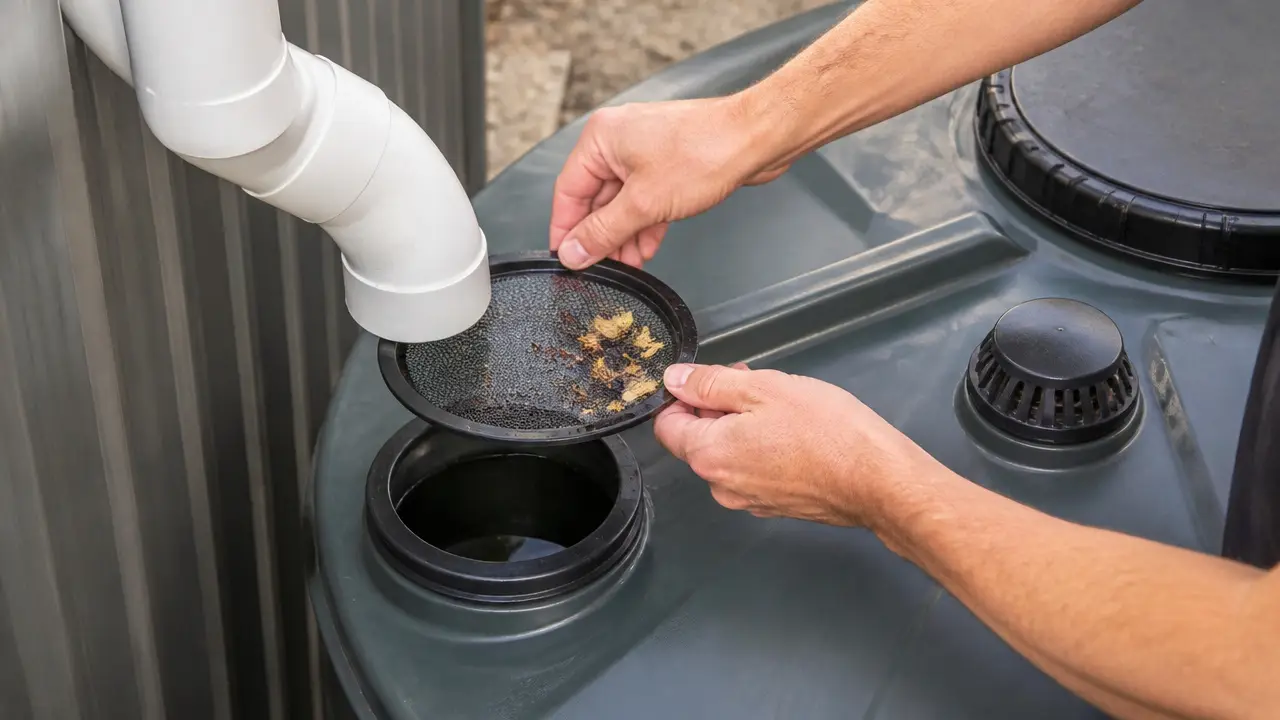
Keeping leaves and animals out of the tank, screening openings, maintaining gutters, and preventing stagnant debris from building up are still important even when the water is only used for irrigation.
What If You Want to Drink Rainwater?
Do not assume rainwater is safe to drink because it came directly from the sky or because it looks clear.
CDC states that collected rainwater is not necessarily safe to drink without removing harmful germs and chemicals. If rainwater is used for drinking, cooking, or bathing, CDC recommends regular testing for germs and chemicals.
A drinking-water rainwater system should be treated as a complete system rather than a single-filter project.
That normally means considering the whole path:
collection surface → debris control → first flush → storage → prefiltration → treatment → plumbing → testing → maintenance
The treatment stages needed depend on what testing finds and how the water will be used.
A sediment filter, for example, can remove particles above its rated size. It does not automatically remove dissolved chemicals or all disease-causing organisms.
Boiling can kill many germs, but it does not remove many chemical contaminants. Some chemicals should not be dealt with by simply boiling the water.
Likewise, UV treatment can help control microorganisms when it is properly designed and maintained, but UV does not remove metals, dissolved chemicals, or sediment.
No single filter, UV light, purifier, meter, or test strip can establish that an untreated roof-water system is safe for drinking.
For drinking-water use, work with your local health department or another qualified water professional to determine appropriate laboratory testing and treatment. CDC recommends testing private rainwater drinking systems at least annually and choosing treatment based on the contaminants that need to be removed.
What Matters Most in a Rainwater Harvesting System?
If your goal is simply to collect useful water for the garden, contamination in the atmosphere is usually not the only issue you need to manage.
Pay at least as much attention to what happens after the rain falls.
A practical system should keep unnecessary contamination out from the beginning:
- Keep the roof and gutters reasonably clean.
- Keep large leaves and debris out of the tank.
- Consider first flush diversion where appropriate.
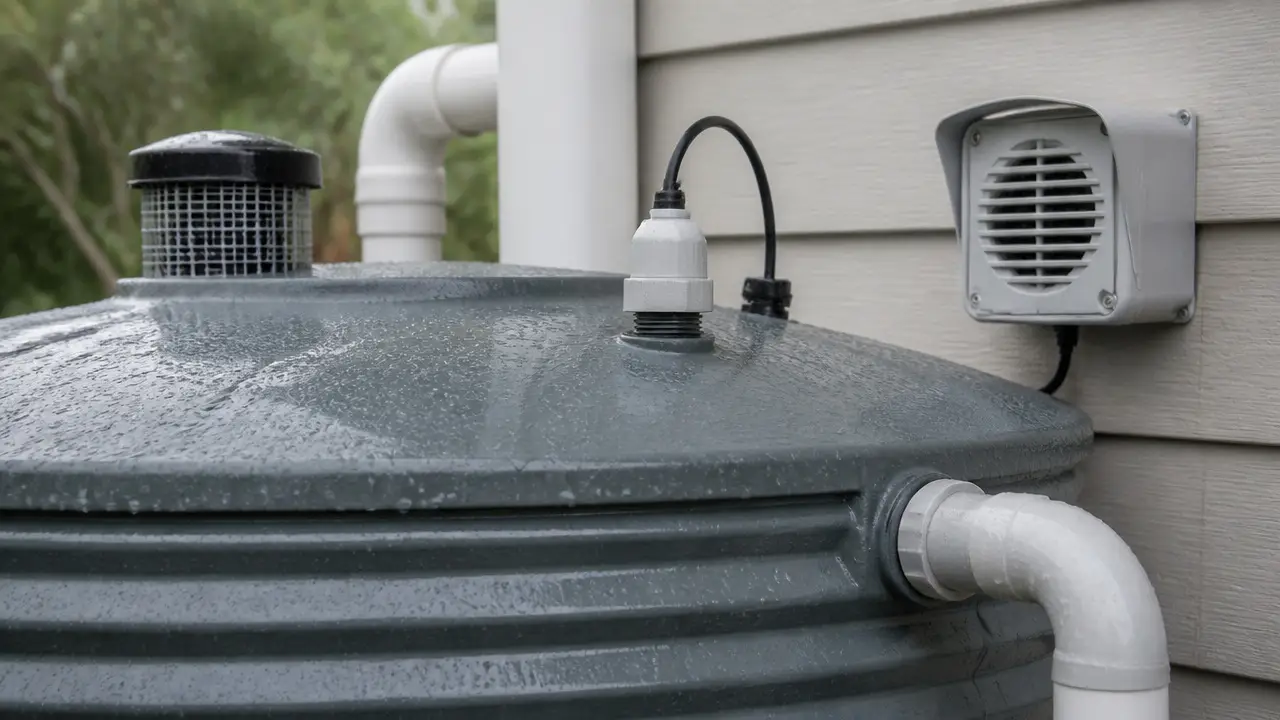
- Screen tank openings against insects and animals.
- Keep the storage tank covered.
- Prevent sediment and organic material from building up unchecked.
- Use materials suitable for the intended water use.
- Maintain pumps, filters, screens, and treatment equipment as needed.
- Test the water when its intended use requires verified water quality.
Good collection design reduces the load placed on later treatment equipment. It is usually easier to keep contamination out than to remove everything after it reaches the tank.
The Bottom Line
Rainwater straight from the sky is not necessarily dirty in the everyday sense, but it is also not pure, sterile, or automatically safe to drink.
Raindrops can collect particles, germs, and chemicals as they move through the atmosphere. Once the rain lands on a roof, it can collect additional contamination from dust, animals, roofing materials, gutters, and pipes.
For garden and other non-potable uses, a well-maintained collection system may be fairly simple. For drinking water, treat rainwater as a water source that needs suitable collection, treatment, current laboratory testing, and regular maintenance rather than assuming the sky has already purified it.
Frequently Asked Questions
Is rainwater clean before it touches a roof?
It can be cleaner than roof runoff, but it is not necessarily pure. Rain can pick up dust, smoke, germs, and chemicals while moving through the atmosphere.
Is fresh rain safe to drink directly from the sky?
Do not assume so. Clear rainwater can contain contaminants that cannot be seen, smelled, or tasted. Water intended for drinking needs a suitable treatment and testing plan.
Why is normal rain slightly acidic?
Carbon dioxide in the air dissolves into rainwater and forms a weak acid. EPA says normal rain has a pH of about 5.6. Air pollutants can make rain more acidic in some areas.
Is the first rain after a dry period dirtier?
The first roof runoff can carry a heavier load of accumulated dust, pollen, droppings, and other material. A first flush diverter can send some of this initial runoff away from the storage tank.
Does boiling rainwater make it safe to drink?
Boiling can kill many harmful germs, but it does not remove many chemical contaminants. Drinking-water safety requires knowing what may be in the water and choosing treatment that addresses those contaminants.
Does a rainwater filter make the water potable?
Not automatically. Potable means suitable for drinking. Different filters remove different contaminants, and one filter cannot be assumed to address every possible germ or chemical.
Is rainwater from a rain barrel okay for the garden?
Rainwater is commonly used for irrigation, but how safely it can be used depends on the collection surface, storage conditions, and what plants or surfaces the water will contact. Keeping debris and animals out of the barrel and maintaining the system still matter.