
As an affiliate, we may earn a commission from qualifying purchases. We get commissions for purchases made through links on this website from Amazon and other third parties.
Best Overall
Best Full Weather Display
Best Long-Range Smart System
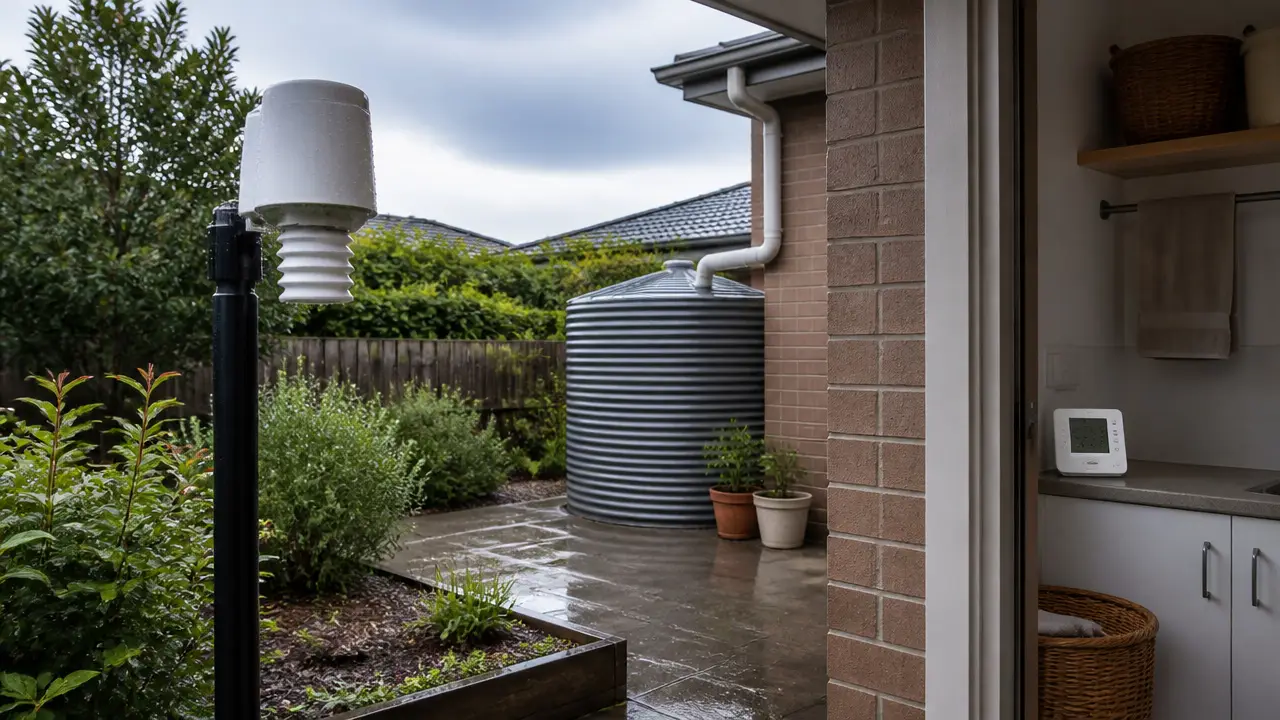
A wireless rain gauge lets you put the collector where rainfall exposure is good without putting the display there too. That matters for rainwater harvesting because the most convenient place to read a gauge—inside the house, garage, or utility room—is often not the best place to measure rainfall.
The important distinction is what “wireless” means. Some systems use a direct radio link between an outdoor collector and an indoor console. Others add Wi-Fi, apps, cloud history, or smart-home integrations. Direct radio can be simpler and more resilient for basic rainfall monitoring, while internet-connected systems are better when remote access and long-term data are worth the added setup.
For remote records, digital rain gauges with app connectivity can complement a wireless display.
Quick Wireless-Fit Checklist
- Measure the real sensor-to-display path. Walls, masonry, metal roofing, and terrain can reduce range.
- Choose local display versus app access. A local console works even when internet service is unavailable.
- Check the power plan. Outdoor sensors may use replaceable batteries, solar charging, or both.
- Mount the collector in open exposure. Wireless range does not fix bad rainfall placement.
- Expect periodic cleaning. Tipping-bucket mechanisms can stop when debris or insects interfere.
- Test before permanent mounting. Establish stable reception from the final location first.
Wireless Rain Gauges at a Glance
| Product | Best For | Wireless Approach | Tradeoff |
|---|---|---|---|
| La Crosse 724-1415BL | Focused rainfall monitoring | Direct RF to indoor display | Requires batteries and collector cleaning |
| Sainlogic 12-in-1 Weather Station | Local weather data without Wi-Fi dependence | Wireless outdoor array to console | More sensors and setup than a rain-only system |
| WeatherFlow Tempest | Long-range smart monitoring | Outdoor sensor to hub plus app ecosystem | Higher complexity and cost than a dedicated gauge |
| Sainlogic Smart WiFi Weather Station | Remote rainfall history and exports | Wireless station plus 2.4 GHz Wi-Fi/app | Cloud/app continuity matters over time |
Best Overall: La Crosse 724-1415BL Wireless Rain Station
1 / 4
La Crosse 724-1415BL Wireless Rain Station

Wireless Range
Over 330 ft claimed
Rain History
Current to yearly total
Display
Indoor console
The La Crosse 724-1415BL is the most direct fit for someone who wants wireless rainfall data without building a full smart-weather system. Its outdoor tipping-bucket collector sends readings to an indoor console and records current, hourly, daily, weekly, monthly, yearly, and total rainfall.
That separation is useful around a rainwater system because the collector can sit in clear exposure while the display stays near the tank controls, kitchen, or utility room. The documented transmission range is over 330 feet in suitable conditions, although structures and interference can shorten it.
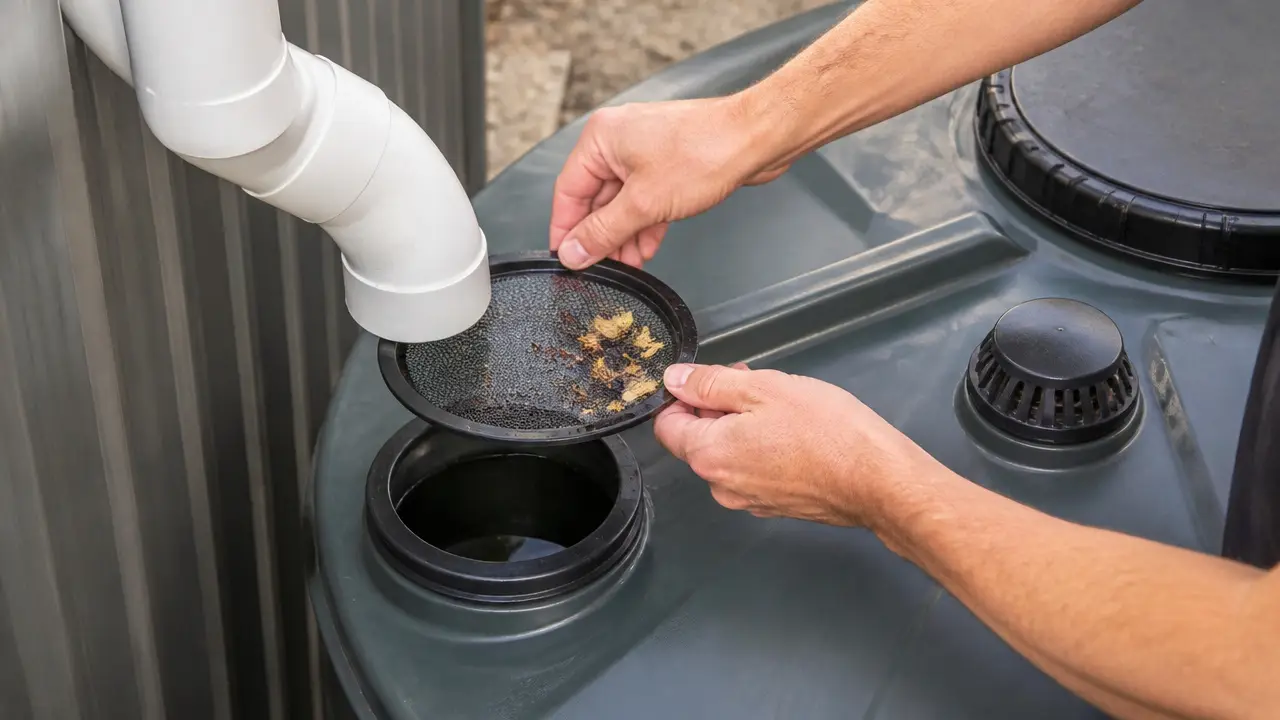
The main maintenance issue is the outdoor bucket. Customer evidence notes spider webs and debris interfering with operation, so a sudden zero reading during obvious rainfall should trigger inspection before you assume the radio link failed.
Why It Works
- Direct wireless communication keeps normal operation independent of Wi-Fi.
- Rainfall history is more useful for tank planning than a single event total.
- The self-emptying collector reduces manual handling.
What To Keep In Mind
- Range through walls can be shorter than the stated open-area distance.
- The tipping mechanism needs periodic cleaning.
- Batteries are required for complete operation.
Best Full Weather Display: Sainlogic 12-in-1 Weather Station
2 / 4
Sainlogic 12-in-1 Weather Station

Connectivity
Wireless local display
Display
6.5 in
Measures
Rain, wind, pressure, temperature, humidity
This Sainlogic station makes more sense when rainfall is only one part of the decision. Its outdoor array also measures wind, pressure, temperature, humidity, and other conditions, then sends that data wirelessly to a local display.
For rainwater harvesting, those extra readings are most useful when stored water feeds a garden. Rainfall shows supply; temperature, humidity, and wind help explain how quickly irrigation demand may return afterward.
It does not require Wi-Fi for the core local display workflow, which keeps the system useful during internet outages. The tradeoff is setup complexity. More sensors, calibration options, and a denser screen mean more work than a dedicated rain station.
Why It Works
- A local console avoids app dependence for routine checks.
- Multiple weather variables can support irrigation planning.
- Wireless outdoor sensing lets the display stay indoors.
What To Keep In Mind
- It is overkill if rainfall is the only measurement you will use.
- Calibration and setup require more attention.
- Customer evidence includes both accurate rainfall reports and units that stopped registering rain.
Best Long-Range Smart System: WeatherFlow Tempest
3 / 4
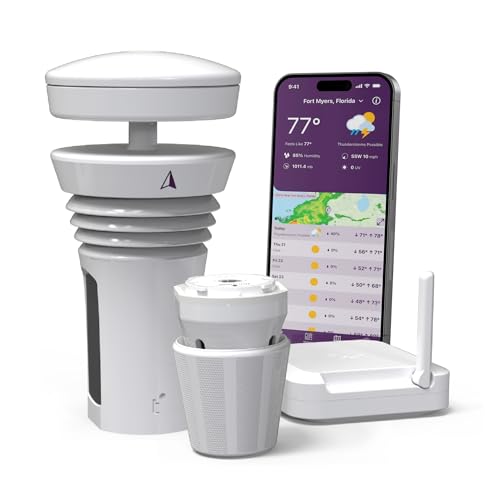
WeatherFlow Tempest Weather Station
Outdoor Power
Solar
Wireless Range
Up to 1,000+ ft claimed
Access
App-enabled
Tempest has the clearest role when the sensor needs to sit far from the house and you also want app-based weather history. The solar-powered outdoor unit communicates wirelessly to its hub, and the manufacturer documents a range over 1,000 feet under suitable conditions.
Unlike a conventional tipping-bucket station, Tempest uses a no-moving-parts outdoor design. That reduces the specific maintenance problem of a bucket rocker getting jammed by insects or debris, although the sensor still needs correct exposure and occasional inspection.
For a large rainwater property, the longer-range design can make an exposed field, garden, or tank area practical as the measurement location. The downside is that smart features, integrations, and app access make the system more dependent on software and ecosystem support than a local RF display.
Why It Works
- Long documented wireless range suits larger properties.
- Solar outdoor power reduces routine battery replacement.
- App history adds useful seasonal context.
- No traditional tipping bucket means fewer moving collector parts.
What To Keep In Mind
- It is a full smart-weather platform rather than a simple rain gauge.
- Third-party integrations may involve added services or changing support.
- Correct sensor exposure still matters to rainfall quality.
Best for Remote Data History: Sainlogic Smart WiFi Weather Station
4 / 4
Sainlogic Smart WiFi Weather Station

Wi-Fi
2.4 GHz
Archive
Up to 2 years claimed
Export
Excel
The Wi-Fi Sainlogic station is the strongest fit when “wireless” means you want rainfall information away from the local console, including phone access and historical exports. Its evidence supports 2.4 GHz Wi-Fi, app alerts, a two-year archive, and Excel data export.
That can be valuable for long-term rainwater planning. Exported rainfall records can be compared with tank-level logs or irrigation use to see whether storage is undersized, collection efficiency is poor, or dry-season demand is simply greater than annual rainfall can support.
The compromise is dependence on software. Customer evidence includes pairing problems and concerns about app support for older versions. For that reason, the station belongs below the simpler direct-RF options when remote data is not essential.
Why It Works
- App access extends rainfall monitoring beyond the local display.
- Long-term archive and export can support seasonal system analysis.
- The system also measures broader weather conditions.
What To Keep In Mind
- It uses 2.4 GHz Wi-Fi according to the supplied evidence.
- App support can affect long-term usefulness.
- More connectivity creates more possible failure points than a direct RF gauge.
How to Improve Wireless Rain-Gauge Reliability
Start by testing the outdoor sensor near the indoor receiver, then move it to the intended location. If communication becomes unreliable, shorten the distance or reduce obstructions before assuming the hardware is defective.
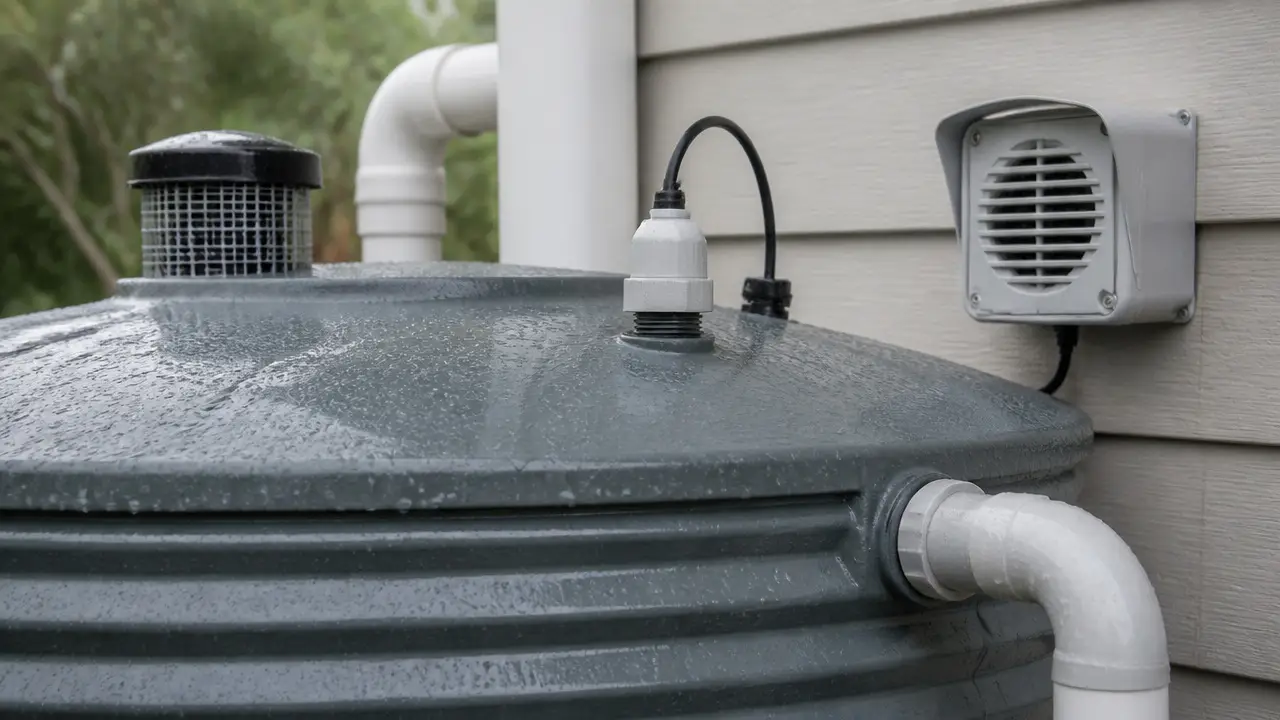
Metal is especially important. Metal roofs, siding, sheds, tanks, and reinforced walls can weaken radio signals. Mounting the sensor on the far side of a metal tank from the house can create a problem even when the straight-line distance is modest.
Also separate communication problems from measurement problems. If the console is receiving outdoor temperature but rainfall remains at zero during a storm, inspect the collector mechanism. If all outdoor values disappear together, investigate batteries, pairing, and radio range first.
Wireless Rain Gauges and Rainwater Yield
Rainfall depth from a wireless gauge is still not the same as gallons captured. Use the data to estimate potential roof yield, then compare that estimate with tank-level or flow measurements.
A repeated mismatch is useful information. If local rainfall looks normal but tank refill remains poor, inspect gutters, screens, first-flush hardware, downspout diverters, and overflows. Wireless monitoring makes the pattern easier to see; it does not diagnose the hydraulic cause by itself.
Frequently Asked Questions
How far can a wireless rain gauge transmit?
It depends on the model and site. Manufacturer range figures are usually best-case values. Walls, metal, terrain, and interference can substantially reduce real-world distance.
Does a wireless rain gauge need Wi-Fi?
Not necessarily. Many use a dedicated radio link from the outdoor sensor to an indoor display. Wi-Fi is mainly needed for app access, cloud history, and remote alerts.
Can I put the rain collector beside my rainwater tank?
Only if that location has representative rainfall exposure. A tank beside a building, fence, or tree may be a poor measurement location even if wireless communication is convenient there.
Why did my wireless rain gauge stop recording rain?
Check the collector for debris, insects, spider webs, or a stuck tipping mechanism. If all outdoor readings disappeared, then check batteries, pairing, and wireless range.
Are solar wireless stations maintenance-free?
No. Solar power reduces battery changes, but the sensor still needs correct mounting, cleaning, and periodic inspection.
Is a local display better than an app?
For simple rainwater monitoring, a local display is usually more resilient because it does not require internet access. An app is more useful when you want remote checks, alerts, and long-term data history.
For a broader comparison that includes non-wireless options, see best digital rain gauges. If you want a manual reference to verify electronic readings, best rain gauges covers simple analog choices.