As an affiliate, we may earn a commission from qualifying purchases. We get commissions for purchases made through links on this website from Amazon and other third parties.
Yes. You can use a hose timer with a rain barrel, but the timer must work at the low water pressure produced by the barrel.
This is the main issue. A rain barrel feeding by gravity may have much less pressure than a household outdoor faucet. Some hose timers need more pressure to open and close correctly. A timer designed for gravity-fed or low-pressure watering is usually a better fit.
How a Hose Timer Works With a Rain Barrel
A hose timer installs between the rain barrel outlet and the watering line.
A simple setup looks like this:
Rain barrel → shutoff valve → hose timer → garden hose or irrigation line
The timer opens at the programmed time and lets water flow. It then closes after the set watering period.
The timer does not normally create pressure. It only controls when the available water can pass through.
That means the performance of the system still depends on:
- The height of the rain barrel
- How much water is in the barrel
- The size of the outlet and hose
- The length of the hose
- The type of timer
- The watering device at the end of the line
The Biggest Problem Is Low Water Pressure
Household hose bibs are supplied by pressurized plumbing. Rain barrels usually are not.
A basic rain barrel relies on gravity. The water above the outlet creates pressure.
This height difference is called head height. Head height is the vertical distance between the water surface and the point where the water is being delivered.
More height generally means more pressure.
As the barrel empties, the water level drops. That reduces the available pressure.
This can create a situation where a timer works well with a full barrel but becomes unreliable as the barrel gets lower.
Raising the Barrel Can Help
Placing a rain barrel on a stable elevated base increases the head height.
However, do not raise a barrel on a weak platform just to gain pressure. Water is heavy. A full barrel can place a large load on its support.
The base should be:
- Level
- Stable
- Designed for the expected weight
- Protected from tipping or shifting
If substantial elevation or structural work is needed, the safer solution may be a different irrigation design rather than an improvised tall stand.
Make Sure the Timer Can Operate With Gravity Feed
Not every hose timer is suitable for a rain barrel.
Some timers use an internal valve that depends on incoming water pressure. If the rain barrel cannot provide enough pressure, the valve may not open completely or may not close as expected.
Before choosing or installing one, check the manufacturer's operating requirements.
Look specifically for information about:
- Minimum operating pressure
- Gravity-fed operation
- Inlet and outlet connection sizes
- Maximum allowable pressure
- Required installation orientation
- Whether the valve remains closed if the battery fails
Do not assume that a timer advertised for a garden hose will automatically work on a rain barrel.
If the manufacturer does not state that the timer works under the pressure available from your system, compatibility is uncertain.
Check the Connections Before Installing the Timer
Many rain barrels use a threaded spigot that accepts a standard garden hose connection. Others use different fittings.
Make sure the timer and barrel outlet actually match.
Avoid forcing together threads that seem close but do not fit correctly. Different thread types can appear similar while still leaking or damaging the fitting.
A typical connection might be:
Barrel outlet → valve → adapter if needed → timer → hose
Keep unnecessary adapters to a minimum. Every fitting, narrow passage, and long hose can add resistance to an already low-pressure system.
A Timer Works Best With Low-Pressure Irrigation
A hose timer does not guarantee that every watering device will work from a rain barrel.
Soaker hoses
Some soaker hoses can work with gravity-fed systems, while others need more pressure for reasonably even watering.
A long soaker hose may water heavily near the barrel and very little near the far end.
Drip irrigation
Drip irrigation can be a good match, but the components must be suitable for the available pressure.
Standard pressure regulators and some emitters are designed for pressurized water supplies. Installing components meant for higher pressure can greatly reduce or stop flow in a gravity system.
Sprinklers
Most conventional lawn sprinklers need considerably more pressure than a basic elevated rain barrel provides.
Adding a timer will not change that.
If you need sprinkler-like pressure, you may need a properly sized pump rather than relying only on gravity.
Flow Rate Matters Too
Pressure and flow are related, but they are not the same thing.
Flow rate is how much water passes through the system over a period of time.
A rain barrel may provide enough pressure to open a timer but still have a low flow rate because of:
- A small outlet
- A partially closed valve
- Sediment
- A narrow timer passage
- A long hose
- Too many emitters
- Significant elevation changes
Before depending on an automatic schedule, test the complete system manually.
Details about recommended hose timers for rain barrels and low-pressure watering help verify delivery-pressure changes that indicate lost prime.
Fill the barrel to a normal level, open the timer, and watch the irrigation system operate. Repeat the test when the barrel is partly empty.
This gives you a better idea of how the system behaves as pressure changes.
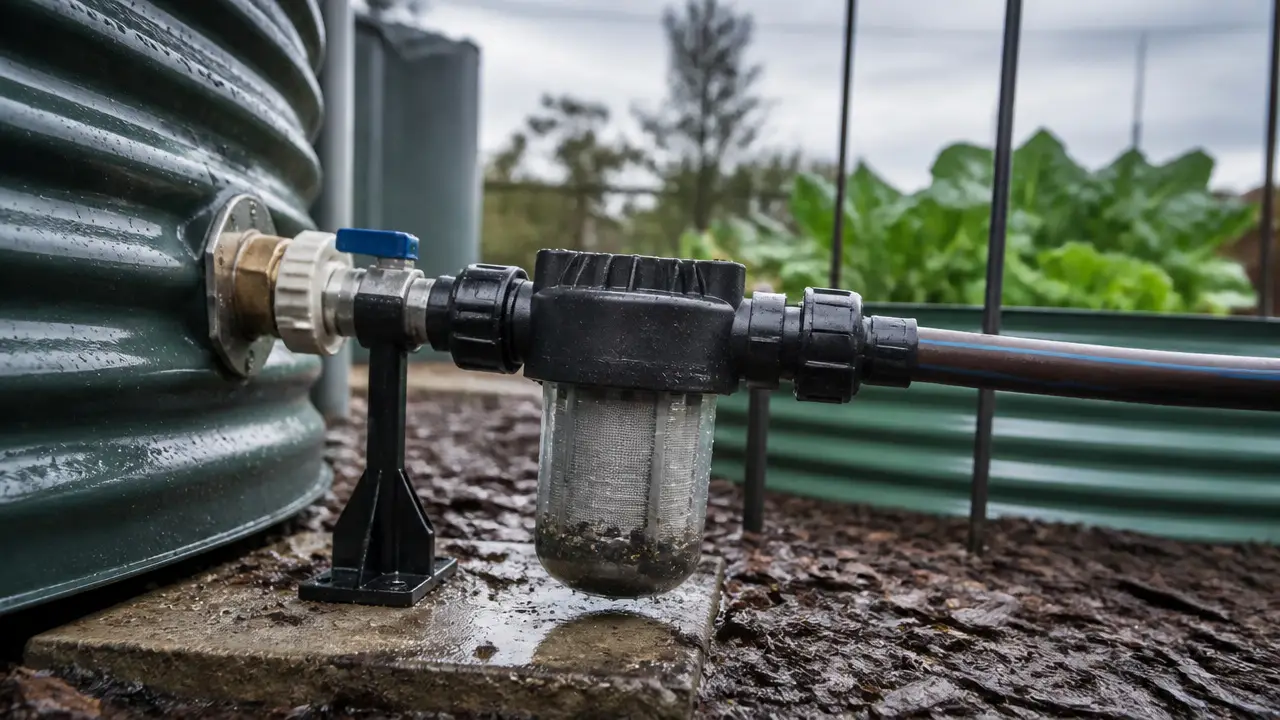
Put a Screen or Filter Before Small Irrigation Parts
Rain barrels can collect small amounts of sediment and organic debris even when the inlet is screened.
That debris can clog:
- Hose timers
- Small valves
- Drip emitters
- Narrow irrigation tubing
If your watering system has small passages, a suitable sediment screen or irrigation filter can help.
The filter should not be so restrictive that it causes a large pressure loss. Gravity-fed systems have little pressure available to waste.
Clean the filter regularly rather than waiting for flow to stop.
What Happens If the Barrel Runs Empty?
A timer normally measures time, not the amount of water left in the barrel.
If the timer opens when the barrel is empty, no useful watering will occur.
This is usually more of an irrigation problem than a timer problem. Your plants may miss their scheduled watering without you realizing it.
Check the barrel periodically during dry weather.
For plants that cannot tolerate missed watering, do not depend on an unattended rain barrel unless the system has been designed to handle low-water conditions safely.
Battery Timers Need Regular Checks
Many automatic hose timers use batteries.
Check them as part of normal rain barrel maintenance. Follow the timer manufacturer's instructions for battery replacement and storage.
Also test the timer periodically by watching a complete opening and closing cycle.
An automatic watering system should not be treated as maintenance-free. A stuck valve, clogged filter, disconnected hose, or empty barrel can change how the system performs.
Plan for Overflow and Unexpected Watering
A hose timer controls water leaving the barrel through the irrigation outlet. It does not control how much rain enters the barrel.
Your barrel still needs a safe overflow path.
Overflow water should be directed away from places where it could cause erosion, foundation problems, or unwanted pooling.
Also check hoses and fittings for leaks. A timer that opens automatically can release a substantial portion of the stored water if a downstream hose has come loose.
Protect the Timer in Freezing Weather
Water trapped inside a hose timer can freeze and damage its internal parts.
If freezing temperatures occur in your area, follow the manufacturer's winter-storage instructions.
A seasonal setup may need to be:
- Disconnected
- Drained
- Stored somewhere protected from freezing
The rain barrel, valves, hoses, and irrigation lines may need their own freeze protection as well.
Do not assume that closing the barrel valve removes all water trapped inside the timer.
When a Pump Makes More Sense
A gravity-fed timer is useful for simple, low-pressure watering close to the barrel.
A pump may be worth considering when you need:
- Higher pressure
- Water delivered uphill
- Long irrigation runs
- Many watering zones
- Equipment that requires a specific operating pressure
- More consistent performance as tank level changes
A pumped system requires more planning. Pump flow, pressure, power supply, controls, dry-run protection, plumbing connections, and electrical safety all have to work together.
For outdoor electrical equipment, follow applicable electrical requirements and use equipment rated for the installation.
A Simple Setup That Usually Makes Sense
For a small garden, keep the system simple:
- Place the rain barrel on a strong, level support.
- Use a screened rain barrel inlet.
- Confirm that the barrel outlet and timer connections match.
- Choose a timer intended to work with the pressure available from the barrel.
- Add a suitable screen or filter if the irrigation equipment has small openings.
- Keep hoses reasonably short where possible.
- Test the system with both a full and partly empty barrel.
- Check the barrel, filter, timer, and watering lines regularly.
The key is to design around the pressure you actually have rather than expecting a hose timer to make a gravity-fed barrel behave like a pressurized outdoor faucet.
Frequently Asked Questions
Will any hose timer work with a rain barrel?
No. Some hose timers require more inlet pressure than a gravity-fed rain barrel can provide. Check the manufacturer's minimum operating pressure or confirmation that the timer can be used with gravity-fed water.
Does a hose timer increase rain barrel water pressure?
No. A hose timer controls when water flows. It normally does not increase pressure. Raising the water level relative to the outlet increases gravity pressure, while a pump can provide additional pressure when properly designed.
How high should a rain barrel be for a hose timer?
There is no single height that works for every timer and irrigation system. The required height depends on the timer's operating requirements, the irrigation equipment, hose length, elevation changes, and other restrictions in the system. Any stand must also safely support the full barrel.
Can I use a hose timer with drip irrigation from a rain barrel?
Yes, if the timer and drip components can operate at the available pressure. Some drip equipment is intended for pressurized supplies and may perform poorly with gravity feed. Check the operating requirements of each important component.
Can I run a sprinkler through a timer from a rain barrel?
The timer may operate, but many conventional sprinklers require more pressure than a gravity-fed rain barrel provides. A pump may be needed if the sprinkler has a higher pressure requirement.
Should I put a filter before the hose timer?
A screen or suitable filter can help keep debris out of the timer and irrigation equipment. This is especially useful with drip systems. Choose a filter appropriate for the system and keep it clean so it does not unnecessarily restrict gravity flow.
What happens when a timed rain barrel runs out of water?
The timer may still open at the scheduled time, but little or no water will reach the plants. Check stored water levels during dry periods rather than assuming every programmed watering cycle has occurred successfully.